How to Deal With Urgent Kitchen & Bath Water Issues
Water spreading from a sink cabinet, toilet, shower, or wall calls for a fast response: stop the water, protect people from electrical danger, and document the problem before cleanup hides the cause. A few quick steps can prevent the issue from expanding from a wet cabinet base to damage in adjoining rooms or below the floor.

Call for a free estimate:
Start with control rather than diagnosis. You do not need to know whether a failed supply line, drain connection, fixture, or appliance caused the leak before closing a valve and calling for help.
How can you tell whether the water problem is an emergency?
An active leak that cannot be isolated, water near electricity, water coming through a ceiling, or any sewage backup needs immediate professional attention. Call emergency services first if water reaches an electrical panel, outlet, appliance, or exposed wiring and it is not safe to approach the area. Do not enter standing water where electrical equipment may be energized.
A broken supply hose under a sink, a toilet that keeps refilling and overflowing, or a pipe releasing water inside a wall can put a large amount of water into concealed materials within the home. Water staining or dripping from a ceiling deserves the same response, even if the flow appears small, because the visible point may be below the actual leak.
Sewage or wastewater backing up through a toilet, tub, or floor drain is a separate category. Keep people and pets out of the affected area, avoid using other plumbing fixtures, and arrange for a qualified plumber and appropriate cleanup support. The U.S. Environmental Protection Agency’s mold and moisture guide advises prompt drying and notes that water-damaged materials may need removal when they cannot be dried and cleaned.
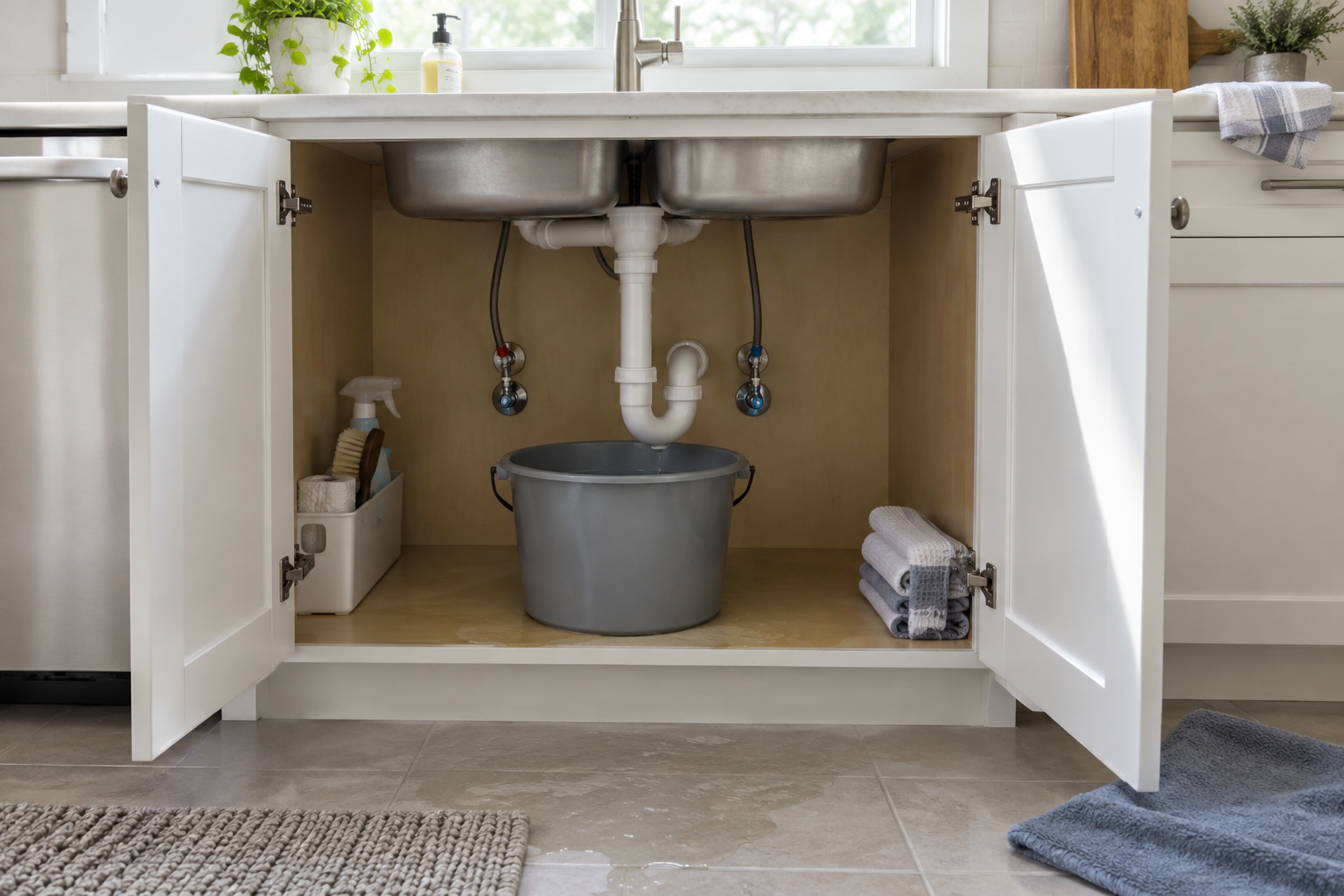
Some problems can wait for a scheduled visit once the water is fully contained. A faucet that drips into its own basin, a slow drain with no backup, or a small leak at a visible drain trap that stops when the fixture is not used usually does not require a middle-of-the-night dispatch. Put a container below a minor drip, stop using that fixture, and check periodically that the container does not overflow. A slow leak into a cabinet, wall, floor, or ceiling is different because it may continue unseen.
- Call now: a burst or actively spraying pipe, an overflowing fixture that will not stop, ceiling leakage, visible flooding, sewage backup, or water near electrical equipment.
- Act now, then schedule service: a shutoff valve has stopped the water, but a supply line, valve, drain, toilet seal, or fixture still needs repair.
- Schedule routine service: a contained faucet drip or minor drain issue that causes no overflow, staining, cabinet damage, or persistent water on the floor.
If water is coming from a shower or tub area, the source may be a plumbing connection, a failed drain seal, or water passing through an opening in the enclosure. This guide to leaking shower or tub causes and warning signs explains why the pattern of moisture matters before anyone opens a wall or floor.
What should you do in the first 60 seconds?
Close the appropriate shutoff valve first, then use the home’s main water shutoff if the leak continues or the local valve cannot be reached safely. Most sinks and toilets have small stop valves on the supply pipes below or behind the fixture. Turn a conventional valve clockwise until it stops, without forcing a corroded or stuck handle.
If the valve does not stop the flow, or if the leak is on the pipe before that valve, close the main shutoff. The Federal Emergency Management Agency advises household members to know where the main water valve is located and how it operates. In many homes it is near where the water service enters the building, though the location varies by building layout and local practice.
- Move clear of any water near electrical equipment. If you can do so safely from a dry location, shut off power to the affected area at the breaker. Do not touch a panel while standing in water.
- Close the local fixture valve. If that does not stop the leak promptly, close the main water valve.
- Stop using nearby sinks, toilets, showers, dishwashers, and washing machines until a plumber identifies the source. A drain blockage or shared line problem can worsen when more water is sent into the system.
- Move towels, rugs, toiletries, and portable belongings away from the water. Place a pan or bucket under a controlled drip only if it can be done without entering an electrical-risk area.
- Take wide and close photographs or video of the water source, wet materials, and visible damage before dismantling anything. Keep the failed hose or fitting if it comes free naturally, but do not pull apart plumbing to investigate.
- Call a plumber, property manager, insurer, or restoration provider as appropriate. Give the dispatcher the location, whether the water is off, whether sewage is involved, and whether water reached ceilings or electrical equipment.
How do you choose a 24/7 plumber without accepting a vague bill?
An emergency plumbing provider can state the dispatch charge, diagnostic charge, after-hours policy, and approval process before sending a technician. Ask whether the company charges a flat emergency fee, an hourly rate from arrival, a minimum number of labor hours, or a combination. A flat dispatch charge and repair labor are different items, so ask which work is included and whether the fee is credited toward an approved repair.
Ask for the technician to explain the immediate stop-work option separately from permanent repair options. For example, shutting off and replacing one failed under-sink supply line and drying drywall and other materials may be the necessary urgent work, while replacement of a faucet, cabinet base, or unrelated fixtures can be discussed later. A plumber should obtain approval before proceeding beyond the agreed emergency scope.
Verify the business through your state or local contractor licensing authority where licensing applies, and confirm that the license status matches the company name on the estimate. Licensing rules differ by jurisdiction, so a company’s statement that it is licensed is not enough. Ask for proof of insurance if substantial water damage, wall opening, or work in a multi-unit building is involved.
Request an itemized written estimate or invoice that separates the call-out charge, labor, parts, access work, and any proposed restoration work. It should identify the immediate failure, describe what was repaired, and state what remains uncertain. Vague phrases such as “water damage repair” without a defined area, material, or task leave room for scope creep.
- What is the fee to arrive, and is it separate from diagnosis or repair labor?
- When does hourly billing begin and end, and is there a minimum charge?
- Can the technician make the leak safe first and provide a separate estimate for nonurgent repairs?
- Will the invoice identify the failed part and list installed parts separately?
- Which license authority can verify the business, and what insurance documentation is available?
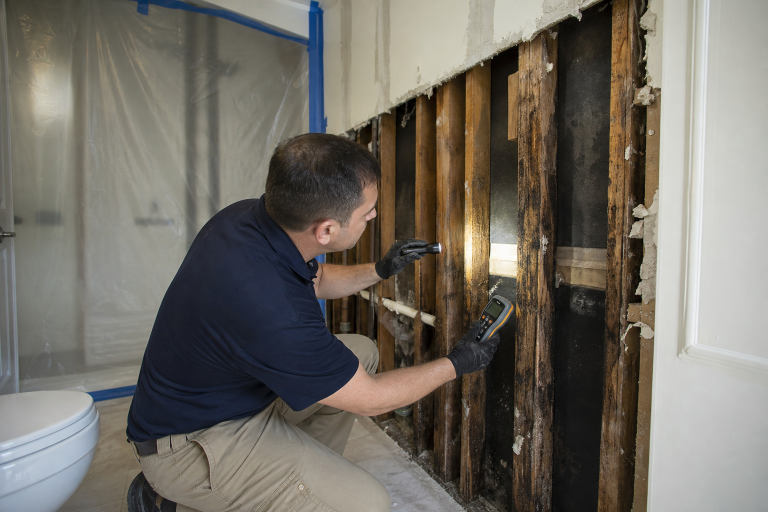
Do not authorize broad demolition simply because water is visible. Opening a limited area may be necessary to reach a failed pipe or dry concealed materials, but the reason, location, and repair plan should be stated before the work begins unless an immediate safety condition prevents delay.
What should happen after the leak has stopped?
Drying begins as soon as the water source is controlled, with special attention to cabinet bottoms, flooring edges, wall cavities, and the ceiling below the leak. Remove wet rugs and loose items, then use ventilation and dehumidification where it is safe to do so. The EPA says moisture control is the key to controlling mold and advises drying water-damaged areas and items within 24 to 48 hours where possible.
Cabinet bases made from particleboard or fiberboard can swell when saturated. Once swollen, they may not return to their original strength or shape after surface drying. A technician or restoration professional can determine whether water reached the subfloor, insulation, drywall, or wall framing, especially when the leak was hidden for an unknown period.
Photograph damage before discarding materials, save receipts, and contact your insurer promptly if the loss may exceed your deductible or affect multiple rooms. Your policy controls coverage, so avoid assumptions about what it will pay. Insurers often need the cause, date discovered, mitigation steps, and documentation of damaged property.
Call for a free estimate:
For ordinary clean-water leaks, do not seal a wet cabinet or reinstall soaked materials simply because their surfaces feel dry. Trapped moisture can remain behind toe kicks, under flooring, and inside wall cavities. Where sewage, contaminated water, or extensive structural materials are involved, use qualified remediation support rather than attempting to clean porous materials yourself.
How can you reduce the chance of another kitchen or bath water failure?
Regular visual checks catch many failures before they become floods. Look below sinks for corrosion, green or white mineral buildup, wet cabinet bottoms, rusted valve hardware, or flexible supply hoses that are kinked, frayed, or rubbing against sharp edges. Check around toilet bases and behind washing machines, and investigate any new cabinet odor, floor softness, or recurring stain rather than covering it with a mat or liner.
Know the main shutoff location before a failure occurs, and make sure the path to it remains accessible. If a shutoff valve will not turn or leaks around its stem during a routine check, arrange a planned plumbing visit. Replacing an unreliable isolation valve during normal hours is generally simpler than discovering it cannot close during a burst-line emergency.
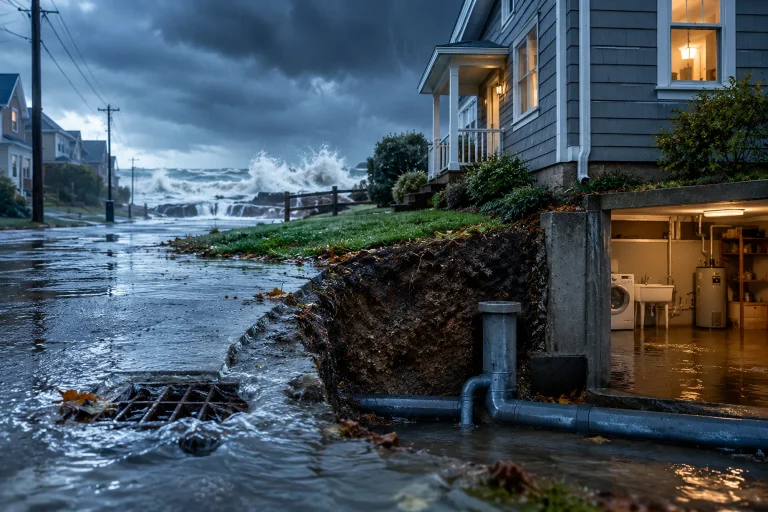
Use fixtures normally and avoid treating drains as disposal systems. Grease, wipes, and objects that do not break down in water can contribute to drain backups. If heavy rain coincides with slow fixtures or wastewater coming up through low drains, this overview of possible sewage and wastewater issues during heavy rain can help distinguish household plumbing concerns from wider drainage conditions.
Keep a short record of repairs, including the location, date, failed component, and any warranty paperwork. That record helps a future plumber see whether repeated failures point to one fixture, a pressure issue, a drainage problem, or an earlier repair that needs follow-up.
FAQ
Should you turn off the main water valve for a leaking sink?
Close the sink’s local valves first if they stop the leak and can be reached safely. Use the main valve when the leak is before the local shutoff, the local valve fails, or water continues to flow. Leave the water off until a plumber confirms the repair is complete.
Can you use other plumbing fixtures after a bathroom leak?
Avoid using nearby fixtures until the source is known, especially when water is backing up, leaking through a ceiling, or appearing around a toilet or tub. Using another fixture can add water to a shared drain line or increase an overflow.
What information should you give an emergency plumber?
State where the water is coming from, whether the flow is active, whether the water has been shut off, and whether it has reached electrical equipment, ceilings, or more than one room. Mention sewage or wastewater immediately because it changes the response and cleanup needs.
How long should wet cabinets and floors be left to dry?
Drying should start immediately, and materials need evaluation if water entered enclosed spaces or caused swelling, staining, soft spots, or delamination. Surface dryness alone does not confirm that a cabinet base, subfloor, or wall cavity is dry enough to close back up.
If you need help with an active kitchen or bath leak, contact a properly licensed local plumber for an emergency assessment and a written description of the work needed. Please call a listed specialist for a free, no-obligation discussion.