HVAC Emergency: Calm Steps for Sudden System Failure
A sudden loss of heat or air conditioning can make the whole house feel unsettled, especially when it happens at night or during severe heat wave. The first decision is to separate a safety problem from an inconvenient equipment failure, then give a technician clear information without taking unsafe repair steps.

Call for a free estimate:
Immediate action matters when the problem creates imminent risk and, in those cases, protect people and property first. For a system that simply will not start or is delivering weak heating or cooling, a few basic checks can prevent an unnecessary after-hours call and make a same-day visit more productive.
What can count as an HVAC emergency?
Any condition involving a possible gas leak, carbon monoxide alarm, smoke, sparking, or an active electrical or water hazard needs immediate emergency response rather than routine HVAC troubleshooting. The U.S. Consumer Product Safety Commission’s carbon monoxide safety guidance says to move outside to fresh air and call 911 when a carbon monoxide alarm sounds. Do not silence the alarm, search for its source, or wait for an HVAC company before making that call.
A sulfur-like or rotten-egg gas odor also calls for an immediate exit from the building and a call to the gas utility’s emergency number or 911 from a safe location. Do not operate switches, use a phone inside, light a flame, start equipment, or try to locate or close a gas valve. The CPSC gas appliance safety guidance directs occupants to leave the area and contact the gas supplier or fire department when they smell gas.
Smoke, visible sparking, a scorched electrical smell, or a breaker that trips repeatedly should be treated as an electrical concern. Turn the thermostat off. If there is fire, smoke, or immediate danger, leave and call 911. The Consumer Product Safety Commission advises against using electrical equipment that shows signs of damage and against trying to correct an electrical fault yourself.
Problems that commonly justify same-day HVAC service
A system that will not heat or cool at all may justify same-day service when outdoor conditions could create property damage, such as frozen plumbing, or when the home cannot be kept at a safe temperature by another available heat or cooling source. State the outdoor conditions, whether the system is completely off, and whether water is present when you call. Those details help the dispatcher assign the right urgency.
Loud new mechanical noises, ice accumulating on accessible refrigerant tubing, a blower that runs without producing conditioned air, or a thermostat that has gone blank are also reasonable reasons to request a prompt assessment. While these signs do not identify one failed part, they do give the technician a useful starting point and help you avoid authorizing a major repair based solely on a phone description.
Issues that can often wait for a standard appointment
A standard appointment is usually reasonable for uneven room temperatures, ordinary cycling, gradual loss of comfort, a dirty filter with no shutdown, or a unit that works but sounds somewhat different. Keep an eye on the condition and write down when it occurs. If the situation shifts to an odor, alarm, leak, smoke, or electrical concern, treat it as an emergency instead.
Do not let a contractor turn a basic inspection into a premature replacement decision. A failed capacitor, drain blockage, control issue, or airflow problem can stop a system just as completely as a major component failure. This guide to HVAC repair or replacement decisions explains the separate question of when an equipment replacement is warranted.
What should you do before the technician arrives?
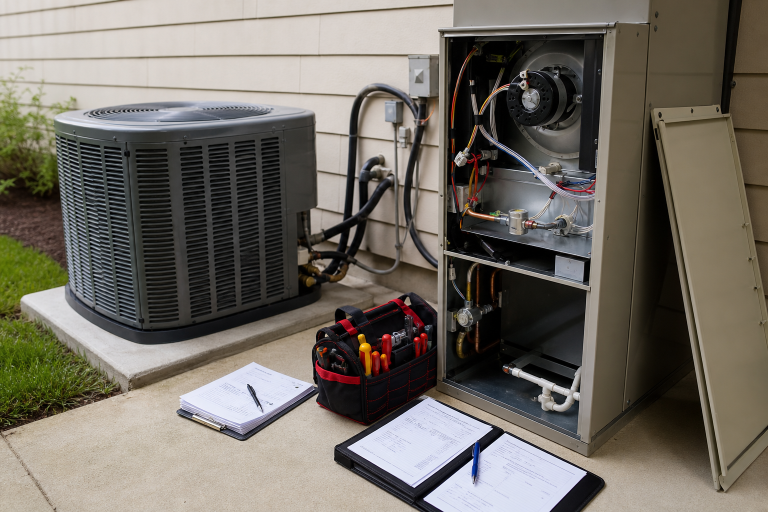
Perform only external checks, and preserve the information that will help the service call start quickly. Do not remove access panels, touch wiring, force a switch, or add refrigerant, cleaners, or drain chemicals.
- Set the thermostat to off. This prevents repeated attempts to start while you decide whether the issue is urgent. If the display is blank, note that fact, but do not assume the thermostat is the failed part.
- Check the electrical panel once. Look for a clearly tripped HVAC-related breaker. If it is tripped and there is no smoke, burning odor, water, or visible damage, switch it “on” one single time. A breaker that trips again should stay off until a qualified technician evaluates the system.
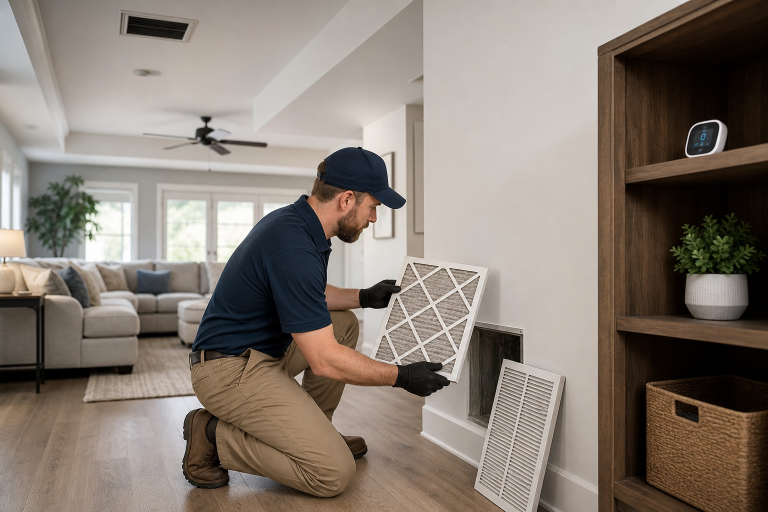
- Check the filter and visible vents. Note whether the filter is heavily loaded and whether supply or return grilles are blocked by furniture, rugs, or stored items. Do not run the system without its specified filter unless the equipment manufacturer explicitly instructs otherwise.
- Clear access around the equipment. Move boxes, laundry, leaves, snow, and other loose obstructions away from the indoor unit and outdoor equipment without reaching into the cabinet. Give the technician a clear route to the thermostat, electrical panel, indoor unit, and outdoor unit.
- Document what happened. Record the thermostat setting, outdoor temperature, alarm messages, unusual noises, when the failure began, and any recent power outage or filter change. A short video of a noise can be useful if it can be captured without approaching a hazard.
- Use emergency shutoffs only when safety guidance calls for them. For a gas odor, leave rather than stopping to shut off the gas. For an electrical fire or active hazard, call emergency services and follow their instructions. A technician or utility representative can determine whether equipment power or fuel supply should remain off.
Keep pets and children away from the work area, and avoid repeatedly changing thermostat settings while you wait. Repeated restarts can obscure what the system was doing when it failed.
How can you choose same-day service without getting trapped by fees?
A trustworthy emergency visit starts with a disclosed diagnostic fee, a clear arrival window, and your approval before repair work begins. In many markets same-day service costs more to schedule than a routine appointment, but a higher fee does not excuse vague pricing or an open-ended authorization.
Ask the dispatcher for the diagnostic charge, whether it changes after normal business hours, whether it is credited toward an approved repair, and what happens if parts are unavailable. Ask whether the company charges a separate travel, dispatch, or after-hours fee. Get the answer by text or email when possible, and keep the message with your invoice.
Before approving a repair, request a written description of the diagnosed problem, the proposed repair, labor and parts charges, applicable warranty terms, and the total authorization amount. An honest technician may need time to test before offering a diagnosis. That is different from asking you to approve a large repair or replacement before the cause of the shutdown has been identified.
- Confirm that the company is licensed where licensing is required and carries the insurance required in your area.
- Ask whether the technician will diagnose the fault before discussing replacement options.
- Request the model and serial number be listed on the invoice, along with any recommended part and its warranty.
- Decline blank work orders and authorizations that do not state a maximum dollar amount.
- For a costly repair that is not safety-critical, ask whether the system can be left safely off while you obtain another written opinion.
Payment pressure is a warning sign when the scope remains unclear. You can authorize diagnosis first, then decide on repair after seeing the written finding. For a broader look at routine service decisions, see Abodence’s HVAC maintenance overview.
What seasonal maintenance reduces surprise HVAC failures?
Regular filter attention, clear equipment access, and scheduled professional maintenance reduce avoidable airflow and drainage problems before peak heating or cooling demand. The U.S. Department of Energy’s air-conditioner maintenance guidance identifies clean filters as central to proper airflow and recommends checking them monthly during the cooling season, then cleaning or replacing them as needed according to the equipment instructions.
Use the filter size and type specified for the system, and write the installation date on its frame. A more restrictive filter is not automatically an upgrade and it can cause unexpected issues. If the manufacturer does not approve it for the equipment, choose the specified filter and discuss indoor-air concerns with a qualified contractor rather than restricting airflow by guesswork.
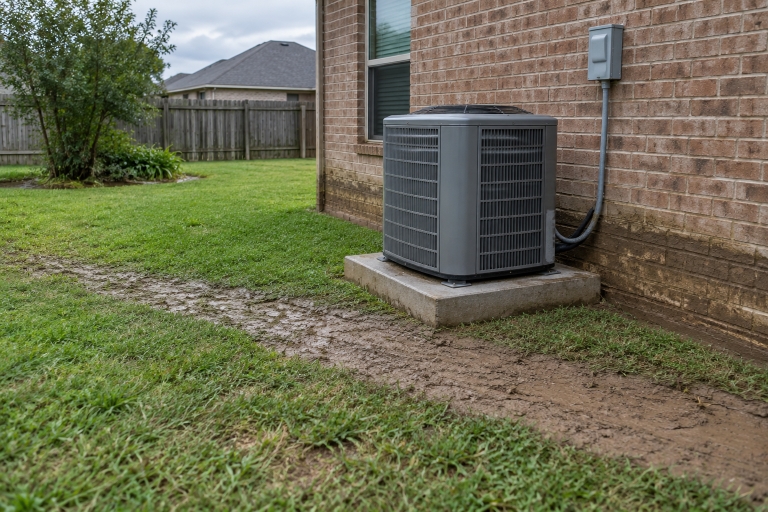
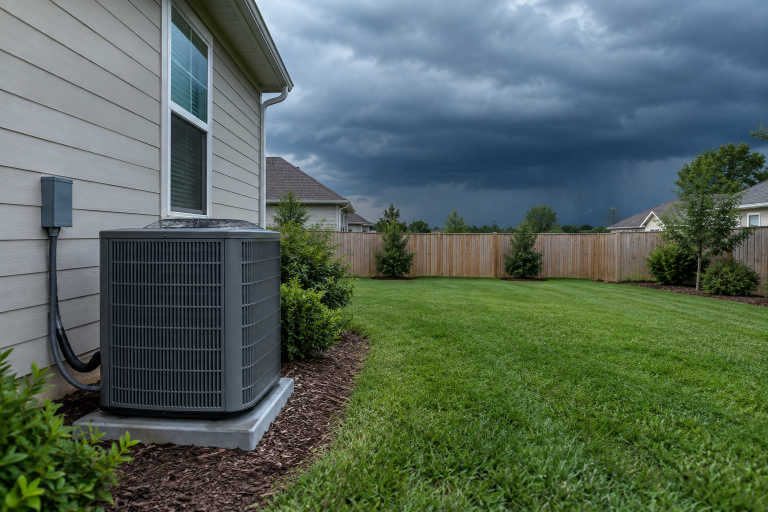
Outside, keep vegetation, leaves, and stored items away from the outdoor unit so air can move through it. Do not cover operating equipment or pressure-wash coils. Inside, keep the furnace or air-handler area accessible and look periodically for water below the unit or damage to accessible insulation on refrigerant lines.
Call for a free estimate:
Before each heating season and cooling season, schedule maintenance appropriate to the equipment type. The Air Conditioning Contractors of America describes inspection of controls, electrical components, airflow, condensate management, and combustion-related components as part of its ANSI/ACCA 4 QM residential HVAC maintenance standard. A maintenance visit should document what was inspected, what was measured, and what, if anything, needs correction.
FAQ
Should I turn my HVAC system off when it stops working?
Turn the thermostat off when the system is making unusual noises, leaking water, failing to heat or cool, or behaving unpredictably. Leave the system off if a breaker trips again, smoke appears, an electrical odor is present, or a carbon monoxide alarm sounds. A technician can decide when it is safe to restart.
Can I reset an HVAC breaker myself?
One reset may be reasonable only when there is no smoke, burning odor, water, visible damage, or other sign of electrical danger. If the breaker trips again, leave it off and arrange qualified service rather than resetting it repeatedly.
What should I tell an emergency HVAC technician?
Give the technician the equipment type, thermostat setting, when the failure began, any error display, unusual noise or odor, breaker status, visible water, and whether the system has recently lost power. Those details narrow the initial inspection and make it easier to discuss the written diagnosis.
How often should HVAC maintenance be scheduled?
Most central heating and cooling systems merit a professional maintenance visit before the season in which they will work hardest, with filter checks and basic visual checks in between. If a sudden failure has left you unsure what to do next, contact a qualified local HVAC provider for an assessment and a written scope of work.
For additional help, please call a listed specialist for a free, no-obligation discussion.