Leaking Shower or Tub? Serious Signs, Smart Fixes, and What They Mean
Focus Keyword: leaking shower or tub causes

Call for a free estimate:
Bathroom leaks usually come down to a short list: failed sealant, a bad drain connection, worn valve parts, cracked finishes, or water getting past tile because the waterproofing behind it has failed. The hard part is that the stain you see on a baseboard is often not where the leak starts.
A minimal leak can stay small if it is limited to caulk or a loose trim connection. It can also point to a larger assembly problem, especially when water only shows up after a shower and not after running the sink or flushing the toilet. According to the U.S. Environmental Protection Agency WaterSense leak guidance, household leaks can waste significant amounts of water, and fixing leaks is one of the most direct ways to reduce water waste.
This guide discusses common causes of shower or tub leaks, how to tell them apart, when a simple repair is realistic, and when the right move is to stop using the fixture and have the area opened up.
What are the most common leaking shower or tub causes?
Most bathroom fixture leaks come from the points where water is supposed to be contained or redirected, not from the tub or shower body itself.
The most common source is failed caulk or grout at corners, wall joints, and where the tub meets the surround. In a tiled shower, grout is a wear surface, not the waterproof layer. The Tile Council of North America, in the TCNA Handbook, treats the waterproof membrane or approved backing system as the actual water management layer behind the tile assembly. When that system is missing, damaged, or poorly tied into the pan or tub flange, water can move into the wall even if the tile still looks mostly intact.
Drain assemblies are another frequent cause. The connection at the tub shoe, shower drain body, or trap can loosen or lose its seal over time. Valve bodies and supply connections inside the wall can also leak, especially if water appears even when no one is actively bathing.
A hairline crack in acrylic, fiberglass, cultured marble, or tile can let water pass into the structure below, particularly when someone stands in the fixture and flexes the surface. In some cases, the leak is not in the shower or tub at all. Water can enter from an adjacent toilet seal, a nearby sink drain, or even from exterior moisture. If the bathroom is under an attic or roof area, ruling out broader moisture issues is part of a careful diagnosis. Abodence covers related moisture patterns in this guide to attic moisture problems.
How can you tell where a shower or tub leak is really coming from?
The a reliable clue is when the leak appears in relation to how the fixture is used.
If water shows up only during a shower, the issue is often in the wall, door, enclosure, or tile assembly above the drain line. If it appears when the tub is filled and then released, the drain and waste connection become more likely. If it leaks when the water is on, even before it reaches the tub or shower floor, the valve, shower arm, spout connection, or supply piping deserves attention.
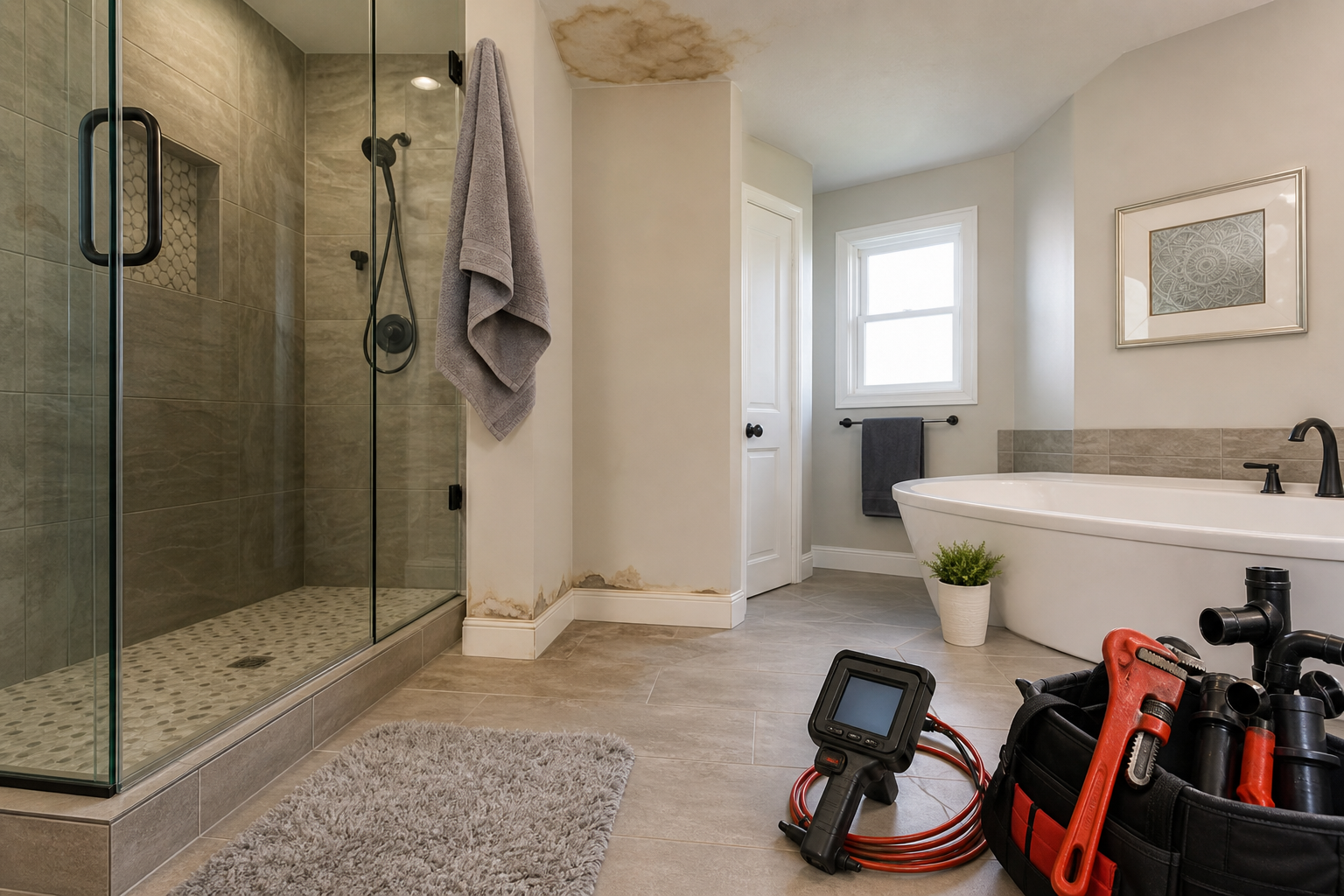
Pattern matters more than guesswork. A stain on the ceiling below that grows after each shower points to a repeated water path. Bubbling paint, soft drywall, loose base trim, and musty odor are all signs that moisture is moving beyond the wet area. The National Association of Home Builders, in its residential performance guidelines, notes that sealant joints are maintenance items and can open up as materials move and age. That makes periodic inspection practical, especially at inside corners and fixture transitions.
One useful distinction is whether the leak happens with spray or with standing water. A shower door that leaks at the threshold usually leaves water outside the enclosure quickly. A failed tub drain gasket may not show itself until a full tub is drained. A cracked shower pan may only leak under body weight.
Can bad caulk or grout really cause a serious leak?
Yes, failed joints around a shower or tub can allow enough water through to damage drywall, trim, and framing over time.
Caulk is meant to bridge movement joints where planes meet, such as vertical corners and the tub-to-wall transition. The International Residential Code requires wall areas in bathtubs and showers to be finished with nonabsorbent surfaces. In practice, that means the visible finish and the joints around it must contain routine splashes inside the fixture.
Grout failure is different from membrane failure, but homeowners often see them as the same problem. Grout can crack or erode from movement, cleaning methods, or age. Regrouting may improve the surface, but it will not correct a missing waterproof layer behind the tile. In a basic acrylic or fiberglass tub surround, the more common problem is failed caulk at seams and at the tub edge.
When the leak is limited to an open joint and the surrounding materials are otherwise sound, resealing can be the right low-cost fix. When the wall feels soft, tile is loose, or moisture has spread beyond the wet area, fresh caulk is usually cosmetic and will not address the real path of water.
Could the drain or overflow be the problem?
Yes, tub and shower drain assemblies are common leak points because they rely on compressed gaskets and tight threaded connections.
A tub drain can leak at the flange where it meets the tub, at the shoe below, at the overflow gasket, or at the waste-and-overflow joints behind the wall or under the floor. A shower can leak at the drain body, the connection to the waste line, or the pan-to-drain interface. According to Oatey installation guidance for tub drains and shower drains, proper sealing depends on the correct gasket orientation, approved sealant where specified, and secure compression at the drain body.
Leaks tied to the overflow often show up only when the water level reaches that opening. Drain leaks often appear during or just after draining, when a larger volume of water passes through the assembly at once. If the ceiling below drips only after a bath is released, that pattern points away from wall tile and toward the waste piping or drain connection.
When does the valve or plumbing inside the wall cause the leak?
Water that appears even when the tub or shower floor stays dry often points to the supply side rather than the enclosure itself.
Call for a free estimate:
The shower arm, tub spout drop, mixing valve, and supply connections inside the wall can all leak. Some leaks happen only while the valve is on. Others continue slowly because a fitting or cartridge seal has failed under pressure. The American Society of Plumbing Engineers publishes design guidance showing that concealed valves, fittings, and penetrations are critical points in wet-wall assemblies because they combine pressurized water with limited visibility.
Trim plates can also mislead you. Water can run behind an escutcheon if the opening around the valve body or shower arm is not sealed as the manufacturer directs. Moen and Delta both publish installation instructions for trim and valve assemblies that call for specific sealing practices at wall penetrations, with limits on where sealant should and should not be applied so incidental water can be directed properly.
Is a cracked tub, shower pan, or tile surface enough to leak through the floor?
Yes, a crack can be enough, especially when body weight flexes the surface and opens the path wider during use.
Acrylic and fiberglass fixtures depend on proper support underneath. Manufacturer installation instructions commonly require a level base and, in some models, a bedding compound or full support under the unit. When that support is missing, the floor of the tub or shower can flex, stressing seams and finishes. Cracked tile can be a symptom of the same movement problem rather than the original cause.
Surface repair products have limits. A cosmetic chip repair may restore appearance, but it does not always restore water integrity in a flexing assembly. If a pan moves underfoot, sealing the visible crack without correcting the support issue often leads to repeat leakage.
How much does it cost to fix leaking shower or tub causes?
About $150-500 is a common 2025 range for a straightforward plumbing leak repair visit, while larger shower rebuilds tied to failed waterproofing can run into the thousands depending on demolition and finish work.
For broad plumbing repair pricing, Angi’s 2025 estimates place many common leak repairs in the low hundreds, while more invasive work rises with wall or ceiling access and finish restoration. For remodeling-scale work, the 2024 Remodeling magazine Cost vs. Value Report shows that bathroom projects involving replacement of wet-area finishes and fixtures are far more expensive than targeted repair.
Recaulking, replacing a trim seal, or correcting an accessible drain part is often a repair job. Rebuilding a tiled shower with failed waterproofing is a construction job. Drywall patching, painting, tile replacement, and subfloor repair can cost more than the original leak fix.
If you are already considering changing the fixture layout or replacing an aging tub, it may help to compare repair scope with remodel scope before authorizing piecemeal work. This related guide on walk-in shower conversion cost is useful when the leak has exposed a bigger bathroom decision.
When is a simple repair enough, and when is replacement the smarter move?
A targeted repair is usually enough when the leak source is isolated, the surrounding materials are still sound, and the fixture assembly itself is not failing.
Examples include a worn overflow gasket, separated caulk at the tub edge, a loose drain connection, or a trim penetration that was never sealed correctly. In those cases, replacing the failed part and verifying the leak has stopped is often the most sensible path.
Replacement makes more sense when the substrate is damaged, the pan or tub flexes, the tile assembly lacks proper waterproofing, or repeated repairs have not stopped the problem. A contractor should be able to explain whether the issue is a part failure or a system failure. If the quote only mentions fresh caulk while the wallboard is soft or the framing is wet, the scope is probably too small.
Watch for vague language in proposals. Terms like “repair as needed” or “waterproof where necessary” do not tell you what will actually be removed, rebuilt, or tested.
What should you ask before hiring someone to diagnose or repair the leak?
A good quote should identify the suspected leak path, the access needed to confirm it, and what is included if hidden damage is found.
- What specific source is most likely, based on the leak pattern?
- Will diagnosis require opening the wall or ceiling?
- If tile or surround materials are removed, who handles restoration?
- Is the proposed fix limited to sealant or parts, or does it address waterproofing behind the finish?
- Will the contractor test the fixture after repair to confirm the leak has stopped?
- What warranty applies to the repair itself, and what conditions would void it?
Those questions help separate a true diagnosis from a cosmetic patch. They also make it easier to compare quotes that look similar on price but very different on scope.
What are the most searched homeowner FAQs about leaking shower or tub causes?
Can a shower leak through the floor without obvious standing water?
Yes, water can pass through failed joints, wall penetrations, or a cracked pan even when the bathroom floor outside the shower looks dry. Leaks often travel inside the assembly before they become visible below.
Is regrouting enough to stop a shower leak?
Sometimes, but only when the problem is limited to the grout surface and the waterproofing behind the tile is intact. If the underlying membrane or backing system has failed, regrouting alone will not solve it.
Why does my tub leak only when it drains?
The drain, waste piping, or overflow connection becomes more likely when leakage appears during draining. That pattern usually points away from wall splash and toward the plumbing connection below or behind the tub.
Should you stop using a leaking shower right away?
Yes, stopping use is the safer choice when water is reaching ceilings, walls, or floors outside the wet area. Continued use can enlarge the damaged area and make the repair more invasive.
Call for a free estimate:
Can a plumber fix every shower leak?
No, plumbing repairs solve supply, valve, drain, and waste connection problems, but failed tile waterproofing or enclosure rebuilds may require a tile contractor or remodeler. Some leaks involve both trades.
If your bathroom leak pattern is still unclear, getting a written diagnosis before approving broader work is the practical next step. If you need help comparing repair versus replacement scope, Abodence can help you find the right starting point for your specific situation. Please call one of the listed specialists for additional help.
Sources: Tile Council of North America TCNA Handbook, National Association of Home Builders Residential Construction Performance Guidelines, Oatey installation guidance, American Society of Plumbing Engineers design guidance, Moen installation instructions, Delta installation instructions, Angi 2025 plumbing leak repair estimates, Remodeling magazine 2024 Cost vs. Value Report