Smart Kitchen Storage Choices: Key Takeaways on Open Shelving vs Closed Cabinets
Smart storage choices start with one practical truth: open shelving, closed cabinets, and mixed layouts each work best in different kitchens, and the right pick depends more on how you cook, clean, and store everyday items.

Call for a free estimate:
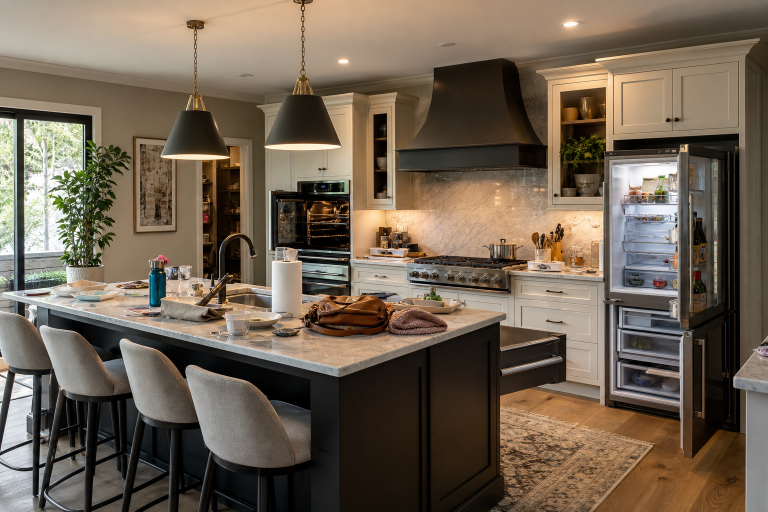
If you are planning a remodel or simply rethinking one wall of your kitchen, this is one of the decisions that changes how the room looks and how it functions every day. Shelving can make a kitchen feel lighter and easier to personalize. Cabinets can hide visual clutter and protect what you store. A mixed approach often gives you both benefits, but only if each zone has a clear job.
According to the National Kitchen and Bath Association 2024 Kitchen Trends Report, walk-in pantries, clutter reduction, and better storage remain central priorities in kitchen design. That is useful context because the open-shelf versus upper-cabinet debate is really a storage planning question first, and a style question second.
Should you choose open shelving, closed cabinets, or a mix?
Most homeowners do best with a mixed layout because it keeps daily-use items accessible while still giving you enough concealed storage for food packages, small appliances, and the visual clutter every working kitchen creates.
That answer holds up in real kitchens because each option solves a different problem. Open shelving improves visibility and display. Closed cabinets protect contents from grease, dust, and visual noise. A hybrid layout lets you place each where it earns its keep.
For many homes, the mistake is choosing based only on photos. Magazine-style shelving often looks calm because the contents are tightly edited. Real kitchens usually need space for mismatched packaging, backup groceries, kids’ cups, water bottles, and countertop appliances that are not especially attractive.
If your kitchen has limited pantry space, a fully open upper layout can create pressure on base cabinets and counters. If your kitchen feels boxed in or dark, removing a run of upper cabinets may improve the room more than replacing doors or finishes.
When does open shelving make the most sense?
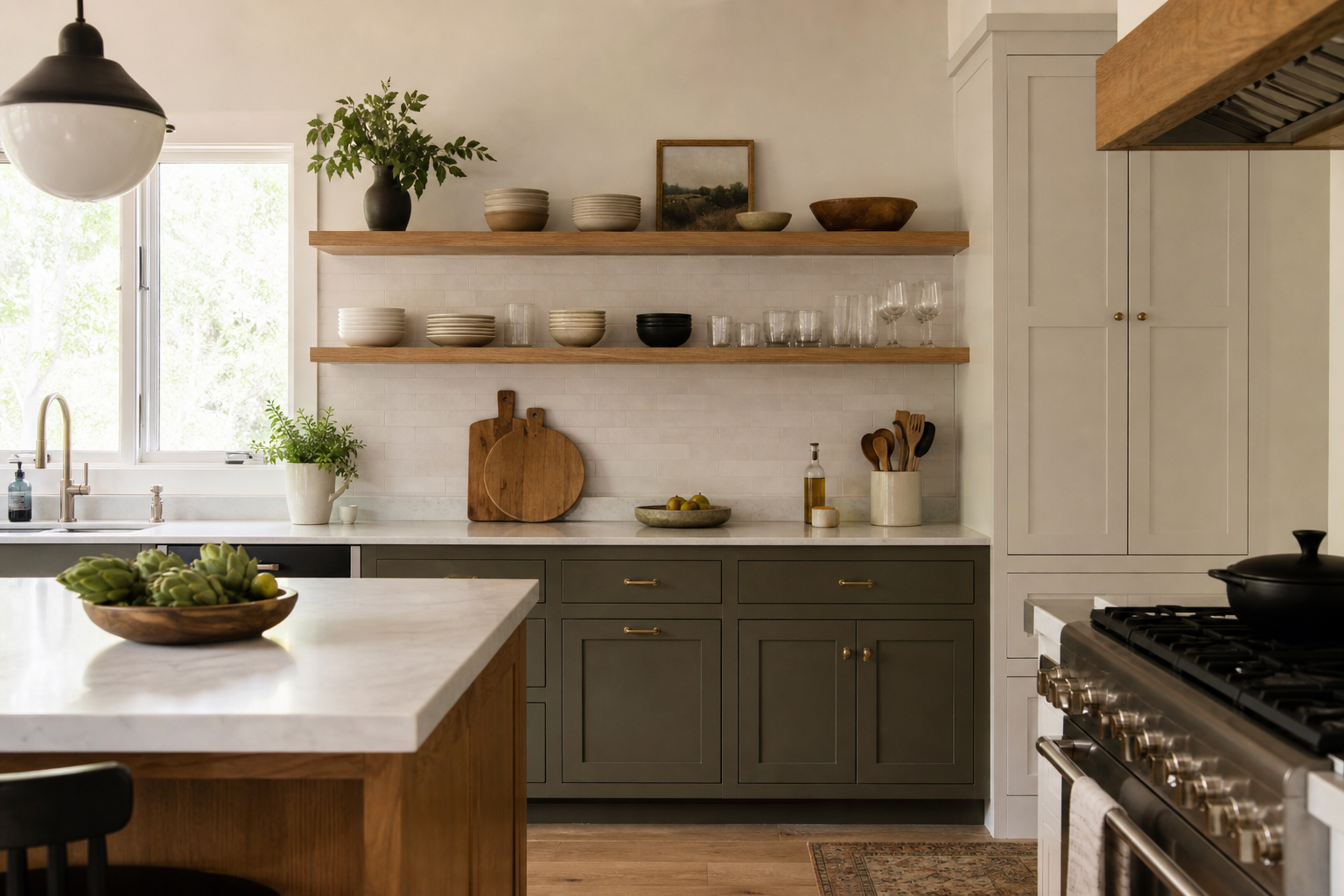
Open shelving works best when you store a small number of attractive, frequently used items and you are willing to keep them orderly. This option tends to fit kitchens where daily dishes, glasses, mugs, and serving pieces get regular use. In those cases, shelves can feel efficient because everything is easy to see and reach. They can also help a compact kitchen feel less top-heavy, especially on a short wall, around a window, or in a niche where full cabinets would look bulky.
Best uses for open shelves
The strongest use case is a controlled display zone, not bulk storage.
- Everyday plates and bowls near the dishwasher
- Glasses and mugs near a coffee station
- Cookbooks on a dry wall away from heavy splatter
- A short run of shelves framing a vent hood or window
- Decorative pieces mixed with practical items in a lightly used area
Open shelving also makes sense when you want easier access for people who dislike reaching into deep wall cabinets. In some households, that simple access improvement matters more than the style effect.
What are the tradeoffs of open shelves?
More visible storage means more visible mess, and that is the tradeoff most people underestimate.
Items on open shelves are exposed to normal kitchen residue. Guidance from appliance manufacturers such as Whirlpool and GE Appliances consistently recommends regular cleaning of surfaces near cooking zones because airborne grease settles over time. Shelves close to a range therefore need more frequent wiping than enclosed cabinets.
There is also less forgiveness for overflow. If your dish count grows, or if your pantry is already undersized, shelves can stop feeling airy and start feeling crowded very quickly. That is why open shelving usually works better as a limited feature than as the main upper-storage system.
When are traditional closed cabinets the better choice?
Closed cabinets are usually the better choice when you need maximum storage, easier visual control, and better protection for what you keep in the kitchen.
For busy households, this is often the most practical answer. Doors hide mismatched containers, infrequently used serving pieces, snack stock, vitamins, and small appliances. They also let you use the full depth and height of the storage area without worrying about how it looks from across the room.
If you cook often, closed cabinets near prep and cooking zones are especially useful. They contain the ordinary mess of a working kitchen without asking you to curate every shelf. In family kitchens, that alone can make the room easier to live with.
Cabinets also offer more flexibility for specialized storage accessories. The Kitchen Cabinet Manufacturers Association identifies organization features such as pull-outs, tray dividers, waste systems, and adjustable shelving as common functional upgrades in cabinet construction. Those features are hard to replicate with open shelves alone.
Where closed cabinets earn their keep
Some storage categories simply benefit from doors.
- Pantry overflow and dry goods in original packaging
- Plastic containers and travel mugs
- Small appliances such as blenders, mixers, and air fryers
- Cleaning supplies and household extras
- Holiday or occasional-use serving pieces
Call for a free estimate:
They are also the safer visual choice if your kitchen opens directly to the living or dining area. In an open-concept home, hidden storage can help the whole floor feel calmer and less cluttered.
What are the downsides of all-closed cabinetry?
A full wall of upper cabinets can make some kitchens feel heavier, darker, and more enclosed than they need to be. This matters most in smaller rooms, kitchens with low ceilings, or layouts with limited natural light. If that describes your space, swapping one cabinet run for shelves, a window wall, or a combination of short uppers and open sections can improve the room without reducing storage too drastically.
Cabinets can also encourage forgotten items. Because contents are hidden, duplicate purchases and dead storage are more common unless the interior is planned carefully.
What makes a mixed kitchen storage plan work well?
A mixed plan works well when open shelves are given a narrow, intentional role and cabinets handle the bulk of the storage load. That means you are not trying to make shelves do the job of a pantry. Instead, you use them where visibility and access are genuinely helpful. Everything else goes behind doors.
In practice, the most successful mixed kitchens usually follow a simple pattern: closed storage for volume, open storage for convenience or display. This is especially effective around focal points such as a range hood, coffee station, or sink wall.
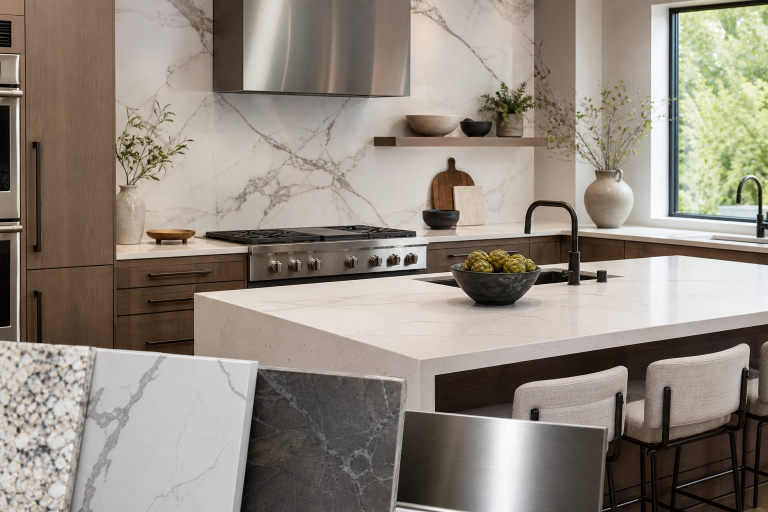
If you are also comparing surface materials, this countertop materials guide is a useful companion because countertop upkeep and shelf placement often affect each other in the same zones.
Good examples of a balanced layout
One well-placed shelf section often does more than a full wall of them.
- Closed uppers on most walls, with two shelves beside the hood
- Cabinets for dishes and food storage, with one shelf over a beverage station
- A tall pantry wall plus a short decorative shelf run near a window
- Mostly closed cabinetry, with open shelves in an alcove or end wall
How should your kitchen habits guide the decision?
Your daily routine should decide the layout more than design trends should.
If you cook most nights, buy groceries in bulk, and keep many tools on hand, closed cabinets will usually carry the kitchen better. If you have a smaller dish collection, maintain tidy surfaces easily, and want the room to feel more open, shelves may be worth adding. If more than one person uses the kitchen and organization habits vary, a mixed plan is usually easier to maintain.
Consider how often you realistically reset the room. A shelf arrangement that looks great in a photo can become frustrating if you do not want to edit and wipe it regularly. On the other hand, if your kitchen feels cramped and you already have a strong pantry setup, removing some uppers can be a smart design move rather than a storage mistake.
Measure what you actually store before committing. Count dinner plates, cereal boxes, mixing bowls, glasses, and small appliances. Homeowners often discover that a few categories need concealed space far more than expected.
What design details matter most before you decide?
Placement, shelf depth, support, and proximity to moisture or grease matter more than the styling details people usually focus on first.
For open shelves, keep depth practical for the items you use most. Very deep shelves can become awkward and visually heavy. Very shallow shelves may look clean but fail to hold standard dishes. Support hardware and wall attachment should match the load. Manufacturer hardware specifications are the source to check here, especially for floating shelf systems that hide brackets inside the shelf body.
For cabinets, look closely at door swing, interior adjustability, and whether the cabinet width matches what you plan to store. A beautiful cabinet that cannot hold your mixer or everyday platters cleanly is a planning error, not a style issue.
Finish choice matters too. Painted shelves and painted cabinets can both show wear in busy kitchens. Wood tones may hide minor scuffs better, while glossy finishes can show fingerprints more readily depending on color and sheen.
If you are updating several kitchen dimensions at once, Abodence also has a related guide on comfort-height fixtures that may help when storage planning overlaps with broader layout decisions.
What common mistakes should you avoid?
A common mistake is overestimating how much attractive, shelf-worthy storage you actually have.
Many homeowners also place open shelves too close to active cooking splatter, choose floating shelves without verifying load ratings, or remove too many uppers before solving pantry storage elsewhere. Another frequent problem is treating display shelves as a substitute for organization. If the base cabinets and pantry are already overloaded, shelves rarely fix that.
With closed cabinets, the usual mistake is building a solid wall of storage without considering sightlines. That can work in a large kitchen, but in a smaller room it may create more visual weight than you need. Glass-front cabinets are sometimes proposed as a compromise, but they still require orderly contents and do not provide the same visual concealment as solid doors.
Call for a free estimate:
FAQ
Are open shelves going out of style?
Open shelves are still used in current kitchens, but they are more often applied as a limited feature than as a full replacement for upper cabinets. NKBA trend reporting continues to show that storage performance and clutter control matter heavily, which supports a more balanced use of shelving.
Do closed cabinets add more resale appeal?
Broader buyer appeal usually comes from functional storage and a kitchen that feels easy to maintain, so closed cabinets often have the safer resale profile. A mixed design can also appeal widely when it keeps enough concealed storage in place.
Can you replace upper cabinets with shelves later?
Yes, that change is commonly possible if wall condition, support, and layout allow it. The key check is whether the wall can support the planned shelf system and whether you have enough remaining concealed storage elsewhere.
How many open shelves are enough in a kitchen?
One short section is enough in many kitchens. A pair of shelves beside a hood, sink, or coffee area often delivers the visual effect people want without giving up too much enclosed storage.
Is a mix better for small kitchens?
A mixed layout is often the most effective choice in a small kitchen because it can reduce visual heaviness without sacrificing all the hidden storage. The right balance depends on your pantry capacity, ceiling height, and how much you store every day.
If you are weighing a remodel and want help sorting storage priorities before you choose cabinetry, shelving, and surfaces, Abodence can help you compare the practical options for your specific kitchen. Please call a listed specialist for a free, no-obligation discussion.
Sources: National Kitchen and Bath Association 2024 Kitchen Trends Report, Woodwork Institute Architectural Woodwork Standards, Richelieu shelf hardware specifications, Whirlpool cleaning guidance, GE Appliances cleaning guidance, Kitchen Cabinet Manufacturers Association