How to Prevent Sewer Backups in a Nor’easter Storm
A Nor’easter can overload public sewers, private laterals, and drainage around a foundation at the same time. The practical goal is to keep stormwater away from the house, identify a vulnerable drain connection before the storm, and know when an active backup requires a licensed plumber rather than a household fix.

Call for a free estimate:
The U.S. Environmental Protection Agency explains that combined sewer systems carry both sewage and stormwater, and that heavy precipitation can exceed system capacity and trigger combined sewer overflows. Separate sewer systems, clogged private laterals, groundwater entering damaged pipes, and low basement fixtures can create similar indoor backup risks through different mechanisms.
Why do Nor’easters raise the risk of a sewer backup?
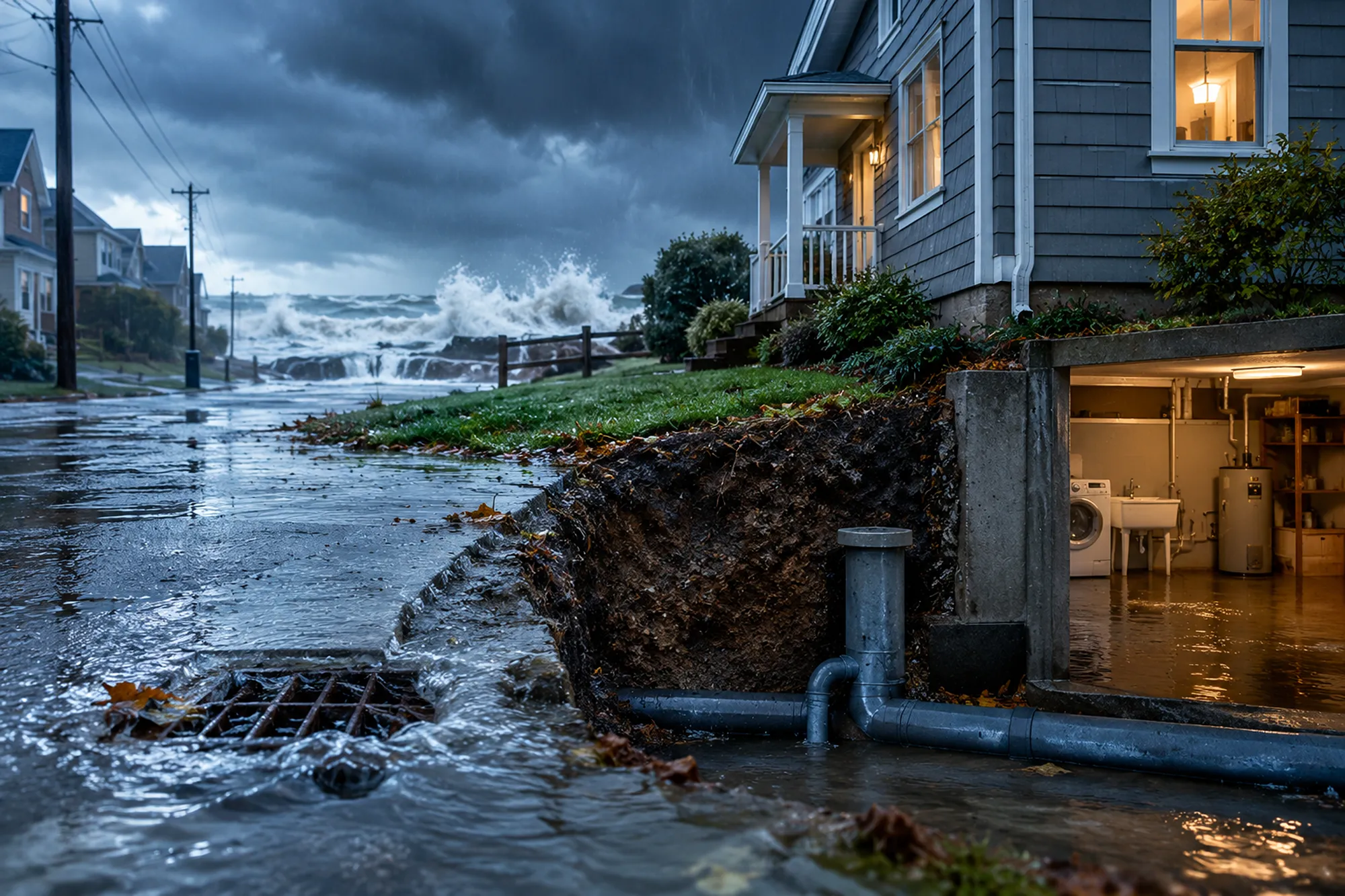
Long-duration rain, coastal flooding, and saturated ground can restrict where wastewater and runoff can go. A Nor’easter often brings persistent precipitation rather than one short downpour, leaving municipal pipes, catch basins, and soil drainage under continuing pressure. If the public sewer rises above the elevation of a basement drain or fixture, water can move toward the building through the service line unless the plumbing layout includes suitable backflow protection.
Local system design matters. In a combined system, rain enters the same network that carries wastewater. In a separate system, a private sewer lateral may still take on groundwater through cracks or failed joints, while roof runoff directed too close to the home can add water to the foundation area. The EPA’s combined sewer overflow guidance describes why wet-weather flow can overwhelm combined systems, but it does not mean every wet-weather backup is a municipal-system problem.
The lowest opening is commonly the first place trouble shows up. A floor drain, shower, laundry standpipe, or toilet below street level has less elevation margin than plumbing on the main floor. Gurgling fixtures, water appearing at a floor drain, or drainage slowing at several fixtures during a storm are reasons to stop sending water into the drain system and call a licensed plumber promptly.
What should you do before a Nor’easter arrives?
Keeping roof and surface water away from the foundation is the most direct homeowner task before sustained rain begins. Check that gutters are clear, downspout extensions discharge away from the foundation, and yard drains are free of leaves or sediment. These checks do not protect a home from a surge in the public sewer, but they reduce the avoidable burden created by runoff held near the house.
Do not connect roof leaders, sump discharge, or other clear-water drainage to a sanitary sewer unless the local utility expressly allows it. The New York City Department of Environmental Protection identifies illegal connections between stormwater sources and sanitary sewers as a contributor to sewer overflows and backups. Your city or town may have different rules and connection types, so the local sewer utility is the appropriate source for the property-specific requirement.
- Locate the main sewer cleanout and make sure it remains accessible to a plumber.
- Clear stored belongings away from basement floor drains and from the area around a sump pit.
- Move valuable and absorbent items off the basement floor when a major storm is forecast.
- Confirm that a sump pump, if the home has one, has power and a discharge route that sends water away from the foundation.
- Keep the contact information for a licensed plumber and the local sewer utility available before conditions worsen.
A sump pump addresses groundwater and foundation drainage, not a reverse flow from a sanitary or combined sewer. It should not be treated as a substitute for a properly selected backwater valve or for repair of a damaged building sewer.
When is a backwater valve worth considering?
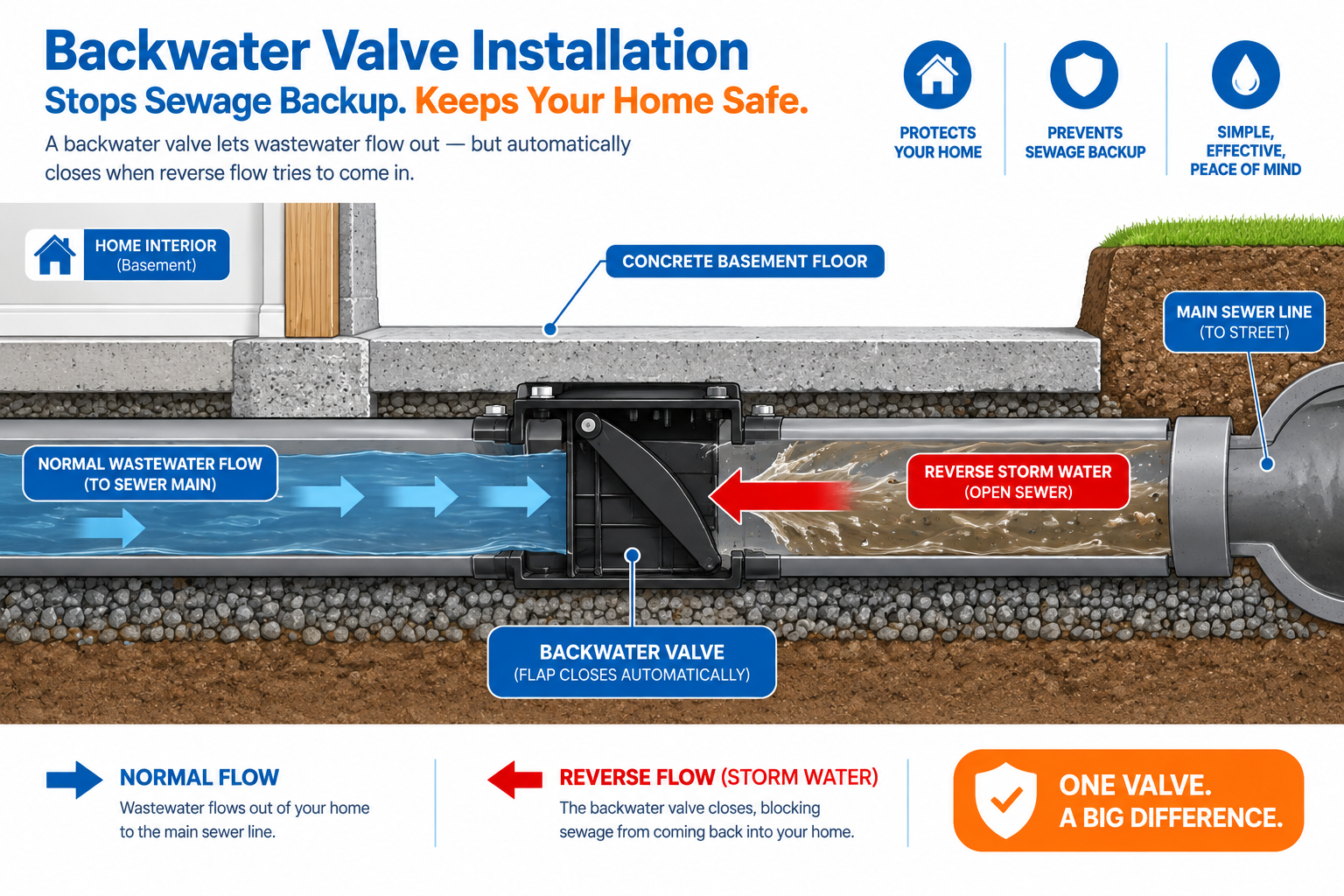
A properly designed backwater valve can block reverse flow into plumbing located below the level of an overloaded sewer, but it needs professional evaluation before installation. The 2024 International Plumbing Code, Section 715, requires backwater protection for fixtures installed below the elevation of the next upstream manhole cover in the public sewer, subject to the code’s stated conditions. Local adoption and amendments determine whether that provision applies at a particular address.
The device is not a universal add-on. A valve closes when flow reverses, which can also prevent lower-level fixtures from draining while it remains closed. A plumber needs to identify the pipe served, the direction of flow, whether upper-floor plumbing must bypass the valve, and where the valve can be reached for inspection. A quote that merely says “install backflow valve” without identifying those details leaves too much unresolved.
Ask the plumber whether the proposed work needs a permit, which fixtures will be protected, what happens to those fixtures while the valve is closed, and how the access cover will remain available after the floor is restored. The International Code Council provision is a drainage rule, not a guarantee that a valve will solve a blockage, broken lateral, or surface-water flooding problem.
Why maintenance access changes the value of the installation
A backwater valve has moving parts that must remain accessible and clear. The International Plumbing Code requires access to backwater valves, and the manufacturer instructions for the specific model set its inspection and service requirements. Always keep the valve accessible, covering the access point with finished flooring or permanent cabinetry can turn a simple inspection into a disruptive repair.
For a house with no low-level plumbing, changing the drainage layout may be more appropriate than installing a valve. The right choice depends on the elevation of fixtures, the sewer configuration, local code, and the reason water entered the building. More hardware is not automatically the better answer.
Which warning signs need a plumber before the storm?
Multiple fixtures draining poorly at once usually point to a problem farther downstream than a single sink trap. A toilet that bubbles when a nearby tub drains, water rising in a basement floor drain, or sewage appearing at a cleanout are conditions a licensed plumber should evaluate. A camera inspection may establish whether the issue is a blockage, root intrusion, offset joint, collapsed pipe, or another defect in the private line.
One slow bathroom sink does not establish a main sewer problem. A localized fixture issue may be limited to that fixture’s trap or branch drain, while a pattern involving several fixtures calls for a different level of investigation. Avoid running laundry, dishwashers, showers, or repeated toilet flushes when a suspected main-line restriction is present, because each use adds water that may have nowhere to go.
Written scope matters when comparing repair proposals. Ask whether the contractor is addressing a stoppage, repairing a private lateral, installing a backwater valve, or diagnosing a public-sewer surcharge. Those are separate problems with different work, permit, restoration, and warranty implications. Vague descriptions can make one quote appear lower because it excludes camera work, access restoration, or the actual repair method.
What should you do if sewage starts backing up indoors?
Stop using water fixtures and call a licensed plumber immediately when sewage enters the home through a drain, toilet, or cleanout. Do not attempt to clear a main drain, open piping, or handle contaminated water during the event. The EPA notes in its flood cleanup guidance that floodwater may contain sewage and other contaminants, which is why an indoor sewage backup should be treated as a professional cleanup and repair matter.
Also contact the local sewer utility if the backup occurs during widespread flooding or if neighbors report the same issue. The utility can determine whether there is a known public-system condition, but a municipal report does not diagnose the private lateral serving the house. A plumber can evaluate the building-side drainage system once conditions allow.
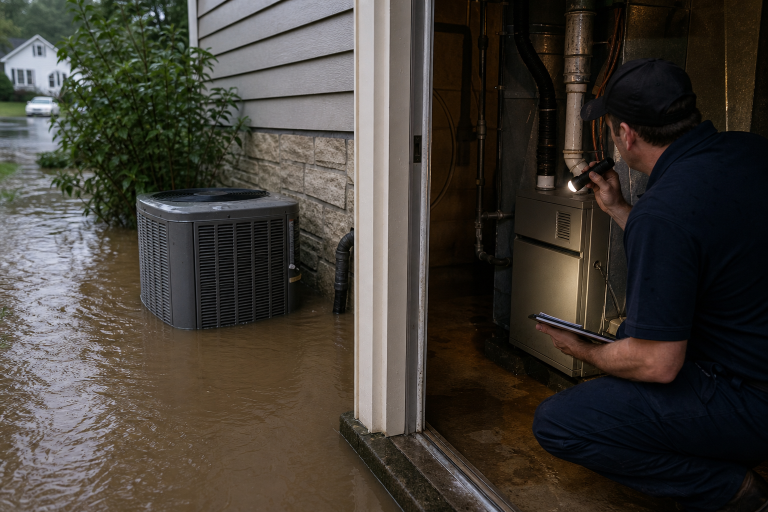
Keep people and pets away from the affected area, and do not restart basement equipment that has been exposed to water until it has been assessed by the appropriate qualified professional. For related precautions involving flooded heating and cooling equipment, see critical AC flood safety checks before restarting HVAC.
Call for a free estimate:
How can you reduce damage while planning a long-term fix?
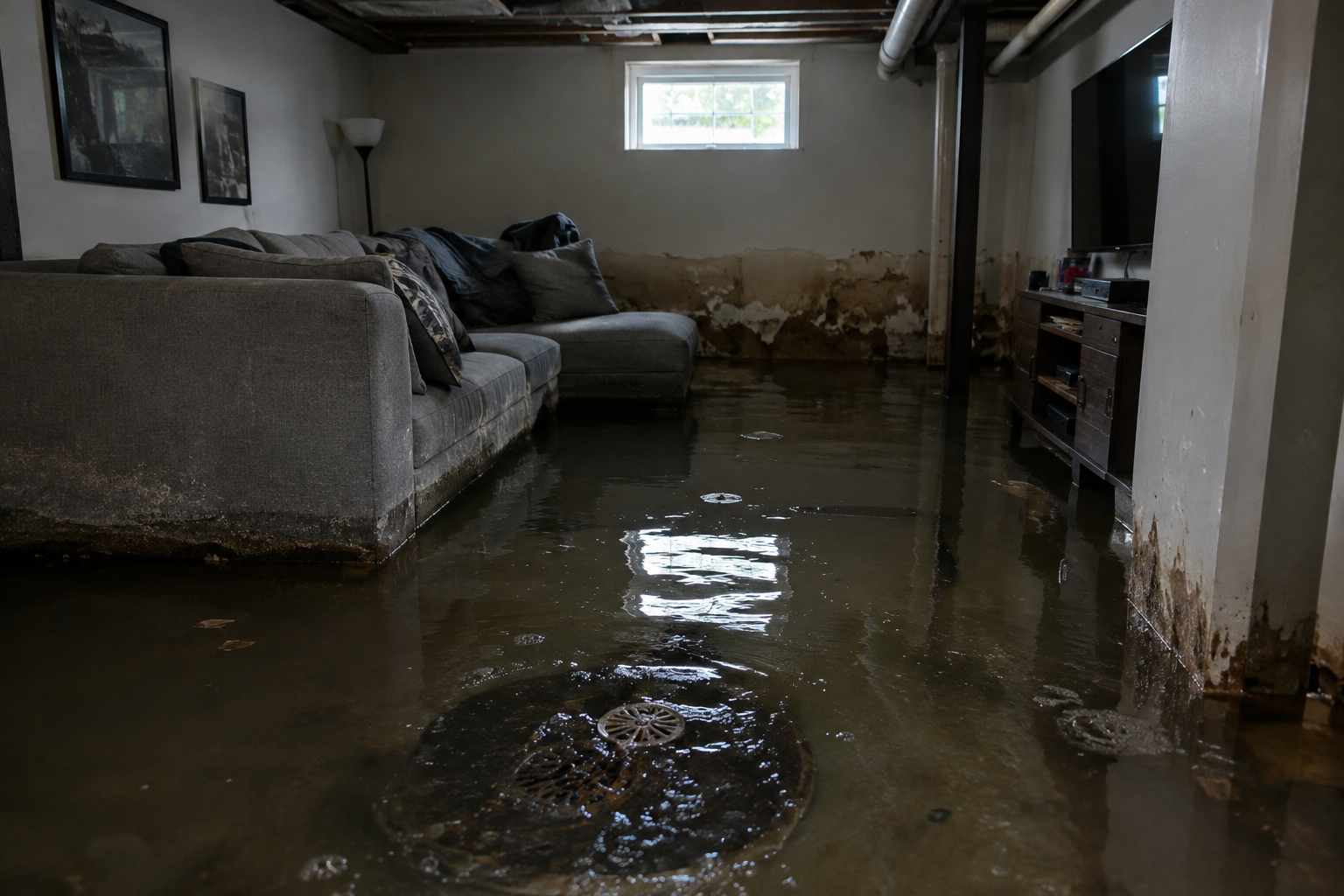
Raising stored items above the basement floor and keeping utilities, drains, and cleanouts accessible can limit what is exposed if water enters. Use shelving where feasible, store paper goods and textiles in sealed containers above anticipated water level, and avoid placing finished materials over plumbing access points.
A plumbing evaluation after a wet-weather event should distinguish between water entering from the sewer and water entering through walls, floor cracks, window wells, or a failed sump system.
Document the date, rainfall conditions, fixtures involved, and any communication from the sewer utility. Photos taken from a safe location and a written timeline can help a plumber compare symptoms with camera findings. They can also help you ask a targeted question about whether the next step is cleaning, repair, drainage work, a backwater valve, or a municipal follow-up.
FAQ
Can heavy rain cause a sewer backup even if the line was recently cleaned?
Yes, a recently cleaned private line can still receive reverse flow when an overloaded sewer rises above the home’s low fixtures. The EPA’s wet-weather guidance explains the capacity pressure created in combined systems, while a plumber must determine whether a private-line defect, a municipal surcharge, or another water source caused the specific event.
Will a backwater valve protect every drain in the house?
No, protection depends on where the valve is installed and which fixtures connect downstream of it. The 2024 International Plumbing Code treats backwater protection as a fixture-elevation issue, so a licensed plumber should map the drainage connections and explain any limits before work begins.
Should you use the toilet or washing machine during a suspected sewer backup?
No, stop adding wastewater to the drainage system when several fixtures are slow, gurgling, or backing up. Call a licensed plumber to assess the main drain, and contact the local sewer utility when the problem coincides with a widespread storm-related event.
Who should inspect a home after a Nor’easter sewer backup?
A licensed plumber should assess the drainage system, and qualified cleanup or trade professionals may be needed for affected building materials and equipment. If you need help sorting out the likely scope, request a written plumbing assessment that identifies the suspected entry path and the specific repair or protection being proposed. If you have questions or concerns, please call a listed professional for a free, no-obligation discussion.