Countertop Materials: The Hard Truth About Durable, Low-Maintenance Options
Countertop materials vary a lot in how well they handle scratches, stains, heat, and daily cleaning. If you want a surface that stays presentable without constant sealing, polishing, or worry, the best choices usually come down to quartz, porcelain, stainless steel, and some natural stones used in the right setting.

Call for a free estimate:
The hard part is that “durable” and “low-maintenance” are not always the same thing. A material can be very hard but still need periodic sealing. Another can be easy to clean but vulnerable to heat damage or visible scratching. The right pick depends on how you cook, how much upkeep you will actually do, and whether the counter is going in a kitchen, bath, laundry room, or bar area.
According to the NSF/ANSI 51 standard for food equipment materials, surfaces used in food-contact settings are evaluated for cleanability and material safety. In residential kitchens, that does not decide style or price, but it does frame the practical question correctly: a countertop should be easy to keep clean, resistant to normal use, and suited to the room.
Which countertop materials are durable and low-maintenance?
For typical homes, quartz and porcelain offer the strongest mix of easy care and everyday durability, while granite can also perform well if you are willing to keep up with sealing based on the slab maker’s guidance. Stainless steel is exceptionally tough and sanitary, but many homeowners do not like the industrial look or the way scratches show over time.
Laminate and solid surface can still be sensible choices in the right budget range, especially when low cost matters more than maximum lifespan. They are easier to damage than quartz or porcelain, but they are also easier on the budget and can be perfectly practical in lighter-use spaces.
How should you judge countertop durability in real life?
The useful way to compare surfaces is to look at stain resistance, scratch resistance, heat resistance, impact resistance, and maintenance requirements as separate issues. One countertop may excel in three categories and still be a poor fit for your habits.
For example, the National Kitchen & Bath Association identifies durability, cleanability, and maintenance expectations as core specification factors in kitchen planning guidance. In plain terms, that means you should ask what happens when oil sits overnight, when a hot pan lands on the surface, when a heavy pot hits an edge, and whether the material needs sealing to stay protected.
Stain resistance matters in everyday use
Nonporous materials usually give you the easiest ownership experience because they do not rely on a sealer to resist spills. Quartz, porcelain, stainless steel, and many solid-surface products are in this category. Some natural stones can stain if the sealer is worn or if the slab is naturally more absorbent.
Heat resistance is where some easy-care surfaces give up ground
Porcelain and many natural stones generally handle heat better than quartz, while manufacturer care guides for engineered quartz commonly warn against placing hot cookware directly on the surface. Caesarstone’s published care documentation and warranty guidance, for example, direct owners to use trivets or hot pads rather than setting hot pots or electric appliances directly on quartz.
Edge damage is different from surface wear
A countertop can resist scratches and still chip at corners or sink cutouts. Porcelain is a good example. It is very hard and highly resistant to staining, but edge detailing and fabrication quality matter because impact at a vulnerable edge can be the weak point.
Is quartz still a good all-around countertop material?
For many homeowners, quartz is the simplest all-around choice because it is nonporous, widely available, and easy to clean with mild soap and water. It also avoids the routine sealing that comes with many natural stone installations.
According to the U.S. Environmental Protection Agency Safer Choice program, everyday cleaning can often be handled with simpler products rather than harsh specialty chemicals. That lines up well with quartz care guidance from major manufacturers, which generally recommends mild soap, water, and non-abrasive cleaning methods.
Quartz does have limits. Most engineered quartz manufacturers caution against direct high heat, and dark or glossy finishes can show smudges more readily than lighter matte options. If your kitchen sees frequent baking, heavy cast-iron use, or a lot of hot pans moving around, that tradeoff should be taken seriously.
Is a porcelain countertop better than quartz for durability?
Porcelain can outperform quartz in heat resistance and UV stability, which makes it especially attractive for sunny rooms, outdoor kitchens, and homeowners who want a very low-absorption surface. Many porcelain slab manufacturers also market it as resistant to stains, scratches, and high temperatures when properly fabricated and installed.
The tradeoff is less about day-to-day cleaning and more about fabrication and impact behavior. Thin large-format porcelain requires an installer who is experienced with the product category, especially around cutouts, support, and edge treatment. If the fabricator is excellent, porcelain can be one of the most durable low-maintenance options available.
Where does granite fit if you want low maintenance?
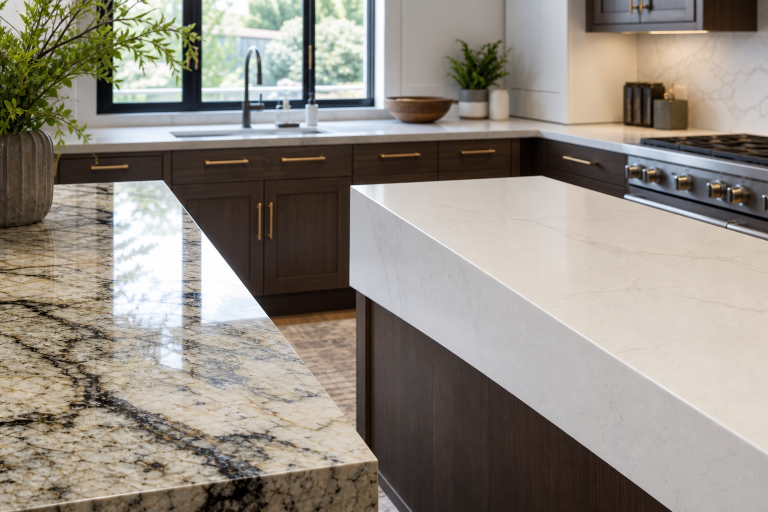
Granite can be a durable long-term countertop, but it is only low-maintenance if you are comfortable with periodic sealing and the slab you choose is relatively dense. The Natural Stone Institute, has long distinguished among stone types and finishes because porosity and care needs are not identical across all slabs.
That means granite is not one uniform answer. Some granites are very forgiving in daily use. Others need more attention to keep oils and spills from soaking in. A good fabricator should explain the specific slab’s care needs rather than speaking about “granite” as if every piece behaves the same way.
For homeowners who want natural variation and strong heat tolerance, granite still makes sense. For homeowners who know they will never reseal a counter, a nonporous product is usually the cleaner choice.
Are marble, soapstone, and butcher block too high-maintenance?
These materials can work beautifully, but they are usually chosen for a specific look and feel rather than for minimum upkeep. If low maintenance is the top priority, they are rarely the first recommendation.
Marble
Etching and staining risk are the main reasons marble is harder to live with in a busy kitchen. The Natural Stone Institute’s care guidance distinguishes etching from staining because acidic foods can dull the finish even when the stone is sealed. Homeowners who love marble often accept that wear as part of the look.
Call for a free estimate:
Soapstone
Dense soapstone is less fussy about staining than marble, but it can scratch and develop a lived-in patina. Some owners oil it to deepen the color, which is a look preference rather than a structural need on every slab.
Butcher block
Wood counters are workable and repairable, but they demand regular maintenance. The U.S. Department of Agriculture Food Safety and Inspection Service notes that cutting surfaces should be kept smooth and cleaned thoroughly, and heavily worn surfaces can become harder to sanitize. In a countertop context, that means water management, refinishing, and surface condition all matter.
Can laminate or solid surface still be smart low-maintenance choices?
Yes, both can be smart choices when budget, easy cleaning, and a softer visual style matter more than maximum heat and scratch resistance. They are not the toughest materials on the market, but they can still be the right buy.
Laminate has improved a lot in appearance. It is easy to wipe down and often costs much less than stone or quartz. The main compromises are heat sensitivity, seam visibility in some layouts, and lower resistance to deep cuts or impact damage.
Solid surface, sold in product lines such as Corian, is nonporous and repairable in ways laminate is not. Manufacturer literature from Corian Design notes that many marks can be restored because the material is consistent through its thickness. That can be a real advantage in bathrooms, laundry rooms, and moderate-use kitchens.
If you are comparing broader remodeling choices, materials are only one part of the decision. Fixture height, sink configuration, and room use also influences what is best for a particular area. Abodence covers a related planning issue in this guide to comfort-height fixtures.
What countertop material is best for kitchens versus bathrooms?
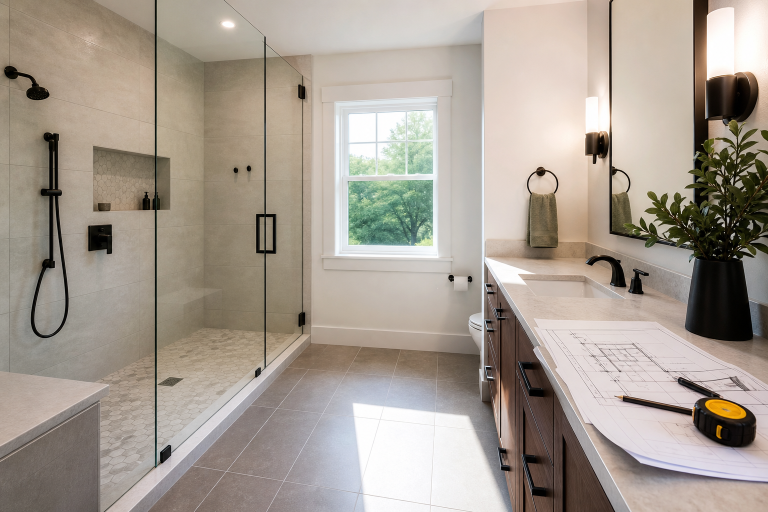
Kitchens usually benefit most from quartz, porcelain, granite, or stainless steel because cooking adds heat, impact, and stain exposure that bathroom counters do not face. Bathrooms are often more forgiving, which opens the door to solid surface, laminate, quartz, porcelain, and many other stone types that might feel too delicate for a hard-working kitchen.
In a bathroom, your biggest practical concerns are usually water around the sink and cleaning frequency. In a kitchen, the counter has to deal with food prep, hot cookware, and heavier use across larger spans.
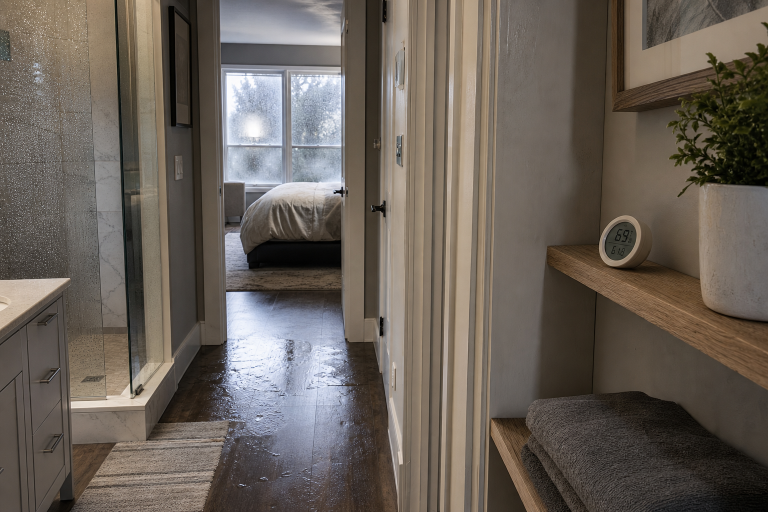
If moisture is part of the larger room problem, the surrounding space matters as much as the countertop. Abodence explains that issue further in this article on moisture and ventilation problems.
How much do durable countertop materials cost in 2026?
Based on 2026 figures from Angi and HomeAdvisor marketplace pricing, laminate commonly runs about $20-50 per square foot installed, solid surface about $35-85, granite about $40-100, quartz about $50-120, marble about $40-180, butcher block about $40-100, stainless steel about $70-215, and porcelain slab counters often start around the midrange of quartz and rise with fabrication complexity. These are broad installed ranges, not a guaranteed quote.
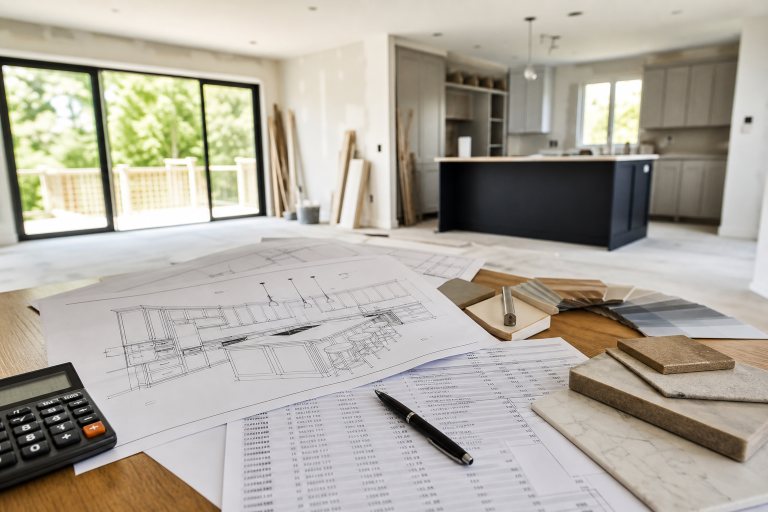
The biggest variables are slab availability, edge profile, cutouts, seam layout, local labor rates, and whether cabinets need leveling or reinforcement. A low quote can leave out tear-out, sink cutout work, backsplash details, or template revisions. That is a common source of confusion in remodeling proposals.
Getting three written quotes is the practical approach. Ask each fabricator to specify the exact material line, thickness, finish, edge profile, sink cutout details, backsplash scope, and what care or sealing the product requires after installation.
Which countertop materials are easiest to keep looking clean?
Lighter colors, matte or honed finishes, and less dramatic pattern movement usually hide daily smudges better than dark glossy surfaces. The easiest material to maintain can still look messy if the finish makes every fingerprint obvious.
- Best for low visible upkeep: light or mid-tone quartz, matte porcelain, and patterned granite with forgiving movement
- More likely to show marks: black polished stone, glossy dark quartz, and stainless steel with strong directional light
- Most upkeep-sensitive appearance: polished marble and wood around sinks
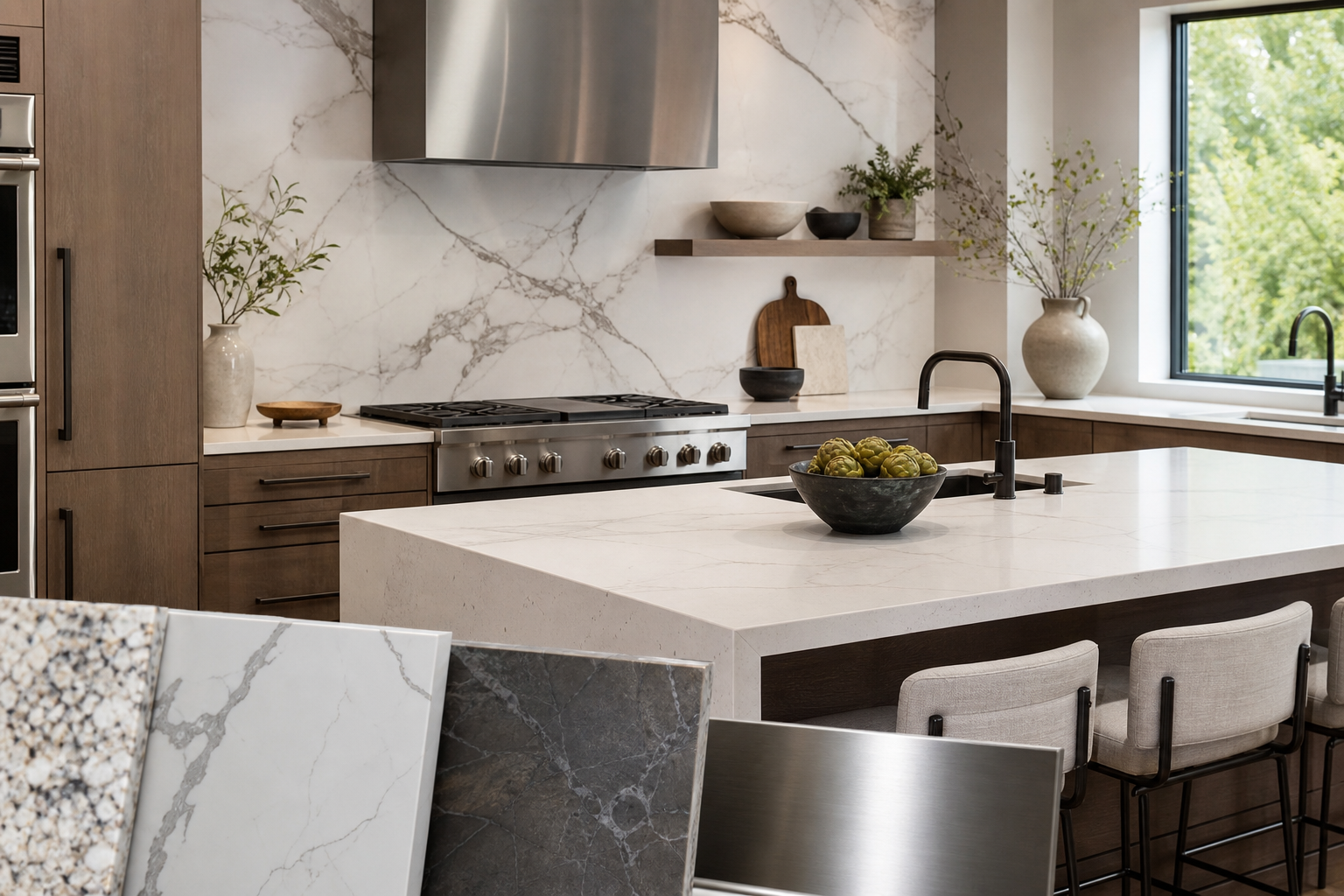
This is where showroom samples can mislead you. A small sample under store lighting does not show how a full island will look next to windows, pendants, and everyday clutter.
What is a good countertop material for most homeowners?
Quartz is often the best fit for many homeowners because it balances low maintenance, broad design choice, and reliable day-to-day durability without requiring routine sealing. Porcelain is a strong alternative when heat resistance, UV stability, or a thinner contemporary look matters more.
Granite is still a good answer if you want natural stone and accept the care requirements of the specific slab. Laminate and solid surface remain sensible when budget or repairability leads the decision. Stainless steel is excellent for performance, but it is more of a style choice in residential spaces.
The right decision is usually the one that matches your actual habits, not the one with the most prestige. If you leave hot pans out, prioritize heat tolerance. If you will never reseal a surface, choose a nonporous material. If your remodel budget is tight, a well-chosen laminate may serve you better than stretching for a stone you do not really want to maintain.
FAQ
What countertop material lasts the longest with the least maintenance?
Quartz and porcelain are often the strongest low-maintenance choices because both are easy to clean and do not require routine sealing in normal residential use. The better fit depends on whether you value quartz’s broad style range or porcelain’s stronger heat and UV performance.
Is granite more durable than quartz?
Granite can be more heat-tolerant, but quartz is usually easier to maintain because it is nonporous and does not need periodic sealing. The practical winner depends on whether your priority is lower upkeep or natural stone performance.
Call for a free estimate:
Are porcelain countertops hard to damage?
Porcelain resists stains, heat, and scratching very well, but edge impacts and poor fabrication can still cause problems. Installer experience matters more with porcelain than many homeowners expect.
What is the cheapest low-maintenance countertop option?
Laminate is usually the lowest-cost easy-care option based on 2026 installed pricing ranges. It gives up ground on heat and scratch resistance, but it can still be a smart buy in many kitchens, baths, and utility spaces.
Do all stone countertops need sealing?
Many natural stone countertops do need sealing, but the schedule depends on the specific stone and slab density. A fabricator should give care instructions for the exact material you are buying rather than a generic statement about all stone.
If you are narrowing down countertop materials and want help sorting the tradeoffs for your room, budget, and upkeep tolerance, Abodence can help you compare options and connect with the right next step for your project. Please call a listed professional for a free, no-obligation discussion.
Sources: National Kitchen & Bath Association, Caesarstone care and warranty documentation, Natural Stone Institute care guidance, Corian Design product literature, Angi 2026 pricing data, HomeAdvisor 2026 pricing data