Prepare for Heavy Rain & Possible Sewage and Wastewater Issues.
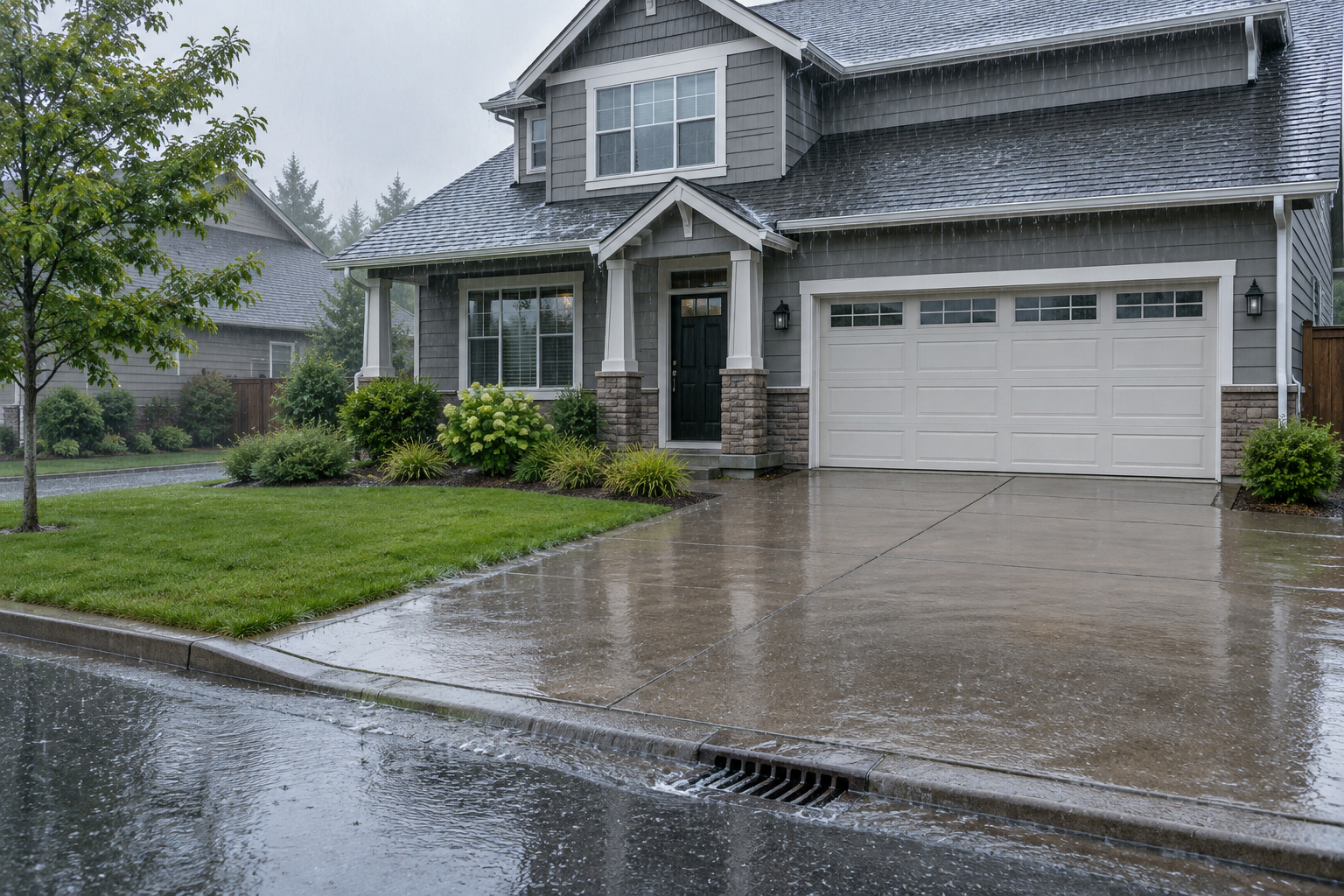
Heavy rain can overwhelm parts of a public sewer system and force wastewater back through the lowest openings in a home, including floor drains, tubs, showers, and toilets. A sewage or wastewater backup is a contamination event, not a routine plumbing inconvenience. If this happens, a good approach is to stop using fixtures, keep people and pets away from the affected area, report the event, and bring in qualified help.

Call for a free estimate:
Preparation will not stop a municipal system from becoming overloaded. It can, however, reduce confusion when conditions change quickly, preserve useful records, and help a plumber or restoration contractor separate a private drain problem from a wider sewer issue.
How can heavy rain cause wastewater to back up indoors?
Public sewer capacity can be exceeded when rainwater enters systems that also carry wastewater, creating pressure that can push water and sewage toward connected buildings. The U.S. Environmental Protection Agency’s combined sewer overflow guidance explains that combined systems carry both stormwater runoff and sewage in the same pipes, and heavy precipitation can exceed their capacity.
Not every neighborhood has a combined sewer, and a backup during heavy rain does not automatically prove that the public system is at fault. A blocked building drain, damaged private sewer lateral, tree-root intrusion, or a restriction farther along the line can produce similar symptoms. The U.S. Environmental Protection Agency also identifies wet-weather conditions as a contributor to sanitary sewer overflows, which occur when sewage is released before reaching a treatment facility.
Look for wastewater rising at several low fixtures, especially while nearby homes report trouble, because it may point to a system-wide condition. A problem isolated to one fixture may have a more local cause. Neither pattern is a reason to attempt a repair yourself, because wastewater can contain contaminants and the cause may be outside the visible drain.
Do not flush a toilet or run sinks, showers, dishwashers, or laundry equipment once wastewater is backing up.
What should you do when a sewage backup starts?
Immediately stop adding water to the drainage system, keep everyone out of the affected area, and call your local sewer utility or public works emergency line to report the backup. The utility can determine whether an incident has been reported in the area and may advise whether crews are responding to a public-system problem.
Call a licensed plumber or qualified emergency restoration provider as well, particularly if wastewater is still rising, more than one fixture is involved, or the source is uncertain. A utility report does not diagnose a private lateral, and a plumber cannot determine municipal responsibility simply by looking at a floor drain.
- Stay out of standing wastewater and prevent pets from entering the space.
- Keep children away from the room and close doors if that can be done without approaching contaminated water.
- Do not use drain chemicals, a household drain snake, or a shop vacuum on sewage-contaminated water.
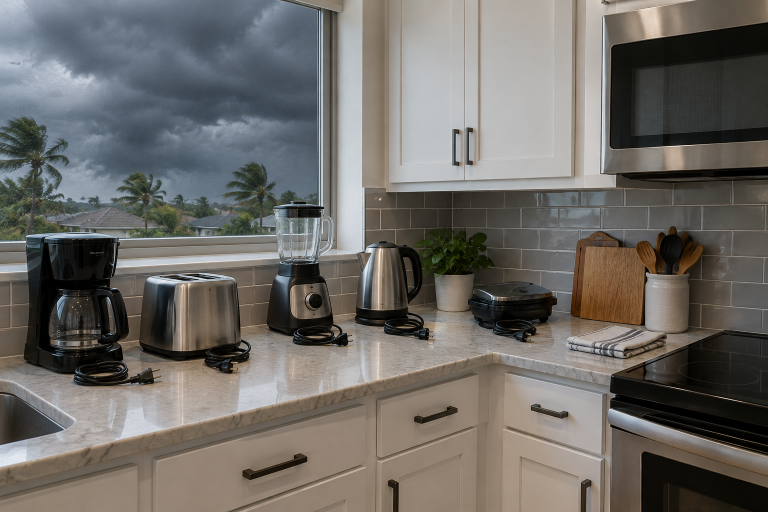
- If water has reached electrical equipment, outlets, or appliances, do not enter the area to switch anything off. Contact emergency services or a qualified electrician as appropriate.
- Take photos or video from a dry, safe location before cleanup begins, if doing so does not delay an emergency call.
What can you prepare before a severe rain forecast?
Save the phone numbers for your utility’s emergency line, a licensed plumbing company, your insurance carrier, and a restoration provider where everyone in the household can find them. Sign up for local weather and municipal alerts if your city or county offers them.
Document the condition of finished basements, utility rooms, and stored belongings before storm season. Date-stamped photos, a basic inventory, and receipts for higher-value items give you a record of pre-loss condition. Keep digital copies somewhere other than the basement, such as secure cloud storage. Move portable belongings, paper records, and irreplaceable items off a basement floor when heavy rain is expected. Do not store valuables directly under plumbing cleanouts or beside floor drains.
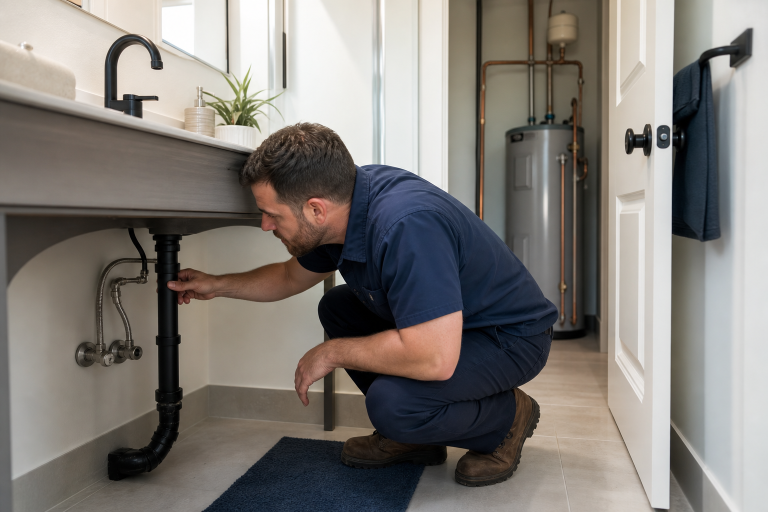
Ask a licensed plumber to identify the building drain, private sewer lateral, accessible cleanouts, and any existing backwater valve. The 2024 International Plumbing Code addresses backwater valves in Section 715 for building drains subject to backflow, but model-code provisions become enforceable only when adopted and amended by the local authority. A plumber and local code office can explain whether a valve fits your drain layout and local requirements. It is not a universal retrofit, and it requires a design that does not create a new drainage problem inside the home.
Roof drainage also deserves attention before prolonged rain. Gutters and downspouts should direct roof runoff away from the foundation where site conditions allow, which is separate from a sewage backup but can reduce avoidable water around the house. For related exterior warning signs, see roof replacement warning signs and repair decisions.
What should a professional assessment cover after a backup?
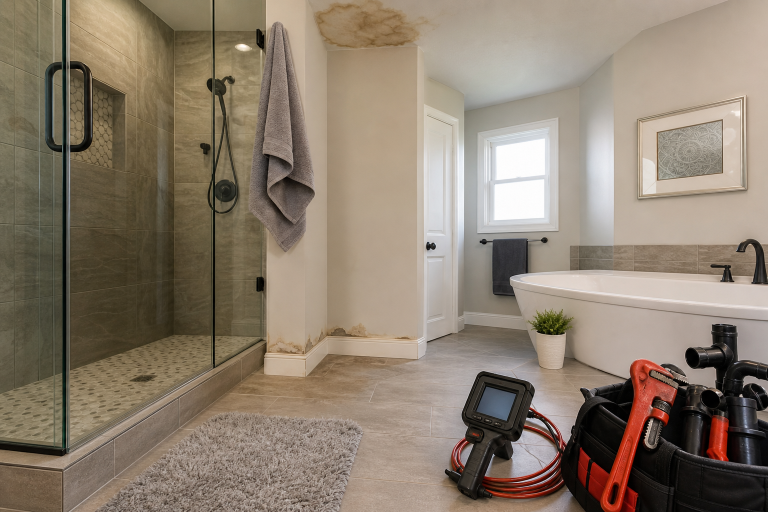
A qualified assessment should establish the source, affected areas, safety limits, and cleanup scope before anyone treats the event as a simple drain clog. Ask the plumber to explain whether the evidence points to the building drain, the private lateral, or a condition beyond the property line. If camera inspection is proposed, the written scope should say what section of pipe will be inspected and whether access is safe at that point.
The ANSI/IICRC S500 Standard for Professional Water Damage Restoration provides an industry framework for evaluating water intrusion, contamination conditions, drying, cleaning, and documentation. In a sewage event, the restoration scope should distinguish between items that can be cleaned by an appropriate professional process and materials that must be removed because they cannot be adequately restored.
A useful written estimate identifies the rooms and materials involved, containment measures, removal and cleaning work, equipment use, disposal, and any testing or inspection proposed. It should also state what is excluded. Vague phrases such as “sanitize basement” leave too much room for disagreement about what will actually be removed, cleaned, or documented.
Get clarity on the boundary between emergency stabilization and full restoration. Removing contaminated materials may be necessary before repairs begin, while rebuilding walls, replacing flooring, and reconnecting equipment are separate scopes. Bundling every task into one unclear price can make it difficult to compare bids or understand what your insurer needs.
What should be cleaned, removed, or left alone?
Contaminated water calls for controlled professional cleanup rather than ordinary household cleaning. The EPA’s publication What to Do After a Sewage Backup advises avoiding contact with sewage, restricting access to contaminated areas, and using appropriate protective measures during cleanup. It also advises discarding items that cannot be adequately cleaned.
Porous finishes and belongings create the hardest decisions because contamination can move below the visible surface. A restoration professional should document the materials involved and explain the basis for removal or cleaning. Do not accept a generic promise that every item can be “disinfected” without an itemized scope and a clear description of the process.
Leave electrical, gas-fired, and HVAC equipment alone if it was reached by wastewater until the appropriate qualified professional has evaluated it. Restarting equipment before an inspection can create an additional hazard or spread contamination through the home. If floodwater has affected heating or cooling equipment, this guide to AC flood safety checks before restarting HVAC explains why inspection comes before operation.
Call for a free estimate:
Who is responsible for the sewer line and the cleanup bill?
Responsibility depends on local ordinances, the location of the failure, and the terms of any insurance policy. Many communities divide responsibility between the public main and the private building sewer or lateral, but the precise boundary differs by jurisdiction. Request the utility’s written explanation of its findings rather than relying on a verbal assumption.
Insurance coverage also depends on the policy and endorsements in force before the event. Send the carrier the photos, utility report number, plumber’s findings, invoices, and a list of damaged property. Do not dispose of records or damaged materials until the insurer has explained its documentation requirements, except where removal is necessary to address an active safety or contamination condition.
A contractor should not promise coverage or tell you that a particular cause will definitely be paid. The practical approach is to document the event carefully, authorize only the work needed to make the area safe and stable, and obtain written scopes for later repair work.
FAQ
Can heavy rain make sewage come up through a toilet?
Yes, an overloaded sewer system or a blockage in a building’s drain path can force wastewater toward low fixtures, including toilets. Stop using water fixtures, report the event to the local utility, and arrange a qualified plumbing assessment.
Should you keep using water if only one drain is backing up?
No, adding water can worsen a developing backup or send more water toward an obstructed drain line. Avoid using fixtures until a qualified plumber has identified the cause and confirmed that normal drainage can resume.
Will a backwater valve prevent every sewage backup?
No, a backwater valve may help in a suitable drainage configuration, but it must be selected and installed for the specific piping arrangement and local code requirements. It does not correct a damaged private lateral, a blocked internal drain, or every form of water intrusion.
How quickly should sewage-contaminated materials be addressed?
Prompt professional stabilization is appropriate because sewage contamination can spread through finishes and belongings. Keep people and pets away, document conditions from a safe area, and call a qualified restoration provider rather than attempting household cleanup.
If you need help sorting out a rain-related backup, request a written assessment from a licensed plumber or qualified restoration provider that clearly separates immediate safety work from longer-term repairs. Please call a listed specialist for a free, no-obligation discussion.