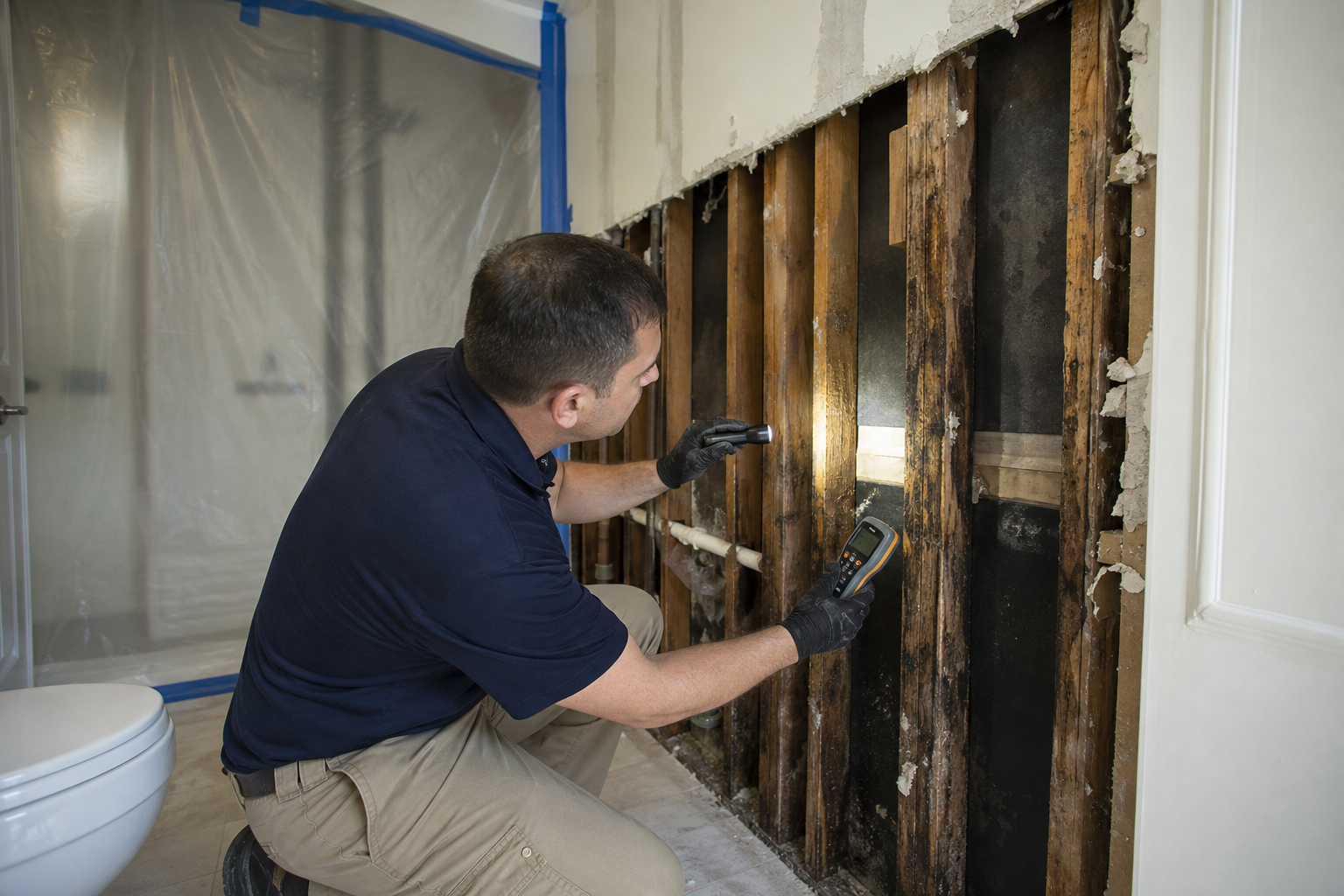
When Mold and Rot Are Behind Walls: What Homeowners Should Do Next
Hidden mold and rot behind walls should be treated as a controlled investigation, not a cosmetic patch. Once drywall comes off, the right next step is to confirm how far moisture damage extends, stop the water source, remove damaged materials, and rebuild only after the area is dry and sound.

Call for a free estimate:
That approach protects your budget as much as the wall itself. A contractor who starts closing up the wall before the moisture source is fixed is skipping the part that matters most.
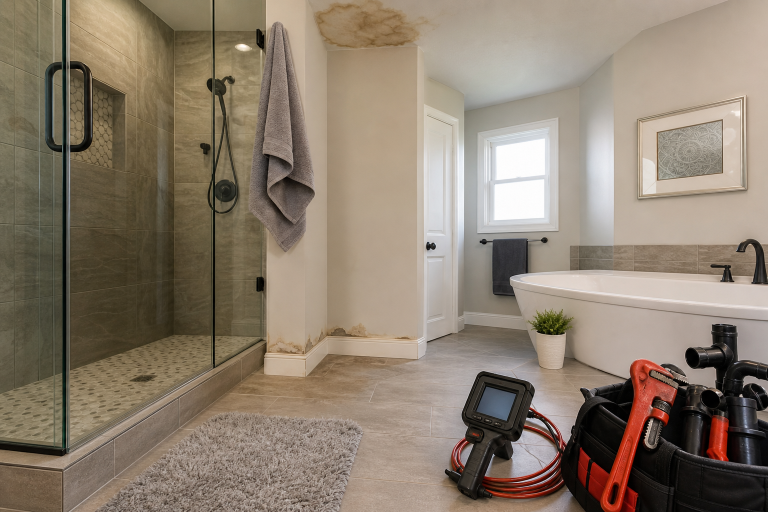
Behind-wall damage usually turns up during bathroom remodels, leak repairs, shower replacement, or window and exterior wall work. Sometimes the damage is limited to a small section of drywall and trim. In other cases, the opening reveals decayed framing, damaged insulation, or visible fungal growth that changes the scope of the job. The practical issue is not just what was found. It is how the work is contained, documented, priced, and sequenced from that point forward.
If the damage started near a tub or shower assembly, related leak patterns can overlap with plumbing and enclosure failures. Abodence covers those warning signs in Leaking shower or tub causes: serious signs, smart fixes, and what they mean.
What should happen first when mold or rot is found behind a wall?
The first priority is to stop the moisture source and define the affected area before more demolition happens. According to the U.S. Environmental Protection Agency, mold cleanup should begin only after the moisture problem has been fixed, because mold will return if the water issue remains.
In practice, that means the crew should pause long enough to identify whether the source is a plumbing leak, failed shower waterproofing, roof or flashing intrusion, condensation, or another pathway. A clean-looking replacement wall does not solve hidden moisture.
You should also expect the damaged area to be documented. Good documentation usually includes photos, notes on what materials are affected, and a clear statement about whether the contractor can handle the repair within the original trade scope or whether another specialist is needed. This is where vague language often starts to create billing disputes later.
How do professionals determine whether the problem is minor or extensive?
A limited problem is usually confirmed by tracing damage to a defined area and checking whether surrounding materials remain dry and structurally sound. The Institute of Inspection Cleaning and Restoration Certification publishes the ANSI/IICRC S520 Standard for Professional Mold Remediation, which is the named industry standard many remediation firms use to define containment, removal, and cleaning practices.
That does not mean every discovery requires a full remediation company. If a small plumbing leak damaged only a localized section of drywall or base trim, the repair may stay within a normal renovation scope. If framing is soft, insulation is wet, or visible growth extends beyond the initial opening, the job often needs a more formal damage assessment and tighter containment.
Signs the scope may stay limited
These conditions often point to a smaller repair area:
- Damage is confined to one wall cavity or one section around a known leak
- Framing remains firm and keeps its shape
- Insulation is dry outside the immediate leak area
- Subflooring or adjacent finishes show no spread
- The water source is obvious and recent
Signs the scope may expand
These findings often increase labor, disposal, and rebuild costs:
- Wood crumbles, flakes, or can be penetrated easily
- Multiple wall cavities show staining or deterioration
- The back side of tile assemblies or shower walls shows long-term moisture exposure
- Damage reaches the subfloor, ceiling below, or exterior sheathing
- The source is still active or cannot be confirmed quickly
If the problem appears tied to broader moisture movement in the house, attic and ventilation conditions can also matter. Abodence explains that related issue in Attic moisture problems: smart warning signs and ventilation fixes for homeowners.
When does hidden wall damage require a specialist instead of a general contractor?
A specialist is usually warranted when the damage is widespread, the source is uncertain, or the work needs formal containment and cleaning procedures. The New York City Department of Health and Mental Hygiene guidance on mold cleanup distinguishes smaller cleanup from larger contamination that may require professionals trained to manage containment and removal.
For a homeowner, the practical dividing line is scope control. A general contractor may be fully appropriate for opening a wall, replacing a short section of decayed framing, and rebuilding after a confirmed plumbing repair. A remediation contractor becomes more likely when contamination extends beyond a small area, when dust control is critical, or when multiple building materials are affected.
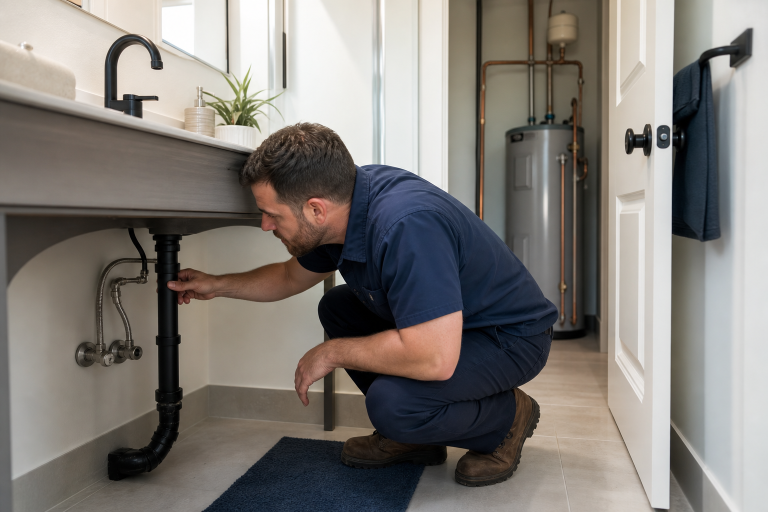
You may also need more than one trade. A plumber might stop the leak. A remediation crew might remove contaminated materials. A carpenter or remodeler might rebuild the wall. Problems start when one bid quietly assumes another company will handle part of the work, but the quote never says so.
What should a quote include after mold or rot is discovered?
A usable quote should separate investigation, removal, drying, and rebuild work into clear line items. According to the Federal Trade Commission, homeowners should get contract terms in writing, including a description of the work and materials.
That written scope should identify what is included now and what would trigger a change order later. Without that detail, a low initial number can turn into a string of open-ended add-ons once the wall is open.
Key items to look for in the scope
- Demolition limits, including how much wall, flooring, or ceiling may need to be opened
- Moisture-source repair responsibility, such as plumbing, waterproofing, or exterior flashing
- Containment and dust-control steps
- Whether insulation, framing, sheathing, or subfloor replacement is included
- Drying time and whether moisture verification is part of the job
- Disposal charges
- Rebuild details, including drywall, backer board, waterproofing products, trim, and paint
- Allowance language for hidden damage that cannot be priced until opened further
Call for a free estimate:
If the wall is part of a shower or tub surround, ask for the exact waterproofing system to be named in writing. Manufacturer installation instructions from Schluter, LATICRETE, and Johns Manville all specify system-specific steps and compatible materials. A quote that says only “replace wall and tile as needed” is too vague for a wet-area rebuild.
How much can unexpected mold or rot behind walls cost to fix?
Costs can range from a few hundred dollars for a very small localized opening and patch to several thousand dollars when removal, drying, framing repair, and finish restoration are all involved. For broad context on interior repair pricing, the 2024 HomeAdvisor marketplace data and 2024 Angi pricing guides both place mold remediation and water-damage-related repairs in ranges that vary sharply by square footage, material type, and whether structural components need replacement.
Those marketplace figures are useful for ballpark planning, but they are not a substitute for a scope-specific quote. The biggest cost drivers are how far the damage extends, whether a wet-area waterproofing system must be rebuilt, and whether specialty containment is required.
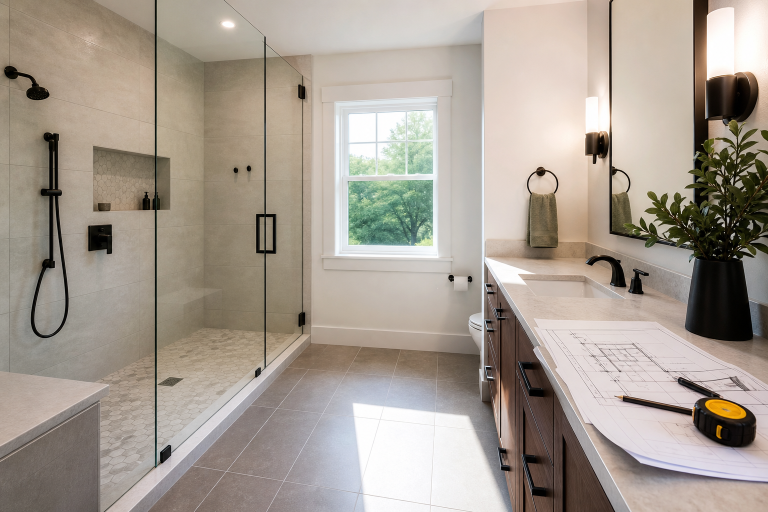
In a bathroom, the expensive option is not always full replacement of the whole room. If the damage is truly isolated and the waterproofing tie-in can be rebuilt correctly, a partial repair may be the better job. If the opening reveals failed backing, spread into the floor, or an older assembly that cannot be reliably tied back together, partial work can become false economy.
Can you stay in the house while this work is being done?
Many homeowners can stay home during a small, contained repair, but that depends on the size of the affected area and how the contractor isolates the work zone. The EPA states that cleanup methods and precautions differ by the size of the mold problem and the materials involved.
For a bathroom wall opened in one room, the practical questions are whether the area is sealed off, whether dust and debris are being controlled, whether another bathroom is available, and whether drying equipment will run for several days. If damage extends into multiple rooms or a main bath is out of service, staying elsewhere for part of the project may simply be more practical.
What mistakes should you avoid when the wall is already open?
The biggest mistakes are approving rebuild work before the source is fixed, accepting vague change orders, and assuming all hidden damage will be visible on day one. Once demolition starts, some contractors price responsibly and some do not. The difference usually shows up in how clearly they define unknowns.
Watch for these common problems:
- Closing the wall before materials are dry
- Replacing finishes without specifying the waterproofing or backing system
- Using broad phrases like “repair as needed” instead of measurable scope
- Failing to state who is responsible for plumbing, tile, paint, or trim touch-up
- Charging for expanded demolition without documenting why it was necessary
If permits are required for the rebuild or for related plumbing or window work, get that answer in writing before reconstruction begins. Abodence explains how permit questions are usually handled in Smart window permit requirements: the clear homeowner guide to door and window rules, and the same principle applies here: the quote should state who is responsible for permit compliance.
How do you know the area is ready to close back up?
The wall is ready for rebuild only after damaged materials have been removed, the moisture source has been corrected, and the remaining structure is dry and sound. In wet-area assemblies, that also means the replacement backing and waterproofing method should match a named system rather than a mix of unspecified products.
Ask for confirmation on three points: what caused the damage, what was removed, and what products will be used to rebuild. If any one of those answers is fuzzy, the project is not ready to move forward cleanly.
For rot, replacement decisions should be based on the condition of the wood, not on whether it can be cosmetically cleaned. For mold-contaminated porous materials such as drywall or insulation, removal is often part of the standard approach described in the ANSI/IICRC S520 framework because those materials are difficult to return to a reliable condition once contaminated.
FAQ
Should you test for mold every time a wall is opened?
Testing is not always necessary if the visible damage and moisture source are already clear. EPA guidance focuses first on correcting moisture and cleaning or removing affected materials, and many routine residential jobs are scoped from visible conditions rather than lab testing.
Is all rotten wood automatically structural?
Some decayed wood is cosmetic trim, while some is part of framing or subfloor support. The practical answer depends on where the damage is located and whether the wood still performs its load-bearing role, which is why the quote should identify exactly which members need replacement.
Can a contractor just spray something and leave the wall in place?
Surface treatment alone is usually not a complete answer when porous materials are damaged. Industry-standard remediation practice under ANSI/IICRC S520 generally centers on removing unsalvageable materials and correcting the moisture source, not masking the problem behind a closed wall.
Will homeowners insurance cover hidden mold or rot behind walls?
Coverage depends on the policy language and the cause of loss. Insurers often distinguish between sudden accidental water damage and long-term leakage, so the next practical step is to read the policy terms and ask the carrier how this specific cause is handled.
Do you need to replace the whole bathroom if damage is found behind one wall?
A full replacement is only necessary when the damage, waterproofing failure, or finish tie-in makes a partial repair unreliable. A localized repair can be the better choice when the affected area is truly limited and the rebuilt assembly can be connected correctly to the remaining work.
If you are facing an open wall and an expanding scope, getting one clear assessment and one fully itemized quote is often the best next step. Please call a listed professional for a free, no-obligation discussion.
Sources: ANSI/IICRC S520 Standard for Professional Mold Remediation, Schluter Systems installation handbook, LATICRETE installation instructions, Johns Manville GoBoard installation instructions, HomeAdvisor 2024 pricing data, Angi 2024 pricing guides