Bathroom Exhaust Fan Selection: Avoid Mold With the Right Size and Features
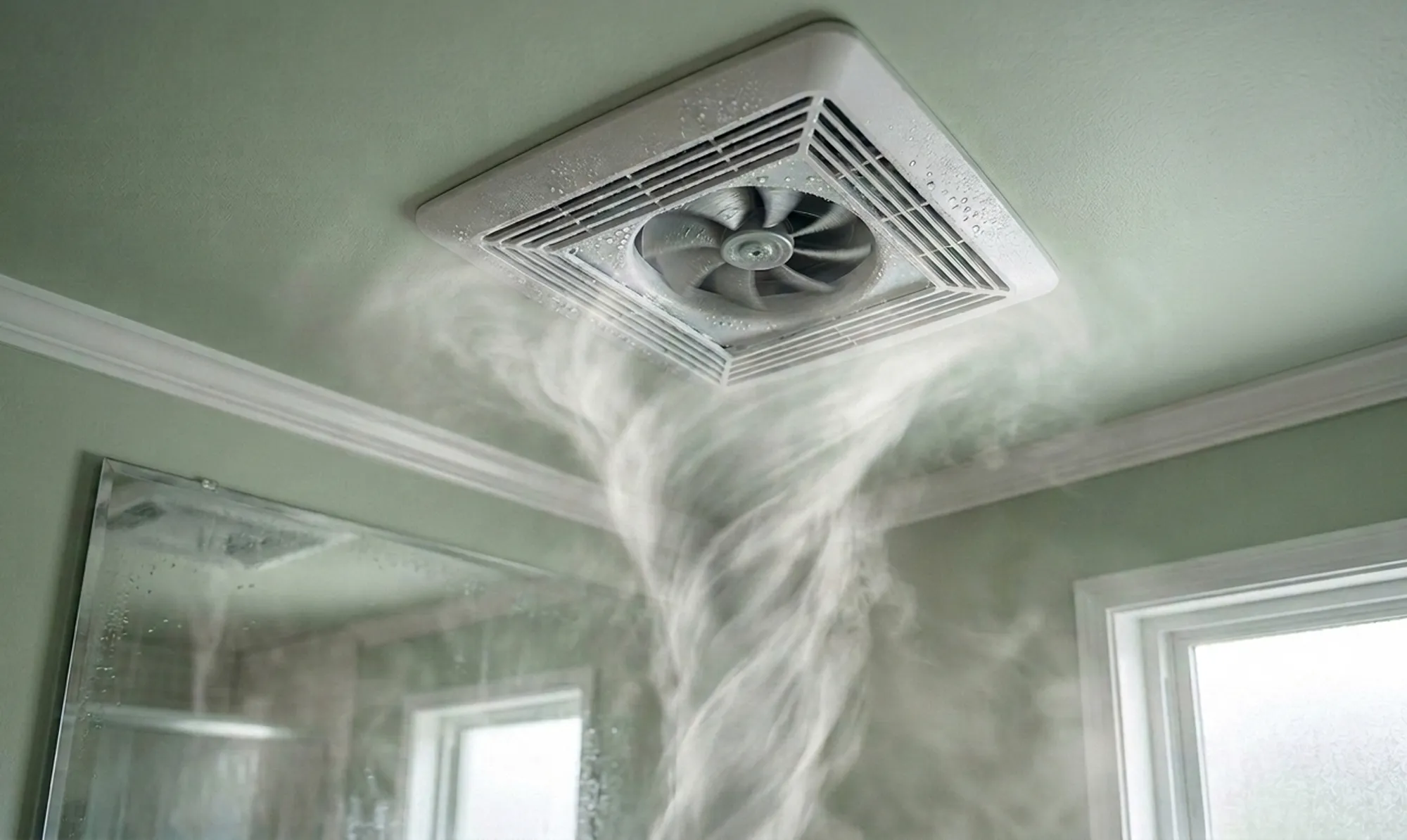
Choosing a bathroom exhaust fan often starts with one practical goal: remove moisture fast enough that steam does not linger on mirrors, walls, ceilings, and grout. In most homes, the right fan is sized by room square footage and chosen with a low enough sound rating that people will actually use it.

Call for a free estimate:
According to the Home Ventilating Institute’s Products Directory, bathroom fans are rated in cfm, or cubic feet per minute, and many are also rated for sound in sones. Per the U.S. Department of Energy guidance on home ventilation, spot ventilation in bathrooms is used to remove moisture and indoor air pollutants at the source.
How do you choose the right bathroom exhaust fan size?
For a standard bathroom, a common starting point is 1 cfm per square foot of floor area, with a practical minimum of 50 cfm for intermittent operation. The HVI publishes the widely used sizing rule of roughly 1 cfm per square foot for bathrooms up to 100 square feet, while larger bathrooms are often sized by adding fixture-based capacity.
That means a 5-by-8 bathroom, which is 40 square feet, should not automatically get a 40 cfm fan if it will be switched on only during showers. In practice, many homeowners land on a 50 to 80 cfm model for small to mid-size bathrooms because that is where many code-compliant, readily available fans begin.
For bathrooms over 100 square feet, HVI guidance typically shifts to fixture-based sizing. A common rule is adding 50 cfm for each toilet, shower, or tub, and 100 cfm for a jetted tub. If a large primary bath has a shower, a soaking tub, and a toilet, the required airflow can rise quickly.
Manufacturer selection guides from Panasonic and Broan-NuTone also note that real-world performance depends on static pressure, which is the resistance created by duct length, elbows, wall caps, and roof caps. A fan that looks adequate on the box may move less air once it is connected to a difficult duct run.
What cfm rating actually helps prevent bathroom mold?
Enough airflow to clear visible steam soon after bathing is the target, because mold risk rises when damp surfaces stay wet or humid for too long. The Environmental Protection Agency explains in its moisture control guidance that mold growth can be controlled by managing moisture, not by surface cleaning alone.
In a small powder room with no tub or shower, odor control may be the main job, so lower airflow can work. In a full bathroom used for daily showers, moisture removal matters more than odor removal. That is why fan sizing should be based on the room’s wet use, not just its footprint.
Higher cfm is especially useful when one or more of these conditions apply:
- The bathroom has a high ceiling.
- Showers are long or frequent.
- The room includes a separate tub and shower.
- The duct run is long or includes several elbows.
- The room has little natural air movement.
More airflow is not automatically better if it comes with enough noise that the fan is rarely turned on. A quieter 80 cfm or 110 cfm unit that runs every time is often the better purchase than a louder budget fan with similar advertised capacity.
Which features matter when comparing bathroom exhaust fans?
Three features usually matter most: verified airflow, low sound, and controls that keep the fan running long enough after a shower. HVI certification is useful because it gives you a standardized airflow and sound rating to compare across models.
How important is the sone rating?
Lower sone numbers are quieter, and that affects whether people use the fan consistently. HVI publishes sound ratings in sones, and many current premium fans are rated around 0.3 to 1.5 sones, while older or basic models can be much louder.
If the bathroom is near a bedroom or home office, quieter operation is worth paying for. If the fan sounds harsh, many people switch it off too early, which defeats the point of buying better ventilation.
Should you get a timer or humidity sensor?
Automatic controls are often the most useful upgrade because they improve real-world moisture removal without asking you to remember anything. ASHRAE Standard 62.2, the residential ventilation standard commonly referenced by builders and code officials, supports mechanical ventilation strategies that deliver required airflow reliably.
A timer switch is simple and effective. You can usually set them for 10, 20, or 30 minutes after a shower, which is often enough to clear leftover humidity. A humidity-sensing fan can also work well, especially in busy households, but sensor quality and settings vary by model.
Do lighted, heater, or decorative combo units make sense?
Combination units can make sense when ceiling space is limited, but the fan performance still matters more than the extra feature. Broan-NuTone installation literature and product specs make clear that heater-fan-light units have specific electrical and installation requirements, so they should not be chosen on appearance alone.
Does duct design matter as much as the fan itself?
Yes, poor duct design can reduce actual airflow enough to undermine a good fan. The International Residential Code requires bathroom exhaust air to be discharged outdoors, not into an attic, soffit cavity, or crawlspace, and that rule exists because trapped moisture can damage building materials.
According to the International Residential Code, Chapter 15 Exhaust Systems, exhaust air from bathrooms must terminate outdoors. Manufacturer instructions from Panasonic and Delta Breez also commonly specify smooth, properly sized ducting and caution that long runs and sharp turns reduce performance.
Here is where many installations go wrong:
Call for a free estimate:
- The duct is too long for the fan’s rated performance.
- Flexible duct is sagging or sharply bent.
- The duct diameter is smaller than the fan outlet.
- The exterior cap sticks closed or has heavy lint or debris buildup.
- The fan vents into the attic instead of outdoors.
If you already have a fan that seems weak, fixing the duct may solve the problem without upgrading to a larger unit.
What bathroom conditions call for a stronger or better fan?
Heavy moisture use, larger room volume, and poor natural drying all point toward a more capable unit. A hall bath used by one person each morning has different demands than a primary bath used for back-to-back showers.
Ceiling height matters because a larger air volume takes more time to clear. So do room finishes. Dense tile, painted drywall, mirrors, and glass can all collect condensation, and that moisture has to go somewhere.
You should lean toward a better fan if the bathroom has any of these signs:
- Condensation stays on the mirror long after a shower.
- Paint peels on the ceiling or above the shower.
- Dark spotting returns around caulk lines or corners.
- The room smells musty even after cleaning.
- The existing fan is loud but seems ineffective.
If you are already seeing wall or ceiling damage, the fan may be only part of the problem. Abodence covers the broader moisture issue in hidden mold and rot behind walls, and fixture-related leaks in this guide to leaking shower or tub causes.
Should you replace an old fan or just improve how you use it?
Sometimes better use and a timer switch are enough, but an undersized or failing fan is usually worth replacing. The practical consideration is whether the current fan is actually removing moisture, not whether it still makes noise when switched on.
A simple upgrade path often looks like this:
- Confirm the fan vents outdoors.
- Check whether the grille and duct path are blocked.
- Compare the room size to the fan’s cfm rating.
- Add a timer control if the fan is otherwise adequate.
- Replace the unit if airflow, sound, or reliability is poor.
How much does a bathroom exhaust fan cost to buy and install?
For the fan alone, many standard residential models fall roughly in the $80 to $300 range, while premium quiet models and combo units can run higher. For installed cost, HomeAdvisor marketplace data published in 2025 commonly placed bathroom fan installation in the several-hundred-dollar range, with higher totals when new ducting, roof or wall termination, wiring, drywall repair, or a larger housing opening is required.
Quotes are easier to compare when they spell out these details:
- Fan model and rated cfm
- HVI certification and sone rating
- Duct size and duct material
- Exterior termination location
- Switch, timer, or humidity control type
- Drywall or paint repair included or excluded
Vague proposals are common on small ventilation jobs. If a quote lists only “replace bath fan” with no model, airflow rating, or duct scope, you do not yet know what you are buying.
FAQ
What size bathroom exhaust fan do I need for a small bathroom?
For most small full bathrooms, 50 cfm is the common minimum starting point, and many homeowners choose 50 to 80 cfm depending on shower use and duct length. HVI sizing guidance uses roughly 1 cfm per square foot for bathrooms up to 100 square feet, but intermittent-use bathrooms often need at least the common 50 cfm baseline.
Is a humidity-sensing bathroom fan better than a timer?
A timer is often the safer simple choice because it is predictable and easy to understand. Humidity sensors can work well in busy bathrooms, but performance depends on sensor quality, placement, and settings.
Can a bathroom exhaust fan be too powerful?
Yes, a larger fan can be unnecessary if the room is small and the duct setup is straightforward. The better goal is matched performance, because overspending on extra capacity does not fix a bad duct run or poor outdoor termination.
Do bathroom exhaust fans need to vent outside?
Yes, bathroom exhaust air should terminate outdoors under the International Residential Code. Venting into an attic or other concealed space can trap moisture where it can damage materials.
How long should a bathroom fan run after a shower?
About 20 to 30 minutes is a common practical target for many bathrooms, which is why timer switches are so useful. The exact time depends on room size, shower length, and how well the installed fan actually moves air.
If you are comparing replacement options or trying to solve a bathroom that still stays damp after every shower, getting a quote that includes fan sizing and duct details is the most useful next step. Please call a listed specialist for a free, no-obligation discussion.
Call for a free estimate:
Sources: Home Ventilating Institute Certified Home Ventilating Products Directory, Panasonic ventilation fan selection guidance and installation instructions, Broan-NuTone product specifications and installation instructions, Delta Breez installation instructions, ASHRAE Standard 62.2, HomeAdvisor 2025 bathroom exhaust fan installation cost data