Serious Flood Damage in Bathrooms: 5 Smart Steps for Homeowners
Flood water damage in bathrooms and under sinks after a severe storms calls for fast cleanup, careful documentation, and a realistic plan for what can be dried versus what usually needs to be removed. In a wet room, the damage is often less visible than it looks at first glance. Water can sit inside vanity bases, wick into drywall, swell particleboard, loosen flooring, and stay trapped behind trim even when the surface seems dry.

Call for a free estimate:
For homeowners, the practical goal is simple: stop additional damage, separate salvageable materials from contaminated ones, and make sure the insurance and repair scope match what actually got wet.
According to the Federal Emergency Management Agency, floodwater should be treated as contaminated, porous materials that cannot be thoroughly cleaned and dried often need to be discarded, and drying should begin as soon as possible. In bathrooms, that guidance matters even more because cabinets, baseboards, drywall, and subfloor edges are tightly packed around plumbing penetrations where water tends to collect.
What should you do first when flood water reaches a bathroom or sink cabinet?
The first priority is to document the damage, remove standing water if it can be done safely, and prevent more moisture from staying trapped in enclosed bathroom materials.
Take clear photos and video before moving anything. Capture the floor, vanity toe-kicks, cabinet interiors, drywall bottoms, trim, and the water line if it is visible. If the flooding came from a weather event and not a plumbing leak, note the date and the storm conditions in your claim file.
Then remove rugs, toiletries, stored paper goods, and anything else that can hold moisture. Open vanity doors and drawers so air can move through the cabinet. If the room still has active electrical risk, do not use plug-in equipment there until an electrician or restoration contractor says it is safe.
According to the Insurance Information Institute, standard homeowners insurance policies generally do not cover flood damage since flood coverage is typically handled through a separate flood policy. That distinction matters early, because the way the water entered the home affects both the claim path and the documentation you need.
How can you tell whether the damage is from flooding or from a separate plumbing leak?
Storm-related bathroom damage usually shows a broader water pattern at the floor level, while a sink leak more often leaves concentrated wetting inside the cabinet, around supply lines, or directly below the drain assembly.
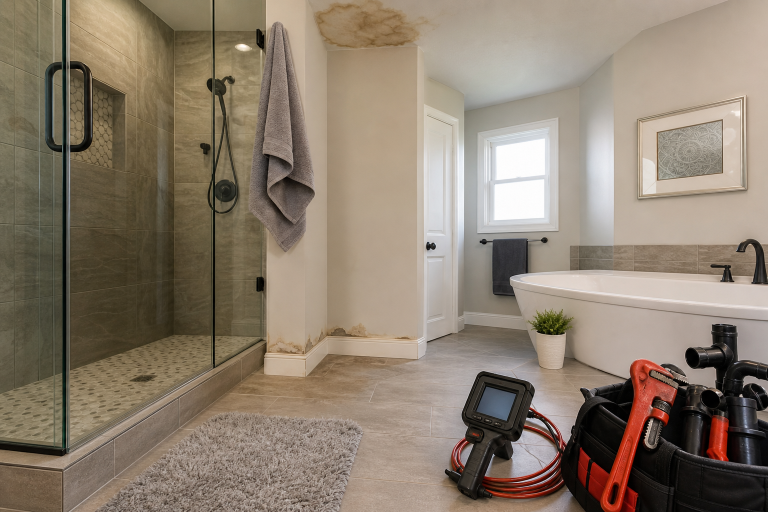
If the vanity interior is soaked but nearby flooring outside the cabinet is mostly dry, a plumbing issue may be part of the problem. If the flooring, baseboards, toilet area, and adjacent hall are all wet at a consistent level, the source is more likely floodwater intrusion. In some homes, both can be true. Flood movement can expose a weak drain connection or shift stored items that stress supply lines.
The National Flood Insurance Program’s claims guidance, published through FEMA, treats direct physical loss by flood differently from unrelated maintenance or plumbing failures. For that reason, it helps to separate your notes into two categories: storm entry damage and pre-existing or separate plumbing defects. A cleaner file makes it easier to challenge a vague denial or a partial scope later.
If you already suspect a shower, tub, or fixture leak that may have added to the loss, it helps to compare the signs with Abodence’s guide to leaking shower or tub causes so you can describe the issue accurately when contractors inspect.
Which bathroom materials usually can be saved after flood water damage?
Hard, non-porous materials often have the best chance of being cleaned and retained, while swollen wood composites, insulation, and waterlogged drywall usually have a much weaker case for salvage.
Materials that are often salvageable
Ceramic tile, porcelain tile, glass, metal plumbing trim, and solid-surface counters may be kept if they remain structurally sound and can be properly cleaned. FEMA’s cleanup guidance supports cleaning and sanitizing hard surfaces after flooding when the material itself has not been permanently damaged.
That does not mean the structure below those finishes is fine. Tile floors can survive while the underlayment, subfloor edge, or vanity side panel has already absorbed enough water to deform.
Materials that often need removal
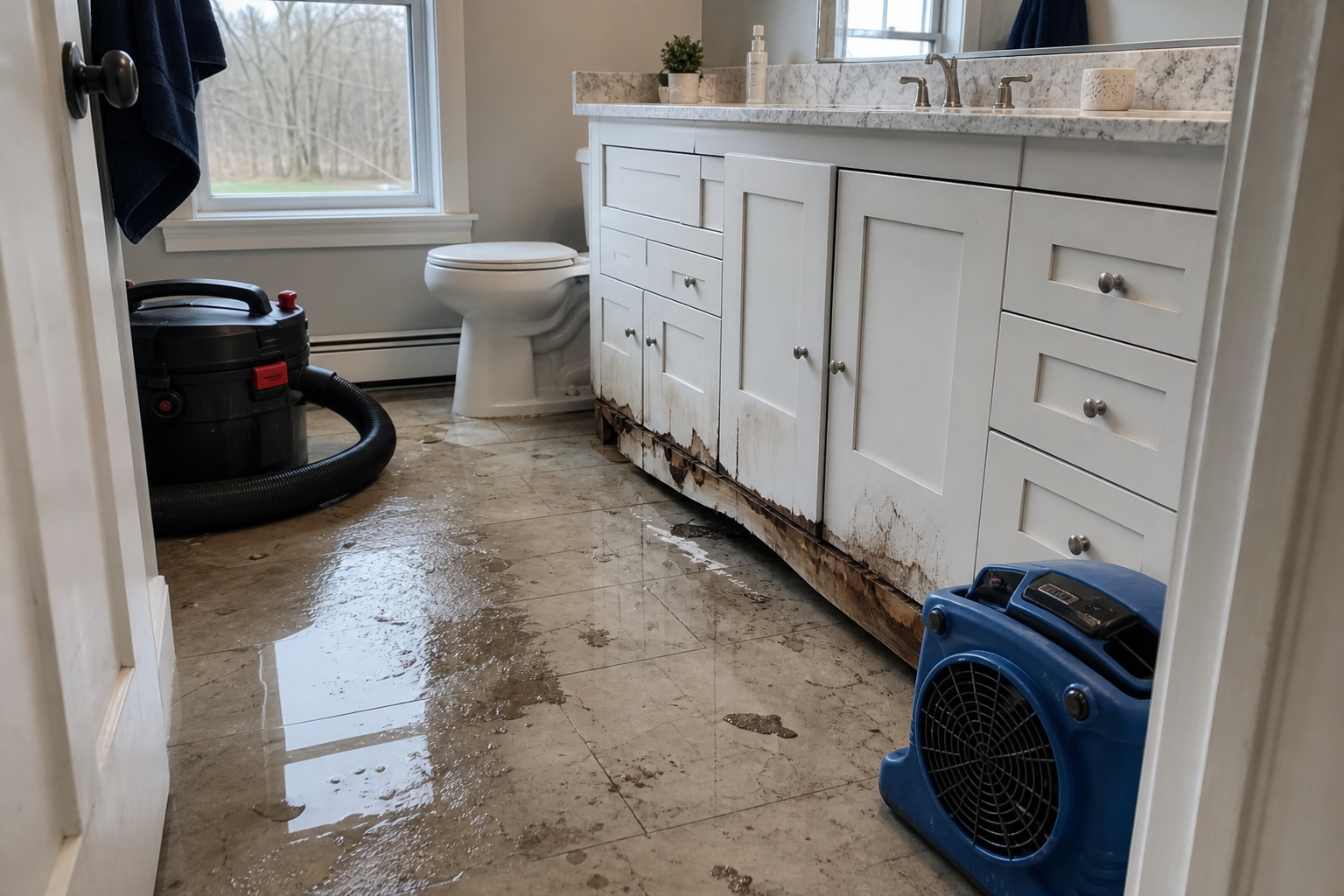
Vanity boxes made from particleboard or medium-density fiberboard usually swell quickly after flood exposure. The Kitchen Cabinet Manufacturers Association publishes care guidance showing that prolonged water exposure can damage cabinet materials and finishes, especially engineered wood products. In practical terms, if the toe-kick is puffed, the side panels are soft, or drawer bottoms sag, replacement is often more realistic than drying.
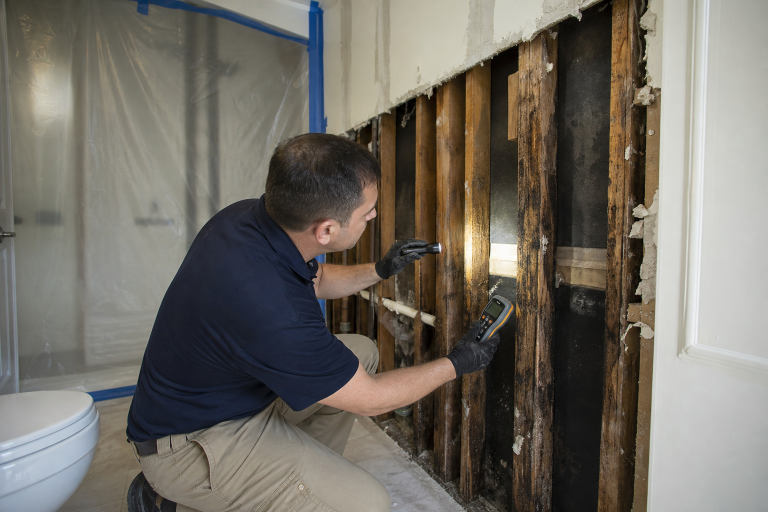
Drywall, insulation, and baseboards at the lower wall can also be affected. The U.S. Environmental Protection Agency advises that mold cleanup decisions depend heavily on the material involved, and absorbent materials that stay wet can be difficult to restore reliably. For a bathroom after floodwater exposure, that usually means wall cavities and trim deserve closer inspection than homeowners expect.
What are the 5 steps for homeowners after a storm flooding?
The most effective response is a short list: document, dry, remove unsalvageable materials, verify the repair scope, and keep every claim and contractor detail in writing.
- Document every affected surface before cleanup starts. Include close-ups of cabinet swelling, flooring edge lift, peeling paint, and any staining at the drywall base.
- Start structural drying as soon as conditions are safe. The Institute of Inspection describes prompt water damage mitigation and controlled drying as core restoration practice.
- Remove materials that cannot be cleaned and dried reliably. In bathrooms, that often includes engineered wood cabinets, wet insulation, and some lower-wall drywall sections.
- Make the contractor explain the scope in plain language. A quote should identify demolition, moisture checks, drying equipment, rebuild materials, and whether plumbing fixtures must be detached and reset.
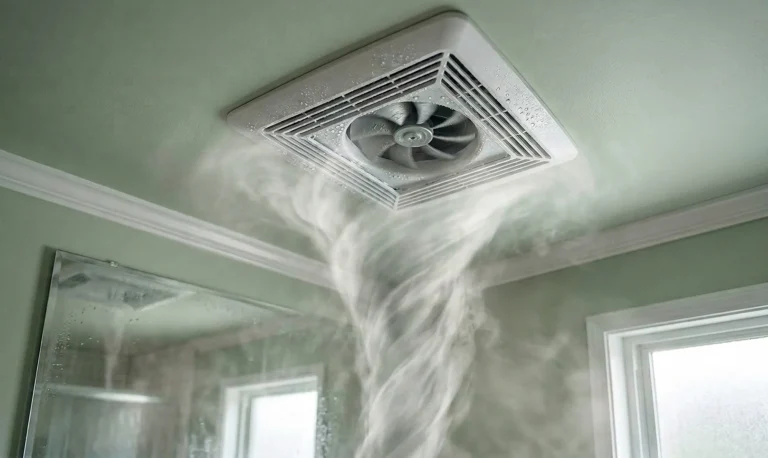
- Match repairs to the room’s actual risk points. If the bathroom already had poor ventilation or hidden moisture buildup, fix that during the rebuild instead of paying twice later. Abodence’s article on moisture problems and ventilation fixes is about attics, but the same principle applies: trapped moisture becomes a building problem when fixtures cannot dry.
How much does bathroom flood damage repair usually cost in 2026?
Minor cleanup and selective repairs can land in the hundreds to low thousands, while a bathroom with cabinet replacement, drywall removal, flooring work, and rebuild labor can move into several thousand dollars very quickly.
Precise pricing for this exact repair category is limited, so the most defensible 2026 cost framing comes from named national and trade sources plus material-specific estimating norms. Xactimate line-item estimating is widely used in insurance restoration, and Homewyse’s 2026 bathroom repair and water-damage related estimate ranges show how demolition, disposal, finish repair, and fixture reset costs stack together. Based on those 2026 estimating frameworks, homeowners commonly see rough ranges such as:
Call for a free estimate:
- $500-1,500 for limited extraction, drying, and small finish repairs when structural materials were not heavily affected
- $1,500-5,000 for selective drywall cut-out, trim replacement, cabinet or vanity replacement, and repainting
- $5,000-12,000 or more when flooring, subfloor sections, vanity, lower walls, and multiple finish trades are involved
Those are not quote substitutes. They are planning ranges based on 2026 estimating sources and common restoration scope patterns. In some states, labor availability after a widespread storm can push pricing upward, especially when multiple counties are booking the same drying and rebuild trades at once.
If the room ends up needing a larger rebuild, Abodence’s remodel budgeting guide is useful for understanding how contingency planning affects the final number.
When should you call a restoration contractor, a plumber, or both?
A restoration contractor is usually the first call when the main problem is storm flooding, while a plumber becomes essential if fixtures, supply lines, drains, or shutoffs may also have failed.
Use a restoration company when you need extraction, drying, moisture mapping, demolition of wet materials, and documentation for an insurance file. Use a plumber when the sink cabinet has active dripping, a loosened trap, backed-up drain components, or a broken shutoff valve. In some bathrooms, the right sequence is restoration first for stabilization, then plumbing repair before rebuild.
The American Society of Home Inspectors publishes consumer guidance noting that bathroom cabinets and surrounding finishes can conceal active leaks long after visible water is gone. That is why a contractor saying the room is dry does not answer the separate question of whether the plumbing assembly is sound.
Ask every contractor a direct question: what exactly is being tested or verified before the rebuild begins? Vague answers are a common problem after storm losses, especially when one company wants to dry the room and another wants to rebuild it without agreeing on what still contains moisture.
What mistakes cause the most trouble after bathroom flood damage?
The biggest problems usually come from delaying drying, assuming hard finishes mean the whole room is safe, and accepting a repair scope that skips hidden wet materials.
One common mistake is keeping a swollen vanity because the countertop still looks fine. Another is repainting lower drywall without confirming whether the cavity insulation or the back side of the wall stayed wet. Homeowners also run into trouble when they throw away damaged materials before photographing them, which can weaken a claim file.
A different mistake is treating every wet bathroom as a full remodel opportunity when the room only needs targeted restoration. If the tile, fixtures, and upper walls are intact, selective repair may be the better use of money. The inverse is also true. Cosmetic touch-up is too small a fix when the cabinet box, wall base, and flooring edges have already failed.
For homes affected by severe weather events, keep a written timeline with storm date, discovery date, first mitigation visit, moisture readings if provided, and every change order. That paper trail is often what separates a manageable repair from a drawn-out dispute.
What should a good repair scope include before you approve the work?
A reliable scope should identify what was wet, what will be removed, what will be dried in place, and what materials are included in the rebuild.
- Specific demolition areas, such as vanity base, drywall height, trim, or flooring sections
- Drying plan, including equipment and expected monitoring visits
- Moisture verification method before reconstruction starts
- Plumbing detach and reset details if the vanity or toilet must be removed
- Material allowances or exact replacement products for cabinets, tops, trim, and paint
- Disposal, cleaning, and final finish work
If a quote says only “repair bathroom flood damage” with a lump sum, it is too vague. Scope gaps are where extra charges and claim disagreements usually appear.
FAQ
Can bathroom tile stay in place after flood water gets into the room?
Tile often can stay if the tile itself is sound and the layers below it were not damaged beyond repair. The decision depends on the condition of the underlayment, grout stability, and whether moisture remained trapped at the edges or below the surface.
Do you always need to replace a vanity after flooding?
Engineered wood vanities often need replacement once they swell, soften, or delaminate. A solid-wood or non-porous unit may be a different case, but the cabinet box has to remain structurally sound and cleanable.
Will homeowners insurance cover flood water under a bathroom sink?
Coverage often depends on how the water entered the home. The Insurance Information Institute explains that flood damage is generally handled under flood insurance rather than a standard homeowners policy, while separate plumbing failures may follow a different coverage path.
How long should drying take after a small bathroom flood loss?
Many controlled drying jobs take several days, but the real timeline depends on how much material absorbed water and whether demolition was required. A room should be rebuilt only after the affected materials meet the contractor’s stated moisture target.
If you need help sorting out whether your bathroom damage is limited cleanup or a larger rebuild, getting a written assessment from a restoration contractor and a separate repair quote is the practical next step. Please call one of the listed vendors for a free, no-obligation discussion.
Sources: Insurance Information Institute, Federal Emergency Management Agency, National Flood Insurance Program claims guidance, ANSI/IICRC S500, Kitchen Cabinet Manufacturers Association, Homewyse, Xactimate, American Society of Home Inspectors