High summer humidity and mold risk in bathrooms
High outdoor humidity makes a bathroom harder to dry, especially after showers. When moisture stays on tile, grout, caulk, painted walls, ceilings, or the underside of cabinets, mold can grow where the material and moisture allow it. The practical goal is not to make the room perfectly dry at every moment. It is to remove shower moisture, correct leaks, and prevent damp conditions from lasting.

Call for a free estimate:
The U.S. Environmental Protection Agency identifies moisture control as the central method for controlling mold indoors and advises keeping indoor relative humidity below 60%, ideally between 30% and 50%. In a bathroom, that broad target depends on both the home’s summer humidity control and the room’s ability to exhaust wet air after bathing.
Why does summer humidity make bathroom mold more likely?
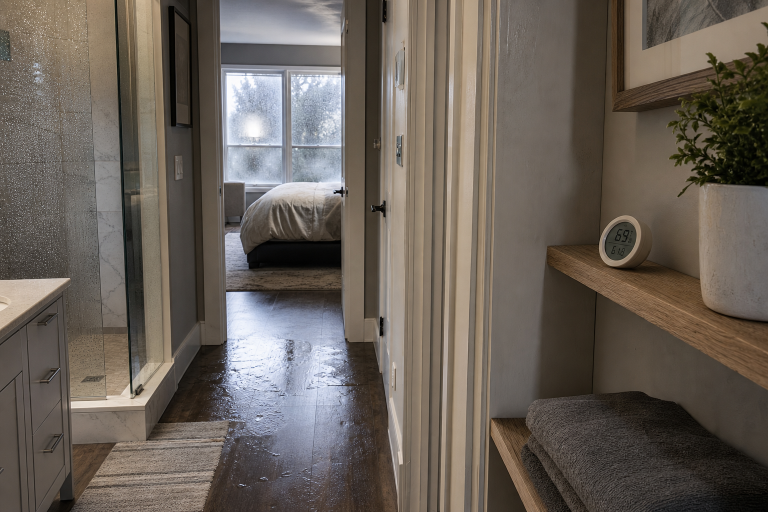
Warm, moisture-heavy outdoor air slows evaporation from bathroom surfaces, so a routine shower can leave the room damp much longer than it would during a dry season.
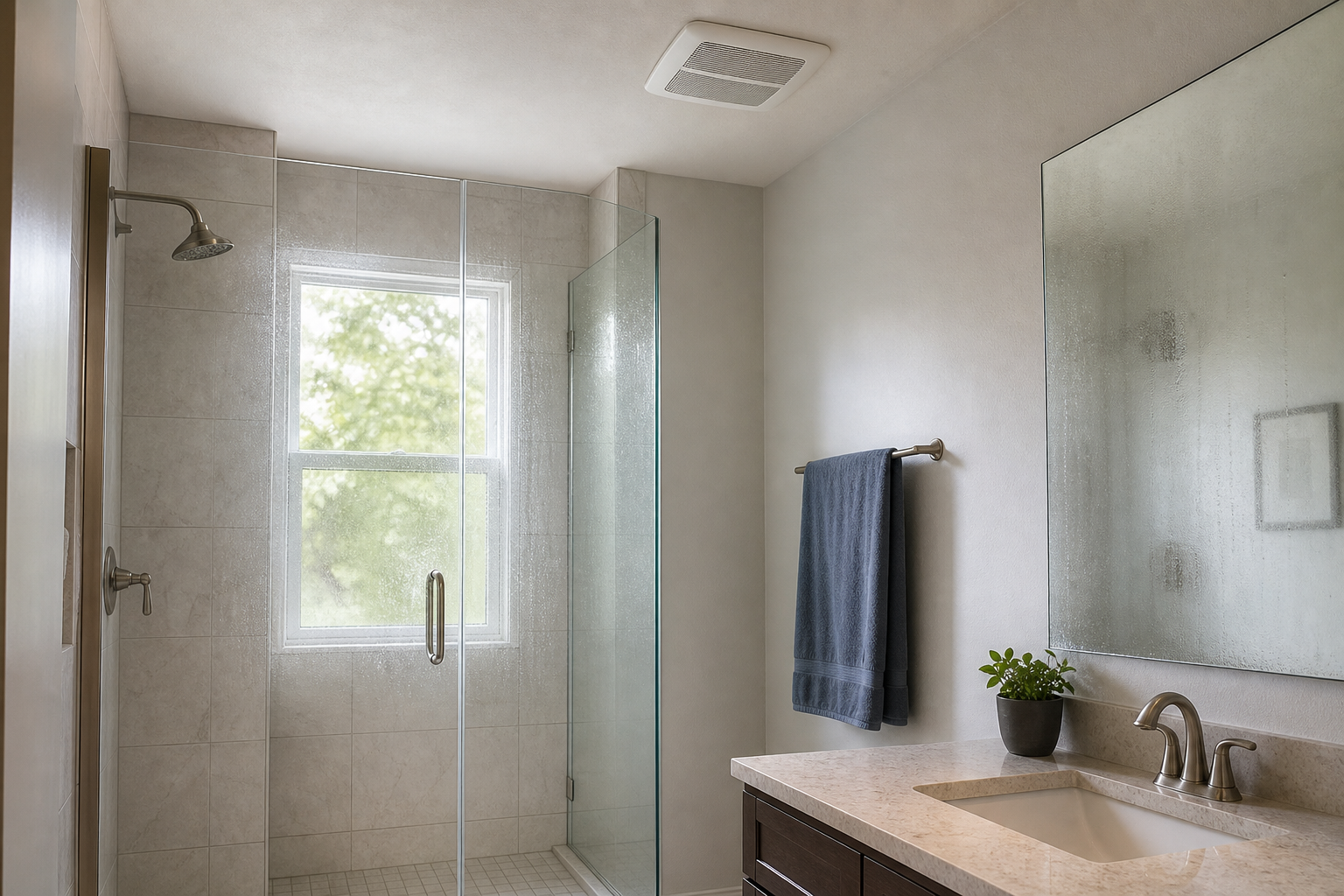
A shower adds water vapor to the air and droplets to nearby surfaces. If the mirror, ceiling, shower walls, and floor stay wet or visibly fogged for an extended period, the room is retaining that moisture rather than moving it outside. EPA guidance explains that controlling moisture prevents the conditions mold needs, which is why cleaning a recurring spot without correcting the dampness usually produces only a temporary result.
Air conditioning can lower humidity throughout a home, but it cannot replace local bathroom exhaust. Central cooling may be undersized, short-cycle, set too warm, or simply unable to overcome repeated shower moisture in one enclosed room. A closed bathroom door can also keep humid air concentrated around the shower and ceiling.
Condensation is often most visible on cool surfaces such as mirrors, windows, exterior walls, metal fixtures, and toilet tanks. That pattern points toward humid air meeting a cooler surface. A stain that stays localized beneath a fixture, around a shower wall, or inside a vanity calls for a different line of inquiry because it may involve a plumbing or enclosure leak.
What moisture source should you rule out first?
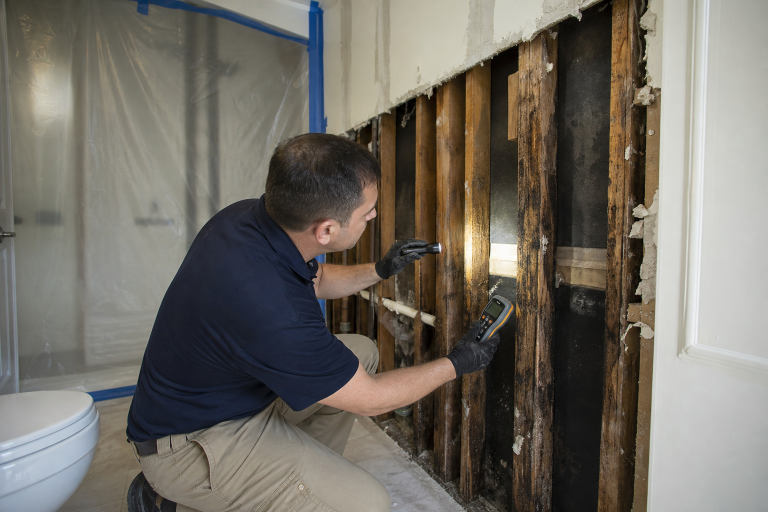
Start by separating ordinary shower humidity from water entering a wall, floor, ceiling, or cabinet, because ventilation cannot solve a concealed leak.
Look for a pattern. Dampness that appears mainly after showers and spreads across the mirror or upper walls is consistent with poor moisture removal. A wet cabinet base, staining below supply valves, damp drywall beside a tub, or damage on the ceiling below a bathroom is more consistent with water escaping from plumbing or the bathing enclosure. The source can also be above the visible damage, so the stain alone does not always identify the failed part.
A leaking shower door, failed caulk joint, damaged grout, loose fixture connection, worn drain seal, or supply-line problem can send water into materials that do not dry quickly. This is why surface mold near a tub should not automatically be blamed on summer air. For a closer look at the possible water paths, see this guide to leaking shower and tub warning signs.
Do not keep using a bathroom with active water intrusion as though an exhaust upgrade will address it. A qualified plumber, bathroom contractor, or moisture-focused restoration professional can determine whether the problem is a supply line, drain, shower assembly, roof-related ceiling leak, or condensation issue before finishes are opened or replaced.
Is the bathroom exhaust fan actually removing humid air?
A fan only protects the room when it moves air through a working duct and discharges that air outdoors.
The U.S. Department of Energy explains that ventilation removes indoor pollutants and moisture, while uncontrolled air leakage is not a substitute for planned ventilation. In bathrooms, the useful question is whether the fan captures moist air near the shower and sends it outside, rather than merely making a motor sound.
Common failures are straightforward: the fan may not run, its grille may be clogged with dust, the duct may be crushed or disconnected, or the discharge may terminate in an attic or another enclosed space instead of outdoors. A long or poorly routed duct can also reduce airflow. Exhausting bathroom air into an attic moves the moisture problem rather than resolving it, and it can contribute to the conditions discussed in this overview of attic moisture warning signs.
Run the fan during bathing and leave it on long enough for visible moisture to clear. A timer switch or humidity-sensing control can make that routine more reliable, particularly in a bathroom used by several people. The Home Ventilating Institute’s Certified Ratings Program is useful when comparing replacement fans because it publishes independently tested airflow and sound ratings, rather than leaving buyers to rely on packaging claims alone.
Fan replacement is not automatically the first expense. If a technician finds a disconnected duct, blocked exterior hood, or failed switch, repairing that specific fault may restore the intended exhaust path without changing the fan unit. If the fan is operating but the room remains damp, the review should include the duct route, outdoor termination, room size, and actual airflow.
What should a useful ventilation assessment include?
A useful assessment identifies the entire air path, not just the fan housing. It should confirm that the fan operates, the duct is connected and intact, the outlet opens outdoors, and the system is capable of clearing moisture from the room. Ask the contractor to put the proposed scope in writing, including whether duct repair, roof or wall termination work, electrical work, ceiling repair, and cleanup are included.
Vague proposals that say only “replace bath fan” can leave the central issue unresolved. The homeowner needs to know whether the quote addresses a failed appliance, a restricted duct, an incorrect discharge location, or more than one of those conditions.
How can you reduce bathroom humidity when outdoor air is already wet?
Use mechanical exhaust during and after bathing, keep the bathing area dry between uses, and rely on whole-home humidity control when the entire house feels damp.
Opening a window may feel sensible, but it is not a dependable summer solution when the outdoor air is already humid. In that situation, bringing in more outdoor air can add moisture instead of lowering it. Often the better approach is an exhaust fan vented outdoors, with the bathroom door managed in a way that lets replacement air enter the room without trapping moisture.
Wipe standing water from shower walls, doors, and ledges after use. Keep bath mats, towels, and shower curtains from staying wet in a closed room. Launder and dry them as needed, and leave a shower curtain or door positioned so the bathing area can dry. These steps address surface moisture that an otherwise sound fan may not reach quickly.
Call for a free estimate:
For a home that remains humid beyond the bathroom, review the cooling system’s operation rather than buying a bathroom fan based solely on the mold spot. The U.S. Department of Energy notes that air conditioners remove moisture as they cool. A system that does not run long enough, has airflow problems, or is poorly matched to the home may leave indoor humidity high. HVAC troubleshooting belongs with a qualified contractor, especially when cooling performance has also changed.
When does bathroom mold call for professional help?
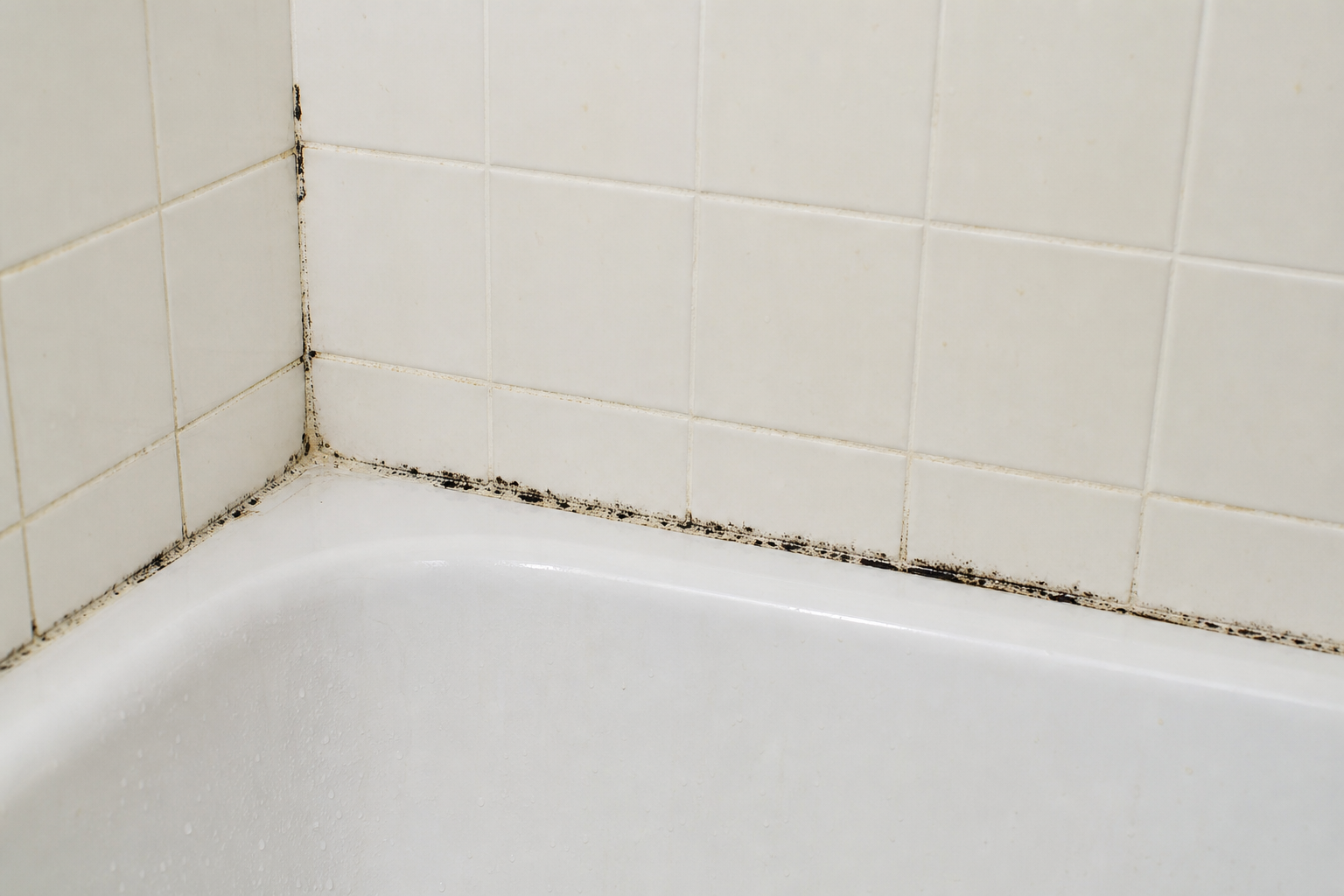
Professional evaluation is appropriate when growth keeps returning after moisture control changes, when materials are soft or damaged, or when the suspected source is hidden.
EPA’s A Brief Guide to Mold, Moisture and Your Home says that moisture problems should be fixed to prevent mold growth and notes that hidden mold may be suspected when there is a musty odor without a visible source. In a bathroom, concealed growth can sit behind a vanity, within a wall shared with a shower, under flooring, or above a ceiling finish.
Large affected areas, repeated water damage, contaminated building materials, or a possible leak inside a wall call for a professional who can define the source and the needed repair scope. The work may involve plumbing, shower waterproofing, ventilation, drywall, flooring, or a combination. Repainting over staining or applying a fragrance does not establish that the materials are dry or that the underlying path has been corrected.
If anyone in the household has concerns about exposure to mold, consult an appropriate health professional. The home repair decision should still focus on removing the moisture source and repairing damaged materials as needed.
What is the sensible order for fixing a humid bathroom?
Address water intrusion first, verify the exhaust path second, and then improve daily drying habits and broader humidity control.
- Identify the pattern. Note whether dampness follows showers, appears near plumbing, worsens after rain, or remains limited to an exterior surface.
- Correct active leaks. Have concealed plumbing, shower, tub, or roof-related water entry evaluated before spending money on cosmetic work.
- Verify outdoor exhaust. Confirm that the fan, duct, and exterior discharge work as one system and that the proposal addresses any fault found.
- Remove routine surface water. Use the fan consistently and dry shower surfaces, mats, curtains, and towels between uses.
- Check whole-home conditions. If several rooms feel humid or condensation is widespread, have the cooling and humidity-control situation assessed.
This order avoids a common waste of money: replacing finishes, buying a larger fan, or repeatedly treating surface growth before anyone has identified where the moisture is coming from.
FAQ
Can high humidity alone cause mold in a bathroom?
Yes, prolonged dampness from high humidity can support mold growth on suitable bathroom surfaces, particularly when shower moisture is not exhausted or dried. EPA guidance places moisture control at the center of mold prevention, so the remedy is to shorten drying time and investigate any recurring wet area.
Should a bathroom fan vent into the attic?
No, bathroom exhaust should discharge outdoors rather than into an attic or enclosed space. Moving humid air into the attic can leave moisture there, so the duct route and exterior termination should be checked as part of any fan repair or replacement.
Why is mold returning after I clean it?
Recurring growth usually means the moisture condition remains. Look beyond the visible surface for slow drying after showers, a weak or misrouted exhaust path, a wet shower enclosure, plumbing leakage, or humidity affecting the wider home.
Will a dehumidifier solve a moldy bathroom?
A dehumidifier may lower moisture in the surrounding home, but it does not repair a leaking shower or replace direct bathroom exhaust. Use it as part of a broader humidity plan only after the room’s water source and ventilation path have been evaluated.
If the bathroom stays damp, develops recurring discoloration, or shows signs of hidden water damage, request a written assessment that identifies the moisture source and the exact repair scope. For additional help, please call a listed specialist for a free, no-obligation discussion.