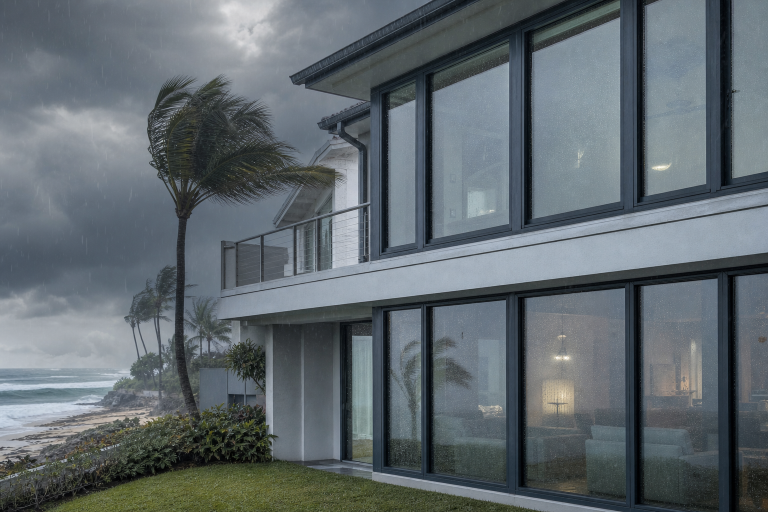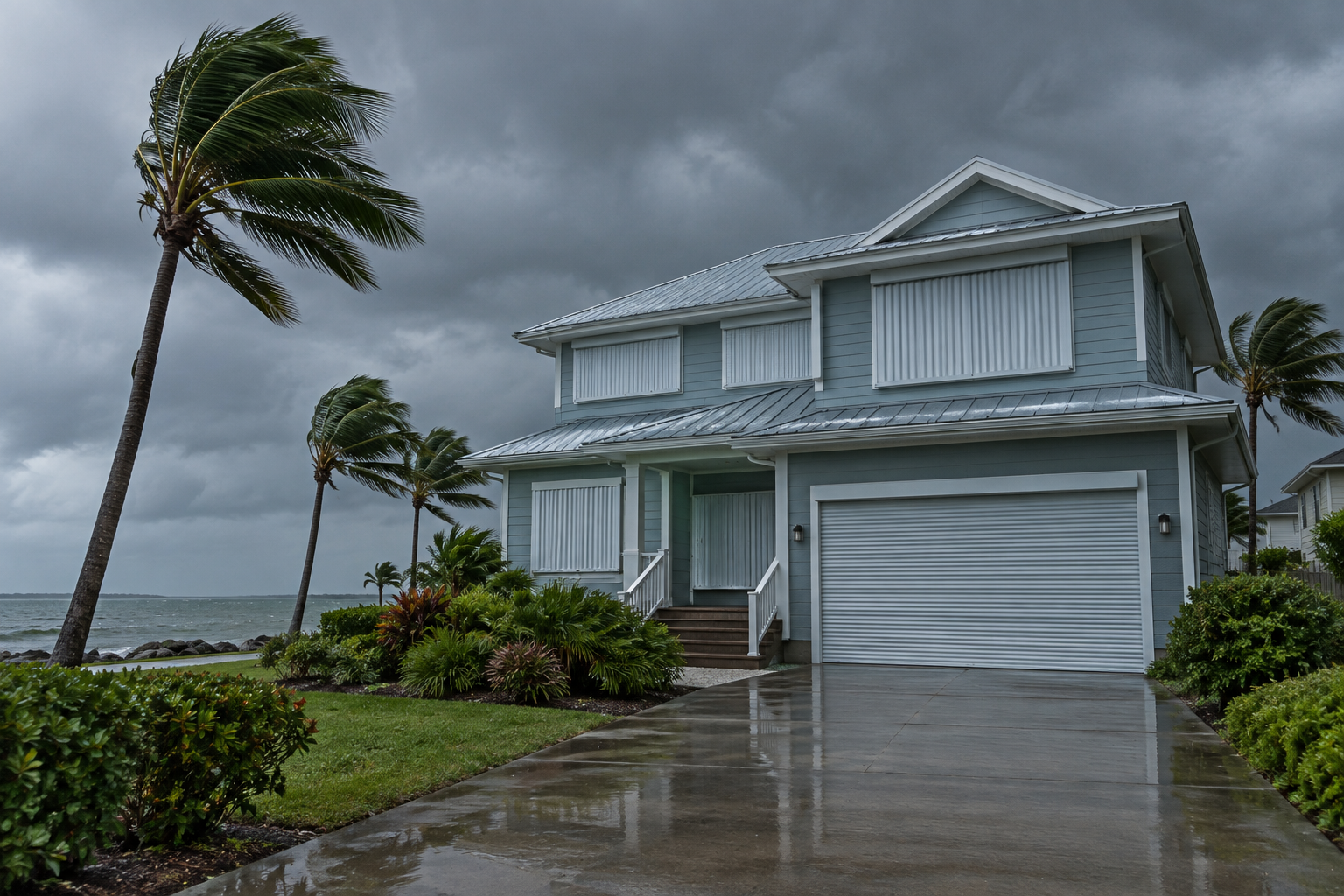
Should I leave windows cracked to relieve pressure during a hurricane?
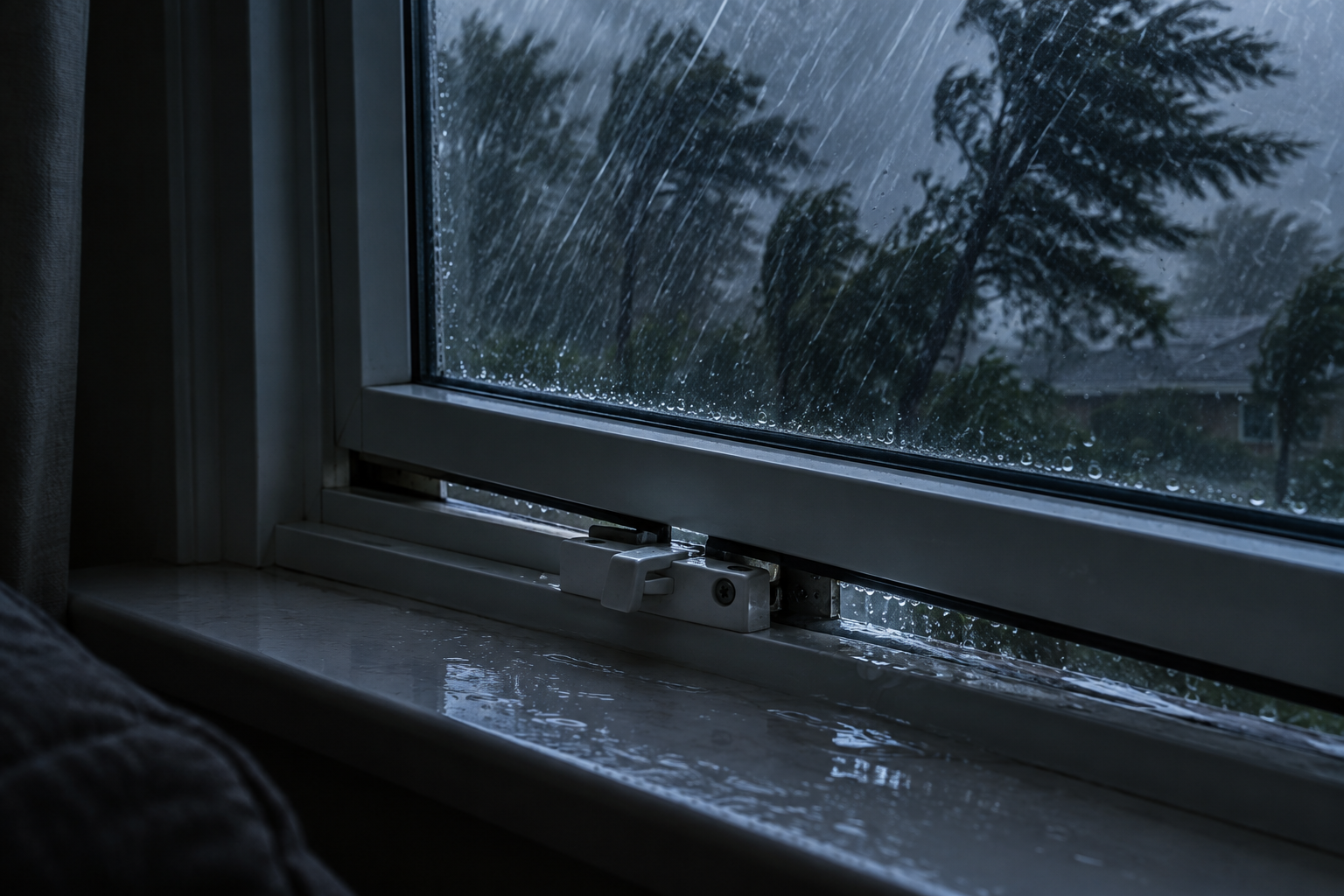
No. Keep windows fully closed and locked during a hurricane. Cracking a window does not safely equalize pressure inside a house. It creates an opening for wind-driven rain and airborne debris, and it can let wind enter the building, increasing pressure on the roof, walls, and other windows.

Call for a free estimate:
The old idea that a house will explode unless a window is opened confuses the gradual drop in outdoor barometric pressure with the far more destructive forces created by hurricane winds. It is vital to keep the building envelope intact: close and lock windows and exterior doors, then use properly installed storm protection where the home needs it.
Why is cracking a window during a hurricane unsafe?
Once wind gets through an opening, it can pressurize the interior of the house and add upward force to the roof.
The National Weather Service advises residents to close and secure windows and doors before a hurricane, while also using shutters or other protective coverings where available. Its hurricane safety guidance treats windows as protective barriers to be secured, not vents to be opened during the storm.
Wind approaching a house creates pressure on the windward side and suction on the sides and roof. A closed window helps preserve the separation between outside and inside pressure conditions. A cracked window lets high-speed air enter, particularly if it faces the wind. That internal pressure can combine with suction over the roof, raising the load on roof connections and ceiling surfaces.
ASCE 7, the American Society of Civil Engineers standard used to establish minimum design loads, accounts for a major difference between an enclosed building and an enclosed building that develops a significant opening. The latter is treated as a “partially enclosed” building because internal pressure can increase wind loads on the structure. A deliberately open window is not a pressure-relief measure under that design concept. It is a pathway for damaging wind.
Will barometric pressure make a closed house explode?
No, ordinary residential construction is not endangered because a hurricane’s falling barometric pressure is trapped inside a closed home.
Outdoor barometric pressure changes over hours as a storm approaches. Air movement through the many small, normal leakage paths in a house, along with the building’s ordinary response to pressure change, prevents the sealed-container scenario behind the myth. A closed, locked window does not turn a house into an airtight vessel.
The dangerous pressure event is rapid wind entry through a failed or open part of the exterior shell. The Insurance Institute for Business & Home Safety explains in its High-Wind Guide for Homeowners that once wind enters through a breach, it can increase pressure inside the home and contribute to progressive damage. A broken window, failed door, damaged garage door, or open window can become that breach.
What should be closed and secured before hurricane conditions arrive?
Close every exterior opening before tropical-storm-force winds begin, then avoid opening a door or window while dangerous conditions continue.
That includes windows, sliding glass doors, hinged exterior doors, pet doors, attic access doors that connect to conditioned space, and garage doors. A door that is merely pulled shut may not resist gusts as well as one that is latched and locked. Check each opening early, when it is still safe to move around outside if needed.
- Close and lock all windows, including upper-floor and basement windows.
- Secure exterior doors and sliding doors with their installed locking hardware.
- Bring in screens, furniture, planters, and loose objects that could strike glazing.
- Close garage doors and use any manufacturer-approved reinforcement already installed.
- Deploy rated shutters, panels, or impact protection according to the product instructions.
- Move away from windows once strong winds arrive, even when they are protected.
Do not tape glass in an X pattern as a substitute for shutters or impact-rated protection. The National Weather Service’s hurricane guidance does not recommend tape as window protection. Tape does not prevent the window from breaking under debris impact, and it does not stop wind-driven rain from entering around a damaged opening.
For a property with aging locks, warped sashes, or visible frame gaps, ordinary maintenance should be addressed well before storm season. This guide to drafty window repair and air leaks covers everyday causes of gaps, but temporary weatherstripping is not a substitute for a window that can close, latch, and remain intact in high wind.
Do shutters or impact windows change the advice?
Even with storm-rated protection, the window should remain shut and locked.
Impact-resistant windows are designed as a tested assembly, typically involving impact-resistant glass, a reinforced frame, and approved installation details. They are intended to resist specified windborne-debris impacts and pressure cycling, not to operate partially open during a hurricane. Their benefit is preserving the building envelope when debris hits the glazing.
Shutters and storm panels serve a related role. They limit the chance that debris breaks glass and creates an opening. They do not make an open window safe. Close and lock windows, and close or install the shutters or panels exactly as its manufacturer specifies.
Window labels and local building requirements matter. In coastal wind zones, local codes can require particular design pressures, impact resistance, or protective systems depending on location and exposure. The American Society of Civil Engineers’ ASCE 7 wind-load standard supplies the engineering framework used by many U.S. building codes, but a homeowner should confirm the applicable requirements with the local building department or a qualified window contractor.
New windows are not an automatic hurricane upgrade. A replacement window with ordinary glass, the wrong rating, or poor installation may not provide the protection needed for a particular coastal location. When comparing options, review the product’s documented performance rating, the installation scope, and any permit requirements. Abodence’s window permit requirements guide explains why local approval can matter when openings are replaced or altered.
What if a window breaks during the storm?
Move people away from the opening and into a small interior room on the lowest level that is not subject to flooding, if doing so can be done safely.
Call for a free estimate:
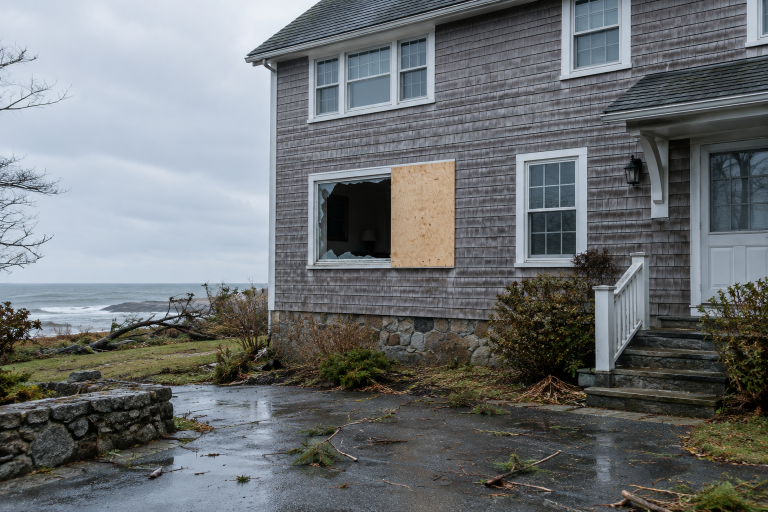
Do not approach shattered glass to force a sash closed, install a panel, or improvise a repair while hurricane-force winds are active. Broken glass, flying debris, rain, and sudden gusts make that work hazardous. Follow instructions from local emergency management officials, and call emergency services if there is an immediate threat to life or a serious structural hazard.
If water is entering but conditions do not require evacuation, use only temporary measures that can be taken without standing near the damaged opening. Avoid contact with wet electrical equipment, outlets, extension cords, or appliances. After officials say conditions are safe, document visible damage for insurance purposes and arrange for a qualified contractor to assess the window, frame, surrounding wall, and any related roof or door damage.
Do not reopen a window after the eye passes overhead. The National Hurricane Center warns that the eye can bring a temporary lull before dangerous winds return from the opposite direction. Keep the house closed and sheltered until local authorities say the storm has passed and it is safe to go outside.
How can you prepare windows before hurricane season?
Start before a storm is forecast, when there is time to identify weak hardware, choose rated protection, and schedule needed work without rushing.
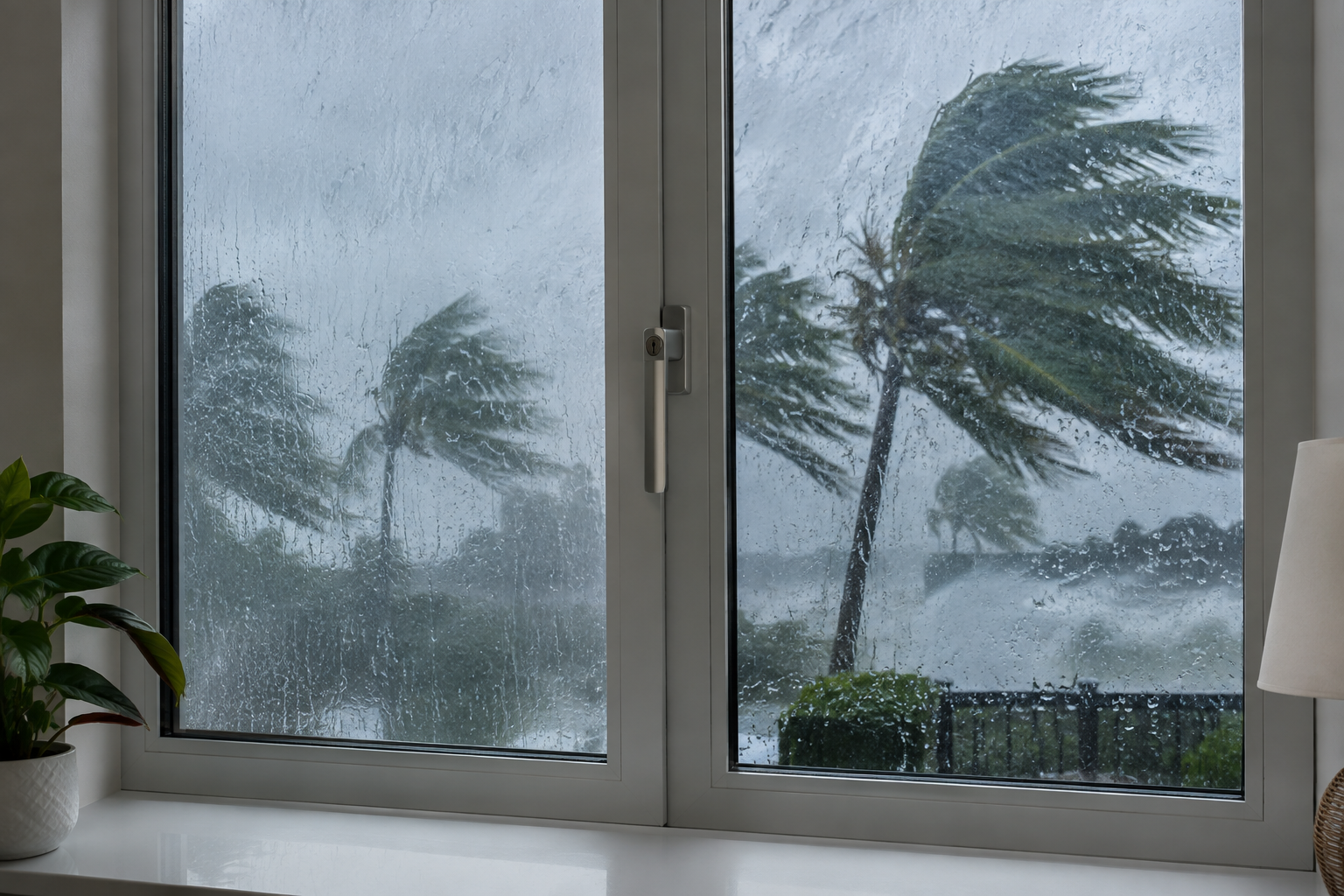
Look for windows that do not latch, cracked panes, loose frames, decayed trim, missing fasteners, or water intrusion around the opening. These conditions do not prove that a window will fail in a hurricane, but they warrant evaluation because a window must close and remain secured to perform its basic role in the exterior wall.
For homes in hurricane-prone areas, an assessment should consider more than the glass. The shape of the house, roof connections, garage door, nearby trees, exposure to open water, and local design-wind requirements all affect the storm risk. The Federal Emergency Management Agency’s Wind Retrofit Guide for Residential Buildings describes how wind protection works as a system, with openings, roof-to-wall connections, and load paths all affecting performance.
A simple repair may be the sensible choice when a window only needs adjusted hardware or a replaceable seal to close and lock correctly. If the frame is damaged, the sash will not stay latched, or the home needs code-compliant impact protection, ask for a written scope that identifies the product rating, installation method, permit responsibility, and warranty terms. Vague descriptions such as “hurricane-proof windows” do not tell you what has actually been specified.
FAQ
Should windows be opened on the leeward side of the house during a hurricane?
No. Every exterior window should be fully closed and locked, regardless of which side faces the wind. Wind direction can shift as storm bands pass, and an opening on a seemingly sheltered side can still admit rain, debris, and pressurized air.
Can I crack a window if my home feels stuffy during a hurricane?
No. Use battery-powered fans only if conditions and the equipment instructions allow, and keep the exterior shell closed. Comfort is secondary to preventing wind and water from entering the home during dangerous weather.
Should I leave a window open if a hurricane evacuation order is issued?
No. Close and lock windows before leaving, then follow the evacuation order and the directions of local officials. An open window can expose an unattended home to rain intrusion and internal wind pressure.
Are impact windows enough, or do I still need shutters?
It depends on the window’s documented rating and the local code requirement for the property. Some impact-rated assemblies are approved without separate shutters in applicable locations, while other installations require a protective system. Verify the exact product approval and local requirements rather than relying on the general term “impact window.”
If a window will not close or lock securely before storm season, a qualified window contractor can assess the opening and provide a written repair or replacement scope. For additional help, please call a listed specialist for a free, no-obligation discussion.