Should I unplug my appliances before a hurricane hits?
Yes, unplug accessible plug-in appliances before hurricane conditions make it unsafe to do so, but do not pull out hardwired equipment or depend on unplugging alone to manage every electrical risk. A disconnected appliance has no path for a surge to reach its electronics through its power cord. Act while the kitchen is dry, the weather is calm, and you can move around safely.

Call for a free estimate:
Start with small appliances and electronics you can reach easily, then make a separate plan for refrigeration, hardwired cooking equipment, flooding, and backup power. Whole-home surge protective devices are useful layers of protection, but they do not make every outlet and appliance immune to a severe lightning event, flooding or an electrical problem.
Which kitchen appliances should you unplug before the storm?
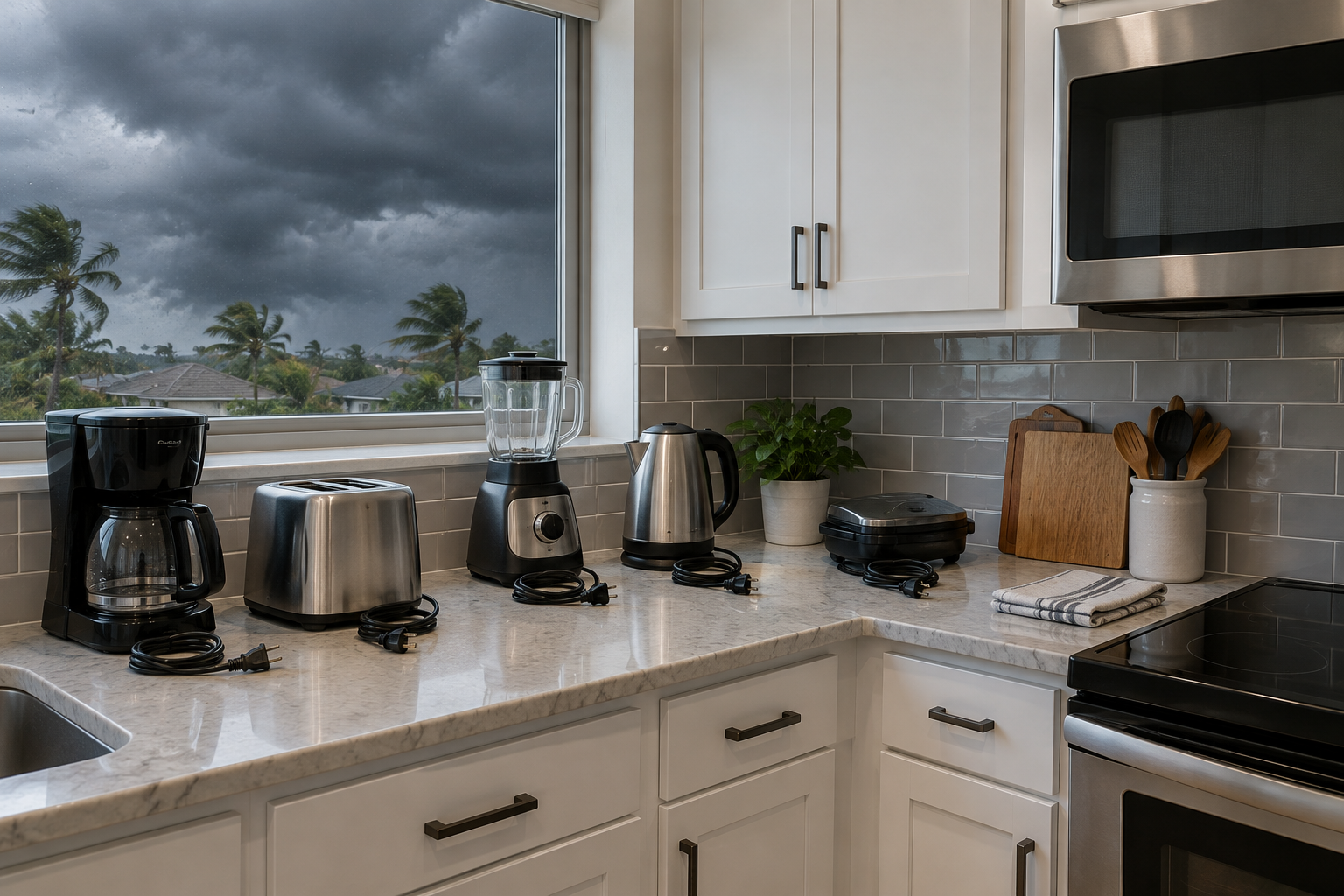
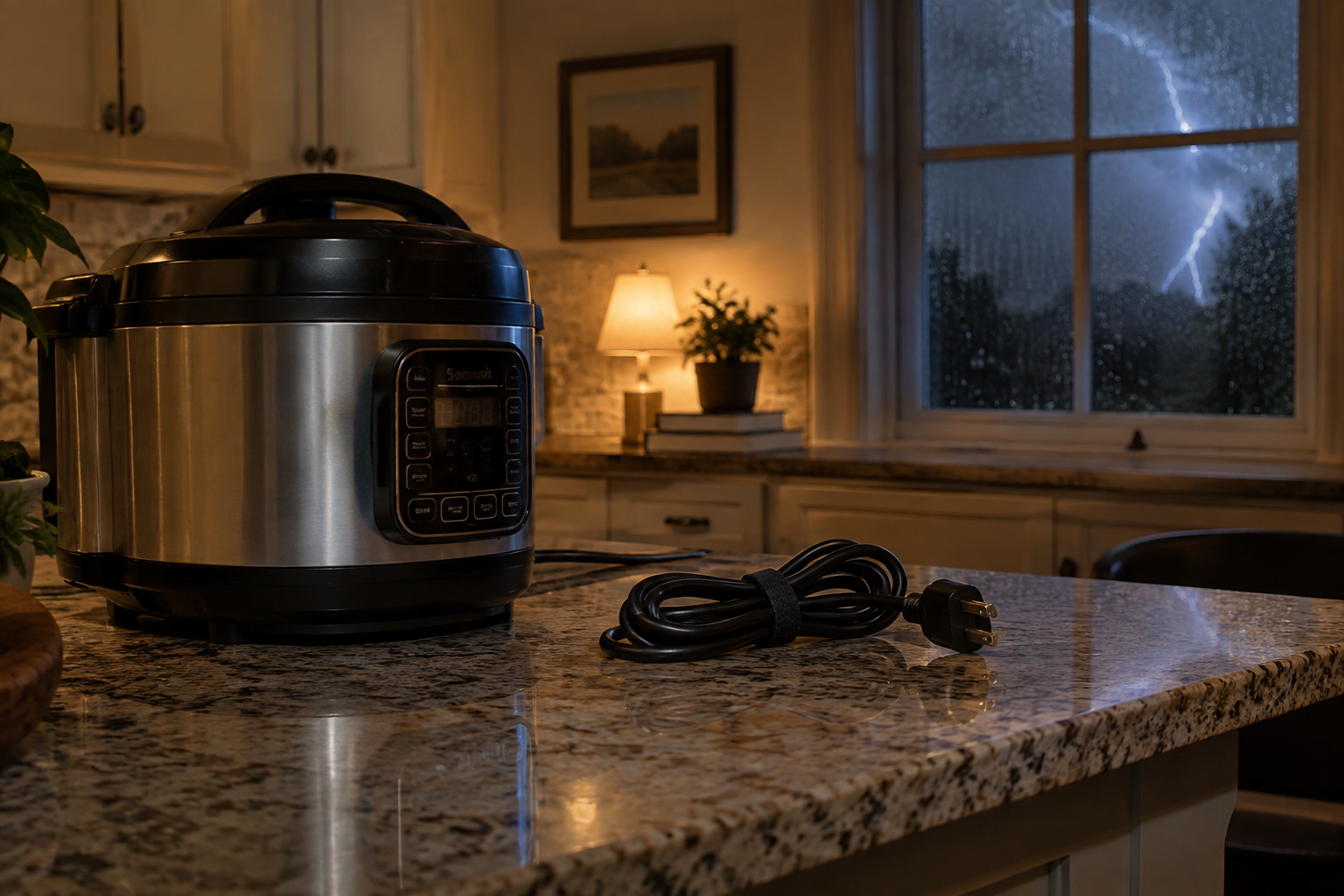
Unplug portable countertop appliances, a plug-in microwave, and other accessible cord-connected equipment before the hurricane arrives. The U.S. Consumer Product Safety Commission advises unplugging appliances before a storm because lightning can travel through electrical systems and damage connected equipment.
Prioritize items with electronic controls, displays, clocks, chargers, or circuit boards. That commonly includes a countertop microwave, toaster oven, coffee maker, multi-cooker, air fryer, blender, stand mixer, food processor, and countertop ice maker. These items are usually easy to disconnect without moving heavy equipment, and leaving them unplugged also removes unnecessary electrical load while the home is vacant or operating on limited backup power.
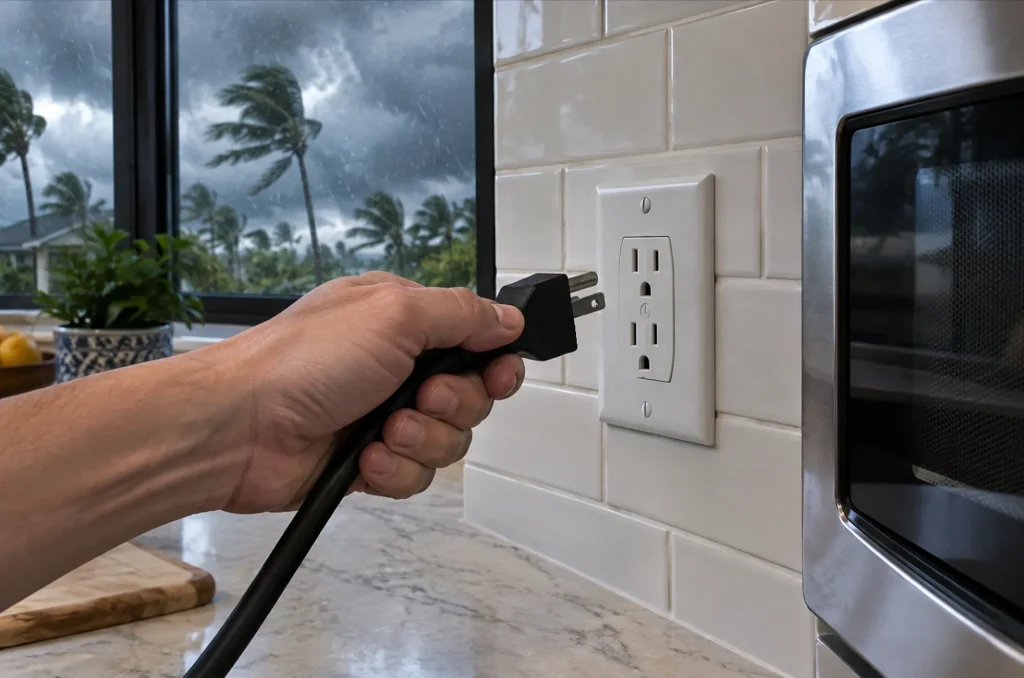
A microwave deserves a closer look because some models sit on a counter while others are installed over a range. If its plug is plainly accessible from a dry, stable position, disconnect it by gripping the plug body rather than tugging the cord. If reaching the plug requires climbing, moving the range, opening an unsafe cabinet area, or working near water, leave it alone and address the circuit only when conditions are safe.
If accessibilty is difficult, do not make unplugging a reason to pull out a refrigerator, move a range, or work behind cabinetry. The appliance is not worth a fall, damaged water line, or contact with wet electrical equipment.
- Countertop cooking appliances and food-prep equipment
- Plug-in microwave ovens with a safely reachable outlet
- Corded chargers, smart speakers, and small electronics in the kitchen
- Plug-in under-cabinet accessories, if their outlets are dry and accessible
Should the refrigerator stay plugged in during a hurricane?
Keep the refrigerator and freezer connected until an outage occurs unless flooding, a utility instruction, or an electrical hazard makes that unsafe. The FDA’s Food Safety During Power Outage guidance says an unopened refrigerator keeps food cold for about four hours, while a full freezer holds its temperature for about 48 hours, or about 24 hours when half full.
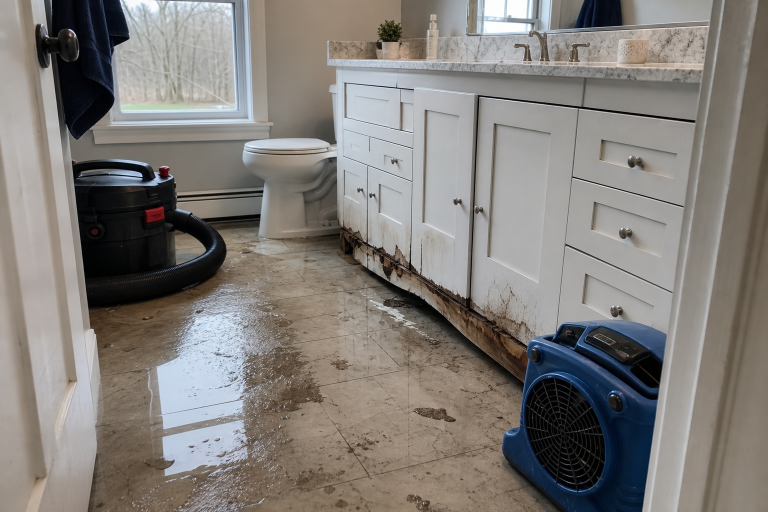
If a flood could reach the appliance, do not stand in water or touch the refrigerator, its cord, or a nearby outlet. FEMA’s Returning Home After a Hurricane or Disaster guidance says to avoid entering a flooded building until authorities say it is safe and to avoid downed power lines. Electrical equipment exposed to floodwater needs professional evaluation before it is energized again.
For central cooling equipment, the same restraint applies. A flooded outdoor condenser, air handler, or electrical disconnect should not be restarted on guesswork. This guide to AC flood safety checks before restarting HVAC explains the issues that warrant inspection after water exposure.
What should you do with an electric stove and dishwasher?
Leave hardwired kitchen equipment in place unless you can safely switch off its circuit from a dry electrical panel before conditions worsen. Many electric ranges are hardwired or connected with a heavy-duty range cord, and many built-in dishwashers are connected inside a cabinet rather than at a normal wall outlet. Neither is a good candidate for hurried disconnection.
Turning off the dedicated circuit can be reasonable when you expect flooding, when an appliance has known electrical damage, or when emergency officials direct residents to shut off power. The U.S. Department of Energy explains that a circuit breaker interrupts electricity when it is switched off or trips. Only operate the panel if it is dry, you can reach it without standing near water, and there is no evidence of damage.
Do not remove a range cord, disconnect dishwasher wiring, or open an appliance junction box as a storm-preparation project. Those tasks involve high-current circuits and fixed wiring. If a range, dishwasher, disposal, or outlet has been wet, sparks, smells hot, or shows visible damage, keep clear and contact a qualified electrician or appliance service professional after the immediate danger has passed.
Gas cooking equipment needs a different decision. Do not disconnect an appliance or alter a gas connection merely to prepare for a hurricane. Follow instructions from local emergency management and the gas utility if an evacuation, gas odor, damage, or flooding affects the home.
Can a whole-home surge protector replace unplugging?
No, a whole-home surge protective device is a valuable first layer, but it cannot guarantee protection from every surge or direct lightning event. UL 1449 is the safety standard that covers surge protective devices, and the National Electrical Manufacturers Association’s Surge Protection Institute explains that a coordinated system may use protection at the service entrance and additional point-of-use protection nearer sensitive equipment.
A whole-home device is generally installed at the main electrical panel. It is designed to divert or limit transient overvoltage on the electrical system. Point-of-use surge protectors add protection closer to electronics, but they must be listed for surge protection and used according to their instructions.
Unplugging remains the clearest option for an appliance that is easy to disconnect and does not need power. It creates physical separation from the branch circuit. Whole-home protection is more useful for fixed systems and items you reasonably leave connected, including appliances that are difficult to access.
Do not buy a surge protector as a substitute for correcting damaged wiring, a wet panel, or a loose outlet. A licensed electrician should assess those conditions. If you are comparing protection options, ask whether the proposed device is UL 1449 listed, where it will be installed, what circuits it addresses, and whether the electrical grounding and bonding system needs evaluation.
When is it too late to unplug appliances?
Stop handling cords and outlets once water is present, winds make movement unsafe, lightning is close, or emergency officials tell residents to shelter or evacuate. The National Weather Service’s lightning safety guidance says to stay indoors and away from corded electrical equipment during a thunderstorm.
Preparation should happen before tropical-storm-force conditions arrive, not during the most dangerous part of the event. Create a short shutdown routine while there is time: disconnect selected countertop appliances, charge essential devices, place flashlights where they can be found without electricity, and keep refrigerator and freezer doors closed if power fails.
Call for a free estimate:
Never use a portable generator indoors, in a garage, or near doors, windows, or vents. The CPSC’s Portable Generator Safety Tips states that generators should be operated outside, at least 20 feet from the home, with exhaust directed away from the structure. Connecting a portable generator to home wiring also requires transfer equipment installed by a qualified electrician, rather than a homemade connection through an outlet.
What should you check after power returns?
Reconnect only dry, undamaged plug-in appliances after utility power is stable and the home has no sign of flooding or electrical damage. Inspect cords and plugs for scorch marks, cracked insulation, bent prongs, corrosion, or unusual heat. Keep an appliance unplugged if you find damage or if it was in standing water.
A brief outage does not automatically mean a major appliance has failed. Check whether a breaker has tripped and whether utility power is stable before assuming a control board needs replacement. Repeated tripping, burning odor, buzzing, visible sparking, or a damaged service panel calls for an electrician, not more reset attempts.
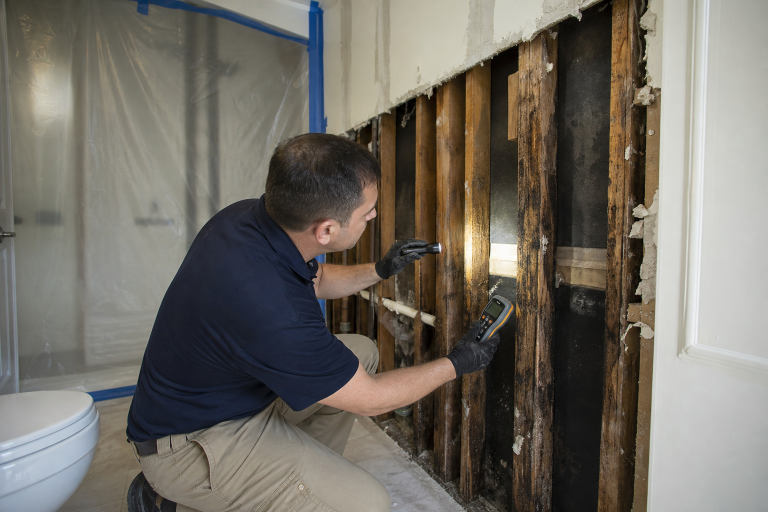
If an appliance was submerged or its electrical components were exposed to floodwater, do not test it by plugging it in. The Electrical Safety Foundation International advises that electrical equipment affected by water be evaluated by a qualified professional before use. For a working appliance that was simply unplugged as a precaution, reconnect it one item at a time after the storm so any problem is easier to isolate.
Storm damage can also reveal unrelated house issues, such as roof leaks, moisture in attic spaces, or damaged outdoor HVAC equipment. A focused post-storm inspection is more useful than replacing equipment preemptively. For broader exterior concerns, review these roof replacement warning signs before deciding whether a repair or a full replacement is warranted.
FAQ
Should I unplug my microwave before a hurricane?
Yes, disconnect a plug-in microwave if you can reach its plug safely before the storm. Leave an over-the-range or built-in unit alone if access requires moving appliances, climbing, or reaching into a wet or unsafe area.
Should I turn off my main breaker before a hurricane?
Only turn off the main breaker when flooding, damage, or instructions from local authorities make it appropriate and the panel is dry and safe to reach. Shutting off all power without a specific reason also stops refrigeration and other systems, so it should be a deliberate safety decision rather than a routine step for every storm.
Do whole-home surge protectors protect appliances from lightning?
They reduce exposure to many electrical surges, but they do not promise that an appliance will survive every lightning-related event. Accessible unplugging adds separation for items that do not need to remain powered.
Can I plug appliances back in as soon as electricity returns?
Wait until power is stable and confirm that the appliance, cord, outlet, and surrounding area are dry and undamaged. Water exposure, a burning odor, sparks, or repeated breaker trips requires professional evaluation before the appliance is used.
If you need help deciding whether storm-related electrical damage, a wet appliance, or a surge protection proposal needs professional attention, arrange an assessment with a qualified local electrician. Please call a listed specialist for a free, no-obligation discussion.