Roof Replacement Warning Signs: How to Know if You Need a Spot Repair or Full Replacement
Roof replacement warning signs are easiest to read when you separate localized damage from system-wide failure. That is the practical way to decide between a spot repair and a full roof replacement.

Call for a free estimate:
If a problem is confined to a small area and the rest of the roof is still in solid condition, a repair is often the better choice. If the roof is near the end of its service life, has widespread deterioration, or has leaks tied to multiple weak points, replacement usually makes more sense.
For homeowners, the hard part is that both options can be presented as the obvious answer. The better approach is to judge the decision against age, extent of damage, repairability, and what the roof manufacturer and building-code sources actually require.
How do you tell whether a roof problem is local or system-wide?
A roof issue points to repair when the damage is isolated and the surrounding materials are still sound. It points to replacement when the failure affects broad sections of the roof or several parts of the roofing system at once.
The National Roofing Contractors Association, in its homeowner guidance, describes common warning signs such as missing, cracked, or curling shingles, damaged flashing, and interior water stains. Those signs matter differently depending on how far they extend across the roof. A few wind-damaged shingles on one slope are a different problem from widespread shingle loss, repeated leaks, and failing flashings at several locations.
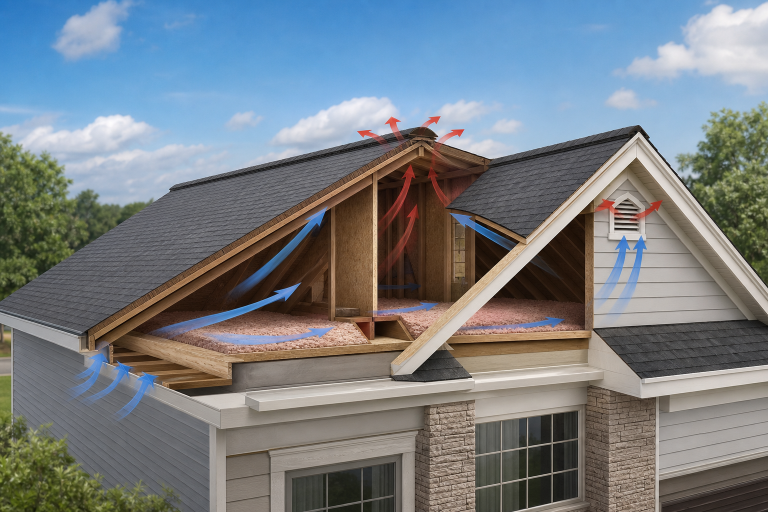
Asphalt shingle manufacturers draw a similar line in their technical documents. CertainTeed’s Shingle Applicator’s Manual and GAF installation guidance both treat shingles, underlayment, starter strips, ventilation, and flashing as parts of a system. When one component fails in a small area, repair may restore performance. When several components are compromised, patching one visible symptom may leave the underlying problem in place.
When is a spot roof repair usually enough?
A limited repair is usually enough when the roof still has useful life left and the damaged area can be fixed without disturbing large sections of surrounding material.
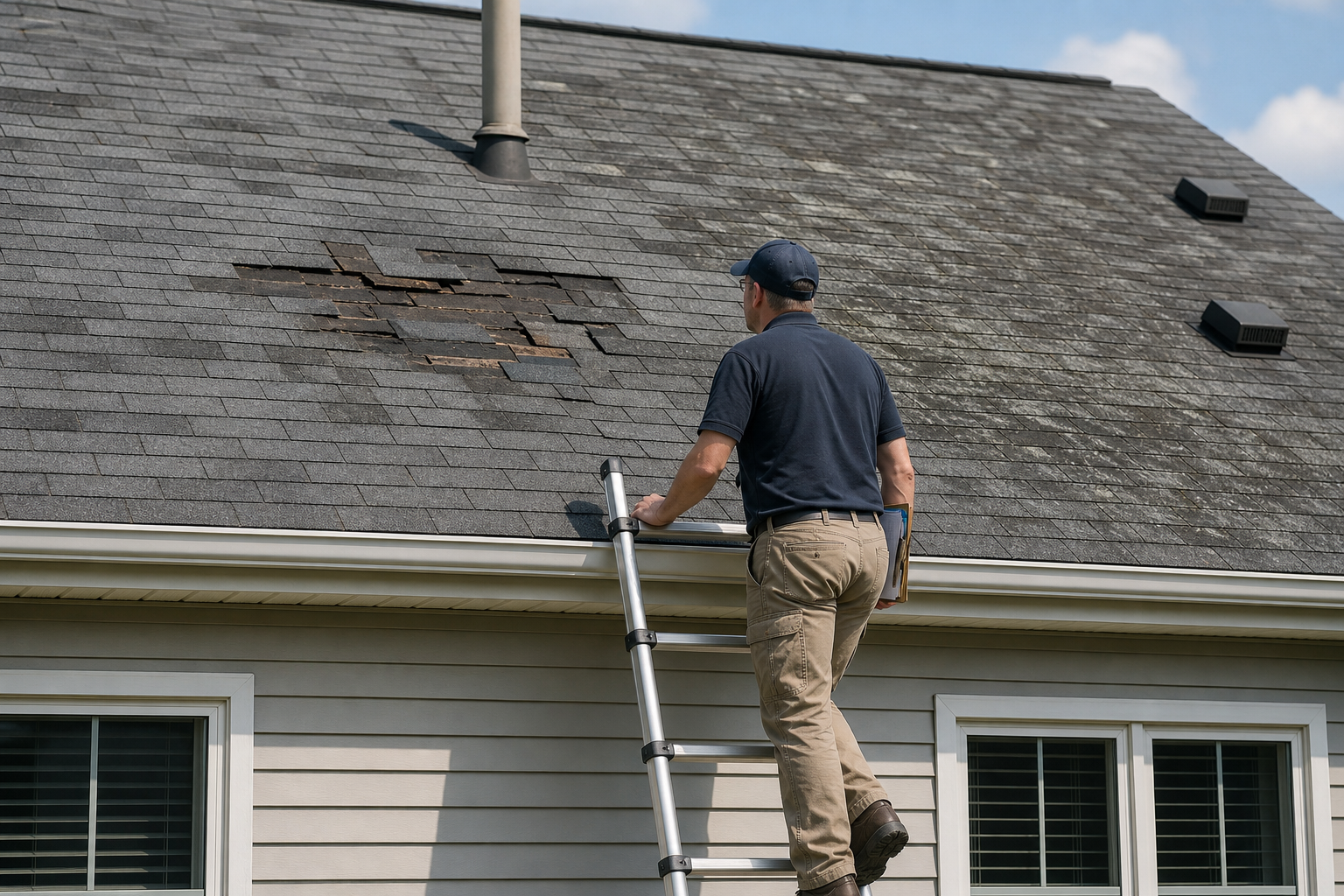
That often includes a few missing shingles after a wind event, a small flashing issue around a vent pipe, or a localized leak traced to one penetration. The key is whether the repair can tie into the existing roof without creating a weak seam or relying on brittle materials that are already failing nearby.
Owens Corning roofing technical literature notes that asphalt shingles change over time as they weather. In practical terms, older shingles can become less flexible and harder to lift and reseal cleanly during a repair. If the field shingles around the damaged area are still pliable and intact, a spot repair is more realistic. If they are brittle across large sections, the repair itself can cause more breakage.
Repair is also more reasonable when the roof deck underneath is dry and structurally sound. The International Code Council’s International Residential Code requires roof coverings to serve the building and protect against the weather. If the problem is only at the surface layer, repair may restore that function. If moisture intrusion has damaged the deck or underlayment over a wider area, the scope usually expands beyond a simple patch.
Signs a repair is likely the right call
- Damage is confined to one small area.
- The roof is well short of the end of its expected service life.
- Matching materials are still available, or a close match is acceptable.
- The surrounding shingles remain sealed, flexible, and intact.
- The leak source is clearly identified, such as one vent boot or one flashing detail.
When does a full roof replacement make more sense?
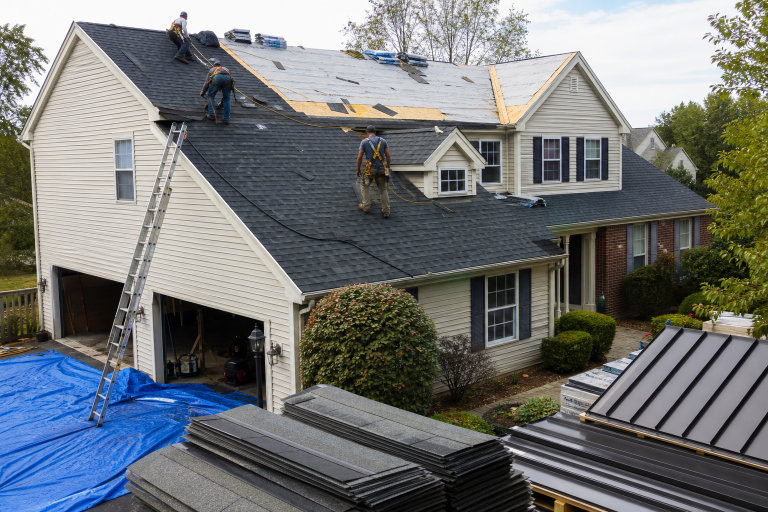
A full replacement makes more sense when the roof has broad wear, repeated leaks, or age-related failure that cannot be solved reliably with one more patch.
The Asphalt Roofing Manufacturers Association explains that asphalt shingle roofs age through exposure to sun, weather, and normal wear, and that visible signs such as granule loss, cracking, curling, and widespread deterioration indicate the roof may be reaching the end of its service life. A roof in that condition can still sometimes be patched, but the patch does not reset the age of the surrounding materials.
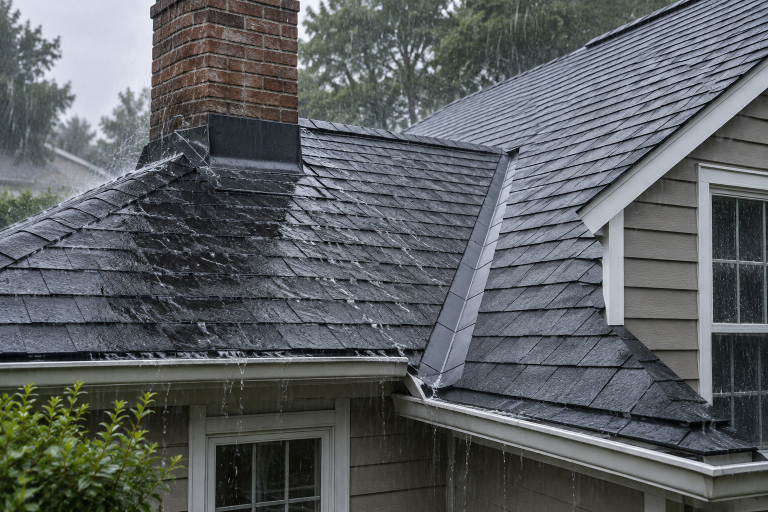
Multiple leak points are another strong signal. If water is entering around valleys, wall flashing, penetrations, and field shingles in different locations, the issue is no longer one failed detail. It is the roof system losing reliability across the assembly.
Replacement is also more likely when repairs would need to be repeated in the near term. The practical question is not whether a contractor can patch an old roof. In many cases, they can. The better question is whether that patch is likely to buy meaningful time without sending you back into another repair cycle soon after.
If you are also trying to compare materials, warranties, and expected tradeoffs, this guide to roofing materials compared can help frame the replacement side of the decision.
Signs replacement is usually the smarter option
- Leaks have appeared in more than one area.
- Shingle wear is widespread, not localized.
- The roof has already had several repairs.
- Flashing, underlayment, or decking problems extend beyond one section.
- The existing roof is near the end of the manufacturer’s expected service window.
How much should roof age influence the decision?
Roof age should influence the decision heavily because repair value drops as the remaining service life gets shorter.
Manufacturers publish limited warranties with specific coverage terms, but warranty length is not the same thing as guaranteed real-world lifespan. GAF, Owens Corning, and CertainTeed all publish warranty documents and product literature that tie performance to proper installation, ventilation, and system components. Those documents are useful for understanding coverage terms, but they do not turn an old roof into a good repair candidate.
A 5-year-old roof with one damaged section is very different from a 22-year-old roof with similar visible damage. In the first case, repair may preserve many years of remaining use. In the second, the same money may only delay replacement briefly.
Call for a free estimate:
This is also where homeowners can get pushed into vague recommendations. A quote that says only “roof repair as needed” or “replace bad shingles” does not tell you whether the contractor thinks the rest of the roof is still serviceable. You need a written explanation of why the repair should hold and what nearby materials looked like during inspection.
Warranty language matters here too. These roof warranty terms explained can help you read the difference between product coverage and workmanship promises before you approve major work.
What damage patterns usually point to hidden roof problems?
Recurring leaks, sagging areas, and water intrusion around transitions often point to hidden conditions beneath the visible roof surface.
The Federal Emergency Management Agency notes in its residential building guidance that water intrusion can affect structural components and interior finishes when the building envelope is breached. On a roof, that means the stained drywall you see inside may be the end result of a larger moisture path through underlayment, flashing, or decking.
Deck rot, saturated insulation in roof-adjacent assemblies, and deteriorated flashing are not always visible from the ground. Nor are fastening problems that let shingles loosen over time. A roof can look acceptable in broad view and still have failure concentrated at valleys, sidewalls, chimneys, skylights, and plumbing penetrations.
One warning sign deserves extra attention: soft or sagging roof sections. That can indicate deck damage or structural concerns, which moves the issue beyond a routine cosmetic repair. This is not a DIY decision point. A qualified roofing contractor should evaluate it promptly.
Interior clues can help narrow the scope. Stains limited to one area below a roof penetration often line up with a local repair. Stains that reappear after previous fixes, or appear in several rooms, suggest a larger investigation is needed.
Can a repair create problems if the roof is already old?
Yes, a repair can create new issues on an old roof when surrounding materials are too worn to be lifted, resealed, or integrated cleanly.
This happens most often with aged asphalt shingles that have become brittle. A contractor may need to break the seal of adjacent shingles to replace a damaged piece or flashing component. If those shingles crack during the process, the repair area can expand. That is one reason experienced estimators sometimes recommend replacement even when the visible problem looks small.
Color mismatch is the least important concern. Performance is the real issue. If the repair depends on tying new components into materials that are already near failure, the result may be technically repaired but still short-lived.
Building code can also affect the scope. According to the International Code Council’s IRC roof replacement provisions, reroofing work must meet code requirements for the materials and conditions involved, including limits on when new roof coverings can be installed over existing ones. Local amendments can change the details, so your jurisdiction still controls. The point is simple: once work expands, the project may stop being a small patch in both practical and code terms.
What should a roofing quote include so you can trust the recommendation?
A trustworthy roofing quote should explain the observed problem, the proposed scope, and why that scope fits the roof’s actual condition.
If a contractor recommends repair, the quote should identify the leak source or damaged area, list the materials to be replaced, and state whether adjacent shingles or flashings were inspected. If the recommendation is full replacement, the quote should say what conditions make repair poor value, such as widespread shingle failure, repeated leaking, or compromised decking.
Useful quotes usually include:
- A description of the damaged areas and how many roof sections are affected.
- Whether flashing, underlayment, or decking replacement is included.
- How ventilation will be handled if replacement is proposed.
- Cleanup, disposal, and permit responsibility.
- Workmanship warranty terms in writing.
Be cautious with vague phrases such as “roof tune-up,” “repair where needed,” or “full replacement recommended” with no written reason. Those phrases leave too much room for scope changes later.
If the job is moving toward replacement, you may also want a timeline before signing. This roof replacement timeline guide explains what usually affects project length.
Is it ever smarter to wait and monitor instead of repairing or replacing right away?
Waiting can be reasonable when the issue is cosmetic or uncertain, but active leaking and structural warning signs should not be put on hold.
A small stain that has been professionally evaluated and tied to a past issue may justify monitoring. A few isolated granules in a gutter, by themselves, do not automatically mean replacement either. Asphalt shingles normally shed some granules over time, and manufacturers treat granule loss as a matter of degree and pattern, not a one-time observation.
By contrast, ongoing water entry, soft decking, or repeated repairs in the same general area usually make delay more expensive. Moisture problems rarely stay contained once the roof assembly is repeatedly breached.
Call for a free estimate:
This is one place where the cheaper option can still be the right one. If the roof is otherwise sound, paying for a targeted repair and a documented inspection is often better than replacing the whole roof early. If the roof is broadly worn out, spending on another patch can simply postpone the larger project without preserving much value.
FAQ
Can one leak mean I need a whole new roof?
One leak alone does not mean full replacement if the source is isolated and the rest of the roof is still in good condition. The deciding factor is whether the leak reflects one failed detail or broader roof-system deterioration.
How many missing shingles is too many for a simple repair?
A small cluster is often repairable when surrounding shingles are still sound and sealed. Once shingle loss is spread across multiple areas or tied to brittle, aging materials, replacement becomes more likely.
Should you replace a roof if it is not leaking yet but looks worn?
Visible wear can justify replacement before active leaks start when deterioration is widespread and the roof is near the end of its useful life. That choice is often less disruptive than waiting for water intrusion to confirm what the roof condition already shows.
Will homeowners insurance choose repair or replacement?
Insurance decisions depend on the policy terms, cause of loss, and the adjuster’s assessment of the damaged area. Coverage decisions are separate from whether a repair is actually the best long-term solution for the roof you have.
Can a contractor repair part of a roof and replace the rest?
Partial replacement is possible on some roofs when one section has failed and adjacent sections remain serviceable. The practical limits are material matching, integration details, and whether the remaining roof still has enough life to justify keeping it.
If you are weighing quotes and want help sorting a reasonable repair from a replacement recommendation, Abodence can help you compare the scope and decide what questions to ask before you move forward. Please call a listed specialist for a free, no-obligation discussion.
Sources: National Roofing Contractors Association, CertainTeed Shingle Applicator’s Manual, GAF residential roofing installation guidance, Owens Corning roofing technical literature, Asphalt Roofing Manufacturers Association