Hard Flooring Choices: How to Choose Tile, LVP, or Hardwood for Your Home
Hard flooring decisions usually come down to three materials: tile, luxury vinyl plank (LVP), and hardwood. The right pick depends less on trends and more on where the floor is going, how much moisture it will face, how long you plan to stay, and how much maintenance you are willing to accept.

Call for a free estimate:
Each option can be the smart choice in the right room. Each can also be the wrong one if the basic conditions do not match the material. Tile handles water well but feels harder underfoot. LVP is often easier on the budget and resists spills, but product quality varies more than many homeowners expect. Hardwood can often be refinished and has lasting appeal, but wood and standing water do not mix.
According to the National Wood Flooring Association, wood flooring performs best when interior conditions are controlled and moisture is managed. Per the Ceramic Tile Education Foundation, tile installation success depends heavily on proper substrate preparation, movement accommodation, and using the right setting materials. The Vinyl Flooring Institute states that resilient vinyl products are designed for moisture resistance, but performance still depends on following the manufacturer’s installation instructions.
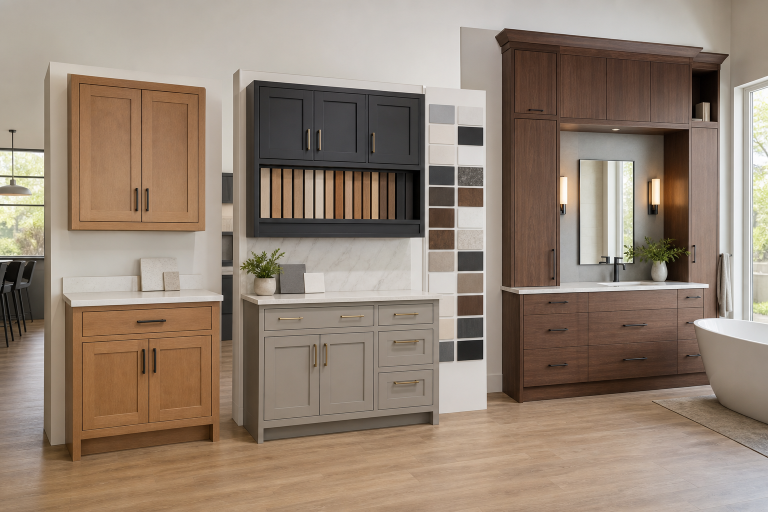
If you are also comparing finishes and adjacent surfaces, this countertop material guide can help you keep the whole room consistent in maintenance level and durability.
Which flooring material is great for kitchens, bathrooms, and busy living areas?
Room conditions should be the primary consideration, because moisture exposure and traffic level typically dictate product choice.
Porcelain and ceramic tile are widely used in bathrooms because the surface itself is water-resistant, and the Tile Council of North America publishes detailed methods for wet-area installations in the TCNA Handbook. That does not mean any tile floor is automatically waterproof. Grout, transitions, and the assembly underneath still need to be built correctly.
Kitchens are more flexible. Tile works well if you want strong spill resistance and do not mind a firmer feel. LVP can also work if you want easier cleanup and a softer step. Hardwood can be used in a kitchen if spills are cleaned up promptly and indoor humidity stays stable, which aligns with NWFA guidance for wood flooring environments.
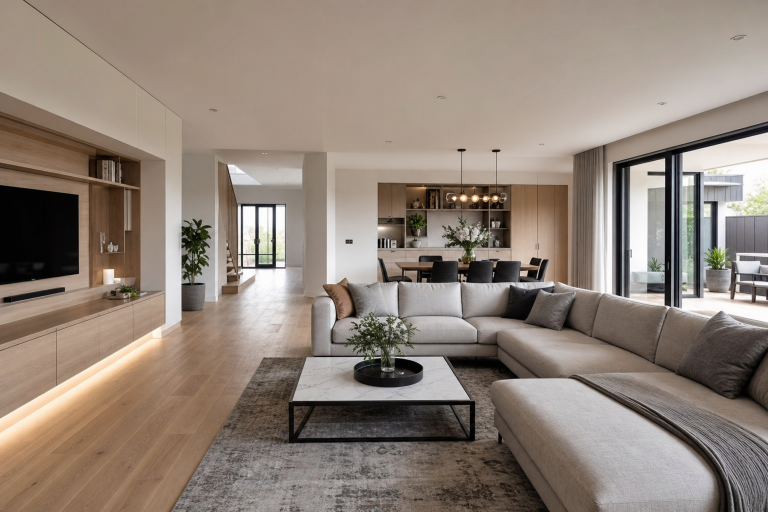
Living rooms, bedrooms, and hallways are often where hardwood shows its strengths. It brings a warmer feel and can be refinished on many solid wood products. Some engineered wood products can also be refinished, but that depends on the thickness of the real-wood wear layer in the manufacturer specification.
Where tile tends to make the most sense
Wet rooms, mudrooms, and homes in hot climates often benefit most from tile. Porcelain tile in particular is known for low water absorption, and the Porcelain Tile Certification Agency certifies products that meet porcelain standards under ASTM criteria. In plain terms, that makes porcelain a strong candidate where tracked-in water is routine.
Where LVP tends to make the most sense
Main-floor remodels, finished basements, and homes that need a faster cosmetic update often lean toward LVP. The material can mimic wood without requiring the same moisture control as real wood. Many manufacturers also offer click-lock floating systems, which can reduce installation complexity compared with site-finished hardwood or full tile work.
Where hardwood tends to make the most sense
Dry living spaces and homes where long-term appearance matters more than short-term spill tolerance are usually a good fit for hardwood. The NWFA recognizes both solid and engineered wood flooring, but it also stresses that subfloor moisture and interior climate must be checked before installation.
How do tile, LVP, and hardwood compare on water resistance?
Tile handles routine water exposure best, LVP handles spills well, and hardwood is the least forgiving when water sits too long.
This is the area where many buying mistakes start. Homeowners often hear that a floor is “waterproof” and assume the whole assembly is protected. In practice, manufacturers usually mean the product itself resists water, not that moisture cannot reach seams, edges, walls, or the subfloor.
Tile has the strongest track record in wet locations when properly installed. LVP products are commonly marketed as waterproof or water-resistant, but the exact claim depends on the specific manufacturer warranty and installation instructions. Hardwood manufacturers and the NWFA both warn against prolonged moisture exposure, because wood can swell, cup, stain, or gap as moisture conditions change.
For a full bathroom or laundry area, tile is usually the safer default. For a kitchen, powder room, or entry, LVP may be enough if the product warranty and installation method fit the space. Hardwood is generally the choice for drier rooms, not for rooms where standing water is expected.
What matters most for durability and wear?
Surface hardness, scratch visibility, and repair options matter more than marketing labels.
Tile is very durable against wear, but it can chip from impact and grout can discolor if it is not maintained. Porcelain tile is often chosen over ceramic in harder-use areas because it is denser by standard definition, though the exact durability still depends on the specific product rating and application.
LVP durability depends heavily on product construction. Wear layer thickness, core type, and warranty terms vary widely by manufacturer. A thicker wear layer does not make every plank better in every way, but it is a concrete spec worth checking because it is one of the few comparable numbers shoppers can verify in a product data sheet.
Hardwood shows wear differently. Scratches and dents are part of real wood ownership, especially with softer species. The upside is repairability. NWFA guidance recognizes sanding and refinishing as a valid way to restore many wood floors, which is something tile and most LVP cannot match in the same way.
How do comfort, noise, and warmth underfoot compare?
Hardwood usually feels warmest and most natural underfoot, LVP is somewhat softer, and tile is typically the hardest and coolest.
Call for a free estimate:
That difference changes how the room feels every day. Tile is excellent for radiant heat systems and warm climates, but many people find it less comfortable for long periods of standing. LVP has a bit more give, especially when installed over an approved underlayment. Hardwood tends to sound quieter and feel less harsh than tile, though exact sound performance depends on the assembly below.
The North American Laminate Flooring Association and many resilient flooring manufacturers publish acoustic and underlayment guidance, but the key point is simple: the floor surface is only part of the comfort story. Subfloor flatness, underlayment compatibility, and installation method affect sound and feel as much as the finish material does.
If comfort in a kitchen is a top concern, tile may still work, but many homeowners end up preferring LVP or wood in spaces where they stand for long stretches.
What should you expect to pay for tile, LVP, and hardwood flooring?
Installed costs vary widely by material and labor, but 2024 national averages from Angi generally place vinyl plank around $3-$13 per square foot, hardwood around $6-$25 per square foot, and tile around $10-$50 per square foot depending on product and installation complexity.
Those are broad ranges, not a quote. Labor drives a large share of the cost, especially for tile patterns, subfloor correction, demolition, and transitions between rooms. Material grade also changes the number fast. A builder-grade LVP and a premium rigid-core product are not competing at the same quality level. The same is true for basic ceramic tile versus large-format porcelain, or strip oak versus higher-end engineered wood.
Hardwood often carries the highest long-term upside if refinishing extends its life instead of full replacement. Tile can also last a very long time, but repair can be more visible if a matching product is no longer available. LVP may cost less upfront in many projects, yet replacement rather than restoration is often the likely path once the surface is worn or damaged.
How much does installation quality affect the outcome?
Installation quality has as much influence on performance as the material itself. The TCNA Handbook states that tile needs the right substrate, mortar, movement joints, and layout.
LVP is less demanding in some ways, but flatness still matters. Many manufacturer installation instructions set specific subfloor flatness tolerances and require acclimation or room-condition limits. If those steps are skipped, planks may separate, sound hollow, or fail at the locking edges.
Wood flooring also depends on moisture testing and acclimation rules set by the manufacturer and recognized by the NWFA. Problems such as cupping, crowning, or seasonal gaps are often tied to moisture conditions rather than to the wood species alone.
This is where vague quotes become a problem. If a proposal does not spell out subfloor prep, moisture testing, underlayment, trim, transitions, and furniture moving, the low number may simply be missing important work.
Which flooring is easiest to maintain over time?
LVP and tile are usually simpler for routine cleaning, while hardwood asks for more care but offers a different kind of long-term value.
The National Wood Flooring Association advises using cleaning methods and products approved for wood floors and avoiding excess water. Tile is generally straightforward for everyday cleaning, although grout lines may need periodic attention depending on the grout type and sealer used. LVP is also relatively low-maintenance, but manufacturers commonly prohibit steam cleaning or harsh chemicals in their care instructions.
Maintenance is also about what happens after damage. A stained grout joint, a chipped tile, a torn vinyl plank, and a scratched wood board are four different repair situations. Wood often gives you the most restoration options. LVP often gives you the easiest everyday care. Tile often gives you the best resistance to routine water and wear.
How should you choose if resale and design longevity matter?
Hardwood usually carries the broadest long-term design appeal, but the best resale choice is still the one that fits the room correctly.
The National Association of Realtors and Remodeling market data routinely treat hardwood favorably in buyer perception, but that does not make hardwood the right answer for every square foot in the house. A bathroom floor that fails from moisture is not helped by being a premium material. In the same way, a low-grade LVP installed throughout a high-end home may look out of place even if it performs acceptably.
Design longevity usually comes from restraint. Mid-tone woods, simple tile shapes, and realistic LVP visuals tend to age better than overly specific trend colors or busy patterns. If the surrounding renovation includes counters, cabinets, and fixtures, keeping maintenance expectations consistent across materials often leads to a better result. This fixture guide is useful if you are coordinating a bath remodel and want the room to work as a whole.
What is the smartest choice for your specific situation?
The best answer depends on whether your top priority is water resistance, comfort, appearance, or long-term repairability.
- Choose tile if the room gets frequent water, you want a very durable surface, and you are willing to pay for careful installation.
- Choose LVP if you want good spill resistance, easier upkeep, and a lower-cost path to a wood-look floor.
- Choose hardwood if the room is dry, you value authentic wood appearance, and you want the possibility of refinishing later.
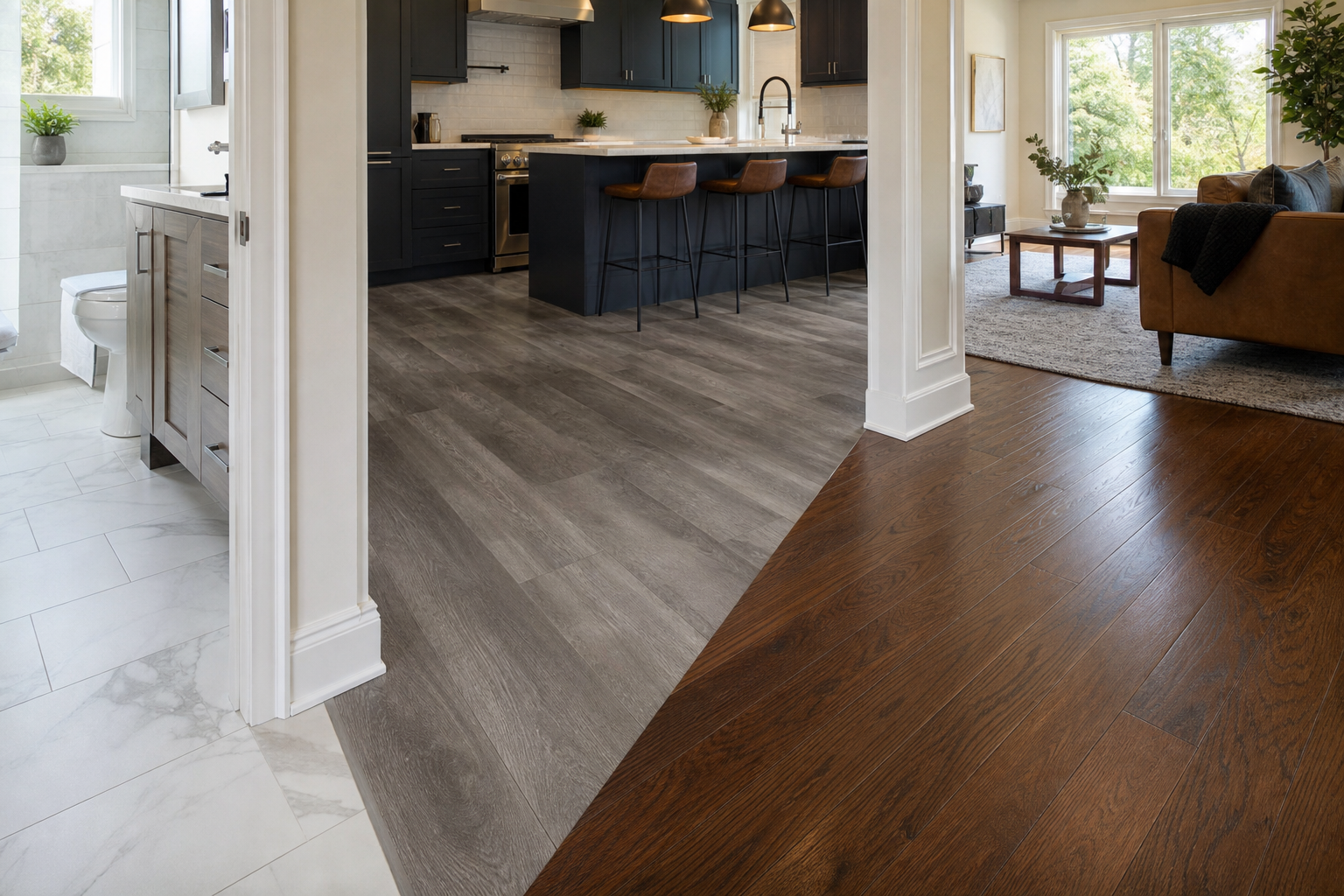
For many homes, the most practical plan is not one material everywhere. Tile in bathrooms, LVP in a basement or mudroom, and hardwood in main living areas is often a more sensible mix than forcing one product into every condition.
FAQ
Is LVP better than hardwood for kitchens?
For many kitchens, LVP is the safer choice when spill resistance and simpler maintenance matter most. Hardwood can still work in a kitchen, but wood requires faster cleanup and more moisture control.
Call for a free estimate:
Is tile too hard for a whole house?
For many households, full-house tile feels too firm and too cool in bedrooms and living spaces. It tends to fit best in wet areas, hot climates, or homes using radiant floor heat.
Does hardwood increase home value more than LVP?
Hardwood often has stronger long-term buyer appeal, but the result depends on the home, the neighborhood, and whether the material fits the room properly. A well-chosen floor in the right location usually performs better than a premium material in the wrong one.
Can LVP go in bathrooms and basements?
Many LVP products are used successfully in bathrooms and basements when the manufacturer approves that application and the subfloor is prepared correctly. The exact limits come from the product warranty and installation instructions, not from the category name alone.
What flooring lasts the longest?
Tile and hardwood can both last for decades when installed correctly and used in suitable conditions. Tile usually has the edge in wet areas, while hardwood has the edge when restoration through refinishing is part of the long-term plan.
If you are narrowing down flooring for a remodel and need help weighing moisture, maintenance, and budget tradeoffs, Abodence can help you sort through the options and request quotes that match your project. Please call a listed specialist for a free, no-obligation discussion.
Sources: National Wood Flooring Association Technical Guidelines, Tile Council of North America Handbook for Ceramic, Glass, and Stone Tile Installation, Ceramic Tile Education Foundation, Vinyl Flooring Institute, Angi 2024 flooring cost guides, manufacturer product specifications and warranty documents