Indoor Humidity and Mold Risk During a Wet El Niño Winter
Indoor humidity and mold risk can climb fast during a wet El Niño winter, especially when outdoor air stays damp, windows stay closed, and small leaks go unnoticed. According to the U.S. Environmental Protection Agency, mold can grow on many damp materials when moisture is present, so the practical goal is moisture control, not just cleaning what you can see.
A wet winter changes how a house behaves as rain events last longer and crawl spaces and basements stay cooler and damper. Bathing, cooking, and drying laundry indoors add even more moisture. If your home already has weak ventilation, air leaks, or a hidden roof or wall issue, that extra humidity can turn into condensation and mold growth.
The good news is that you usually do not need a major renovation to lower the risk. In many homes, the right fix starts with finding the moisture source, improving exhaust, and keeping indoor relative humidity in a reasonable range.
Why does a wet El Niño winter raise indoor humidity and mold risk?
Longer periods of damp weather make it harder for homes to dry out, and that leaves more opportunity for moisture to collect on surfaces and inside building assemblies. According to the NOAA Climate.gov overview of El Niño, El Niño can shift winter storm patterns and bring wetter-than-average conditions to parts of the United States, depending on region and season.
That outdoor pattern matters indoors because houses are not sealed boxes. Moisture enters through water leaks, air leakage, and everyday activities. The American Society of Heating, Refrigerating and Air-Conditioning Engineers, in ASHRAE Standard 62.2, treats local exhaust ventilation in kitchens and bathrooms as a basic moisture management tool. When that ventilation is weak or unused, indoor humidity builds up faster.
Cold surfaces make the problem more visible. Window glass, poorly insulated exterior walls, and unconditioned corners can collect condensation when indoor air is humid enough. Once materials stay damp, mold has the condition it needs to grow.
What indoor humidity level is safest in winter?
For most homes, keeping relative humidity below 60 percent is the basic threshold, and a narrower winter target of about 30 to 50 percent is often the practical sweet spot. According to the EPA Indoor Air Quality guide, indoor humidity should generally be kept below 60 percent to help control dust mites and mold.
Lower is not always better. Very dry air can create comfort problems and can make some materials shrink, but a wet winter is usually a moisture problem first. If you are seeing water on windows, musty odors, or damp spots on ceilings or baseboards, your house may need to run closer to the lower end of that range until the source is addressed.
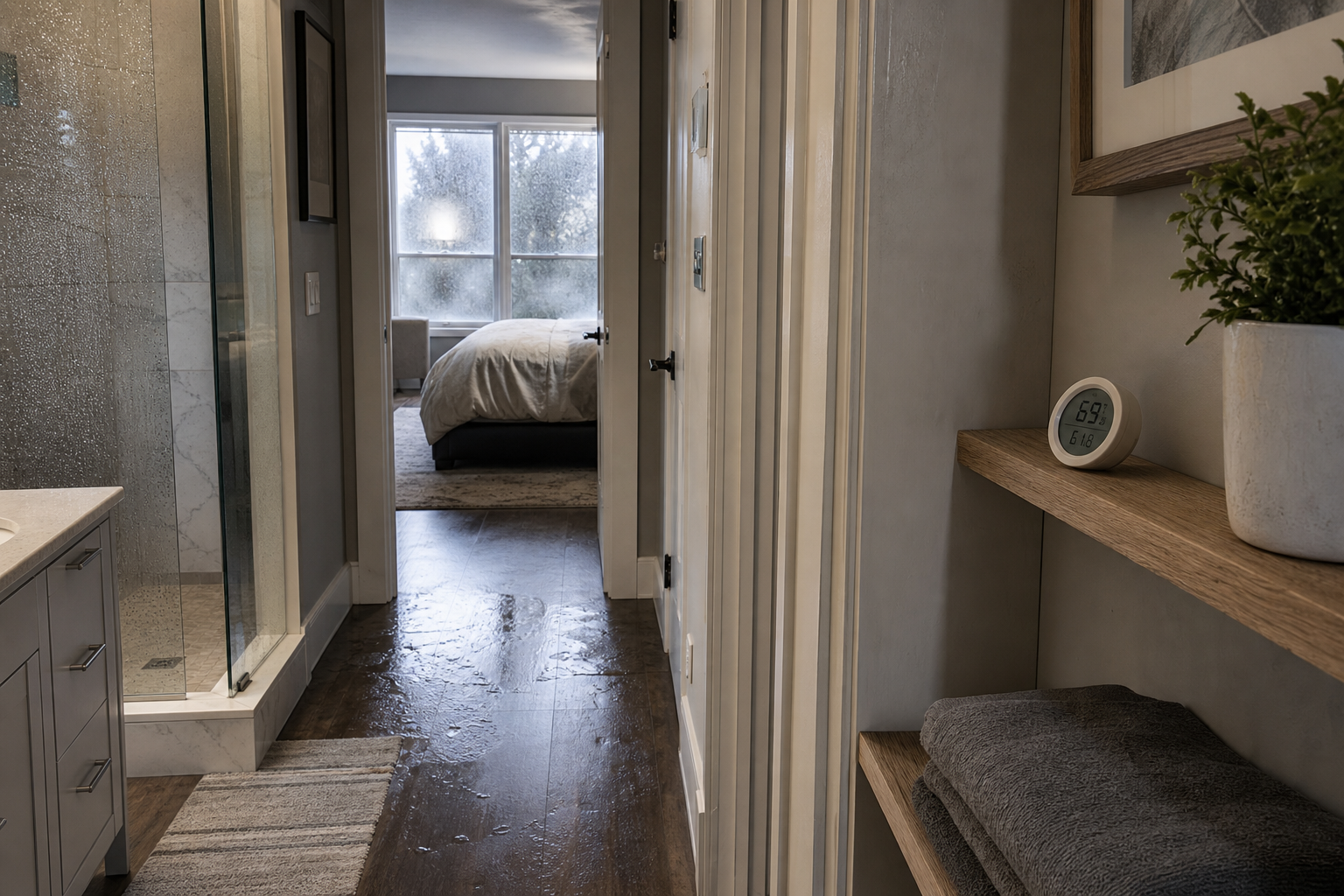
An inexpensive digital hygrometer can tell you more than guesswork will.
Where does moisture usually build up first?
The first trouble spots are usually bathrooms, kitchens, laundry areas, basements, crawl spaces, window perimeters, and exterior wall closets. Those places combine moisture generation, cooler surfaces, or weaker air movement.
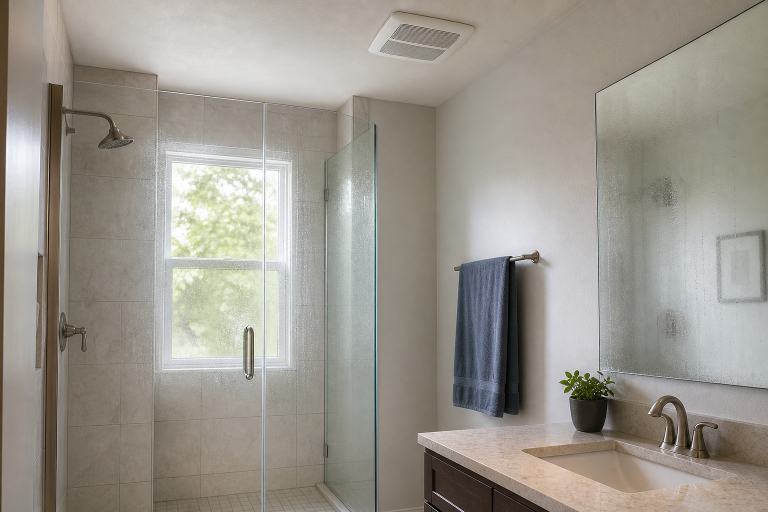
Bathrooms are obvious because showers release a lot of water vapor quickly. Kitchens add steam from boiling and simmering. Laundry rooms become a problem when dryers are not venting properly or wet clothes are dried indoors. Basements and crawl spaces often stay cool enough that moisture lingers longer after storms.
Hidden areas matter too. The EPA notes that mold may grow behind walls, above ceiling tiles, under carpets, and inside ductwork or insulation when moisture is present. If you suspect concealed damage, hidden mold and rot behind walls deserves a more careful inspection before you assume it is just a surface issue.
What signs suggest a real mold risk instead of normal winter stuffiness?
Persistent condensation, peeling paint, staining, warped trim, musty odor, and recurring dark spotting on grout, caulk, drywall, or window frames point to an ongoing moisture problem rather than a one-time humid day. The Institute of Inspection Cleaning and Restoration Certification, treats visible mold growth and moisture intrusion as conditions that require source correction, not cosmetic cleanup alone.
One isolated foggy window on a very cold morning is not the same as daily water beading on multiple windows. A single mildew patch in a shower can be a cleaning issue. Repeated spotting that comes back after cleaning usually means the room is staying damp too long.
Pay attention to timing. If odors get stronger after rain, or a closet wall feels cool and damp only on exterior-facing sides, that pattern often points to a building moisture issue instead of housekeeping.
How can you lower indoor humidity without overcomplicating it?
The most effective first steps are to vent moisture at the source, reduce indoor moisture generation where possible, and fix any water entry before buying bigger equipment. That is the order that usually makes sense because a dehumidifier cannot usually solve a roof leak or a failed bath fan.
Use exhaust fans the right way
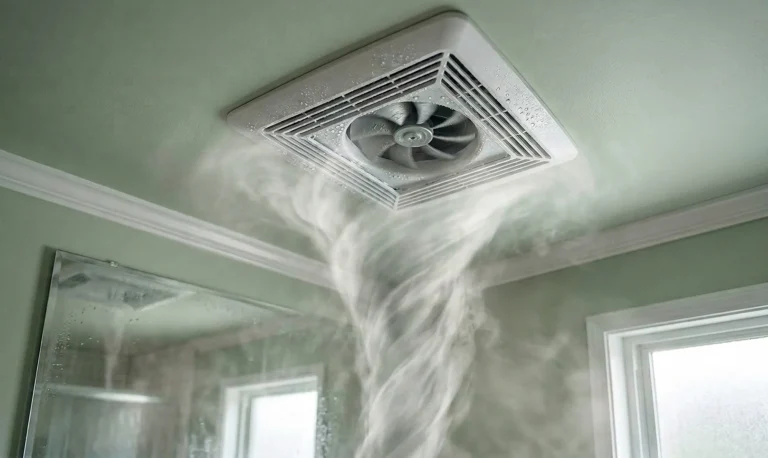
Run the bathroom fan during showers and for a period afterward, and use a vented range hood when cooking with steam or boiling water. ASHRAE residential ventilation guidance supports source control through local exhaust in bathrooms and kitchens because it removes moisture where it starts.
If your bathroom fan is loud, weak, or rarely used because it is ineffective, replacement is probably the right decision. If you are already thinking about fixture changes, comfort-height fixtures is one example of how planning a bathroom update can overlap with practical moisture improvements.
Cut back on indoor moisture loads
Drying clothes indoors, storing wet gear inside conditioned rooms, and leaving shower doors open to an unventilated bathroom all add water vapor to the house. Small behavior changes can matter when outdoor conditions already limit drying.
Use a dehumidifier when the house stays damp
A portable or whole-home dehumidifier can help when the moisture source is weather-driven or tied to a chronically damp lower level. According to the ENERGY STAR dehumidifier guidance, certified models use more efficient technology than standard units, which matters if the unit will run often through a wet season.
That does not mean every damp room needs a new appliance. If the issue is limited to post-shower humidity in one bathroom, a better exhaust fan is often the simpler fix.
When is mold cleanup a small job, and when should you call a professional?
Small, contained surface growth tied to a known moisture source may be manageable, but larger contamination, repeated regrowth, or suspected hidden damage is a professional job. The EPA says that when moldy area coverage is more extensive, or when mold is caused by contaminated water or hidden inside walls and HVAC systems, professional assessment is appropriate.
Professional help also makes sense when the source is uncertain. A stain at a ceiling corner could be roof leakage, attic condensation, or an ice-dam-related issue. During wet winters, roof problems and wall moisture often overlap, and roof replacement warning signs can help you separate a repair issue from a larger problem.
If you are getting quotes, ask for clear scope. Vague language around containment, material removal, drying, and post-remediation verification is where confusion starts. Please call one of the listed specialists for a free, no-obligation discussion.
What home repairs matter most if humidity keeps coming back?
Repeated moisture problems usually trace back to ventilation, drainage, air sealing, insulation gaps, or water intrusion, and the right repair depends on which of those is actually happening. A contractor should be able to explain the source in plain terms before proposing a large fix.
- Bath fan or range hood upgrades: Best when moisture spikes are tied to showers or cooking.
- Gutter, flashing, or roof repairs: Best when staining or odor follows rain events.
- Crawl space or basement moisture control: Best when lower levels stay damp for days after storms.
- Air sealing and insulation improvements: Best when condensation forms on cold surfaces without obvious leaks.
- Window repair or replacement: Best when moisture damage is concentrated at failing frames or glass edges, not just seasonal fogging.
The expensive repair is only justified when the moisture path supports it. If a bathroom mirror stays fogged for an hour because the fan barely moves air, replacing windows will not solve that problem.
How much do humidity and mold fixes usually cost?
Portable dehumidifiers commonly retail from roughly $200 to $500 based on 2025 ENERGY STAR marketplace listings, while bathroom exhaust fan replacements are often $150 to $800 depending on wiring and duct changes, based on 2025 HomeAdvisor marketplace estimates. For larger projects, the 2024 Remodeling magazine Cost vs. Value Report lists a midrange bathroom remodel at a national average cost above $25,000, which is relevant only when moisture control is part of a broader renovation rather than a stand-alone fix.
Professional mold remediation costs vary widely by scope, containment needs, and whether drywall, insulation, or flooring must be removed. Angi and HomeAdvisor both publish 2025 consumer marketplace ranges that often start in the hundreds for minor treatment and rise into the thousands for larger projects. Those figures are useful as rough planning numbers, not as a substitute for a written scope.
What mistakes make winter humidity problems worse?
Common mistakes are treating symptoms only, relying on bleach as the whole plan, and assuming every wet-weather issue needs a full remodel. Moisture problems are easier to solve when you match the fix to the source.
- Painting over stains before the area is dry: The mark may return because the leak or condensation pattern is still active.
- Running a humidifier without measuring humidity: Extra moisture can push windows and wall surfaces into condensation.
- Skipping fan use in winter to save heat: Short-term comfort can lead to longer drying times and more trapped moisture.
- Accepting vague remediation language: If the quote does not spell out removal, cleaning, drying, and rebuild scope, cost creep is more likely.
- Jumping straight to replacement: In many homes, a leak repair or ventilation fix solves the actual problem for far less.
What should you check after a heavy storm cycle?
Start with the places where water enters or lingers, then verify whether indoor humidity is staying elevated for days afterward. A simple post-storm check can catch a small issue before materials stay wet long enough for mold growth.
- Check ceilings, window heads, and exterior wall corners for fresh staining.
- Look at basement and crawl space surfaces for dampness or standing water.
- Read indoor humidity on a hygrometer morning and evening for several days.
- Inspect bath fans and kitchen exhaust for actual airflow, not just motor noise.
- Note any musty smell that appears only after rain.
If your HVAC system was affected by flooding or water intrusion, safety comes first. Abodence has a separate guide on AC flood safety checks that covers what should be inspected before restarting equipment.
FAQ
Can mold grow in winter if the house feels cold?
Yes, mold can still grow in cold weather when materials stay damp long enough. The limiting factor is moisture, not the season by itself.
Is window condensation always a sign of mold risk?
Not always, but repeated condensation is a warning sign that indoor humidity or surface temperature needs attention. When it happens often, nearby trim, paint, and wall materials can stay wet enough to support growth.
Should you run a humidifier during a wet winter?
Only if measurements show your indoor air is actually too dry. If relative humidity is already near or above the recommended range, adding moisture can make condensation and mold risk worse.
Do you need a whole-home dehumidifier?
Not in every house, because many problems are better solved by fixing a leak or improving local exhaust first. Whole-home equipment makes more sense when damp conditions affect large areas or return every wet season.
Will a bathroom remodel solve mold problems?
Sometimes, but only when the remodel includes the real moisture fix such as better ventilation, corrected leaks, or damaged material replacement. New tile and paint alone do not solve hidden dampness.
If you are dealing with recurring indoor humidity and mold risk during a wet El Niño winter, getting a clear inspection and written scope is the practical next step before you spend on the wrong fix. Please call a listed specialist for a free, no-obligation discussion.
Sources: ASHRAE Standard 62.2, IICRC S520 Standard for Professional Mold Remediation, Remodeling magazine Cost vs. Value Report 2024, HomeAdvisor, Angi