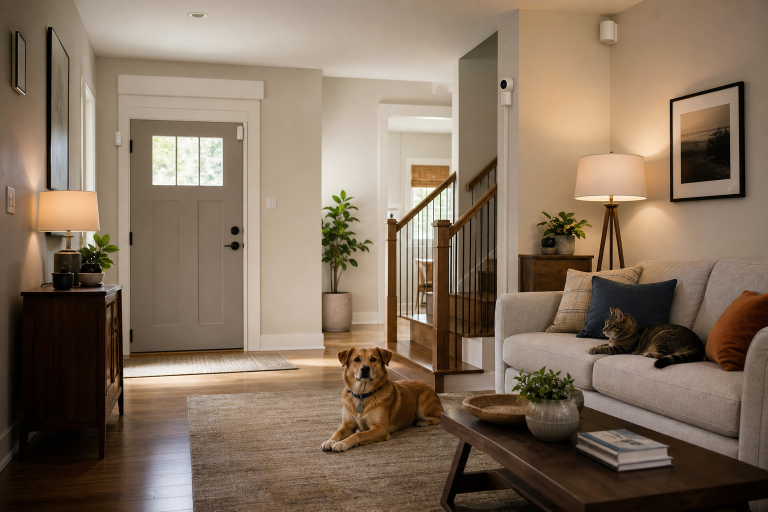
Do I really need a home security system?
A home security system is worth considering when it addresses a specific risk, such as delayed awareness of an entry, frequent vacancy, an isolated location, or a need to summon help quickly. It is less compelling when the concern is mainly reassurance and the home already has solid locks, reliable exterior lighting, careful key control, and neighbors who notice unusual activity.
Visible alarms may influence an offenders’ target selection, but no system guarantees prevention, police response, or recovery of property. The useful decision is whether a monitored alarm, self-monitored sensors, cameras, or simpler physical improvements solve the problem you actually have.
What does the evidence say about burglary deterrence?
Available research suggests that a discovered alarm can make a property less attractive to some burglars, although the evidence does not prove that every system prevents a crime.
The University of North Carolina report Understanding Decisions to Burglarize from the Offender’s Perspective, published in 2012, drew on interviews with 422 incarcerated burglars in North Carolina, Kentucky, and Ohio. In that study, 60% of respondents said they would seek another target if they found an alarm during an attempted entry, while 13% said they would stop the attempt altogether.
In a 2009 Security Journal study by Rutgers University researchers examined residential burglary patterns in Newark, New Jersey, and found an association between burglar alarms and lower burglary levels in areas with more alarm coverage. Its authors also reported a possible benefit extending to nearby homes.
National victimization data provide context, not a personal risk score. The Bureau of Justice Statistics’ Criminal Victimization, 2023 report uses the National Crime Victimization Survey to estimate household property victimization, including burglary. A national estimate cannot say whether one street, building, or home faces above-average exposure.
The research is enough to support a modest expectation: an obvious, functioning security setup may cause some would-be intruders to move on. It is not enough to treat a yard sign, camera, or alarm as a substitute for a well-secured home.
Which home security problem are you trying to solve?
The right setup depends on whether you need deterrence, notice, a record of activity, or emergency dispatch, because those functions are different.
- Deterrence: A visible camera, alarm sign, exterior lighting, and hardware that resists easy forced entry can raise the apparent effort or risk of targeting the home.
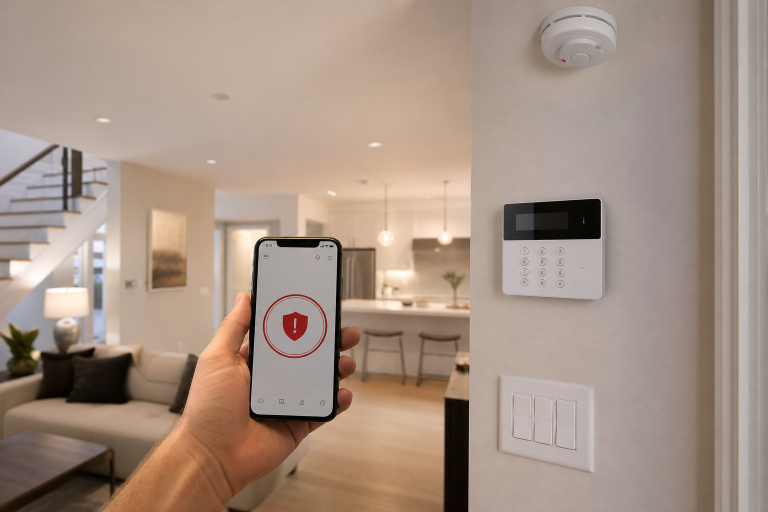
- Notification: Door, window, motion, water, and smoke-related devices can send an alert to a phone or trigger an alarm. A self-monitored system depends on someone seeing and acting on that alert.
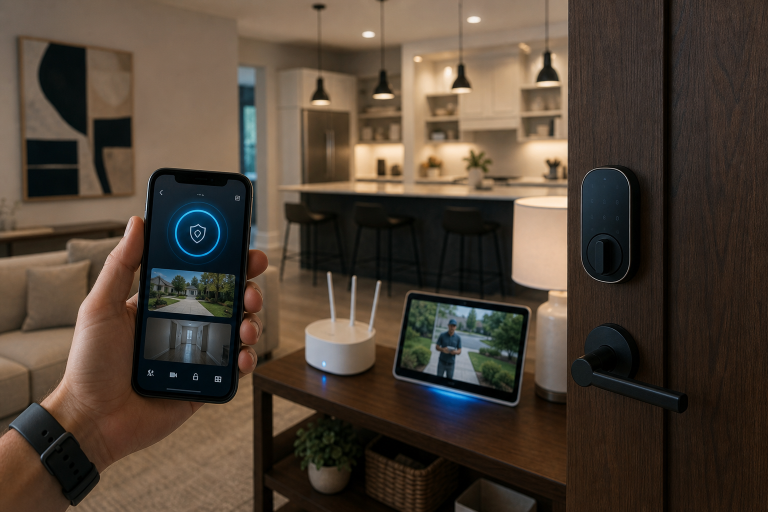
- Documentation: A camera may capture video if it is positioned, powered, connected, and configured to record at the relevant time. It does not stop an entry by itself.
- Response: Professional monitoring can process an alarm signal under the service’s procedures. A response still depends on the system working, the monitoring center’s protocol, and local emergency-service practices.
For a homeowner who mainly wants to know when a child gets home or whether a delivery arrived, a single doorbell camera or entry sensor may be enough. A large monitored system is often unnecessary for that limited purpose. Conversely, a homeowner who travels often, manages a vacant property, or wants an alarm signal handled when no one can answer a phone may reasonably place more value on monitoring.
For the period after an incident, this guide to home security after a break-in covers the practical questions to address before choosing equipment.
When is a simpler approach enough?
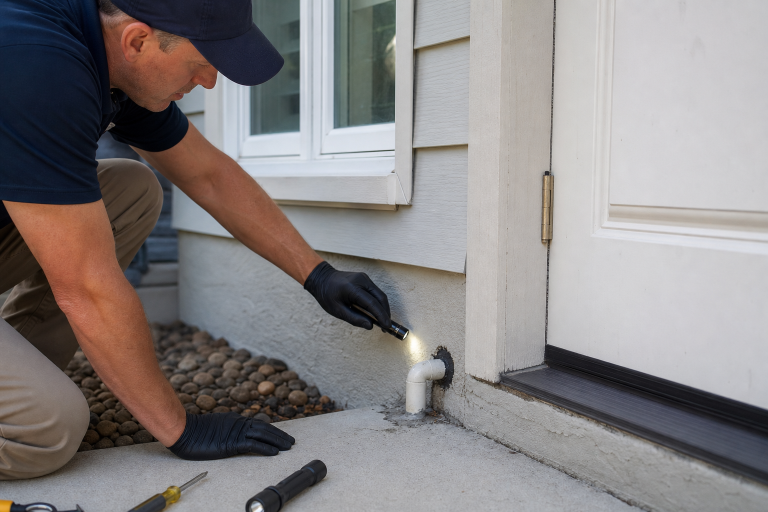
Basic physical security is often the first purchase to make when the issue is a weak entry point rather than a lack of electronics.
Start with the conditions that make access easier: a door that does not close fully, a damaged strike area, an exposed spare key, a window left accessible, or a garage remote left in an unlocked vehicle. A monitored alarm may notify someone after a sensor activates, but it does not correct a door that opens easily or a key that can be taken without entering the home.
Lighting has a limited but practical role. It improves visibility around entrances and paths, which may help residents and neighbors notice activity, but it should not be treated as proof that a home is protected. Timers and sensible exterior lighting can be a lower-cost fit for a homeowner whose main concern is returning to a dark entry, rather than a need for dispatch or recorded video.
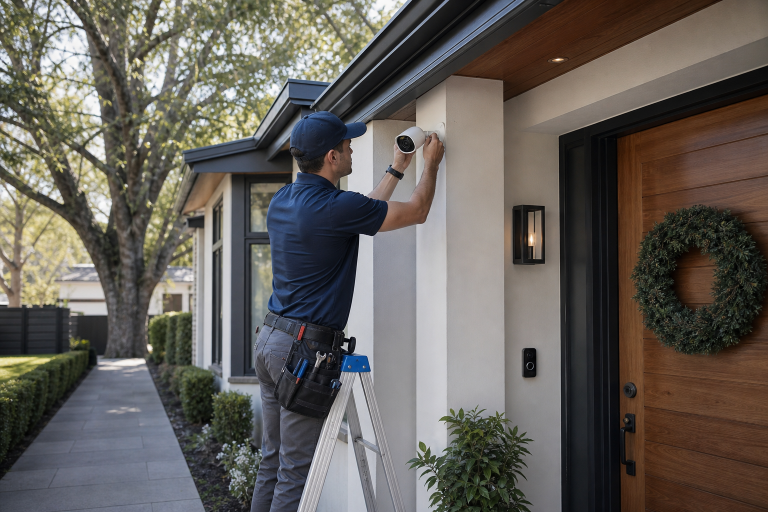
Camera placement also deserves careful consideration. A device aimed at a front walk will not document a side gate, rear door, or detached garage. Before buying cameras, identify the actual approach routes, then account for power, Wi-Fi coverage, night conditions, and whether trees, vehicles, or privacy zones block the view. The installation choices that affect coverage and ongoing service are explained in this security camera installation cost guide.
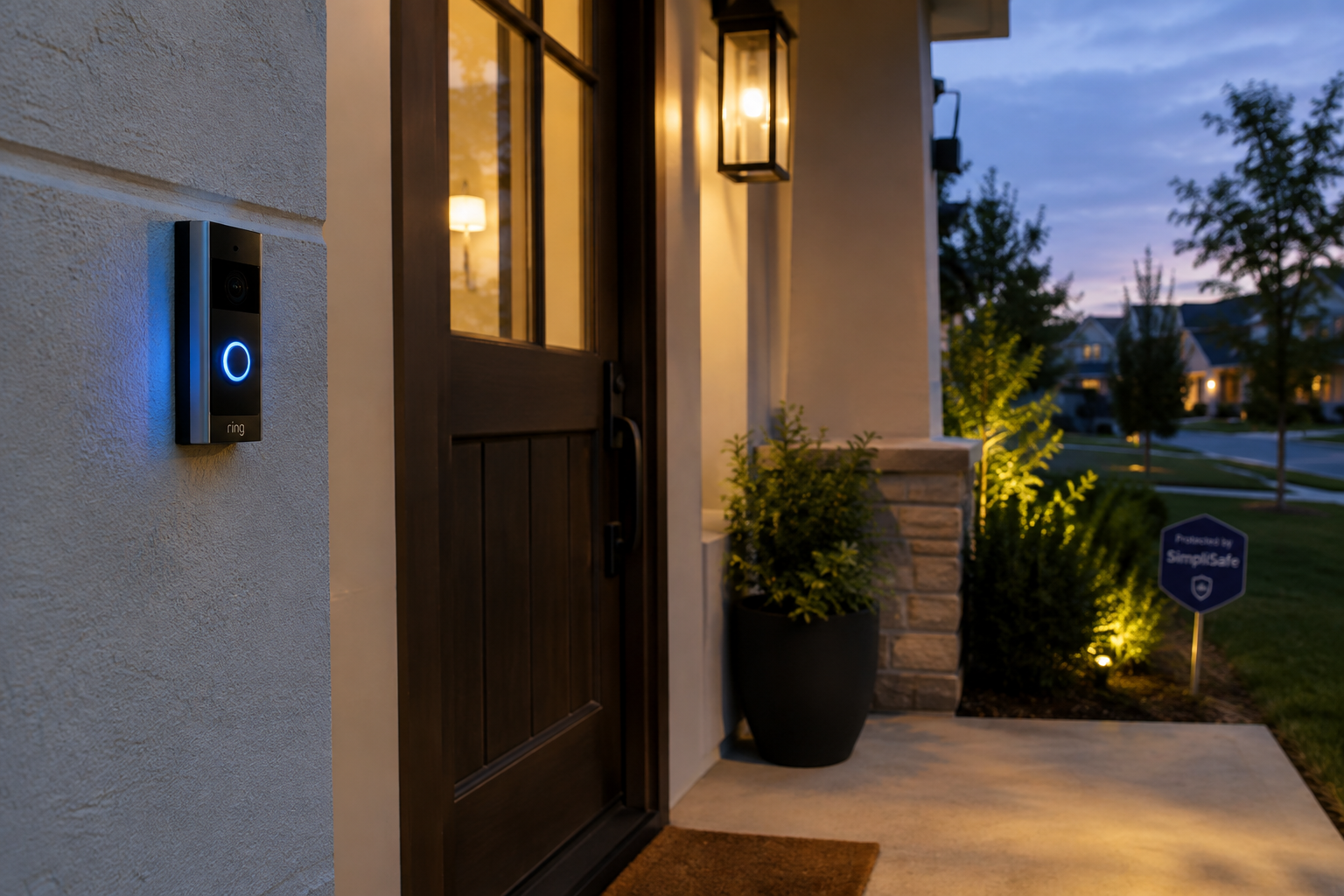
What are the limits of alarms, cameras, and monitoring?
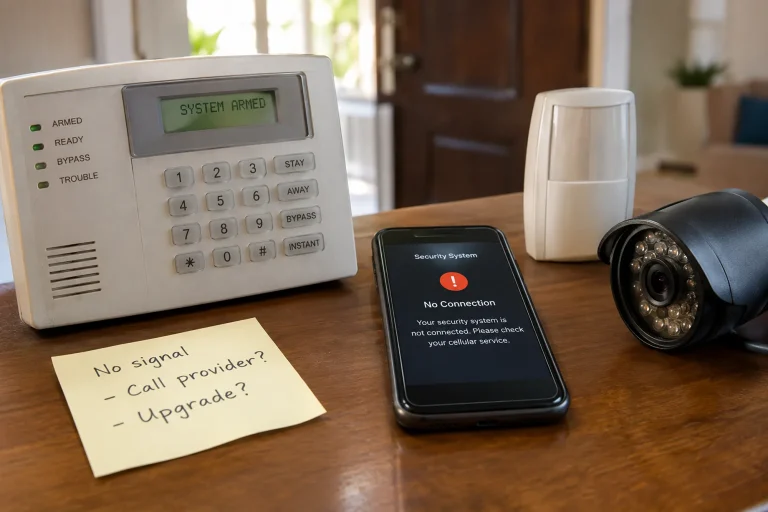
Every security system has failure points, including incorrect installation, drained batteries, interrupted power, weak wireless coverage, user error, and unreviewed alerts.
An alarm should be evaluated as a chain: sensor detection, communication, account setup, notification or monitoring, and a response by a person or agency. A problem at any link changes the outcome. Ask a provider to explain what happens if internet service drops, cellular backup is unavailable, a sensor loses contact, or a user enters the wrong code.
False alarms also deserve attention before signing. They can create disruption and, depending on the jurisdiction, may lead to local registration requirements or fees. The important rules are those published by the local police department or municipality where the property sits. Dispatch priorities and response practices are typically set by local agencies, and an alarm signal does not establish that an emergency is underway. Treat professional monitoring as a means of having a signal assessed and handled under the service agreement, not as a promise of a particular response time.
A camera’s greatest limitation is that it collects sensitive information around a home. Video may show household routines, visitors, neighbors, public sidewalks, and audio, depending on placement and settings. Review who can access recordings, how long clips are retained, whether two-factor authentication is available, and what happens to the account when a device is sold or a household member moves out. Firmware and password maintenance are part of ownership, as outlined in Abodence’s guide to home security firmware and software updates.

How should you compare security system offers?
A clear written scope is more useful than a low introductory price because it reveals what the system will actually do after installation.
Ask each provider to identify every component, where it will be placed, how it communicates, and whether the quote includes installation, activation, permits, taxes, service calls, equipment financing, cloud storage, and monitoring. Confirm the contract term, automatic renewal terms, cancellation process, transfer options if you sell the house, and whether the equipment remains usable without paid monitoring.
Read the warranty separately from the service agreement. Equipment coverage may exclude labor, batteries, accidental damage, connectivity problems, or service visits. Vague warranty language and verbal promises that do not appear in the final documents are reasons to pause. Pressure to sign immediately, unclear monthly charges, or a provider who will not leave a written scope are equally good reasons to seek another quote.
For installed burglar-alarm work, ask whether the proposed design and installation follow UL Solutions’ UL 681, Standard for Installation and Classification of Burglar and Holdup Alarm Systems, where that standard is relevant to the service offered. The question does not mean every home needs the same classification. It gives the provider a concrete standard to address rather than relying on broad claims that a package is “professional grade.”
What is a sensible decision for most homeowners?
Consider a full monitored system when the home is often unoccupied, occupants cannot reliably respond to alerts, the property has multiple access points that need supervision, insurance premium off-sets drop cost, and local risk justify the recurring contract. Consider a smaller self-monitored setup when basic package delivery, entry monitoring and limited video coverage are the main goals.
The 2012 University of North Carolina at Charlotte findings support treating visible security as one part of deterrence, while the Rutgers research supports a cautious view that alarms may correlate with lower burglary exposure at a neighborhood level. Neither study turns a security package into a universal necessity, but they tend to conclude that having a basic alarm system will likely lower intrusion risk.
If the decision remains unclear, request a written assessment and itemized quote from a local security provider, then compare it against the simpler measures your property may actually need. For a free, no-obligation discussion call a listed specialist today.
FAQ
Do alarm systems really deter burglars?
They may deter some people, especially when an alarm is discovered before or during an attempted entry. The 2012 University of North Carolina at Charlotte offender-interview study found that many respondents said they would look for another target after finding an alarm, but the study does not establish a guaranteed outcome for any home.
Is a security camera enough without an alarm?
A camera can be enough when the goal is to check activity at a specific entrance or retain a recording, and the device has dependable power, connection, and coverage. It does not provide the same function as an audible alarm or a monitoring service that handles a signal when nobody is available.
Do I need professional monitoring?
Professional monitoring is most useful when household members may be unavailable to receive and act on an alert. For a home where someone can reliably self-monitor and the goal is limited awareness, a self-monitored system or a few entry sensors may be enough.
What should I fix before buying a security system?
Address doors that do not latch securely, damaged entry hardware, exposed keys, poorly managed garage access, and avoidable blind spots first. Those measures address straightforward access problems that an alarm or camera cannot physically correct.
Sources: University of North Carolina at Charlotte, Understanding Decisions to Burglarize from the Offender’s Perspective (2012); Rutgers University research published in Security Journal (2009); UL Solutions, UL 681, Standard for Installation and Classification of Burglar and Holdup Alarm Systems.