Bathroom Mold After a Remodel: Causes and Smart Next Steps
Bathroom mold that appears after a remodel deserves prompt attention because new finishes can conceal the moisture source. The visible growth may be on caulk, paint, drywall, or a ceiling, but the useful question is where water is entering, condensing, or failing to leave the room.

Call for a free estimate:
The U.S. Environmental Protection Agency states that controlling moisture is the central way to control indoor mold, and that leaks should be fixed promptly. Its A Brief Guide to Mold, Moisture and Your Home also explains that mold can grow on materials when moisture is present. A newly remodeled bathroom adds several possible failure points, including a shower enclosure, plumbing connections, exhaust ducting, and wall or ceiling cavities.
What does mold after a bathroom remodel usually indicate?
A repeat pattern in the same location usually points to a moisture condition that remains active, rather than an isolated surface-cleaning issue. The condition may be water escaping from the shower, a plumbing leak, humid air lingering after bathing, or cold surfaces collecting condensation.
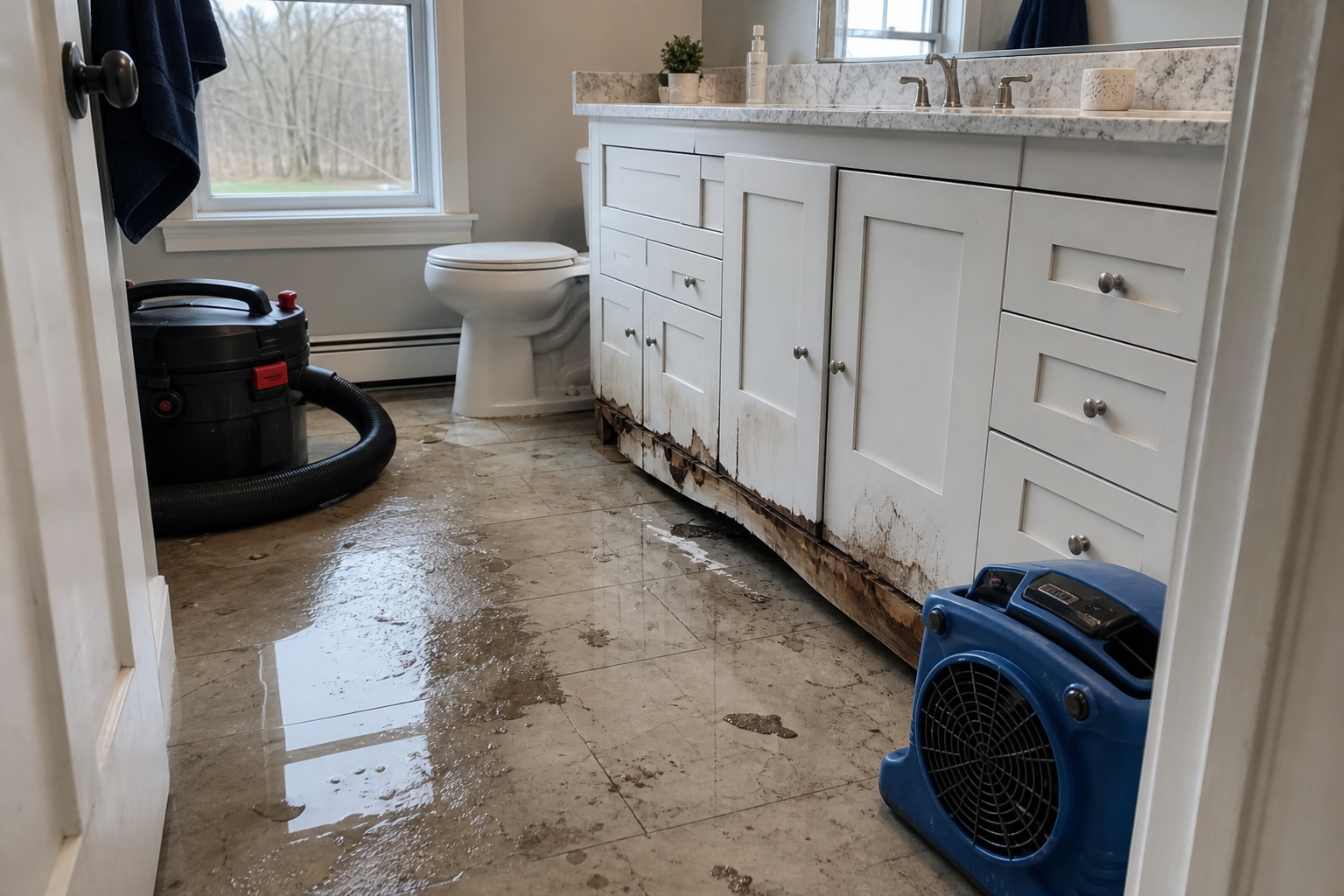
Location narrows the possibilities. Growth at the ceiling near an exterior wall can fit a condensation or ventilation problem. A line of staining below a shower valve, beside a curb, or on the ceiling of the room below deserves investigation for a concealed leak. Growth limited to the edge of a shower door can reflect water escaping during normal use, although the adjacent wall or floor still needs to be checked for moisture damage.
The IICRC S520 Standard for Professional Mold Remediation treats moisture control and correction of the underlying water problem as part of a successful remediation project. Removing visible growth without locating the water source can leave the conditions for recurrence untouched.
Timing is evidence, not a diagnosis
Growth that emerges shortly after shower use, or worsens during humid weather, supports one line of inquiry. A spot that stays wet even when the bathroom has not been used points toward another. Take dated photos before cleaning or repainting, and note whether the bathroom fan was running, whether the shower was used, and whether there was visible water outside the enclosure. This record gives a plumber, remodeler, or moisture investigator a clearer starting point.
A musty odor, soft drywall, peeling paint, swollen trim, or staining that spreads beyond the original spot calls for a professional assessment rather than cosmetic repair. Mold is a health concern, and concealed moisture can involve materials that need controlled removal.
Could the new shower or tile work be letting water through?
Water can pass behind a finished shower when the enclosure, plumbing penetrations, drain connection, or water-management layer has a defect. Tile and grout are finish materials, not a complete water-management system by themselves. The Tile Council of North America Handbook describes shower installation methods that incorporate a water-containment layer behind or beneath the tile assembly.
A problem does not automatically mean that the entire bathroom must be demolished. A leaking shower door sweep, an unsealed enclosure joint, or a fixture connection can have a narrower repair scope than a failed shower pan or wall waterproofing system. The inspection should establish the location and extent of wet material before anyone proposes a broad tear-out.
Ask the remodeler for the project contract, change orders, product data, photos taken before tile was installed, and any written warranty. Those records can show which shower construction method was specified and who supplied or installed each component. Keep communication in writing and describe observable conditions, such as “staining appeared on the ceiling below the shower,” rather than stating a cause before it has been verified.
Where water seems connected to the shower or tub, this guide to leaking shower or tub causes and warning signs provides related context on separating fixture leaks from enclosure and drain issues.
Is the bathroom exhaust system adequate after the remodel?
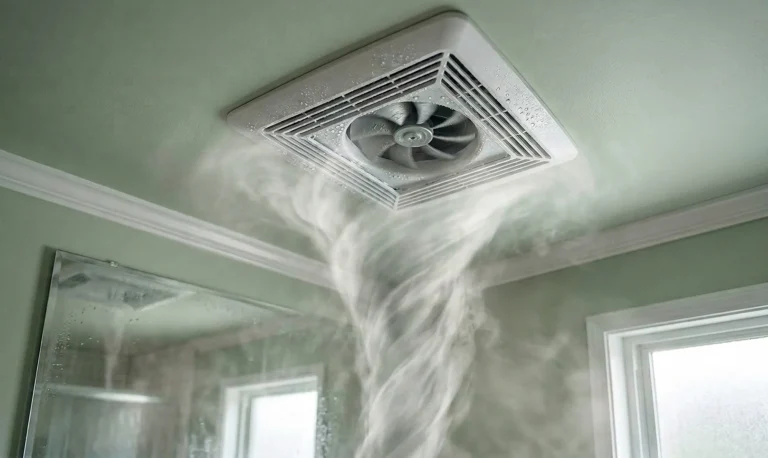
An exhaust fan must move bathroom air outdoors through a complete duct path to reduce lingering humidity. Under the International Code Council’s 2021 International Residential Code, Chapter 15, local mechanical exhaust for a bathroom is specified at 50 cubic feet per minute when intermittent or 20 cubic feet per minute when continuous. Local adoption and amendments determine which code applies to a particular project.
The fan housing alone does not establish performance. A disconnected duct, crushed flexible duct, long routing, poor termination, or discharge into an attic can prevent the system from doing its intended job. An electrician or HVAC contractor can inspect the fan, controls, duct route, exterior termination, and measured airflow without opening finished walls unnecessarily.
Confirm whether the remodel included a new fan, a replacement fan, or only a decorative grille. Also check the scope for a timer, humidity control, or other operating control. A fan that is rarely run cannot manage the moisture it was intended to remove, but a running fan cannot compensate for water entering a wall from a failed plumbing or shower component.
What should you document before requesting a repair?
A concise record of the location, timing, and conditions will make estimates more comparable and help prevent a vague repair proposal. Avoid applying fresh caulk, paint, or stain blocker before the first inspection if possible, since those changes can hide useful evidence.
- Photograph the visible area from close range and from farther back to show its position in the room.
- Record when it was first noticed and whether it changes after bathing, rain, or periods when the bathroom is unused.
- Note water on floors, shower thresholds, vanity walls, ceilings below, or around supply and drain connections.
- Gather the signed contract, invoice, permit information, warranty documents, change orders, and pre-tile photos.
- Write down the fan model if known, its switch or control type, and where the exhaust exits the house.
Do not rely on a contractor saying that an area is dry by touch. The IICRC S520 calls for professional evaluation of conditions and materials as part of mold remediation planning. A written scope should identify the suspected moisture source, the affected materials to be opened or removed, how the area will be contained if needed, and how the repaired area will be checked before it is closed.
When is a professional assessment the sensible next step?
Visible growth paired with staining, softened materials, a persistent odor, or evidence of water beyond the immediate surface warrants a qualified professional assessment. The EPA advises addressing the water problem along with cleanup, which makes a source-focused inspection more useful than a paint-and-caulk-only response.
Different professionals answer different parts of the problem. A plumber can evaluate supply, drain, and fixture connections. A qualified building or moisture investigator can help distinguish a plumbing or enclosure issue from condensation. An electrician or HVAC contractor can assess the exhaust system. A remediation firm may be appropriate when affected materials need removal and controlled cleanup.
For a repair tied to recent renovation work, the original contractor should have an opportunity to inspect the documented condition. That does not require accepting an unsupported explanation or authorizing broad demolition before the cause and scope are put in writing.
Call for a free estimate:
What a useful written scope should say
A useful proposal names the specific area to be investigated, the method used to locate moisture, which finishes may need removal, and who restores those finishes afterward. It should distinguish investigation from remediation and remediation from reconstruction. Those are separate costs and scopes, even when one company offers all three.
Be cautious with proposals that promise permanent results while omitting the source of water, the extent of material removal, or the party responsible for reinstalling tile, drywall, trim, and fixtures. Vague warranty language can leave the owner paying for finish work after a limited leak repair.
Can you prevent a repeat problem once the cause is fixed?
Lasting prevention depends on correcting the specific moisture path and confirming that the affected assembly is dry before finishes are restored. Replacing caulk may be appropriate for a localized failed joint, but it is not a substitute for correcting a plumbing leak, a shower waterproofing defect, or ineffective exhaust ducting.
Before closing a wall or rebuilding part of a shower, ask who will verify that the leak or moisture source has been corrected and what documentation will be provided. Ask for photos of concealed work where practical, along with product information and warranty terms for replaced components. These records are particularly valuable if mold returns after the original warranty period.
If the bathroom project is still in planning or needs partial reconstruction, reviewing questions to ask before a walk-in shower conversion can help clarify how scope, water management, and finish restoration should be discussed before work begins. For a free, no-obligation discussion please call a listed specialist.
FAQ
Should mold be painted over after a bathroom remodel?
Painting over visible growth is unlikely to resolve the underlying moisture condition. The EPA’s mold guidance emphasizes fixing the water problem, and painting before the source is identified can obscure the evidence needed to determine whether the issue involves a surface, a leak, or trapped moisture.
Does a bathroom fan prove the room has adequate ventilation?
No, a fan only helps when it is correctly ducted outdoors and delivers adequate airflow for the room. The applicable code requirement depends on the locally adopted code, while the fan and duct installation determine whether the system can perform as intended.
Can new grout stop mold that keeps returning near the shower?
New grout may address a damaged finish joint, but it will not correct water entering behind the tile, a plumbing leak, or moisture that remains in the room after use. Have the moisture path evaluated before paying for repeated cosmetic repairs.
Who should inspect mold that appeared soon after a remodel?
Start with the original contractor for a documented inspection, then involve the trade that matches the suspected source, such as a plumber for fixture or drain concerns or an HVAC or electrical contractor for exhaust concerns. If the cause is unclear or materials are damp or damaged, request a qualified moisture or remediation assessment and ask for a written scope and quote.