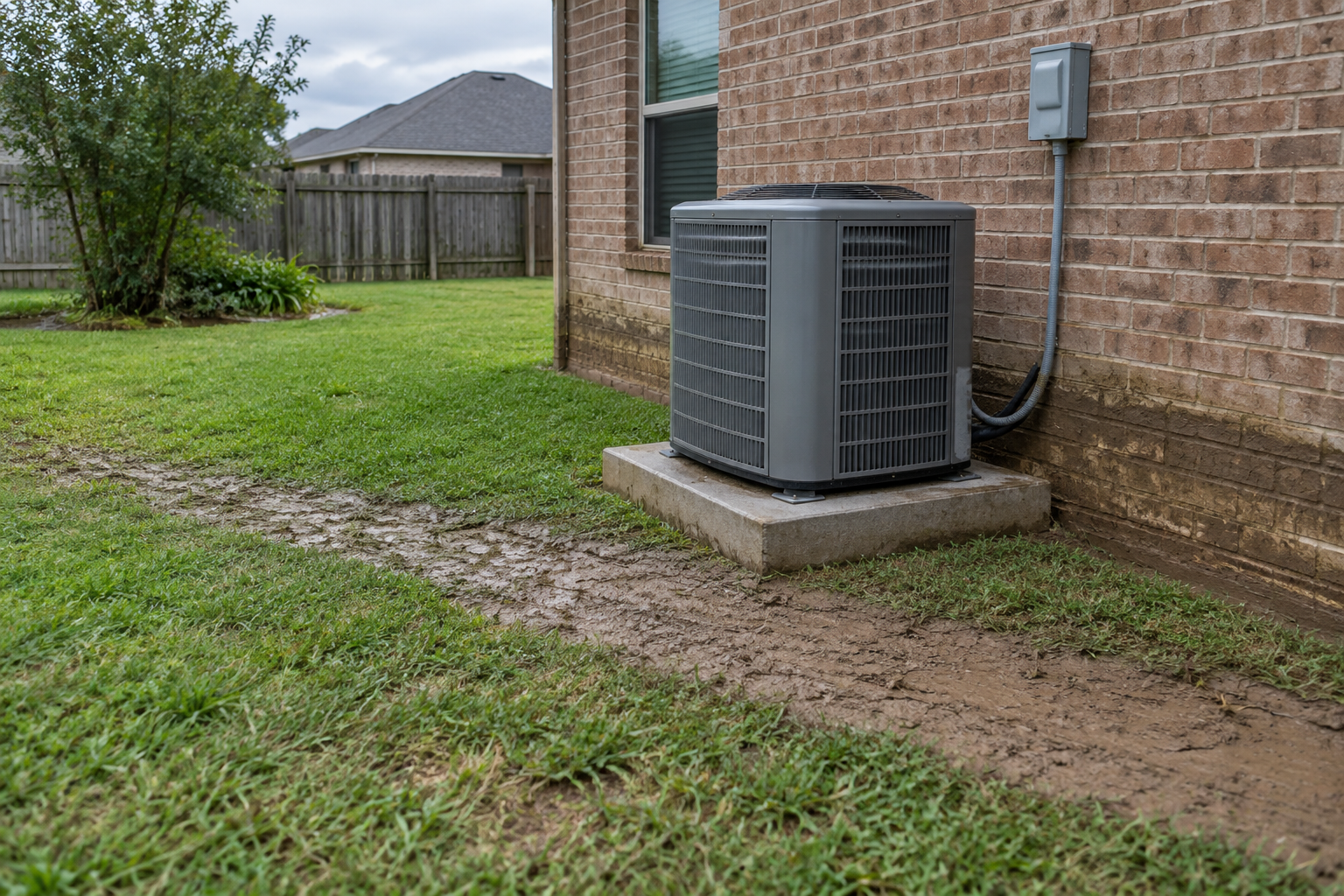
Flood-Damaged HVAC: Spot Immediate Electrical Risks
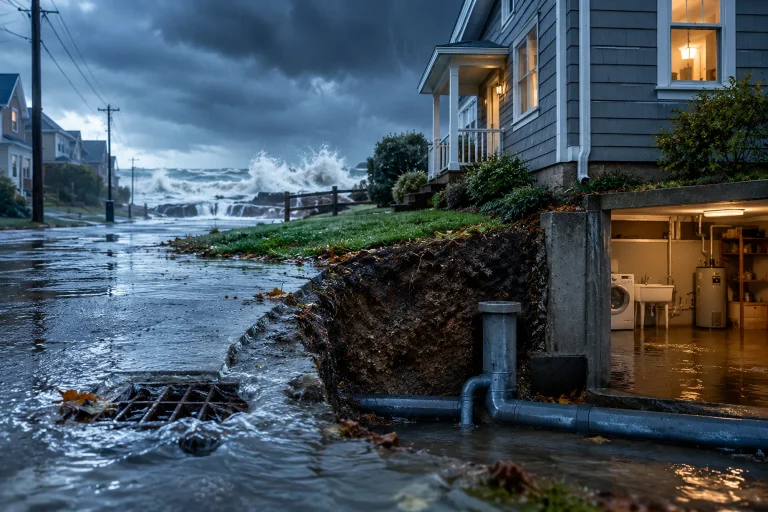
Flood exposure can turn heating and cooling equipment into an electrical hazard even when the cabinet looks intact. Water can reach terminals, controls, motors, disconnects, and branch-circuit wiring. Until qualified people inspect the electrical system and the HVAC equipment, treat a flooded outdoor condenser or basement air handler as unsafe to touch or restart.

Call for a free estimate:
The waterline is useful evidence, but it does not define the full extent of damage. Floodwater can carry silt into openings, leave conductive residue after it recedes, and affect equipment below the visible high-water mark. A unit that dries out is not automatically ready to operate.
What should you do when floodwater reaches HVAC equipment?
Keep people away from the equipment and arrange qualified electrical help before anyone attempts to restore power. The Federal Emergency Management Agency advises people returning after a flood not to enter a building if floodwaters remain around it and to have electrical systems checked by a qualified electrician before turning power back on.
If the main electrical service can be turned off from a dry, safe location without stepping into water or touching a wet surface, FEMA advises shutting off power. If reaching the panel requires entering a wet basement, standing water, or an area with damaged wiring, leave it alone and contact the electric utility or emergency services as appropriate. Do not try to use the outdoor HVAC disconnect as a substitute for a safe, verified service shutoff.
A flooded air handler, furnace, heat pump, or condenser should remain off. Do not remove access panels, pull a disconnect, reset a breaker, plug in a pump near the unit, or test whether the thermostat still works. Those actions can put a person in contact with an energized fault path.
Look for these risk signs:
- Water is touching or has covered an air handler, furnace, electrical panel, disconnect, receptacle, or extension cord.
- A breaker has tripped after the flood, or a GFCI outlet will not reset.
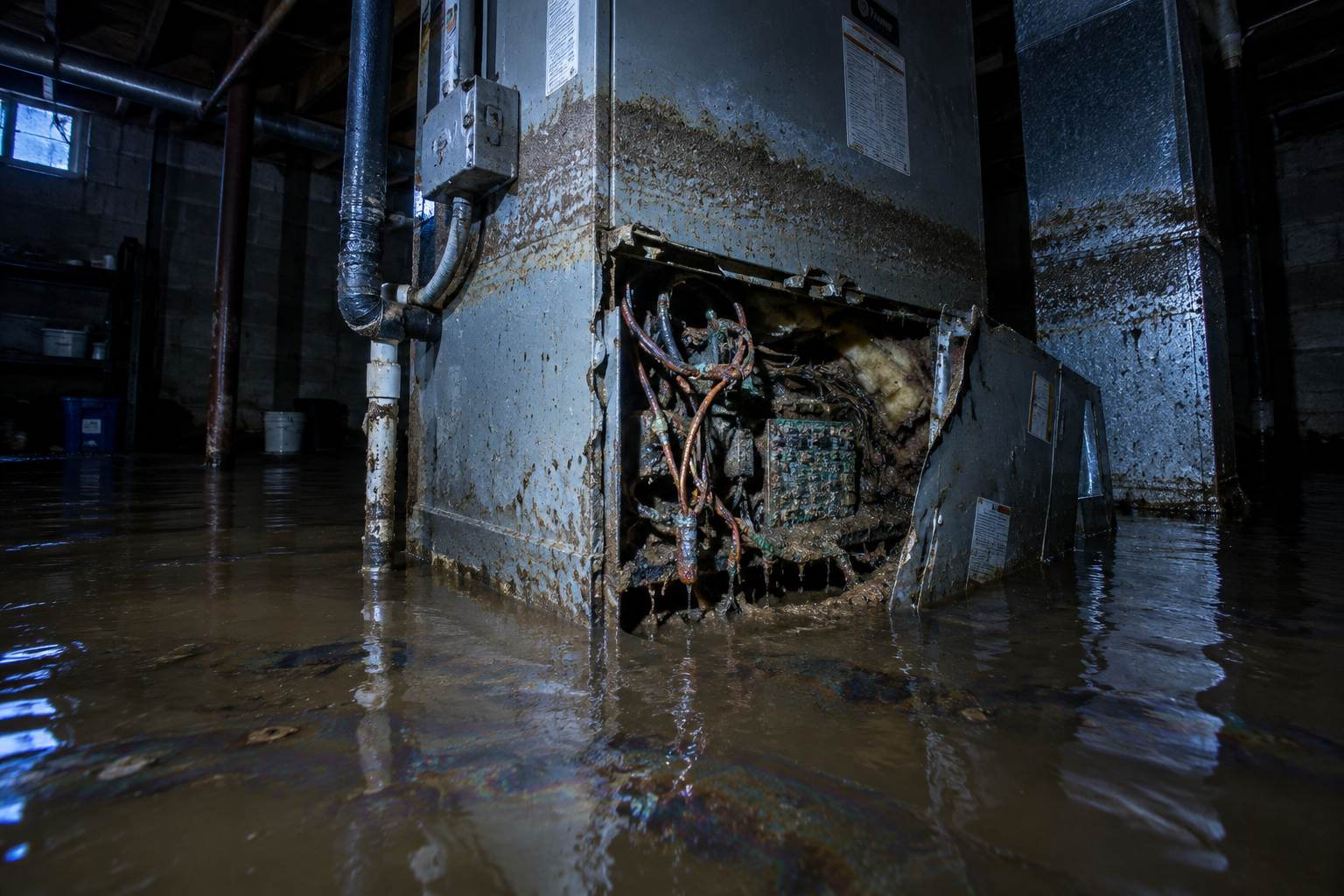
- The HVAC cabinet has a mud line, wet insulation, visible corrosion, debris inside an opening, or a damaged access panel.
- There is a burning odor, buzzing, crackling, smoke, sparks, or a fallen electrical line.
- Water entered a basement or crawlspace where HVAC wiring or controls are located.
For smoke, sparks, a fallen line, or an immediate threat to people, move away and call emergency services and the utility. A repair visit is the wrong first response to an active electrical emergency.
Which flood-damaged HVAC parts create immediate electrical risks?
The greatest concern is any component that can still be connected to power while wet, contaminated, or physically damaged. The Occupational Safety and Health Administration warns that flood conditions can expose people to energized electrical equipment and advises keeping clear of electrical hazards until the system has been assessed.
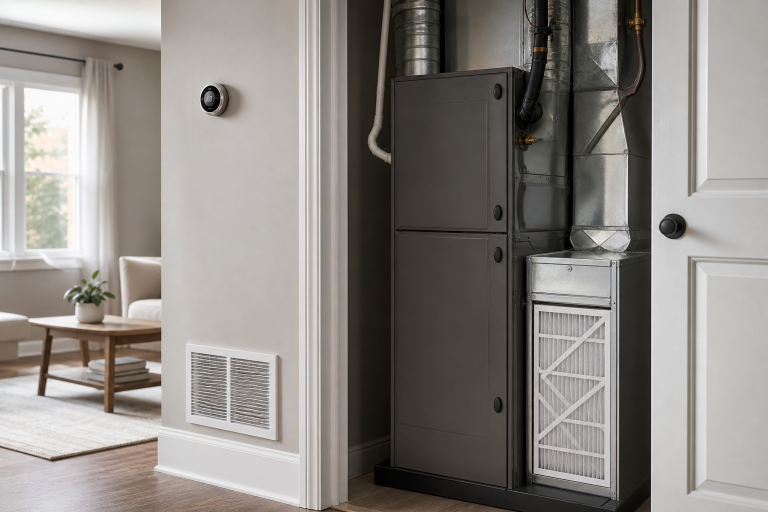
In a basement air handler or furnace, the lower cabinet often contains control boards, transformers, relays, capacitors, blower wiring, and connections to the branch circuit. A shallow flood can reach these components even when the upper section, supply ducts, and thermostat appear dry. Silt can enter through seams, drain openings, or a displaced panel and remain after standing water is gone.
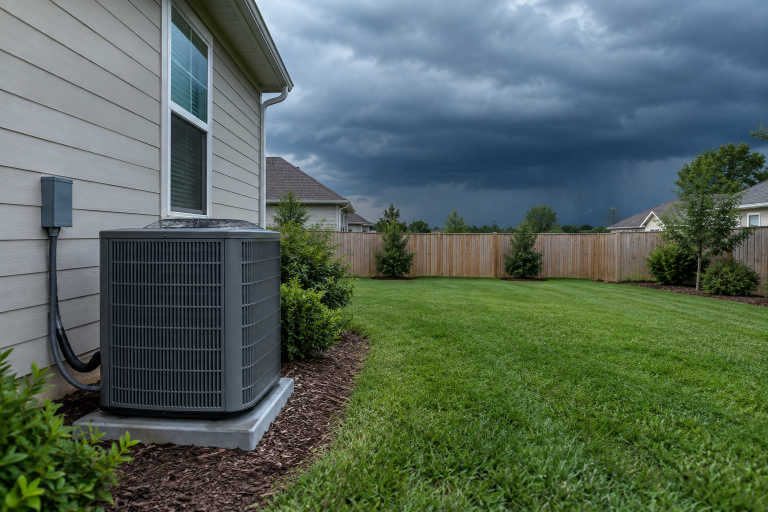
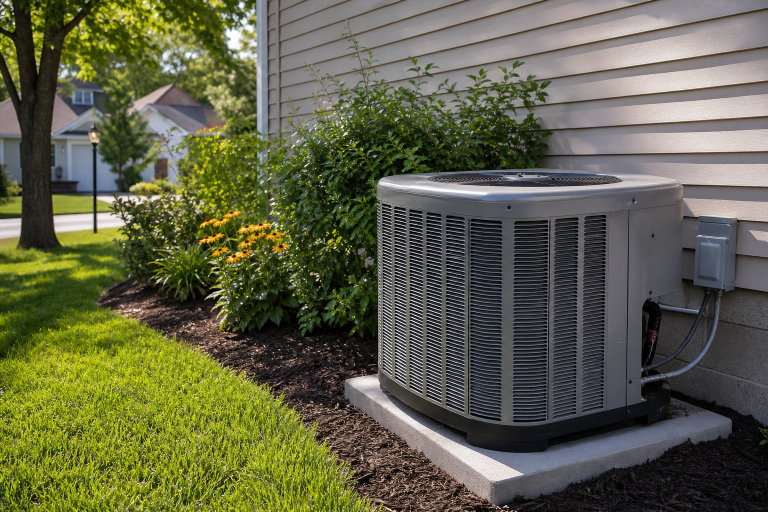
Outdoor condensers and heat pumps have electrical connections near the bottom of the cabinet and a disconnect mounted nearby. Floodwater can enter the unit, damage insulation on wiring, contaminate the contactor and capacitor area, or affect the disconnect enclosure and its wiring. A condenser elevated above the ground may still have an exposed disconnect or conduit connection at a lower level.
Moisture inside a cabinet is only one issue. Floodwater can deposit mud, salts, oils, and other residue that can remain on insulation and circuit boards. Cleaning a visible exterior does not show whether water entered an electrical compartment, nor does it verify that damaged protective devices will operate as designed.
Do not judge safety by whether the thermostat screen lights up. A thermostat may be powered by a low-voltage circuit while the equipment serving it has unsafe line-voltage components.
Why is a tripped breaker or wet disconnect a reason to stop?
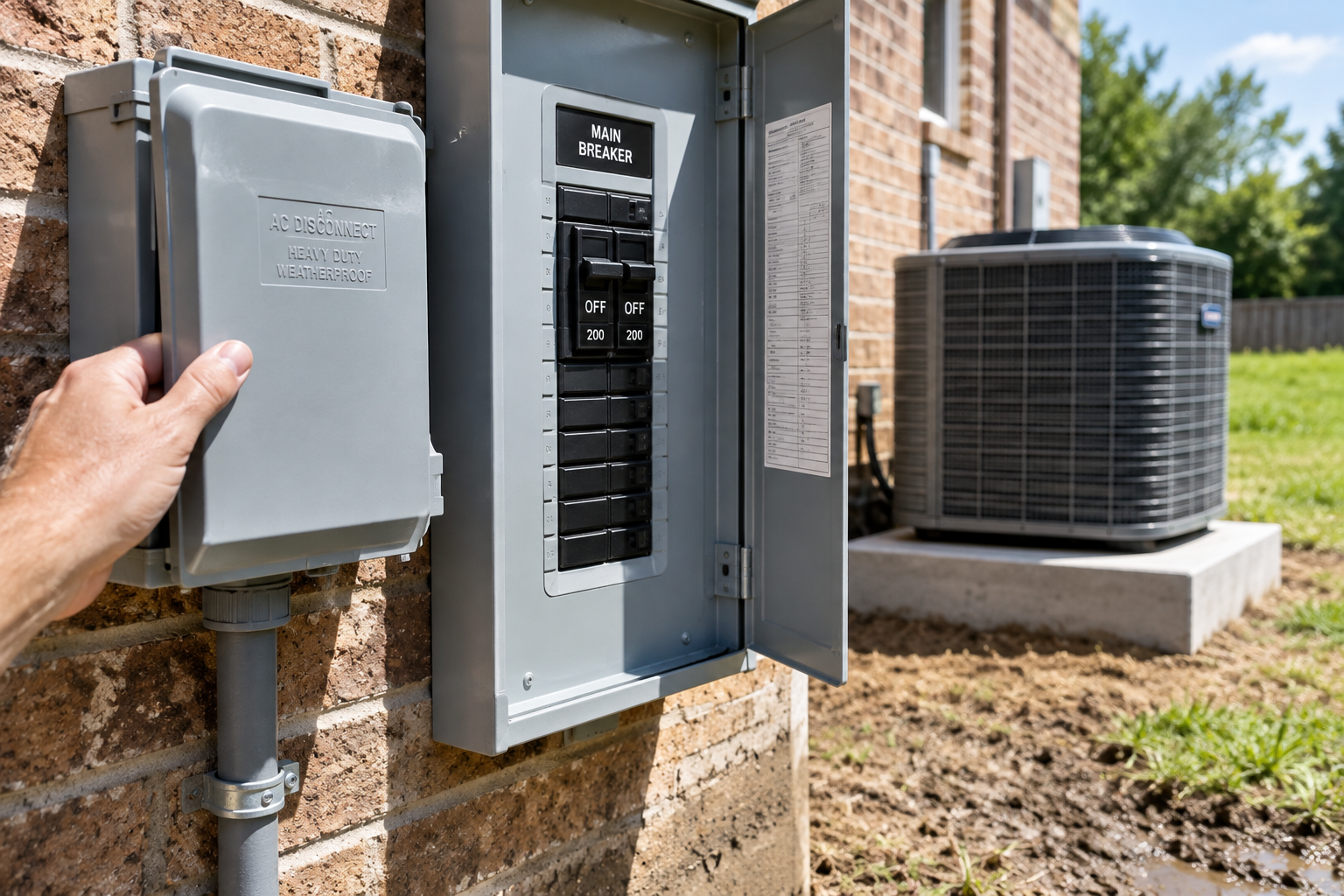
A breaker that trips after flooding should be treated as a warning that requires investigation, not as a reset button. The U.S. Consumer Product Safety Commission states in its flood recovery guidance that electrical equipment exposed to floodwater, including circuit breakers, fuses, ground-fault circuit interrupters, and arc-fault circuit interrupters, should be replaced rather than reconditioned.
Leave the breaker in its current state unless the utility, emergency personnel, or a qualified electrician directs otherwise. Photograph its position from a safe, dry location if that can be done without approaching damaged equipment. A clear record can help the electrician understand what happened before power restoration.
Who should inspect a flooded heating and cooling system?
A licensed electrician should evaluate the electrical service, panel, breakers, disconnects, receptacles, and wiring before an HVAC contractor is asked to restart or assess connected equipment. This approach separates a building-power safety decision from the diagnosis of the heating and cooling appliance.
The Air-Conditioning, Heating, and Refrigeration Institute, in its flood-recovery guidance for HVACR equipment, distinguishes equipment that may be cleaned and evaluated from components that flood exposure can make unsuitable for continued use. A qualified HVAC technician should inspect the appliance after the electrical system is made safe, not simply energize it to see if it runs.
For an air handler, the HVAC assessment commonly addresses the blower assembly, electrical controls, wiring, insulation, drain components, and any accessories mounted in the cabinet. For a furnace, it also addresses combustion-related controls and components. For an outdoor unit, the review should cover the electrical compartment, compressor and fan connections, controls, coil condition, and evidence that water entered the cabinet.
For broader decision factors once the system is safe, this guide to HVAC repair or replacement explains how condition, age, and repair scope can shape the choice.
What should an inspection report and repair quote include?
A useful flood-damage report identifies the water exposure and the exact components examined, rather than relying on a vague statement that the system was “checked.” It should give you a record for insurance discussions and make it easier to compare proposed work without authorizing unnecessary replacement.
Call for a free estimate:
- The observed high-water mark and whether water entered the HVAC cabinet, disconnect, panel, or connected wiring.
- The electrician’s findings on service equipment, breakers, disconnects, receptacles, and branch circuits serving the system.
- The HVAC technician’s findings on specific flooded or contaminated components, including controls, motors, electrical compartments, and insulation.
- Each proposed replacement part, labor item, permit or inspection requirement, and the party responsible for each part of the work.
- Whether the recommendation is to repair, replace defined components, replace the system, or defer a final decision pending electrical repairs.
- Any manufacturer warranty limitation or insurer documentation requirement that applies to the proposed work.
Ask for the reason behind every major line item. “Flood damage” alone is too broad to compare bids. A quote should connect the part being replaced to documented exposure, contamination, physical damage, or an inspection finding.
Be cautious when a contractor proposes an immediate system replacement without identifying affected components or coordinating with the electrical inspection. The reverse problem also occurs when a quote offers to dry, clean, and restart equipment without explaining why flood-exposed electrical parts remain suitable for service.
Should you restart the system after the water goes down?
No, power should stay off until qualified inspection confirms that the electrical system and HVAC equipment can be safely returned to service. Dry weather, a clean-looking cabinet, and a working thermostat do not replace that evaluation.
Restoration may involve more than the main HVAC unit. A whole-house dehumidifier, condensate pump, duct-mounted air cleaner, humidifier, boiler controls, and smart thermostat accessories can each have their own power connection or low-voltage wiring. Tell the inspectors about all equipment in the flooded area so no connected device is overlooked.
Once the hazard has been addressed, a technician can advise whether your system needs ordinary follow-up service. This overview of HVAC maintenance considerations may help with the later maintenance conversation, but it does not replace a flood-exposure assessment.
FAQ
Is an outdoor AC unit safe if only the bottom was underwater?
No, partial submersion still warrants inspection before operation because electrical connections and components may be located in the lower part of the cabinet. The observed waterline, condition of the disconnect, and evidence of water entry guide the electrician’s and HVAC technician’s assessment.
Can a flooded air handler be dried out and used again?
Only a qualified inspection can determine whether continued use is appropriate. The CPSC’s flood recovery guidance specifically calls for replacement of flood-exposed electrical protective devices, and an HVAC professional must evaluate the air handler’s affected electrical and mechanical components separately.
Should you call an electrician or an HVAC company first after a flood?
Start with a licensed electrician when water may have reached electrical service equipment, breakers, wiring, a disconnect, or a powered HVAC cabinet. After the electrical system is made safe, an HVAC technician can assess the heating and cooling equipment and document the repair or replacement scope.
If floodwater reached your HVAC equipment, request an electrical safety assessment and a separate written HVAC evaluation so the next decision is based on documented conditions rather than a quick restart. Please call a listed specialist for a free, no-obligation discussion.