Flooded Basement Furnaces: When Replacement Is Needed
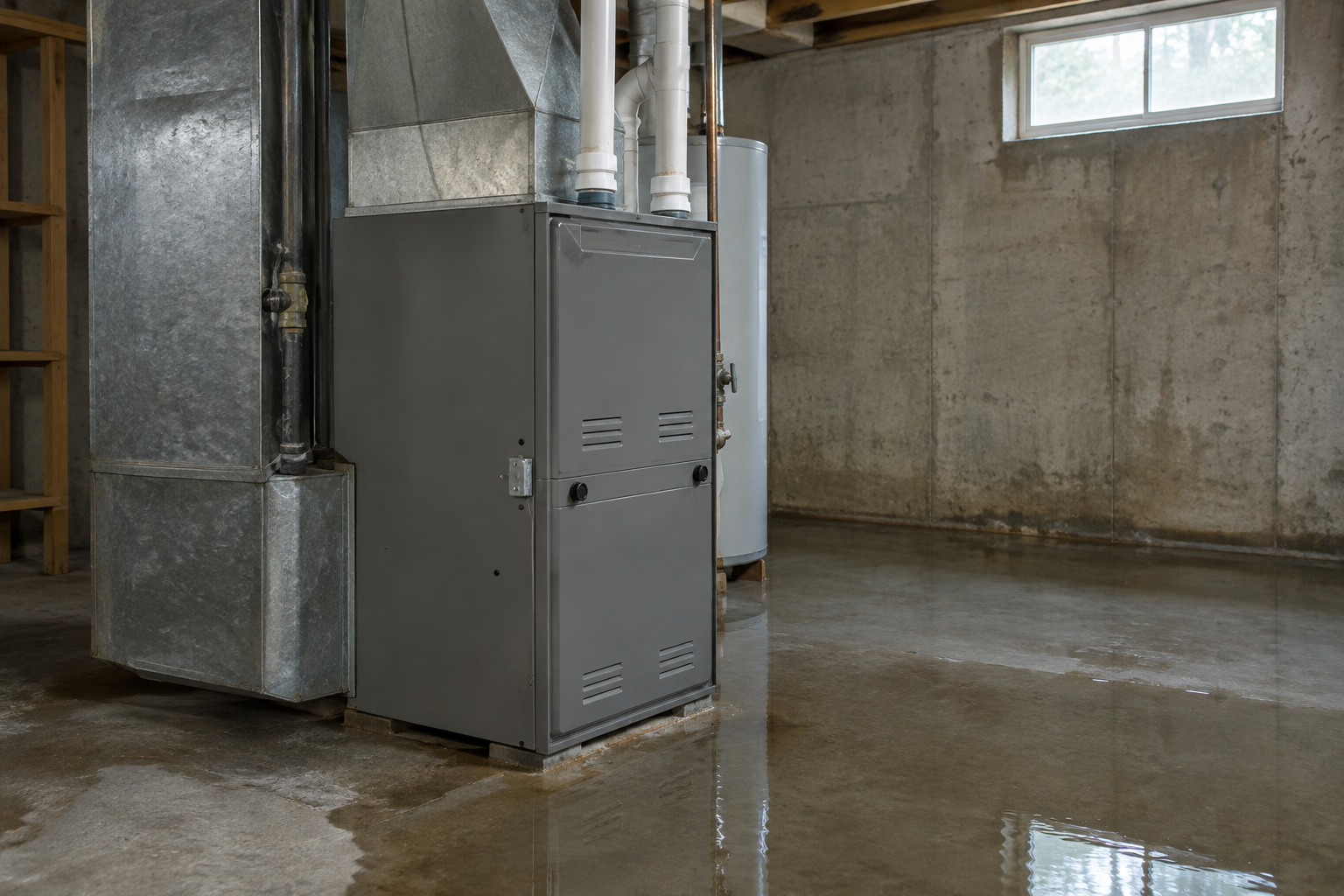
A basement furnace that has been in floodwater should remain off until a qualified HVAC contractor and the gas utility, where applicable, assess it. Floodwater can reach controls that regulate fuel, ignition, flame sensing, and blower operation. The result is often replacement rather than repair, especially when water reached the burner compartment, gas controls, electrical cabinet, or motor.

Call for a free estimate:
The immediate priority is safety and documentation, not drying the furnace out or attempting to restart it. A replacement decision should be based on the water level, the equipment manufacturer’s instructions, the utility’s requirements, and an inspection of every component exposed to water.
Why should a flooded furnace stay turned off?
Flood-exposed fuel-burning equipment should not be restarted because contaminated water can damage gas controls and electrical safety parts in ways that are not visible after the cabinet dries. The U.S. Consumer Product Safety Commission advises consumers to have gas appliances inspected by a qualified professional after flooding and notes that flooded gas controls and safety devices may need replacement.
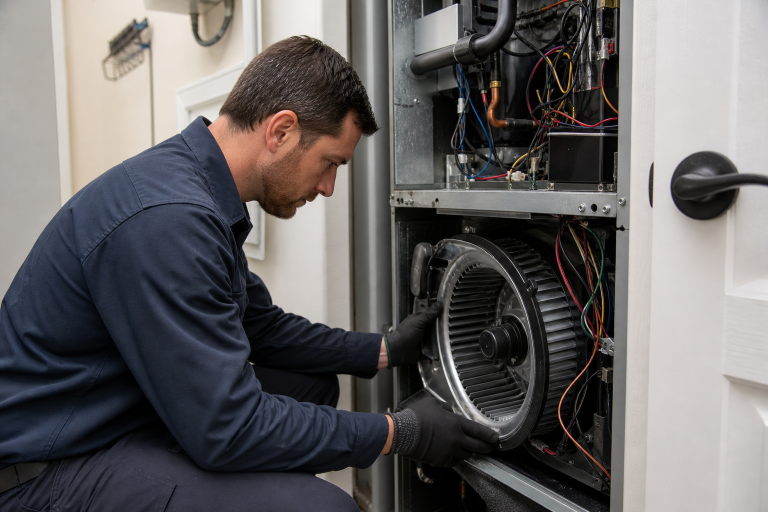
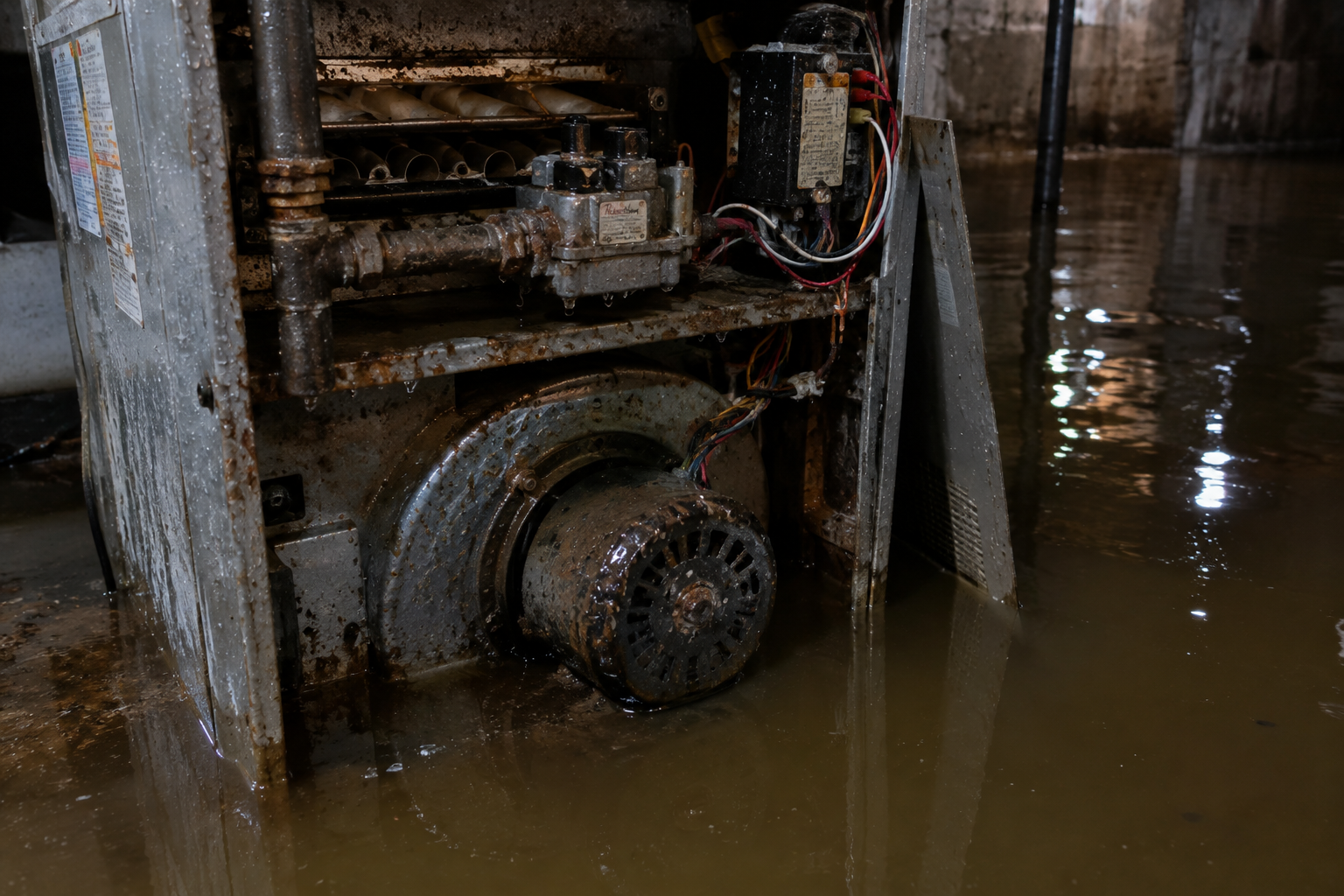
A furnace is a system of interdependent safety components, not simply a metal cabinet with a burner. Depending on the model, water may contact the gas valve, pressure switches, rollout switches, control board, wiring terminals, inducer assembly, igniter, flame sensor, transformer, and blower motor. Silt and dissolved contaminants left behind by floodwater can corrode connections and interfere with moving or sensing parts.
Turning power back on can also create an electrical hazard if water entered the disconnect, service switch, wiring, or control board. Do not remove panels, bypass a safety switch, or try to determine whether the unit “still works.” If you smell gas, leave the area, avoid operating electrical switches, and follow the gas utility’s emergency instructions. A dry exterior panel does not establish that the furnace is safe to operate.
When does flood damage mean furnace replacement?
Replacement is commonly the appropriate outcome when floodwater reached the gas valve, burner controls, electrical components, or blower motor, because these parts govern combustion, ignition, shutdown, and air movement. The CPSC specifically warns that gas controls and safety devices that have been flooded should be replaced, rather than assumed serviceable after drying.
Water depth alone is not enough to judge the outcome. A few inches of water may still reach low-mounted electrical connections or a blower compartment. Conversely, water on the floor that never contacted the appliance can call for a different response. An HVAC contractor should identify the verified high-water mark and compare it with the location of the furnace’s components.
Complete furnace replacement may be more reasonable than replacing a long list of individual parts when the cabinet and multiple internal systems were submerged. That is a scope decision, not a rule that every wet basement requires a new furnace. Ask for the findings in writing, including which components were contacted by water and why individual repair is or is not supported by the manufacturer’s guidance.
What should you document before cleanup or removal?
Clear photos of the furnace, the water line, connected equipment, and the surrounding basement give the contractor and insurer a record of what was exposed. Take wide shots that establish the appliance’s location, then closer photos of the lower cabinet, electrical disconnect, drain piping, duct connections, and any visible sediment. Record the date of the event and the approximate highest water level if you know it.
Keep the furnace model and serial number, installation paperwork, maintenance records, and any prior repair invoices. These records do not prove that flood-damaged parts can remain in service, but they can help identify equipment specifications, remaining warranty terms, and compatible replacement options.
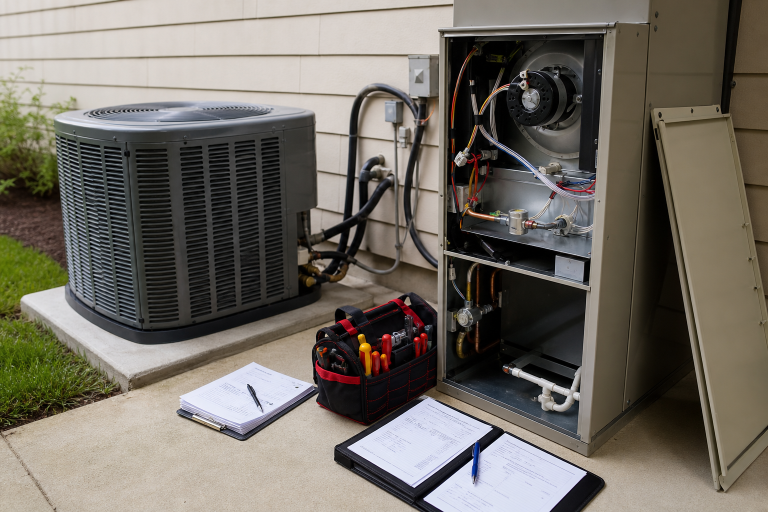
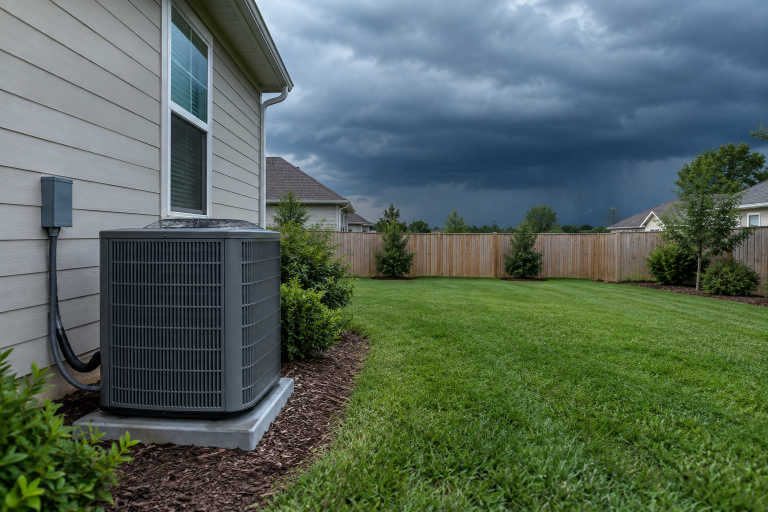
Document the rest of the HVAC system separately. The outdoor condensing unit, ductwork, thermostat, humidifier, condensate pump, air cleaner, and water heater may have different exposure levels and may require separate inspection. Abodence’s AC flood safety checklist explains why each part of a split system needs its own review after water exposure.
What should an HVAC inspection cover after a basement flood?
A written inspection should identify the flood level, the equipment affected, the components that were exposed, and the manufacturer-based reason for repair or replacement. It should also state whether the gas supply, electrical circuit, duct connections, and condensate equipment require work before a replacement furnace can be commissioned.
Ask the contractor to separate confirmed flood damage from unrelated recommendations. For example, an old thermostat or worn duct insulation may deserve attention, but it should not be folded into a flood claim without a clear explanation. Separating the scope makes it easier to compare estimates and discuss coverage with an insurer.
- Whether water reached the gas valve, burners, ignition parts, safety switches, control board, wiring, or blower section.
- Which manufacturer instructions or component guidance support the proposed repair or replacement.
- Whether the electrical disconnect, branch circuit, outlet, or service switch was exposed and needs evaluation by a licensed electrician.
- Whether return ducts, supply ducts, insulation, or accessories were wet and what work is proposed for each item.
- What permits, inspections, startup testing, warranty registration, and disposal are included in the quoted scope.
How can a replacement furnace be protected from future flooding?
Elevating vulnerable equipment above expected flood levels is the central long-term protection measure when the home’s location and local requirements allow it. FEMA’s Protecting Building Utility Systems from Flood Damage guide describes elevating, relocating, or protecting utility equipment so it is less likely to be damaged by flooding.
For a basement installation, options may include a properly designed raised platform, relocating equipment to a higher area of the home, or changing to a system layout that keeps sensitive equipment out of the lowest space. The right option depends on the home’s duct layout, fuel type, drainage conditions, electrical access, local code, and flood history. A platform can reduce exposure from a shallow event, but it does not solve a basement that repeatedly fills to a greater depth.
Drainage work deserves equal attention. A sump pump, battery backup, alarm, foundation drainage repair, or grading correction may reduce the chance of recurring water, but each measure has limits. FEMA’s guide treats flood protection as a building-wide utility planning issue, rather than a reason to rely on one device or a single elevated appliance.
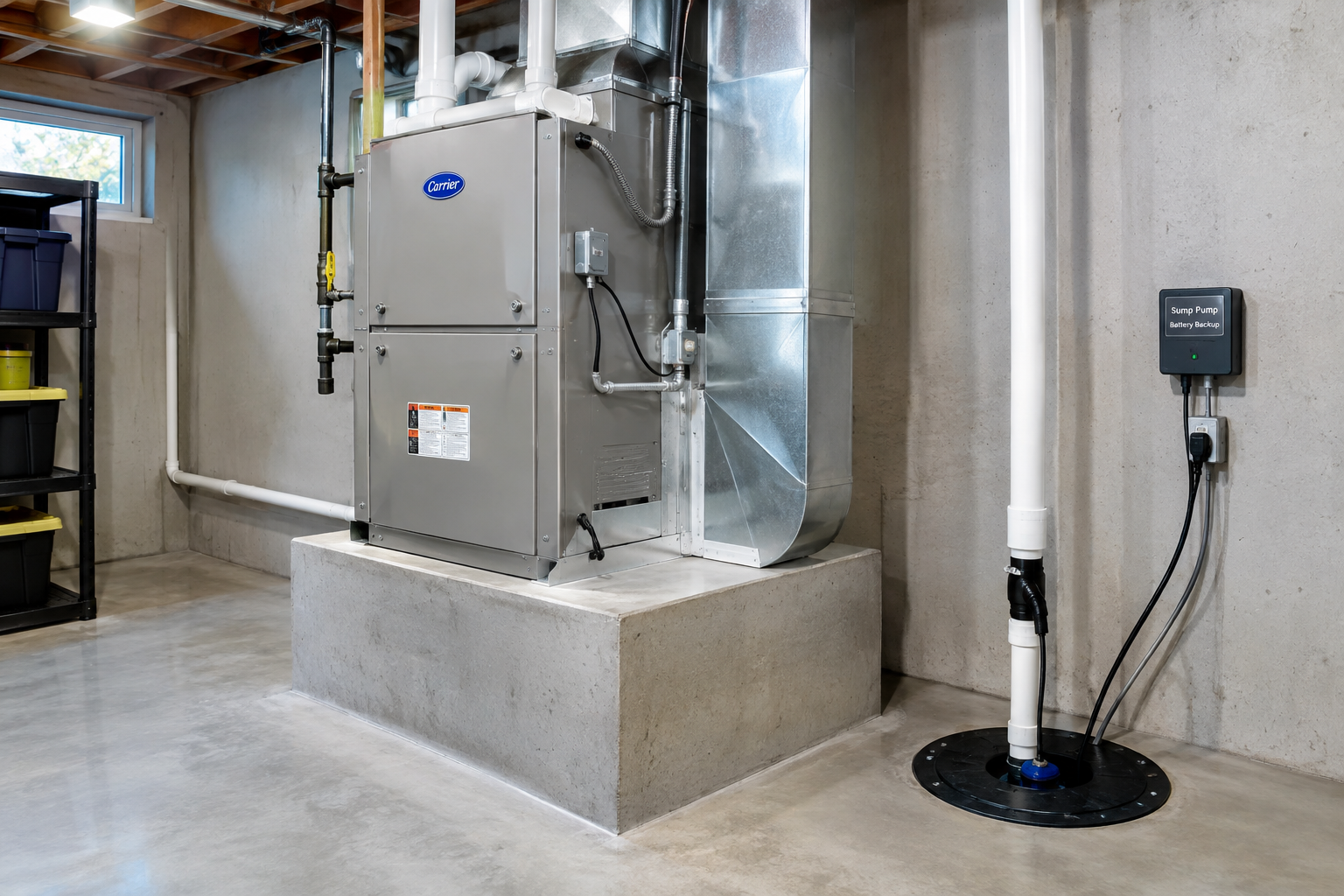
When replacing the furnace, request a load calculation or a documented review of the home’s heating needs. Matching the old unit’s capacity by habit can perpetuate an earlier sizing mistake, particularly after insulation, windows, or additions have changed. The guide to right-sizing HVAC equipment explains why capacity should be based on the house rather than the nameplate of the failed furnace.
What should be included in a replacement quote?
A dependable quote names the equipment and includes the work needed to make the new system operational, not just a furnace model number. It should show whether the price includes removal of the flood-damaged unit, permits, electrical corrections, venting changes, gas-piping work, condensate management, thermostat work, startup, and required inspections.
Ask how the contractor will address affected ductwork and accessories. A new furnace will not correct water-damaged return insulation, a contaminated condensate pump, or an electrical disconnect that was under water. If those items are outside the proposal, the quote should say so plainly.
Call for a free estimate:
Warranty language also deserves a close read. A manufacturer parts warranty, contractor labor warranty, and insurance coverage are separate matters. Get the model number, efficiency rating, warranty duration, registration requirements, exclusions, and labor coverage in writing. Avoid making a decision on a monthly-payment figure alone, because it can obscure equipment scope and excluded work.
FAQ
A flooded furnace should be treated as an inspection and replacement decision, with the answer determined by the components that water reached and the documented scope of work.
Can a furnace be used after the basement dries out?
No, drying the basement does not establish that fuel and electrical safety components inside the furnace remain reliable. The CPSC advises professional inspection of gas appliances after flooding, and the unit should stay off until that review is complete.
Does a small amount of floodwater always require a new furnace?
No, a replacement decision depends on whether water entered the appliance or contacted its components. Water that remained below the furnace and its connected electrical equipment is materially different from water that reached the blower compartment, gas controls, or electrical cabinet.
Can an HVAC company clean and repair flood-damaged parts?
Some work may be possible when documented inspection finds that specific components were not exposed or when manufacturer guidance permits a defined repair. Flooded gas controls and safety devices should not be treated as ordinary cleanable parts, according to CPSC guidance.
Should the air conditioner be inspected too?
Yes, the rest of the HVAC system should be assessed separately because a furnace, outdoor unit, thermostat, ductwork, and accessories can have different water exposure. The condition of one component does not confirm the condition of another.
If your basement furnace was exposed to water, arrange a written assessment from a qualified HVAC contractor and use it to compare the repair, replacement, drainage, and elevation options for your home. Please call a listed specialist for a free, no-obligation discussion.