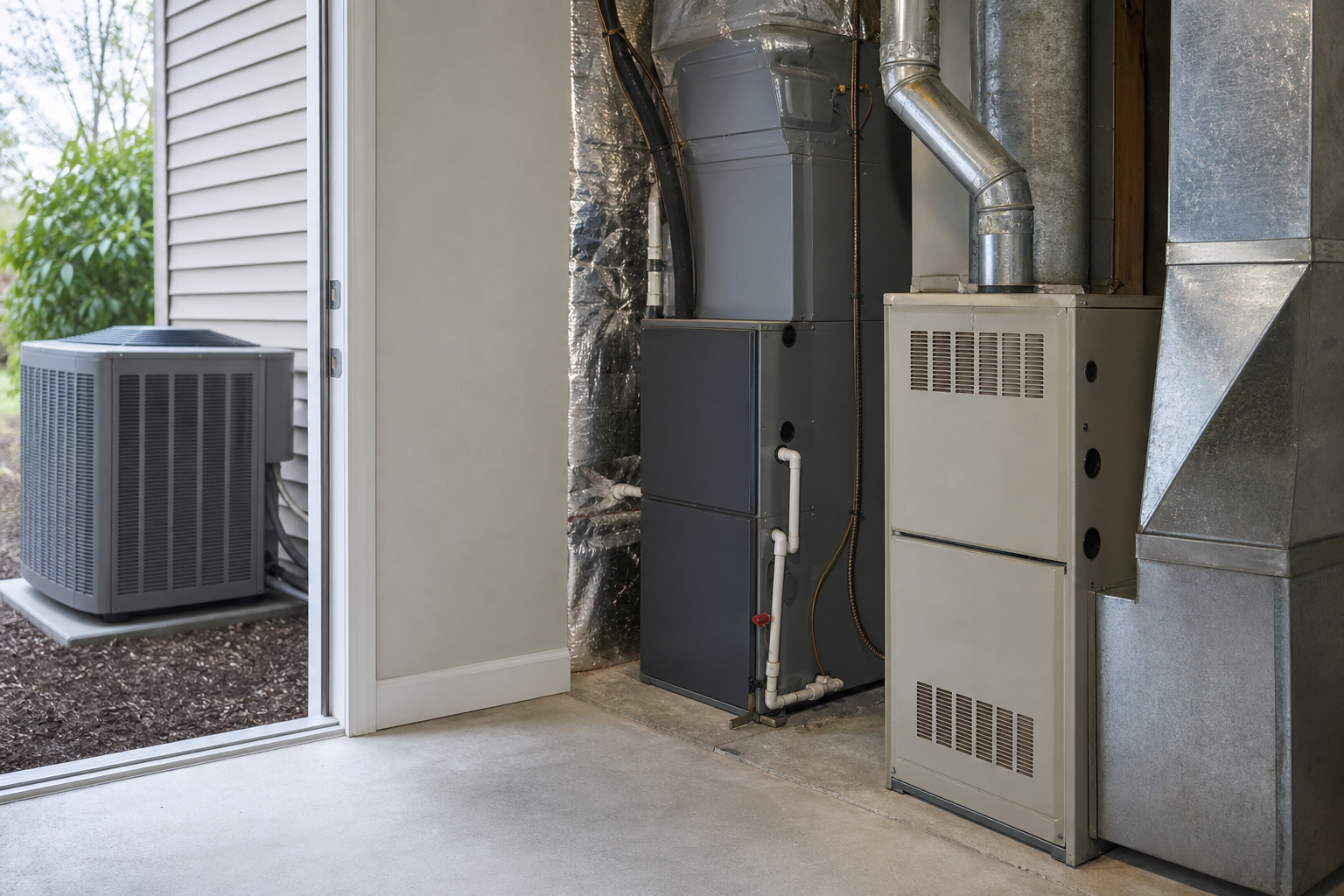
Furnace and AC Lifespan: Insight on How Long HVAC Systems Last
Focus Keyword: furnace and AC lifespan

Call for a free estimate:
Furnace and AC lifespan is usually measured in decades, not just years, but the real answer depends on the equipment type, installation quality, maintenance history, and local climate. For most homeowners, the useful life of a gas furnace often falls around 15 to 20 years, while a central air conditioner often lasts 15 to 20 years, according to the Air Conditioning Contractors of America consumer guidance and manufacturer literature such as Carrier owner resources and Trane product guidance.
A system can reach the upper end of its expected life and still be worth keeping if it is safe, properly sized, and repair costs stay reasonable. A newer system can also become a problem early if it was installed poorly, matched incorrectly, or neglected. The practical question is not just how old the equipment is. The practical question is whether it is still operating safely, efficiently, and predictably enough to justify another repair.
According to the U.S. Department of Energy, air conditioners work hardest when airflow, refrigerant charge, and coil condition are off, which is one reason service life varies so much from house to house. The same DOE guidance also notes that proper maintenance and correct installation are central to performance over time.
What is the average furnace and AC lifespan?
Most homes can expect roughly 20 years from a central AC or furnace unit when the equipment is correctly installed and maintained, based on ACCA homeowner guidance and published manufacturer materials from Carrier and Trane. Heat pumps are often discussed in a similar range, although usage patterns can shorten life in climates where the same system runs for both heating and cooling most of the year.
Manufacturer warranty terms are much shorter than total expected lifespan, and warranty coverage also depends on registration, installation requirements, and excluded conditions. Lennox warranty documents, for example, make clear that warranty coverage terms and equipment life expectancy are different issues.
If you are trying to decide whether age alone means replacement, it usually does not. A 16-year-old furnace with a clean service record and modest repair needs may still be a reasonable keep. A 12-year-old AC with major coil or compressor trouble may not be.
What makes HVAC equipment last longer or fail sooner?
Installation quality and operating conditions usually matter more than brand reputation alone. The Air Conditioning Contractors of America and manufacturer installation instructions consistently tie long-term performance to correct sizing, airflow setup, refrigerant charge, venting, and electrical configuration.
Correct sizing matters from day one
Equipment that is too large or too small tends to run under the wrong conditions. ACCA Manual J and Manual S are the named industry standards used to calculate heating and cooling loads and then select properly sized equipment. If a contractor is replacing a system without a load calculation, that is a warning sign. Abodence covers this in more detail in this guide to choosing the right HVAC size.
Maintenance affects wear, not just efficiency
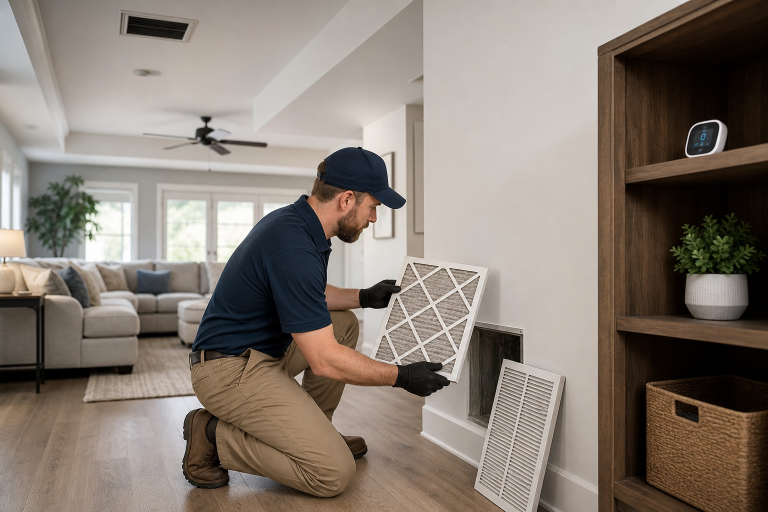
Dirty coils, blocked drains, neglected burners, and skipped tune-ups add strain to components that are expensive to replace. According to ENERGY STAR, regular professional maintenance and routine filter changes help heating and cooling systems operate more efficiently and more reliably.
Climate and runtime change the equation
Systems in very hot, humid, dusty, or coastal conditions often accumulate wear faster because they run longer or face harsher air conditions. Manufacturer guidance from Trane and Carrier both note that environment and usage intensity affect longevity, especially for outdoor equipment exposed to salt air or debris.
Installation details can shorten life quietly
Some failures begin with issues a homeowner never sees, such as poor duct static pressure, improper condensate management, or venting errors. These are not cosmetic mistakes. They affect how hard the system has to work every day.
How can you tell whether your furnace or AC is nearing the end?
Repeated breakdowns, major component failures, and declining performance usually matter more than a birthday on the nameplate. Age becomes important when it combines with repair frequency, rising utility use, or parts that are no longer practical to source.
- Repairs are becoming more frequent within the same two to three seasons.
- The system struggles to maintain temperature in normal weather.
- Service records show major parts such as a heat exchanger, evaporator coil, or compressor are failing.
- Noise, short cycling, or ignition problems keep returning after prior service.
- The equipment uses older refrigerant platforms that can complicate future AC repair decisions.
For cooling equipment, refrigerant type can change the repair math. According to the U.S. Environmental Protection Agency, refrigerant handling is regulated, and older refrigerants can become more expensive or less practical to work with as the market changes. That does not automatically mean replacement is required, but it does affect long-term serviceability.
A failed capacitor, contactor, igniter, or blower motor can still make sense to replace if the rest of the equipment is in good shape. By contrast, a cracked heat exchanger, failed compressor on an older unit, or a leaking coil on aging equipment often pushes the conversation toward replacement.
When does repair make more sense than replacement?
Keeping the existing equipment is usually the better move when the failure is limited, the unit is well within its expected service life, and the rest of the system has been performing normally. This is especially true when the quote is for a standard repair rather than a major component with uncertain follow-up issues.
Manufacturer parts diagrams and service literature make a practical distinction between routine replaceable parts and core system failures. Igniters, pressure switches, capacitors, and some motors are normal repair items. Compressors, heat exchangers, and matched refrigerant components are far more consequential.
If you are sorting through that choice, Abodence also has a related guide on whether HVAC repair or replacement is the smarter call.
When is replacement the smarter choice?
Replacement usually becomes the practical option when the equipment is near or beyond its expected lifespan and the repair involves a major component, repeated labor, or a mismatch with the rest of the system. At that point, putting more money into the old unit can create a cycle of short-term fixes without reliable long-term performance.
Call for a free estimate:
The Federal Trade Commission advises homeowners to consider energy efficiency and total operating cost when evaluating major home equipment. For HVAC, that means looking beyond the immediate repair bill and considering whether an aging system is likely to need more work soon.
There is also a compatibility issue with cooling systems. Outdoor condensers and indoor coils are designed as matched systems. AHRI, the Air-Conditioning, Heating, and Refrigeration Institute, publishes matched system ratings because performance depends on the tested combination, not just one box outside. Replacing only one side of an older AC system can be reasonable in some cases, but not every pairing is acceptable or efficient.
Higher efficiency is not automatically the right reason to replace working equipment. If your current furnace and AC are operating safely and repair costs are modest, replacement purely for a small efficiency gain may not pay back quickly. If you do replace, it helps to understand efficiency labels first. See Abodence’s SEER2 rating guide for the basics.
How much does furnace or AC replacement cost in 2026?
As a broad 2026 planning range, central air conditioner replacement often falls around $5,000 to $12,000, while furnace replacement often falls around $4,000 to $10,000, based on 2026 marketplace estimates published by Angi and HomeAdvisor. Those ranges vary most by capacity, efficiency tier, duct modifications, electrical work, venting changes, and region.
A straightforward furnace swap in an accessible basement can land near the low end. A high-efficiency furnace that needs venting changes, drain provisions, and control upgrades can move higher. The same pattern applies to AC. Coil replacement, line set condition, pad work, and code-related disconnect or breaker changes all affect the final number.
For operating cost, the U.S. Department of Energy and ENERGY STAR both state that higher-efficiency systems can reduce energy use compared with older equipment, but savings depend heavily on installation quality, duct condition, climate, and thermostat settings. Promised savings without a load calculation or scope details should be treated cautiously.
What should you ask before approving a repair or replacement quote?
Clear written scope is the best protection against confusion, repeat visits, and surprise add-ons. A useful quote should explain what failed, what is being replaced, and whether the proposed work restores the system to normal operation.
- What exact part or condition caused the failure?
- Is this a routine repair or a sign of broader system decline?
- Will the repair restore full operation, or are other known issues already present?
- If replacement is proposed, was a load calculation performed?
- For AC, is the indoor coil matched to the outdoor unit under AHRI-rated combinations?
- What warranty applies to parts, labor, and the full equipment package?
- Are permit, venting, drain, electrical, and thermostat changes included in the written price?
Pressure sales often show up as unclear scope, vague efficiency claims, or a refusal to separate urgent safety issues from optional upgrades. A contractor should be able to explain why a repair is unsafe, impractical, or poor value without turning the quote into a sales script.
What maintenance actually helps extend furnace and AC lifespan?
Routine professional service and basic homeowner upkeep are the most credible ways to support longer equipment life. According to manufacturer owner manuals from Carrier and Lennox, the most consistent tasks are seasonal inspection, filter replacement at the interval specified for the filter type, and keeping outdoor units clear of debris and vegetation.
What matters most is consistency. Skipping maintenance for years and then doing a single tune-up rarely erases accumulated wear. For furnaces, service typically includes combustion-related checks, controls, and airflow review. For AC systems, it commonly includes coil condition, drain function, electrical components, and refrigerant performance checks. Safety-critical issues such as gas leaks, venting faults, electrical damage, or suspected heat exchanger failure are professional-call items, not DIY projects.
FAQ
How long should a furnace last in a typical home?
Most gas furnaces commonly last about 15 to 20 years when installation, maintenance, and operating conditions are favorable, based on ACCA guidance and manufacturer literature from Carrier and Trane.
How long should a central AC unit last?
Most central air conditioners commonly last around 15 to 20 years, with actual life depending heavily on climate, maintenance, and whether the system was properly sized and installed.
Should you replace a 20-year-old furnace if it still works?
Keeping an older furnace can still make sense if it is operating safely and repair needs remain modest, but a professional evaluation is important because age raises the odds of major component failure and lower efficiency.
Is it better to replace both furnace and AC at the same time?
Replacing both can make sense when both systems are old, the indoor and outdoor cooling components need to be matched, or labor overlap lowers total project complexity. It is not always necessary if one system is still in solid condition.
What is the most common reason HVAC systems die early?
Poor installation and inconsistent maintenance are two of the most common documented reasons service life falls short of expectations, according to DOE, ACCA, and manufacturer installation guidance.
If you are weighing one more repair against replacement, getting a written evaluation that explains age, failure point, and expected next-step costs is the most useful way to make the call. Please call a listed specialist for a free, no-obligation discussion.
Sources: Air Conditioning Contractors of America, Carrier owner resources, Trane product guidance, Lennox warranty documents, AHRI, Angi, HomeAdvisor