Front Door Security: Practical Ways to Strengthen Doors and Glass Sliders
Front door security starts with a hard truth: no residential door or slider is truly break-in proof. The practical goal is to make forced entry slower, louder, and more difficult by upgrading the parts that usually fail first, especially the frame, strike area, lock hardware, and exposed glass.
That approach lines up with public guidance from the U.S. Department of Justice, Office of Justice Programs, which advises homeowners to focus on solid-core or metal doors, heavy-duty deadbolts, reinforced strike plates, and secure sliding-door measures rather than relying on one product alone. It also fits current manufacturer guidance from Pella on impact-resistant glazing options and from 3M on safety and security window film performance limits.
If you are dealing with an active break-in risk, damage after an intrusion, or a door that no longer latches securely, call a qualified locksmith or door professional right away. For immediate aftermath steps, Abodence has a related guide on home security after a break-in.
Can you make a front door or glass slider truly break-in proof?
No residential entry is realistically invulnerable, but a well-upgraded assembly can resist common forced-entry methods far better than builder-grade hardware.
That distinction matters because many products are marketed as if one upgrade solves everything. In practice, doors usually fail at weak screws, thin jamb material, short strike plates, low-grade locks, or nearby glass. Sliders often fail at the latch, the lift-clearance at the track, or the glass panel itself.
According to the same U.S. Department of Justice burglary prevention guidance, layered physical security is the practical standard. For homeowners, that means choosing improvements that work together instead of buying the most expensive lock and leaving the frame untouched.
What parts of a front door are most likely to fail first?
The frame and strike area are often the weak points, not the door slab itself.
A strong deadbolt mounted into a thin jamb with short screws can still fail under force. The Door and Hardware Institute publishes training and technical guidance centered on the door opening as a complete system, meaning door, frame, hinges, strike, and hardware must work together. That is why replacing only the lock can leave the main failure point unchanged.
For many homes, the most useful upgrades are simple.
- Replace short factory screws in hinges and strike plates with longer screws sized for the framing, following the hardware manufacturer’s instructions.
- Install a reinforced strike plate or door-jamb reinforcement kit that spreads force over a larger area.
- Use a solid-core wood or steel entry door if the existing slab is hollow or damaged.
- Confirm the deadbolt fully throws into the strike without rubbing or partial engagement.
Schlage’s published deadbolt installation guidance and warranty documentation specify proper backset, bore preparation, and secure mounting. Those details are not cosmetic. A lock that binds or only partly engages gives up much of the benefit you paid for.
What is a good way to strengthen a front door?
The first upgrade is usually frame reinforcement paired with a quality deadbolt, because that improves the area most likely to split under kick force.
Start with the frame before moving to premium accessories. A reinforced strike plate, longer mounting screws, and a jamb shield often deliver more real-world benefit than swapping one decent deadbolt for another. If your current door is hollow, warped, cracked, or loose in the frame, replacing the slab with a solid-core or steel unit is the next logical step.
According to the Federal Trade Commission, visible and physical security measures work best when they are part of a broader plan that includes strong locks, lighting, and maintained entry points. The FTC does not present one lock as a complete answer, and that is the right way to think about front entry hardening.
Which lock features are worth paying for?
ANSI or BHMA graded hardware is worth considering because it gives you a recognized performance standard instead of vague marketing language.
The Builders Hardware Manufacturers Association publishes ANSI/BHMA standards used to classify residential lock performance. Grade 1 is the highest, Grade 2 is also strong for residential use, and lower grades are typically less robust. A homeowner does not need the most expensive commercial-looking trim to benefit from this. A well-installed Grade 2 deadbolt on a reinforced frame may be the sensible choice.
Look for a one-inch deadbolt throw if the manufacturer specifies it for the lock model and door prep. Avoid buying hardware based only on finish, keypad style, or app features. Those can matter for convenience, but they do not replace physical strength.
Are smart locks enough by themselves?
No smart lock outweighs the need for a solid door, a reinforced frame, and correctly installed hardware.
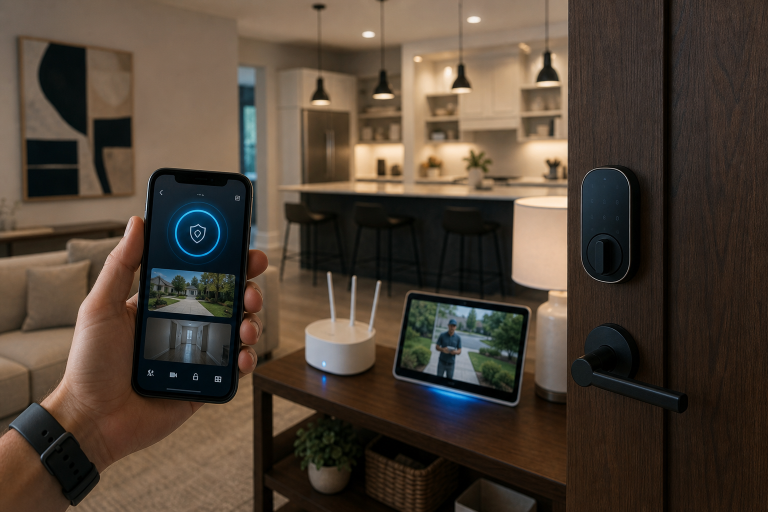
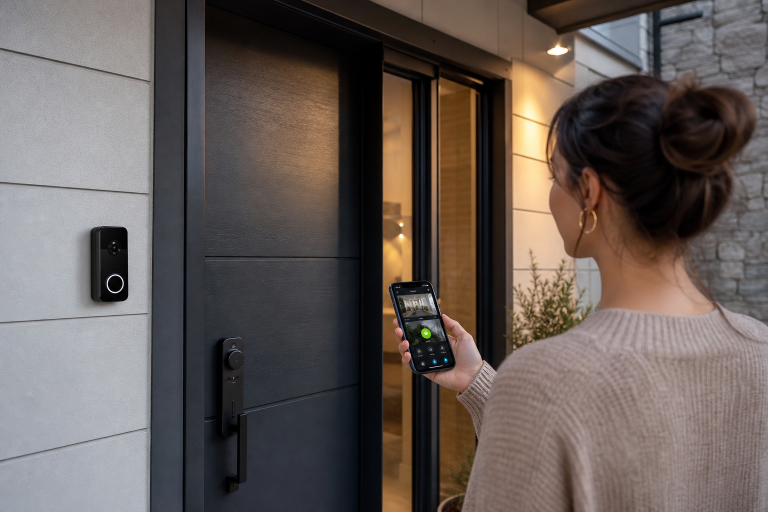
Many smart locks use the same basic deadbolt body as a keyed model, with electronics added for access control. That can be useful, especially for managing codes and checking lock status. It does not make the opening stronger on its own. If you are comparing connected options, Abodence also covers broader smart home security integration.
How should you secure a glass panel near a front door?
A good approach is combining better quality glazing, controlled sightlines, and lock placement that does not invite reach-through entry.
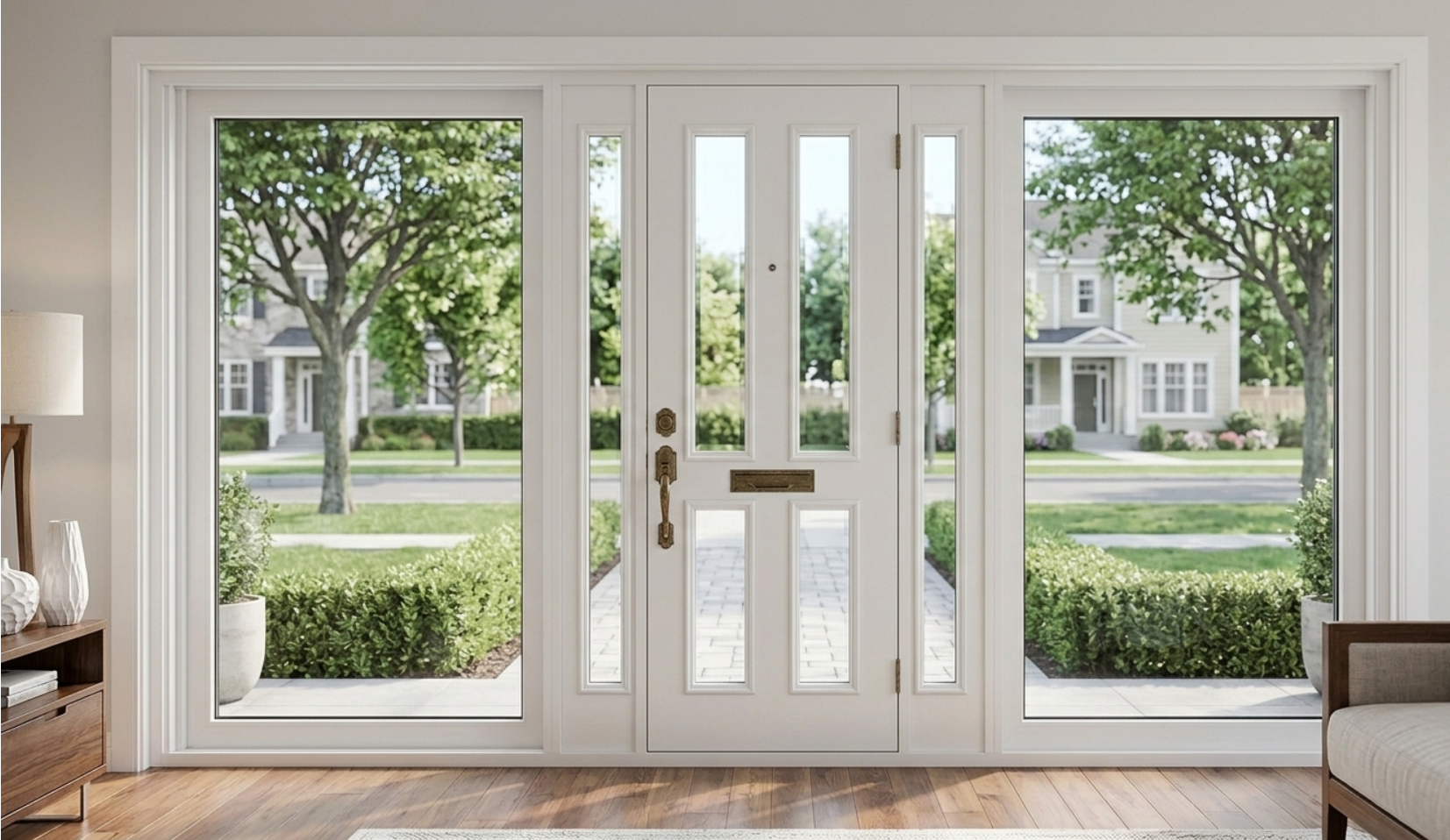
Sidelights and decorative glass can create a simple problem: if a person can break the pane and reach the thumb-turn, the deadbolt does less than you expect. The National Crime Prevention Council advises homeowners to consider doors without nearby breakable glass or to use protected glazing and thoughtful lock placement where glass is present.
Pella’s published product information for impact-resistant glass and laminated glass explains that laminated assemblies are designed to stay adhered to an interlayer after breakage, which helps hold the opening together longer than ordinary glass. That is different from saying the glass cannot be broken. It can. The benefit is delayed entry and a mess that tends to stay more contained.
Does security film make glass break-in proof?
No film makes standard residential glass unbreakable, but properly specified and anchored film can make the opening harder and slower to breach.
3M’s technical literature for Safety & Security Window Films states that film performance depends on the glass type, attachment system, and frame condition. In other words, a peel-and-stick film on weak framing is not the same as a tested system. This is one of the most common places homeowners overbuy the wrong thing. If the goal is serious forced-entry delay, ask for the specific film system and attachment details, not just the film thickness.
What makes sliding glass doors easier to force open?
Loose latches, lift clearance in the track, and unprotected glass are the usual weaknesses on older sliders.
Many people focus only on the latch which misses two common problems. First, some sliding panels can be lifted enough to come off the lower track if anti-lift protection is poor or missing. Second, a basic latch may not resist prying even when it is working as designed.
Andersen’s published care and maintenance guidance for patio doors describes the importance of proper adjustment, latch engagement, and hardware condition. A slider that does not close squarely into its keeper is already compromised, even before you think about extra bars or sensors.
Which slider upgrades actually help?
The most effective slider improvements usually include an anti-lift feature, a secondary blocking device, and stronger glass specification where replacement is feasible.
- Add a manufacturer-compatible auxiliary foot bolt or secondary lock.
- Use a properly fitted track bar or blocking bar to limit panel travel when the door is closed.
- Have the rollers and latch adjusted so the panel seats fully into the keeper.
- Choose laminated or impact-rated glazing when replacing the unit.
A simple track bar is often the cheapest useful upgrade for an older slider. It does not solve glass vulnerability, but it can address forced sliding when the main latch is weak.
Should you replace the whole door or just upgrade the hardware?
If the slab and frame are sound, targeted hardware and frame reinforcement can be enough. If the door is damaged, hollow, poorly fitted, or rotting, replacement is usually the better use of money. Some quotes jump straight to full replacement without documenting whether the existing frame, jamb, and slab are actually failing. Ask the contractor to identify the exact weak point in writing.
If you are considering new exterior doors, code and permit questions may matter depending on scope and opening changes. Abodence has a related guide on door and window permit requirements.
What should a homeowner expect to pay for stronger door and slider security?
About $115-$339 is a common 2025 retail range for a residential deadbolt, while security window film can run about $6-$14 per square foot before project-specific installation costs, based on Home Depot product pricing in 2025 for deadbolts and 3M dealer-market ranges commonly published for security film systems.
Those numbers are only partial because labor, regional pricing, and door condition vary widely. A reinforced strike plate or jamb kit is usually a much smaller purchase than full door replacement. A new patio door with laminated or impact-rated glass is a larger project and should be quoted as a full unit, not compared loosely to hardware upgrades.
For homeowners pricing related security work, Abodence also has a current guide to security camera installation cost.
How do you choose the right professional for this kind of security upgrade?
A good quote identifies the weak component first, then matches the fix to that specific failure point.
Look for a locksmith, door company, or glazing contractor who describes the opening as a system. Ask which part is currently vulnerable, what standard or manufacturer guidance supports the proposed fix, and whether the recommendation changes the frame, the lock, the glass, or all three.
- Ask whether the lock is ANSI/BHMA graded, and which grade it carries.
- Ask whether the strike reinforcement ties into framing, not just trim.
- Ask whether glass film includes an attachment system and what substrate it is designed for.
- Ask whether the slider has anti-lift protection and a secondary blocking device.
- Ask for the exact manufacturer and model numbers in writing.
FAQ
Is a smart lock enough to stop a break-in?
A smart lock mainly changes how you control access, not how strong the door opening is. Physical resistance still depends on the frame, strike plate, screws, deadbolt grade, and nearby glass.
What is better for a sliding glass door, a bar or a new lock?
A blocking bar is often the fastest low-cost improvement for forced sliding, while a better lock helps with latch security. Many older sliders benefit from both, plus adjustment to make sure the panel seats correctly.
Does laminated glass help on entry doors and sliders?
Laminated glass can improve forced-entry resistance because the broken glass tends to stay bonded to the interlayer longer. Manufacturer product literature makes clear that it resists and delays entry, but it does not make the opening impossible to breach.
Should you add security film to every door glass panel?
Film can help in the right system, but it is not automatically the best answer for every opening. Weak frames, poor attachment details, or very vulnerable lock placement may call for a different upgrade first.
Can longer screws really make a difference on a front door?
Yes, longer screws can improve holding strength when they are appropriate for the hardware and framing. The benefit comes from anchoring the strike or hinge more securely into the structural framing rather than only the trim or thin jamb material.
If you want help sorting out whether your weak point is the lock, frame, glass, or slider hardware, getting a written quote from a qualified local pro is the practical next step. Please call a listed specialist for a free, no-obligation discussion.
Sources: Door and Hardware Institute, Schlage deadbolt installation guidance, Pella product information for laminated and impact-resistant glass, 3M Safety & Security Window Film technical literature, National Crime Prevention Council, Andersen patio door care and maintenance guidance, Home Depot product pricing (2025)