Home Security False Alarms: Causes, Costs, and Fixes
A false alarm can interrupt your day, worry neighbors, and create avoidable monitoring or local response fees. Many repeat alerts come from one sensor, a weak battery, a changed setting, or a problem with the connection between devices. Save the date, time, and message from each event. A pattern often points to the failed part.
Why does a home alarm keep triggering false alerts?
A repeat alert usually traces to a named device or zone, such as a front-door contact, a hallway motion sensor, or a smoke alarm. Check the keypad, app, or monitoring portal for the zone name and event type. “Tamper,” “low battery,” “motion,” and “door open” are different problems.
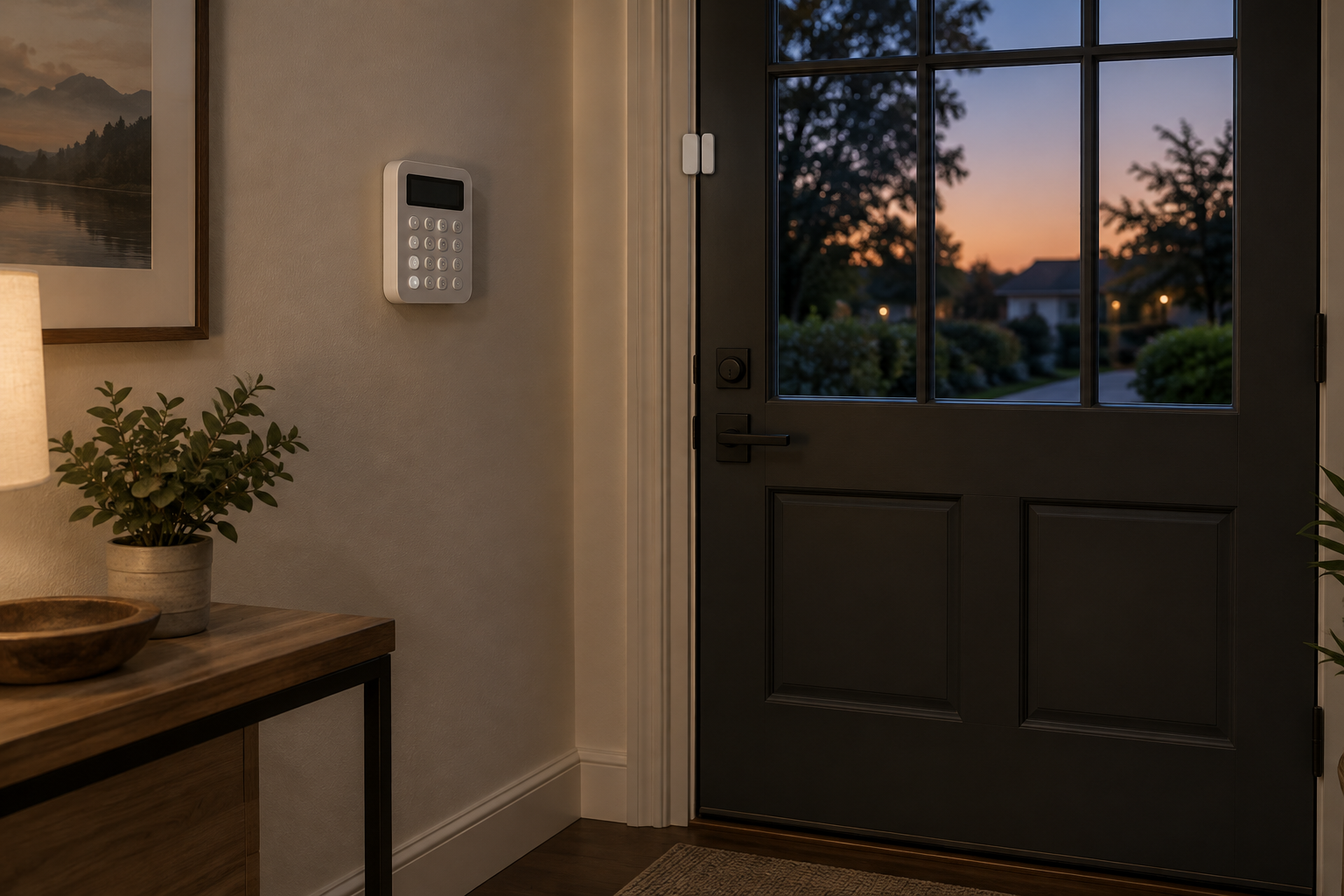
Door and window contacts use two pieces: a small switch and a nearby magnet. If the magnet shifts after a door slams, a screw loosens, or new weatherstripping changes the gap, the system may read the opening as unsecured. An alarm that goes off on windy days can point to a loose frame or a door that moves in its opening.
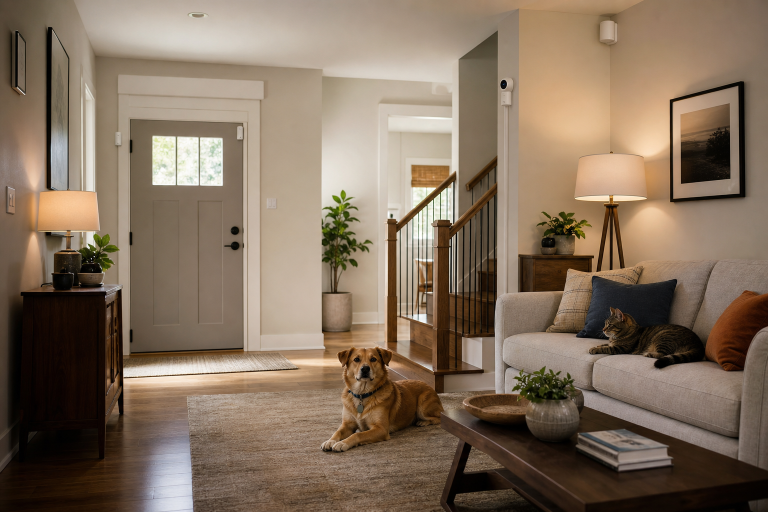
Motion detectors need a clear, stable view of the room. A detector aimed toward a sunny window, a heating vent, or a ceiling fan can react to changing conditions. Pets also matter. A sensor may have a pet setting, but that setting has limits based on the device and its placement. Check the product manual for your exact model as it should have instructions on placement and settings.
Battery alerts can be misleading. A low battery in a wireless device may cause a trouble signal, which means the panel has lost regular communication with that device. It does not necessarily mean an intruder alarm occurred.
What should you check before calling for service?
Begin with the event log and look for the same device name at each occurrence. That record gives a technician a starting point and helps separate a sensor issue from an app or monitoring issue. Avoid deleting the history until you have copied the details.
Look only at accessible, non-damaged equipment. Confirm that a door or window closes fully and that the magnet beside its contact has not visibly shifted or become corroded. False alerts sometimes begin after ordinary changes inside the house. A new dog gate can alter a motion detector’s view. A window replacement can move a contact out of alignment. If the issue began after work on a door, window, or trim, tell the provider.
Also review who has access to the app and keypad. An outdated user code or an accidental arming schedule can look like equipment failure. For app-connected systems, protect the account with a unique password and multi-factor authentication when offered. The Cybersecurity and Infrastructure Security Agency’s guidance on strong passwords recommends long, unique passwords and multi-factor authentication to protect online accounts.
Do not repeatedly arm and disarm the system to see whether the alert returns. That can create more events, confuse the record, and trigger a monitored response under some service plans.
Which alarm messages need immediate attention?
An alert from a smoke or carbon monoxide alarm deserves a real safety response, even if prior alerts turned out to be false. Leave the area and contact emergency services when you believe there may be an immediate danger. Do not silence the device and assume it is a nuisance alert.
The U.S. Consumer Product Safety Commission’s carbon monoxide alarm guidance says to move to fresh air and call emergency services if a carbon monoxide alarm sounds. Have a qualified technician evaluate the source of an unexplained alarm and the alarm equipment. This is not a device to troubleshoot by removing wires or disabling it.
Call your alarm company promptly for a panel that shows fire, carbon monoxide, tamper, communication failure, or a power trouble fault that is recuring. A damaged keypad, a wet control panel, or exposed wiring also needs professional attention. Keep the monitoring company’s phone number where you can reach it without relying on the affected system.
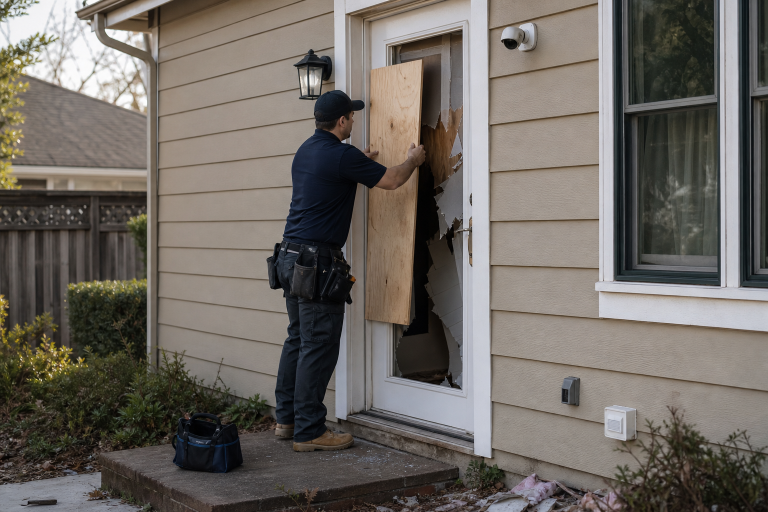
A burglary-zone alert is different. If you arrive home and find a broken lock, an open door, or a window that should be closed, stay outside and call local authorities. Once the property is cleared, the practical next steps include securing entry points and changing compromised access. See home security steps after a break-in for a focused checklist.
How much does false alarm diagnosis and repair cost?
For a typical security-system repair visit, Angi’s 2025 Security System Repair Cost Guide lists a national range of about $150 to $600. That broad range can cover diagnosis and parts, but it cannot predict a local quote or the terms of your monitoring plan. Ask whether the provider charges a trip fee, a diagnostic fee, or both before booking.
The cheapest outcome is often a battery, alignment adjustment, or corrected setting. Costs rise when a technician must trace a damaged wire, replace a wireless device, or work on an older panel with limited compatible parts. A provider should explain which of those conditions applies before you approve work.
Monitoring fees and local false-alarm charges are separate from repair charges. Your service agreement should say whether the company dispatches a guard, contacts you first, or calls public safety agencies. Ask your local alarm program or police department about permit, registration, and false-alarm rules in your area. Those rules can differ from one city to the next.
When is a sensor replacement better than another reset?
Replacement makes sense when the same identified device keeps reporting trouble after its battery, alignment, location, and programming have been checked. A reset only clears a current condition. It does not fix a contact with a cracked housing or a motion detector that repeatedly loses communication.
One obsolete component does not automatically require a new panel, new cameras, and a new monitoring contract. Ask whether the failed device can be replaced with a compatible part, and ask why any wider upgrade is necessary. Compatibility can depend on the panel generation and radio protocol, so get that answer from the manufacturer documentation or your provider.
Age can still change the decision. If several wireless sensors fail, the panel cannot receive updates, or replacement parts are unavailable, a targeted upgrade may be the practical approach. One tactic is to request two options: the smallest repair that restores reliable operation and the cost of a planned system update. Compare the scope, warranty, contract term, and ownership of the equipment.
Software maintenance also matters for connected alarms and cameras. Review home security firmware and software updates before assuming a recurring app or connection alert requires new hardware.
What should you ask an alarm technician?
A useful service visit should end with a clear cause, not only a cleared message on the keypad. Ask the technician to show you the event history and identify whether the system recorded an alarm, a trouble condition, or a communication issue. Those labels affect both the repair and any discussion with a monitoring company.
- “Which specific device or zone caused the event, and what test confirmed the cause?”
- “What will this repair cost today, and what would make the price change?”
Ask whether the technician changed sensitivity, bypassed a zone, or altered notification rules. A bypassed opening may stop nuisance alerts, but it can also leave that entry point outside normal protection. Get written instructions for restoring it after the underlying problem is fixed.
Keep the final invoice with the event log. It documents the repair and makes a future repeat problem easier to evaluate.
FAQ
Can a low battery cause a false alarm?
Yes, a weak battery can cause a wireless device to send a trouble or communication alert, and some systems may present it prominently. Check the exact event description, because a low-battery notice is different from an intrusion event. Use the battery type specified by the device maker.
Why does my motion detector go off at night?
Nighttime alerts can result from a detector’s placement, a pet moving through its detection area, or changing airflow near the device. Review the event log, then ask a technician to evaluate the detector’s location and settings if the same zone repeats.
Should you turn off monitoring after repeated false alarms?
No, disabling monitoring is usually a poor substitute for finding the failed zone or setting. Contact the monitoring provider to understand its response process, then arrange diagnosis of the recurring event. Temporary changes should be documented and reversed once the fault is fixed.
Can an alarm company charge for a false alarm?
Yes, charges can arise under a monitoring agreement or under local false-alarm rules. Read your agreement and contact the relevant local alarm program for the rules that apply to your address. Ask for itemized charges if you receive a bill.
If the same zone keeps triggering, contact a qualified alarm provider for a written diagnostic quote and a specific explanation of the proposed repair. Please call a listed provider for a free, no-obligation discussion.