Choosing A Home Security System: Should You DIY or Hire a Pro?
Choosing a smart home security system usually comes down to one practical question: are you buying a simple alert tool you can set up yourself, or a larger security setup that needs careful placement, wiring, and verification.
For many homes, both options are valid. A self-installed system can be the better fit when you want a small setup and a lower upfront cost. Professional installation often makes more sense when you want hardwired devices, multiple cameras, monitored fire and intrusion equipment, or broader coverage with fewer blind spots.
According to the Federal Trade Commission, homeowners should understand the contract terms, monitoring details, cancellation rules, and total costs before agreeing to any home security service. That applies whether you buy a DIY kit or sign up for a professionally installed monitored system.
What’s the difference between a DIY and professional home security installation?
The main difference is who handles planning, device placement, setup, and testing, not whether the equipment can detect motion, door openings, or video activity.
DIY systems are generally designed for consumer setup. Brands such as SimpliSafe, Ring, and Arlo publish app-based installation guidance for battery-powered sensors, wireless cameras, and plug-in base stations. Professional systems may use similar wireless gear, but many dealers also install hardwired cameras, integrated alarm panels, door contacts, glass-break detectors, and backup power components that take more planning and labor.
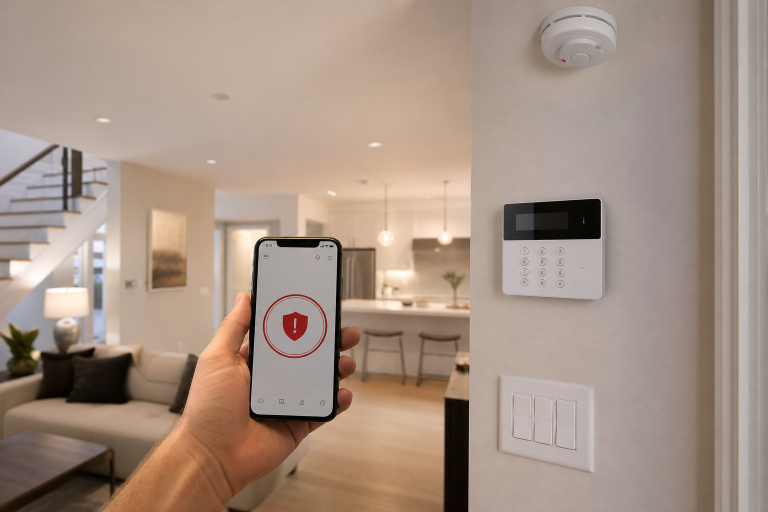
According to the National Fire Protection Association, smoke alarms need proper placement and regular testing to work as intended. If your security plan includes life-safety devices such as smoke or CO alert integration, installation quality matters more than convenience.
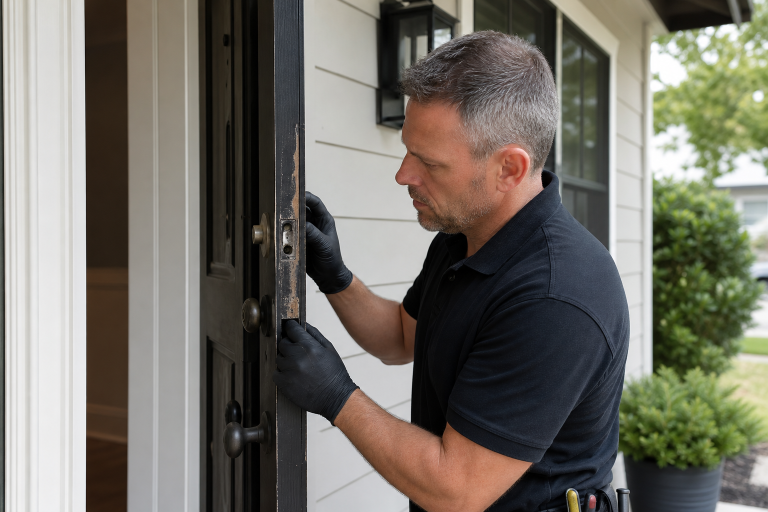
A DIY package usually gives you direct control over setup speed and equipment selection. A professional installation usually gives you a site-specific layout, device testing, and one company responsible for making the system work as installed.
When does a DIY security system make the most sense?
A self-installed setup can make sense when your home layout is straightforward and your goal is basic awareness rather than a fully integrated security design.
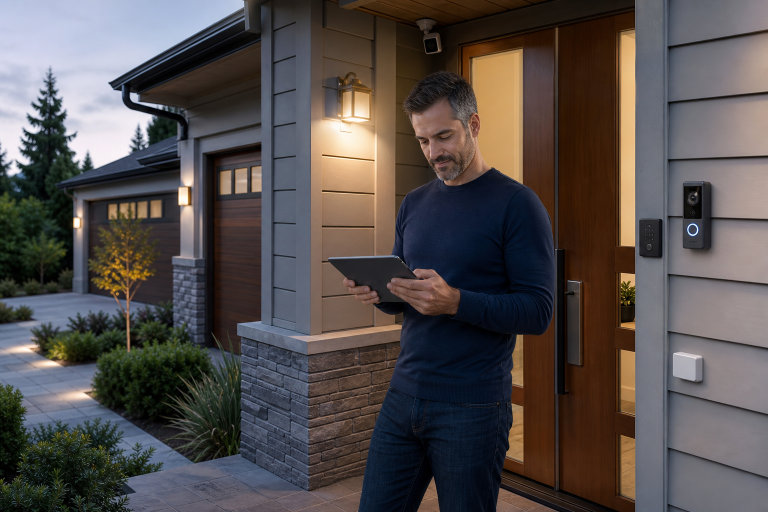
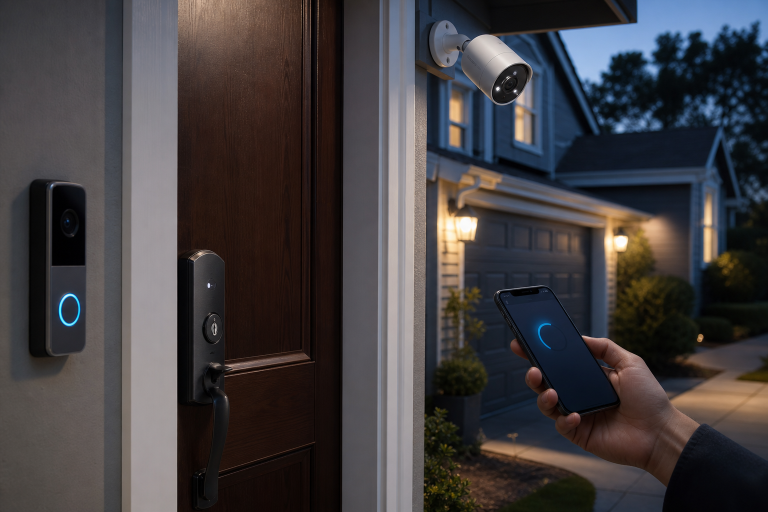
That often describes apartments, condos, smaller single-family homes, rental properties, and households that mainly want video doorbells, a few entry sensors, interior motion detection, and mobile alerts. Consumer systems from SimpliSafe and Ring are built around this model, with peel-and-stick sensors, guided app setup, and optional monitoring plans.
DIY can also be the better choice if you expect to move soon. Battery-powered devices are easier to remove and reinstall than drilled, wired, or permanently mounted equipment. If you are testing whether you even want a security system, starting with a limited kit may be more sensible than signing a long service agreement.
DIY is a strong fit in these situations
- You want a doorbell camera, a few sensors, and app alerts.
- You are comfortable using a smartphone app and home Wi-Fi settings.
- You aren’t worried about WIFI hacking of wireless cameras.
- You want to avoid drilling, wiring, or technician appointments.
- You may move and want to take the equipment with you.
- You prefer month-to-month monitoring options, if available from the provider.
For camera-specific planning, this Abodence guide to security camera installation cost can help you understand where basic setups end and more complex work begins.
When is professional installation worth paying for?
Professional installation is usually worth paying for when coverage quality, system integration, or wiring complexity matters more than saving on labor.
Larger homes often need more than a front-door camera and a few sensors. Long driveways, detached garages, multiple entry points, poor Wi-Fi coverage, masonry walls, and outdoor power limitations can all complicate setup. In those cases, a professional can map camera views, avoid obvious blind spots, and place equipment where it is less likely to miss activity or generate nuisance alerts.
Professional help is also valuable when you want a monitored burglary system tied to smoke, heat, or carbon monoxide alerts. According to the Consumer Product Safety Commission, carbon monoxide alarms should be installed and maintained according to the manufacturer’s instructions. If your security company is integrating those alerts into one monitored platform, proper setup and testing should be part of the job.
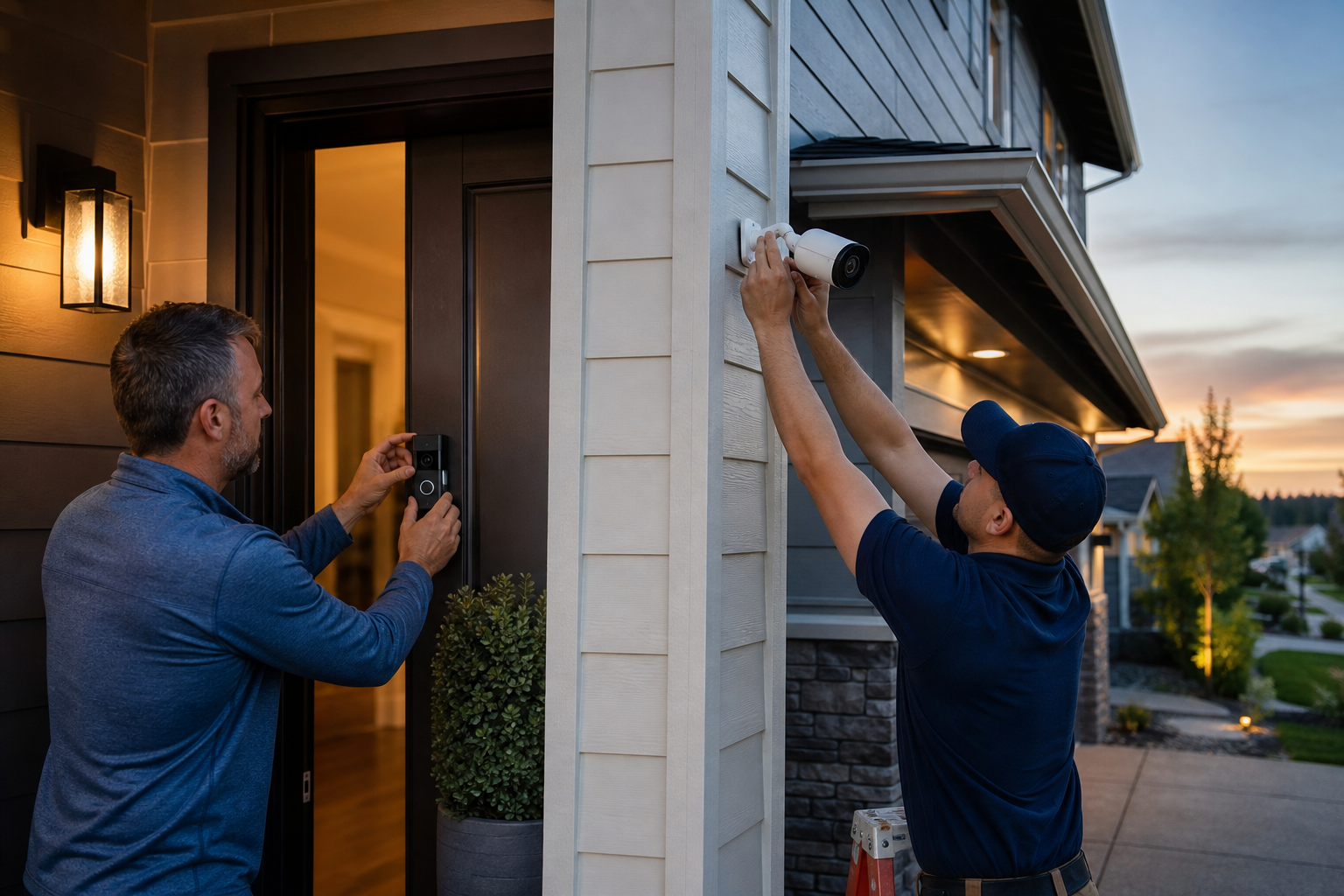
Another common reason to hire a pro is appearance. Surface-mounted wires, uneven camera angles, and weak mounting points are common DIY problems. Stable mounting affects camera view, weather exposure, and long-term reliability.
Professional installation is often the better fit when you want
- Hardwired cameras or a network video recorder.
- Whole-home alarm coverage with many doors and windows.
- Integrated smoke or CO alert monitoring.
- Outdoor cameras placed high, far from power, or across large areas.
- One company responsible for setup, testing, and service.
How much does DIY vs professional home security installation cost?
DIY equipment often starts in the low hundreds, while professionally installed systems can run from several hundred dollars to several thousand depending on cameras, sensors, wiring, and monitoring.
Published 2026 pricing from SimpliSafe shows starter equipment packages in the few-hundred-dollar range before add-ons and monitoring. Ring’s 2026 product pricing shows a similar pattern for basic camera and alarm bundles, with higher totals once you add extra outdoor cameras, storage, and smart-home accessories. On the professional side, ADT’s published offers and dealer-installed camera packages commonly layer equipment charges, installation fees, and monitoring charges together, so the real total depends on contract length and system scope.
There is no single national price that covers every setup. A one-bedroom apartment with a doorbell camera and two sensors is a different job from a two-story house with perimeter cameras, window contacts, and monitored life-safety devices.
Watch for unclear quotes. Some companies advertise a low monthly number that does not fully show equipment financing, activation fees, cloud storage charges, service calls, or early termination terms. The FTC advises reviewing the full contract and cancellation details before signing.
Which option is more reliable day to day?
Day-to-day reliability depends more on power, internet stability, placement, and maintenance than on whether you installed the system yourself or paid someone else to do it.
Battery-powered devices need fresh batteries. Wi-Fi cameras need stable signal strength. Outdoor cameras need weather-appropriate mounting. Hardwired systems need sound connections and backup power planning. Manufacturer support pages from Arlo, Ring, and Google Nest all emphasize network quality, firmware updates, and device power as core reliability factors.
Professional installation can reduce setup mistakes, but it does not remove the need for routine checks. A well-installed system still needs app updates, battery replacement, and occasional testing. A careful DIY setup can be dependable if you stay on top of those basics.
If your concern is cyber risk rather than physical placement, this Abodence article on home security hacking prevention is the more relevant starting point.
What are common mistakes homeowners make with either option?
Some mistakes are buying too much equipment too soon, ignoring contract language, and assuming any camera angle is a useful camera angle.
Many homeowners start with a shopping list instead of a layout. That leads to duplicate coverage in one area and missed coverage in another. Another common mistake is choosing equipment before checking whether the home has strong enough Wi-Fi at the garage, porch, gate, or side yard.
Contract confusion is another recurring problem on the professional side. The FTC warns consumers to review monitoring terms, cancellation policies, and what happens if they move. On the DIY side, people often underestimate ongoing subscription costs for video history, person alerts, or professional monitoring.
Poor camera placement is a common DIY setup error. A camera pointed too high may catch heads and hats instead of faces. A camera aimed into strong backlight may produce a silhouette instead of a useful image. Better equipment does not fix a bad view.
How should you decide which route fits your home?
The practical way to decide is to match the system to your home layout, risk level, and tolerance for setup work.
If you want basic awareness at the front door, a few indoor or outdoor views, and simple smartphone control, DIY is often enough. If you want broad perimeter coverage, integrated alarm monitoring, a cleaner installation, or hardwired gear, professional installation is usually the stronger choice.
Use this checklist before you decide:
- Count the doors, windows, and outdoor areas you actually want covered.
- Check Wi-Fi strength where cameras or sensors would go.
- Decide whether you want optional monitoring or a full monitored alarm service.
- Ask whether you need renter-friendly removable equipment or permanent hardware.
- Compare the first-year total, including equipment, installation, subscriptions, and cancellation terms.
For some households, a hybrid approach works best. You might self-install a video doorbell and indoor cameras, then hire a pro later for hardwired exterior cameras or a monitored alarm panel. That can be a sensible middle ground when you want to spread out cost and complexity.
Can you switch from DIY to professional later?
Many homeowners do switch later, but compatibility depends on the brand, the devices you already bought, and whether the professional company supports that equipment.
Some consumer systems are designed as closed ecosystems, which means sensors, cameras, and subscriptions work best inside that brand’s app and service model. Dealer-installed systems may use entirely different panels, recorders, or monitoring platforms. Before buying a large DIY package, check whether expansion options are limited to one brand’s hardware and cloud service.
FAQ
Is DIY home security good enough for most homes?
For many smaller or simpler homes, a DIY system is good enough when you want basic camera coverage, entry alerts, and app control without complex wiring.
Does professional installation make a security system safer?
Professional installation can make a system more dependable when device placement, wiring, and integrated monitoring are handled correctly, especially for larger homes or setups that include smoke or CO alerts.
Do professionally installed systems always require a contract?
Many professionally installed systems include service agreements or monitoring contracts, but terms vary by provider, so you need to review the full agreement before signing.
Can renters install a home security system?
Renters often can use removable DIY equipment such as battery-powered cameras and adhesive sensors, provided the lease and property rules allow that type of device.
Should you buy cameras first or a full alarm system first?
Starting with cameras first often makes sense if your main goal is visibility, while a full alarm system is the better starting point if you want monitored intrusion alerts across multiple entry points.
If you are weighing a specific layout, equipment list, or quote, Abodence can help you sort through the options and find the setup that fits your home without overbuying. Please call a listed specialist for a free, no-obligation discussion.
Sources: Federal Trade Commission, National Fire Protection Association, Consumer Product Safety Commission, SimpliSafe published pricing and support materials, Ring published pricing and support materials, Arlo support documentation, Google Nest support documentation, ADT published offers and service information