Home Security Smoke Alarm Integration: Smart Fire Protection for Modern Homes
Integrating a fire alarm into your home security system can give you earlier awareness, better whole-home coverage, and a clearer path to professional monitoring, but only if the system is designed around listed devices, code requirements, and the right type of panel.
For many homeowners, the goal is simple: if smoke or heat is detected, the alarm should sound locally, notify you remotely, and if you pay for monitoring, send a signal to a central station. The details are where good systems differ from less effective ones. Fire detection is life-safety equipment, so this is not the place for vague compatibility claims or improvised smart-home workarounds.
According to the U.S. Consumer Product Safety Commission, smoke alarms should be installed on every level of the home, inside each bedroom, and outside each sleeping area. That baseline still matters even when you add a security system, because integration does not replace the need for proper alarm placement.
What does integrating a smoke alarm do?
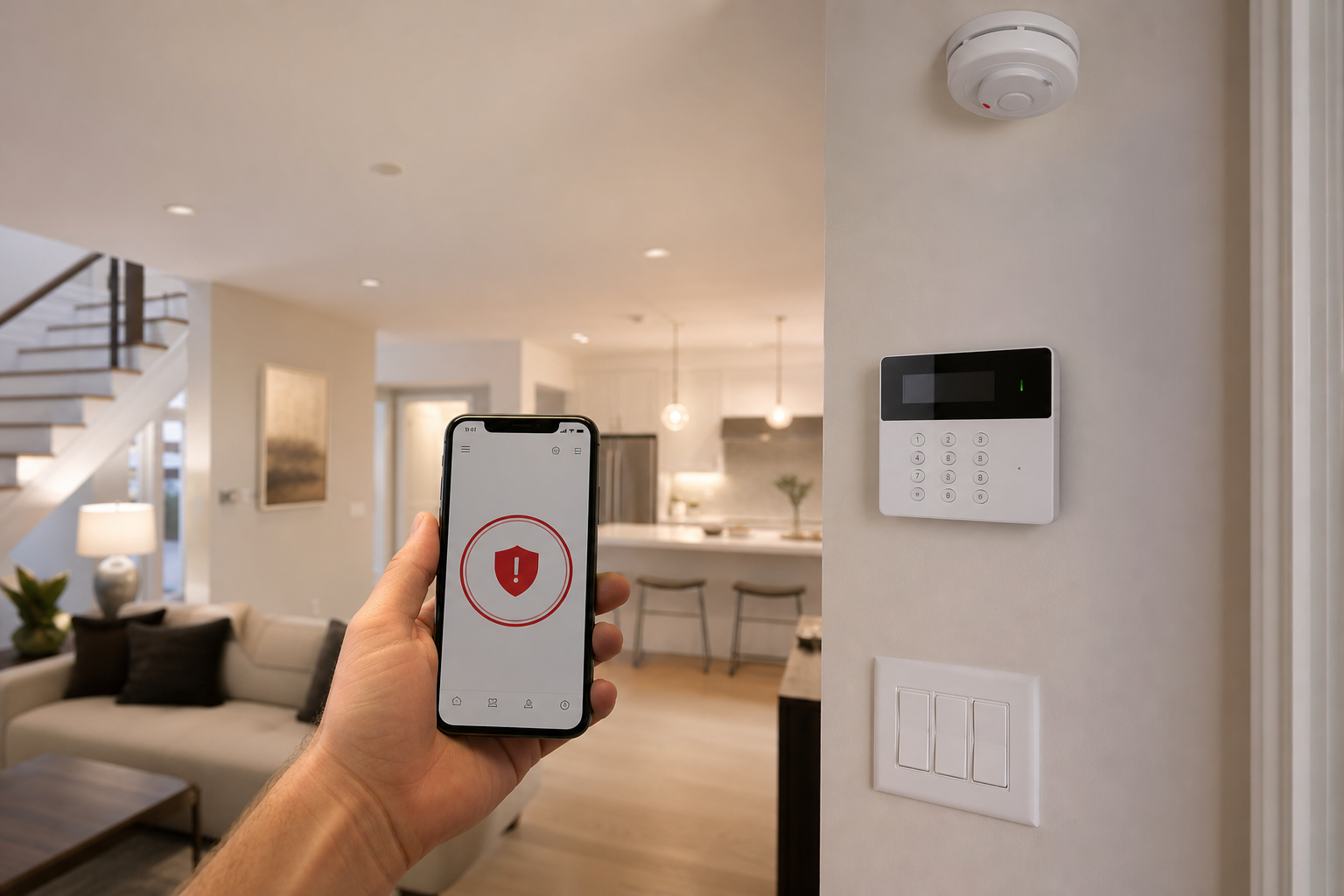
An integrated setup means smoke or heat detectors communicate with a security control panel or monitoring platform so one event can trigger local sirens, app alerts, and central-station dispatch workflows.
In practice, there are two common versions. One uses smoke or heat detectors that are wired directly with a security panel. The other uses basic household smoke alarms and adds a listening device that detects the sound of the alarm and forwards a signal to the security system.
Direct connected detectors are usually the more robust option because the devices, panel, and signaling path are intended to work together as a combined system. A listener device can add convenience, but it depends on hearing the alarm.
Why do homeowners integrate smoke alarms with a security system?
Remote notification is the main reason most households choose this upgrade, especially when no one is home and a local siren alone may not be enough.
A monitored setup can also help coordinate signals across the house. When one detector trips, the system may trigger additional sirens, keypads, or app notifications depending on the platform. That can be useful in larger homes, detached garages, or when family members are away from the home.
There is also a practical difference between a consumer smart-home alert and central-station monitoring. A phone notification only helps if your phone is on, connected, and noticed in time. Professional monitoring adds another response layer, but only if the service plan includes fire signals and the equipment is programmed for that purpose.
Which devices can be integrated safely?
Listed smoke detectors, heat detectors, compatible control panels, and approved communication modules are the core components that belong in a real fire integration design.
According to the UL Solutions certification guidance, smoke alarms and related fire products are evaluated to specific safety standards, and listing matters because the device is being assessed for a defined application. For a homeowner, the practical takeaway is straightforward: use equipment that is specifically listed and identified by the manufacturer as compatible with the exact panel or ecosystem being installed.
Heat detectors are often used in places where smoke alarms may nuisance-trip, such as garages or unfinished areas, but placement and device selection should follow the manufacturer instructions and local code. Household smoke alarms sold for stand-alone use are not automatically interchangeable with low-voltage security smoke detectors.
Wireless compatibility also needs careful review. Some panels support only their own encrypted wireless sensors. Others support legacy sensor families that are being phased out. If a quote says a new panel will “work with existing devices,” ask for the exact model numbers in writing.
What to verify before you approve a quote
- Exact detector type: smoke alarm, smoke detector, heat detector, or sound-listening bridge
- Exact panel and communicator model numbers
- Whether the fire signal is local-only, app-based, or professionally monitored
- Whether the devices are listed for the intended application
- Whether existing alarms are within their replacement date
- Whether permit and inspection requirements apply in your area
How do codes and standards affect home security smoke alarm integration?
Local code, product listing, and manufacturer instructions set the limits on what can be installed and how it can be connected.
According to the NFPA 72, National Fire Alarm and Signaling Code, installation, performance, inspection, testing, and maintenance requirements depend on the type of system and occupancy. Homeowners do not need to memorize the code, but they do need to know that fire signaling is not just another smart-home accessory category.
Many jurisdictions also adopt residential building and fire code provisions that govern where household smoke alarms must be located, when they must be interconnected, and when hardwired units with battery backup are required. A security company may handle panel-connected detectors, while an electrician may be needed if the project also involves replacing or adding household smoke alarms to meet local requirements.
If your project includes remodeling, bedroom additions, or permit-triggering electrical work, code questions become more important, not less. For permit-related planning on other home upgrades, Abodence has also covered how permit requirements affect homeowner projects.
Is monitored fire protection worth the monthly cost?
For households that are often away, have pets at home, manage a second property, or want central-station response, the added monthly fee can be justified if the plan truly includes fire monitoring.
The cost varies by provider and by whether fire monitoring is bundled with burglary, cameras, or home automation. Because pricing changes frequently and many providers quote by package rather than publishing a simple menu, the key issue is less the exact monthly number and more the contract language. Ask whether smoke and heat devices are included in monitoring, whether dispatch verification rules apply, and whether replacing failed sensors is covered.
A cheaper app-only plan may be enough if your goal is awareness rather than central-station response. In that case, paying for full monitoring may not be the right fit. On the other hand, if you believe you are buying monitored fire protection, an app notification plan is not a substitute.
What are the most common integration mistakes?
The most common failures happen before installation starts: unclear scope, unsupported device mixing, and assumptions about monitoring that never make it into the written agreement.
One frequent problem is treating all smoke devices as interchangeable. They are not. A household alarm from a retail shelf, a low-voltage detector for a security panel, and a smart alarm for a branded app can each serve different purposes and may not belong on the same signaling path.
Another issue is replacing a legacy panel without confirming whether existing wireless fire sensors can connect to it. Homeowners are sometimes quoted a panel swap first and only later learn that multiple detectors also need replacement.
Vague warranty language is another weak spot. You want to know who is responsible if a detector goes offline, if a cellular communicator loses service, or if the monitoring center receives trouble signals that never reach you.
Questions that reveal whether the quote is solid
- Will this system use direct-connected detectors or a listening device?
- Which signals go to the app, and which go to the monitoring station?
- What happens during internet loss or power loss?
- Who replaces aging detectors, and at what interval?
- Will permits, inspection, or electrical work be required?
- Can you provide the compatibility list in writing?
How should you compare wired, wireless, and smart-platform options?
Wired systems are often preferred in major renovations or new construction, while wireless systems can make more sense in finished homes where opening walls would add cost and disruption.
Wired low-voltage detectors can offer stable communication and straightforward supervision through the panel, but installation labor may be higher if cabling routes are difficult. Wireless detectors can reduce disruption, though battery management, sensor life, and panel compatibility become more important.
Smart-platform products sit in a different category. Some are well-suited for self-managed alerts and home automation. The right choice depends on your actual goal. If you want a 24 hour, externally monitored setup, choose the platform around that requirement first. If you mainly want remote awareness and broader smart-home control, a consumer platform may be enough.
For homeowners also comparing broader security upgrades, Abodence has a related guide on security camera installation costs, which can help separate camera planning from life-safety planning.
When should you replace existing alarms instead of integrating them?
Any unit at or near its replacement date, any device with unclear compatibility, and any alarm that cannot meet current placement or interconnection needs is usually a replacement candidate.
The CPSC and NFPA guidance on alarm age is the clearest starting point. If the devices are 10 years old, replacement is typically the practical move. Integration work is also a good time to fix coverage gaps, such as missing alarms inside bedrooms or outside sleeping areas.
Older homes often have a mix of hardwired alarms, battery-only alarms, and later add-on smart devices. Without proper planning, trying to preserve existing components can create a system that no one can efficiently manage after the installer leaves. A smaller, fully documented replacement project is often the safer choice.
What should a homeowner expect during a professional assessment?
A proper assessment should identify alarm locations, device age, panel type, communication method, monitoring goals, and any code or permit issues before a final proposal is written.
The company should inspect what is already installed rather than quoting from a generic package list. Expect questions about sleeping areas, additions, attached garage space, internet reliability, and whether you want self-monitoring or central-station service. If the proposal jumps straight to cameras and door sensors without clearly addressing the fire side, the scope is drifting.
You should also expect documentation. A solid proposal names the devices, explains the signaling path, and states what ongoing service includes. Pressure sales language is a warning sign here. Fire integration should be specific and clearly documented, which is exactly what you want from life-safety equipment.
FAQ
Can smart smoke alarms be connected to a home security system?
Some can, but compatibility depends on the exact product, panel, and approved integration method. Manufacturer documentation should identify whether the device supports direct monitoring, app-only alerts, or no security-panel connection at all.
Do integrated smoke alarms still need to be inside bedrooms?
Yes, placement rules still apply even when alarms are tied into a security system. The CPSC says smoke alarms belong on every level, inside each bedroom, and outside each sleeping area.
Will a security system lower the need for standard smoke alarms?
No, a security panel does not remove the need for properly located smoke alarms or detectors. Integration adds notification and monitoring features, but it does not replace baseline fire detection coverage.
Is a listener device as good as a direct-connected smoke detector?
Usually not, because a listener depends on hearing another alarm and is not the same as a detector designed to report electronically to the panel. It may still have a valid use, but the signaling path should be explained clearly before you rely on it.
How often should integrated smoke devices be tested?
Testing and maintenance should follow the manufacturer instructions and the applicable system requirements. Your monitoring provider should also explain how signal testing is documented and how trouble conditions are reported.
If you are sorting through quotes for home security smoke alarm integration and want help understanding what is actually being offered, please call one of the specialists listed.
Sources: UL Solutions certification guidance