Pest Control Safety: What Parents and Pet Owners Should Know Before Treatment
Pest control safety starts with a simple rule: the product label and the treatment plan matter more than broad claims that a treatment is “safe” or “pet-friendly.” If you have children or animals at home, the right question is not whether all pest control treatments are safe. It is which product is being used, where it will be applied, how exposure is limited, and when reentry is allowed.
The U.S. Environmental Protection Agency says pesticides sold or distributed in the United States must be registered, and their labels carry legally enforceable directions for use. For homeowners, that means the label is not a suggestion. It is the primary safety document for where a product can be used, who should stay out, and what precautions apply around children and pets.
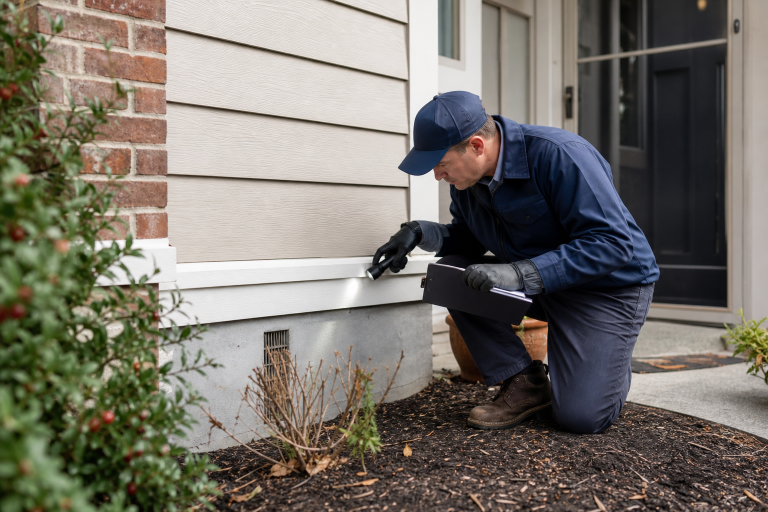
If you are comparing treatment options, the safest choice is often the one that uses the least material in the most targeted way. A crack-and-crevice treatment, bait station, exclusion work, or sanitation correction may fit the problem better than a broad spray.
Are pest control treatments safe for children and pets?
Many pest control treatments can be used in homes with children and pets when they are applied according to the product label and a professional treatment plan, but safety depends on the specific pesticide, the application method, and keeping people and animals away until the label allows reentry.
The National Pesticide Information Center, a cooperative agreement between Oregon State University and EPA, explains that risk depends on both toxicity and exposure. In plain terms, even a lower-toxicity product still has to be used in a way that limits contact, while a treatment with very little chance of contact may present less practical risk than a poorly placed product marketed with softer language.
Children and pets also interact with floors, baseboards, yards, and low surfaces differently than adults do. Young children crawl, touch surfaces, and put hands in their mouths. Dogs and cats may lick paws or investigate treated areas. Those are practical reasons to ask detailed questions before service rather than relying on a general assurance.
What should you ask before a pest control company treats your home?
Useful questions are the ones that identify the exact product, the exact location, and the exact reentry instructions before any treatment starts.
- What pest is being treated, and what evidence supports that diagnosis?
- What product will be used, including the EPA registration number?
- Will the treatment be a bait, dust, crack-and-crevice application, spot treatment, or broadcast spray?
- Where exactly will it be applied inside or outside the home?
- What does the product label say about children, pets, toys, food-contact areas, and reentry time?
- Do any fish tanks, reptile enclosures, bird cages, or pet feeding areas need special protection or temporary relocation?
- Is exclusion or sanitation correction part of the plan, so less pesticide is needed next time?
A clear answer to those questions tells you far more than a sales phrase. It also helps you compare providers on scope and transparency, not just price. If you are also evaluating treatment costs, Abodence covers that separately in this pest control cost guide.
Which types of pest control treatments usually involve the lowest exposure at home?
Targeted methods usually reduce household exposure better than broad, routine applications when they fit the pest problem correctly.
The Centers for Disease Control and Prevention advises pet owners to read and follow label directions and to keep animals away from treated areas until the label says it is safe to return. In practice, that often makes enclosed bait stations, limited crack-and-crevice work, and non-chemical measures easier to manage around children and pets than wide-area indoor spraying.
Enclosed baits
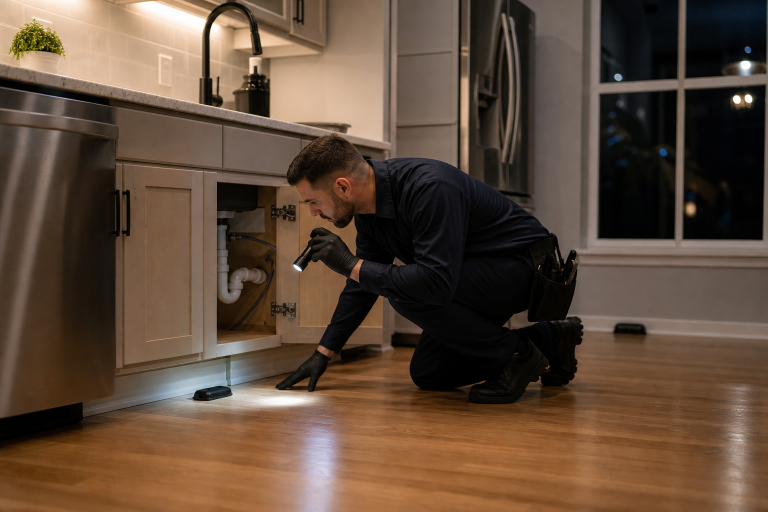
Placed correctly, enclosed bait stations can limit contact because the active material is contained rather than spread across a larger surface area. They are not automatically childproof or pet-proof in every setting, though. Placement still matters, especially in homes with curious dogs or toddlers who can reach behind toilets, under sinks, or along garage walls.
Crack-and-crevice treatments
Applications directed into wall voids, gaps, and hidden harborages can be more controlled than treatments across open floors or counters. This approach is commonly used for pests that travel along edges or nest in concealed spaces.
Exclusion and sanitation corrections
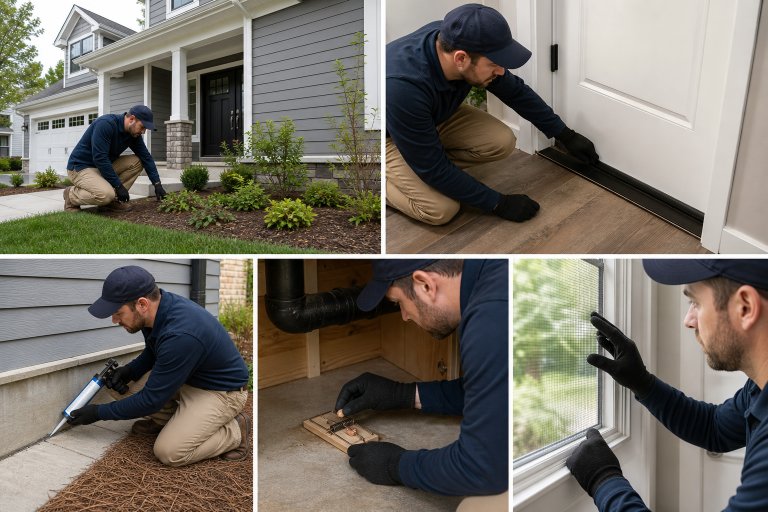
Sealing entry points, reducing food sources, fixing moisture issues, and changing storage habits often cut pest pressure without adding chemical exposure. For some problems, those corrections are the main solution and pesticide use is secondary. That is especially true when the issue is recurring because of access or shelter rather than a one-time intrusion.
What treatment methods deserve extra caution around kids and pets?
Products applied to surfaces that children and animals touch frequently deserve the closest review before service.
Indoor baseboard sprays, broad floor-edge applications, outdoor lawn treatments, and rodent control products can all require extra planning. The concern is not that these uses are automatically improper. It is that the chance of contact can be higher if the product, placement, or timing is a poor fit for the household.
Rodenticides
Rodent bait products need especially careful handling because they are designed to be attractive to the target pest. The EPA rodenticide risk mitigation decision established restrictions intended to reduce accidental exposure, including packaging and bait-station requirements for many consumer products. If a company proposes rodent baiting, ask where stations will be placed, how they are secured, and whether trapping and exclusion can solve part of the problem with less ongoing risk.
Outdoor perimeter and yard treatments
Exterior applications can make sense for some pests, but you should ask whether the product is being applied to a narrow band near the structure or more broadly across play and pet areas. A treatment around the foundation is a different exposure situation from a treatment across turf where children sit and pets roll.
Foggers and total-release products
These products can spread pesticide widely through indoor air and onto surfaces. The EPA has published consumer safety warnings on total-release foggers, including fire and misuse concerns, which is one reason many homeowners prefer more targeted methods when a professional confirms they are appropriate.
How should you prepare your home before pest control treatment?
Good preparation separates people, pets, food, and personal items from the treatment area and makes it easier for the applicator to use the product exactly as labeled.
Preparation steps vary by product, so the company should give you written instructions tied to the actual treatment. Common requests may include covering or storing food, clearing items from under sinks, moving pet bowls, vacuuming certain areas, or keeping children and animals out of specific rooms. The key is that each instruction should connect to the treatment being used, not to a generic checklist handed out for every job.
Fish tanks, bird cages, and small animal enclosures deserve special attention. These setups can be more sensitive to airborne products, droplets, or contamination of water and feed. Ask the company what protection is required for each enclosure in the treatment zone, and do not assume that covering a tank is enough unless the product instructions support that approach.
When is it safe to go back into a treated room or yard?
The correct reentry time is whatever the product label and the applicator’s written instructions specify for that exact treatment.
There is no single universal waiting period. Some products require staying out until sprays are dry. Others may have longer restrictions, especially for certain outdoor treatments or situations involving ventilation. The EPA states on its pesticide safety pages that users must follow label directions, and those directions govern reentry and occupancy. If a company cannot tell you the reentry instructions before treatment, that is a quality problem.
Drying time is not the same as safety in every case. Some labels use dry-to-the-touch language, while others add ventilation or other conditions. Get the instruction in writing, then follow it exactly.
What does a careful, child- and pet-aware treatment plan look like?
A strong plan identifies the pest, uses the most targeted effective method, and explains how exposure will be limited before, during, and after service.
According to the EPA, integrated pest management combines inspection, monitoring, prevention, and targeted control rather than relying only on routine pesticide use. For homeowners, that usually means the company should be able to explain why the pest is present, what non-chemical corrections will help, and why the chosen product is necessary in that location.
- Inspection first, with a specific pest identified
- A treatment limited to the places that actually need it
- Written prep and reentry instructions
- Clear handling steps for toys, pet items, and food areas
- Prevention work such as sealing gaps or correcting moisture
- A follow-up plan based on results, not automatic blanket respraying
This is also where vague quotes cause trouble. If the scope says only “general spray” or “full treatment” without naming the product or application areas, you cannot judge exposure, compare providers fairly, or know what precautions your household actually needs.
Are “natural” or “pet-friendly” pest control options automatically safer?
Marketing terms alone do not answer the safety question because the real standard is the product label, the active ingredients, and the way the treatment is applied.
Some products marketed as botanical, essential-oil-based, or pet-friendly may fit certain situations. Others may still require precautions, restricted uses, or careful placement. NPIC explains that even products from natural sources can carry risks depending on exposure and use pattern. That is why the better question is not whether a product sounds gentler. It is whether the exact product is appropriate for the pest and your household setup.
If a company leans heavily on soft language but avoids naming the product, ask for the label and EPA registration number. A legitimate provider should be able to give both.
What should you do after the treatment is finished?
Post-treatment safety comes down to following the written instructions, cleaning only where directed, and watching whether the plan solved the pest problem without unnecessary repeat applications.
Do not wipe up or wash treated areas unless the applicator tells you to do that. Some products are meant to remain in place in hidden or low-contact areas. Cleaning them too soon can reduce effectiveness and lead to another visit that uses more product than the first one should have required.
At the same time, food-prep surfaces, pet feeding areas, toys, and bedding should be handled exactly as the treatment instructions specify. If those instructions are vague, ask for clarification before children and pets return to normal use of the space.
For recurring issues, prevention work often matters more than another spray. If pests are getting in through gaps, moisture damage, or cluttered storage areas, correcting those conditions may do more than increasing treatment frequency. Home conditions that attract pests can overlap with other maintenance issues, such as moisture in attics or wall voids, which Abodence discusses in this guide to attic moisture problems.
FAQ
Do you need to leave the house for pest control if you have pets?
Sometimes you do, and the required timing depends on the product label and where the treatment is applied. Ask for written reentry instructions before service so you know whether pets need to leave the home, stay out of one room, or avoid the yard for a set period.
Is indoor pest spraying safe for babies and toddlers?
It can be managed safely only when the product is appropriate for indoor use and the label directions are followed exactly. In homes with babies and toddlers, targeted methods and careful placement usually deserve priority because contact with floors and low surfaces is more likely.
Are pest control baits safer than sprays for pets?
Often they can reduce contact when they are enclosed and properly placed, but that does not make every bait low-risk in every home. Dogs in particular may seek out bait placements, so station design and location matter as much as the active ingredient.
Should you clean the house right after pest control treatment?
Usually you should clean only as directed because removing a treatment too soon can make it less effective. Ask which surfaces should be left alone, which can be cleaned normally, and when regular vacuuming or mopping can resume.
What is the safest pest control approach for a home with children and pets?
The lowest-exposure option that still fits the confirmed pest problem is usually the better starting point. In many homes, that means inspection, exclusion, sanitation corrections, and targeted products rather than broad routine spraying.
If you are sorting through treatment options for a specific infestation, getting a written scope with the product name, application areas, and reentry instructions is the practical next step. If you have questions please contact a listed specialist for a free, no-obligation discussion.
Sources: National Pesticide Information Center, Centers for Disease Control and Prevention