Pest Control Stains? What Homeowners Should Expect on Walls and Carpet
Pest control stains are uncommon when a treatment is chosen and applied correctly, but some pest control products can leave visible residue, spotting, or discoloration on walls, baseboards, upholstery, or carpet if the surface, product, or application method are a poor match.
Most modern residential pest treatments are designed for crack-and-crevice use, targeted spot treatment, baiting, dusting, or perimeter application rather than broad indoor spraying. According to the U.S. Environmental Protection Agency, you should ask exactly where pesticides will be applied and request a copy of the product label and safety information before treatment. That matters here because the label and the treatment plan usually tell you whether a product is meant for porous fabrics, finished walls, voids, or non-porous surfaces only.
For a broader look at lower-impact treatment choices, Abodence also explains eco-friendly pest control and whether it works as well as conventional options.
Can pest control treatment stain walls or carpet?
Yes, some pest control treatments can stain walls or carpet, especially oil-based products, wettable powders, dyes, and any treatment applied too heavily to porous or light-colored materials.
The key point is that staining risk depends more on the formulation and the surface than on the word “pesticide” by itself. A clear liquid applied into cracks along a painted baseboard is a different situation from a dust blown into a wall void, a foaming product injected around plumbing penetrations, or a broadcast treatment across carpet.
The National Pesticide Information Center, a cooperative agreement program supported by Oregon State University and the EPA, explains that pesticide products contain both active ingredients and other ingredients, and those other ingredients help determine how the product behaves in use. In plain terms, the same pest problem can be treated with products that dry nearly invisibly or with products more likely to leave residue.
That is why a reputable company should be willing to say, before treatment, what product form it plans to use and whether it expects any visible trace on the treated surface.
Which pest control products are most likely to leave marks?
Dusts, wettable powders, some foams, and some oil-based or strongly tinted formulations are the products most likely to leave visible marks indoors.
Most homeowners never see the label language, but the risk is usually discolosed. Product labels commonly include directions such as avoiding contact with clothing, carpets, or upholstered furniture, or testing an inconspicuous area first on delicate surfaces. Those instructions are the manufacturer telling the applicator where appearance problems may occur.
Liquid concentrates and ready-to-use sprays
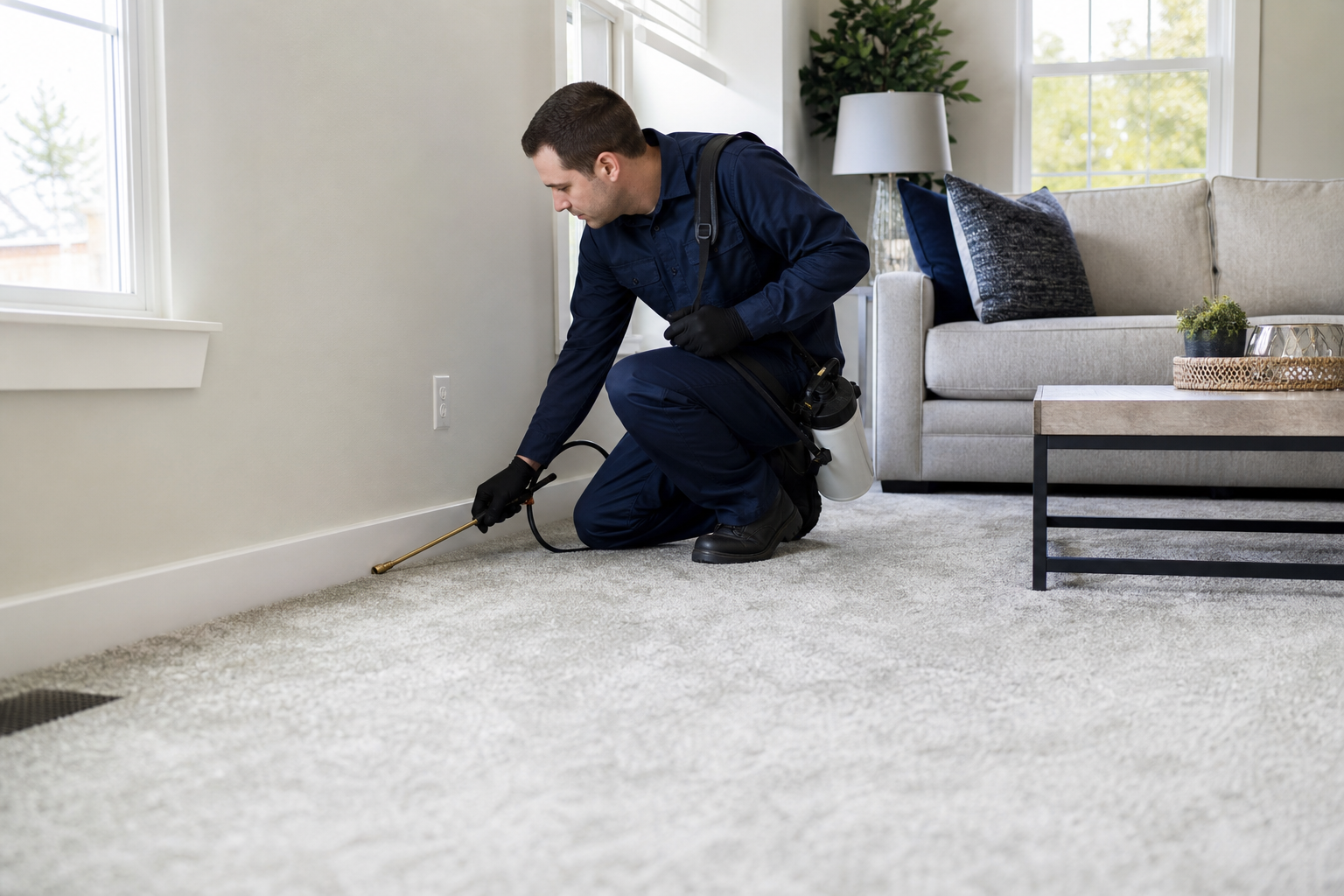
Many indoor liquid products dry clear when used lightly on the right surface. Even so, overapplication can leave a ring, streak, or sticky residue, especially on flat paint, wallpaper edges, unfinished wood, and absorbent carpet fibers.
Manufacturer guidance from BASF for Alpine WSG and from Syngenta for several professional-use products emphasizes applying only as directed and avoiding runoff or excess wetting. When a technician saturates a seam or sprays until a surface glistens, the stain risk goes up even if the product itself is not strongly colored.
Dusts and wettable powders
Fine insecticidal dusts and powder-based products can leave a pale film around outlet covers, baseboard gaps, attic hatches, and wall penetrations if too much material is used or if it escapes from the intended void.
That residue is often more of a visibility issue than a permanent stain, but on dark paint or textured surfaces it can be difficult to remove cleanly. Dust belongs in enclosed gaps and voids, not as a visible layer across living surfaces.
Foams and aerosols
Expanding foam products can be useful inside wall voids or around plumbing penetrations, but they can also wick out of cracks and leave a visible edge if the application is excessive.
Aerosols may also spot nearby surfaces if the spray pattern drifts or lands on fabric. This is one reason technicians often mask or avoid adjacent finished materials during indoor work.
Baits and gels
Baits and gels are usually among the least likely indoor treatments to stain when they are placed correctly in small amounts. The bigger problem with gels is visible smearing if they are applied where people touch, mop, or wipe routinely.
For many ant and roach issues, a bait-based approach may solve the problem with less surface contact than a broad liquid treatment. If staining is a main concern, that is a reasonable question to raise during the estimate.
Which surfaces are most vulnerable to staining?
Porous, absorbent, textured, and light-colored materials are usually the most vulnerable surfaces in a home.
Carpet can hold moisture and residue below the tips of the fibers, which means a spot may not show immediately. Flat wall paint can reveal streaking if a product dries unevenly. Natural stone, unfinished wood, wallpaper, silk-like fabrics, and older or chalky paint finishes are also more likely to show a mark.
According to the University of California Agriculture and Natural Resources, insecticides should be applied only to the site listed on the label and in the manner directed. For homeowners, the practical takeaway is simple: if a carpet, drape, painted wall, or upholstered edge is not a labeled treatment site for the chosen product, it should not be sprayed as a matter of convenience.
Newer stain-resistant carpet is not a guarantee either. Carpet manufacturer care documents often caution that off-label chemicals and strong spot treatments can affect finish, backing, or appearance. If a company proposes direct carpet treatment, ask whether the label specifically allows it on carpet and whether the manufacturer gives any appearance warning.
What should a pest control company tell you before treatment?
You should get a clear explanation of the product type, the exact treatment locations, and any known risk of residue or discoloration before work begins.
According to the Centers for Disease Control and Prevention, you should follow label directions and ask questions about where a pesticide is being used in the home. In practice, that means asking the company to identify the product and the treated surfaces in writing if your walls, rugs, or furniture are a concern.
- What product or products will be used indoors?
- Will anything be applied directly to carpet, upholstery, wallpaper, or painted walls?
- Is the product labeled for that exact surface?
- Does the label or manufacturer mention visible residue, staining, or testing in an inconspicuous area?
- Will the treatment be bait-based, crack-and-crevice only, or a broader spray application?
- If a mark appears, what is the company’s process for documenting and addressing it?
How can you lower the chance of stains without weakening the treatment?
A good way to lower stain risk is to choose the least surface-contact treatment that still fits the pest problem.
That often means baits, traps, exclusion work, and targeted crack-and-crevice applications instead of wide indoor spray coverage. For some infestations, broad spraying is not the most effective approach anyway. If the pest issue is localized, a more precise method may protect both your finishes and the treatment result.
Integrated pest management guidance from the EPA supports using inspection, sanitation, exclusion, and targeted controls rather than relying only on routine blanket pesticide use. For a homeowner, this is where cheaper and cleaner can align: sealing entry points, correcting moisture, and using bait in the right places may reduce the need for wet indoor applications on visible surfaces.
You can also make a few practical requests before service:
- Ask for crack-and-crevice or bait-focused treatment where appropriate.
- Point out delicate finishes, wool rugs, wallpaper, or recently painted areas.
- Request that any questionable surface be tested in a hidden spot first if the label allows that approach.
- Move small fabric items, pet beds, and decorative rugs away from treatment zones.
- Get the scope in writing so there is no confusion about where product will be placed.
If you have pets or small children, this related Abodence guide on pest control safety before treatment covers the questions worth asking before service day.
What if a company wants to spray carpet or upholstered areas?
You should ask for the product label and the reason that surface needs treatment before agreeing to direct application on carpet or upholstery.
Some specific products are labeled for certain fabric or carpet uses in certain pest situations. Many are not. A legitimate need might exist for a targeted flea treatment, for example, but the product still has to be labeled for that use site and applied exactly as directed.
This is where homeowners get tripped up by unclear quotes. “Interior treatment” can mean a few drops of gel in cabinet hinges, or it can mean a much broader application than you expected. If a quote does not specify treatment sites, ask for detail before the appointment, not after furniture has been moved.
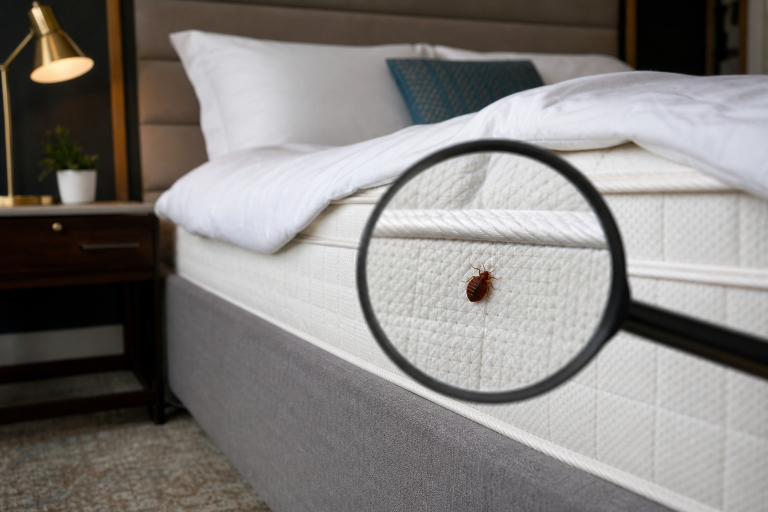
For bed bug work in particular, treatment plans can involve a mix of methods and products. Abodence covers that complexity in this guide to why bed bugs are so difficult to eliminate.
Can stains be cleaned if they happen?
Sometimes a visible residue can be removed, but the right cleanup method depends on the product used and the surface affected.
You should not guess. The wrong cleaner can spread the spot, strip paint, set a residue deeper into carpet backing, or create a bigger appearance problem than the original mark. The first step is documentation: take photos, note the location, and ask the company for the exact product name and formulation used there.
Manufacturer labels and technical sheets often include cleanup, storage, or handling guidance, and the company should be able to tell you whether the mark is likely to be removable residue or actual discoloration. If carpet or upholstery is involved, the fiber manufacturer or a qualified cleaning professional may need that product information before attempting removal.
When is stain risk a sign to choose a different treatment plan?
A different plan makes sense when the target area includes delicate finishes, high-visibility fabrics, or surfaces the label does not clearly allow.
In those cases, the better option may be baiting, trapping, exclusion repairs, monitoring, or limited treatment in hidden voids rather than direct application to finished surfaces. This is especially true in rooms with wool rugs, custom drapery, wallpaper, unfinished trim, or recently refinished floors.
FAQ
Do most pest control treatments leave visible stains?
Most modern residential treatments do not leave visible stains when the product is suitable for the surface and the application is controlled. Problems are more likely with excess liquid, visible dust, certain foams, or treatment on porous materials that should have been avoided.
Can roach or ant gel stain painted walls?
Small gel placements usually do not stain painted walls when they are placed in cracks, seams, or hidden spots. Smearing, overapplication, or placement on a frequently cleaned painted surface can leave a visible mark.
Should carpet be sprayed during routine pest control?
Routine service usually does not require direct carpet spraying for many common pests. If a company recommends it, ask which pest is being treated, which product will be used, and whether the label specifically allows carpet application.
Is residue the same as permanent staining?
No, residue and permanent staining are different problems. A residue may sit on the surface and be removable, while discoloration means the finish or fiber itself changed appearance.
What is the safest way to handle a suspected treatment stain?
The safest first step is to document the mark and get the exact product name before trying to clean it. That gives you a better chance of using the right cleanup method for the wall, carpet, or fabric involved.
If you are comparing companies and want help understanding treatment scope, product type, or whether a lower-contact option makes more sense for your home, Abodence can help you sort through the details and request quotes with the right questions already in hand. Please call a listed specialist for a free, no-obligation discussion.
Sources: National Pesticide Information Center, BASF Alpine WSG product label and technical guidance, Syngenta professional product labels and technical guidance