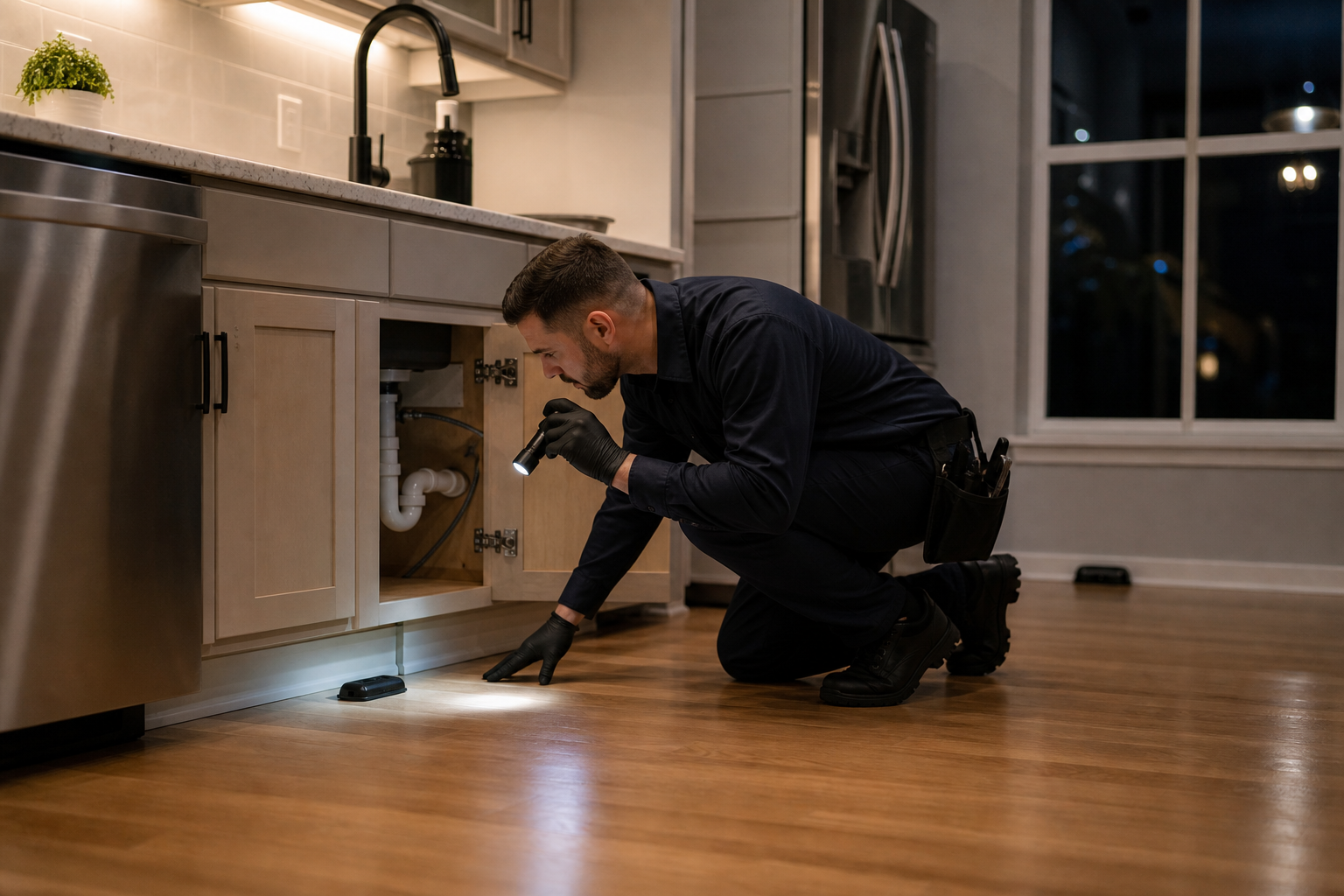
Cockroach Treatment Options: Strategic Ways to Solve a Serious Infestation
Focus Keyword: cockroach treatment options

Call for a free estimate:
Pest treatment options work best when they match the size of the problem, the species involved, and the places roaches are actually using inside the home. For most homeowners, the practical choices fall into three buckets: targeted gel baits and bait stations, insect growth regulators that interrupt the life cycle, and professional treatment plans that combine products with exclusion and sanitation advice.
According to the U.S. Environmental Protection Agency, they recommend an integrated approach that includes sanitation, sealing entry points, fixing water leaks, and using baits or boric acid rather than relying on total-release foggers. EPA also states that bug bombs can expose people and pets to pesticides and may not reach the cracks and hidden spaces where cockroaches spend time.
What are the main cockroach treatment options for homeowners?
The core choices are bait-based products, dusts used in the right voids, sticky monitors, and full professional service when the infestation is established or recurring.
Gel baits are designed to be placed in cracks, crevices, and hidden travel areas. Roaches feed on the bait and can spread the active ingredient back to harborages. Bait stations work on the same basic principle, though placement flexibility is lower than with gel.
Dust products are different. Boric acid and other labeled dusts are meant for thin applications in wall voids, behind kick plates, or other protected spaces, not broad visible piles. The National Pesticide Information Center, a cooperative agreement program of Oregon State University and the EPA, explains that boric acid products can be effective for cockroaches when used according to the label and kept out of areas where children and pets could contact them.
Insect growth regulators, often called IGRs, do not usually deliver the quick visual result people expect from a spray. Instead, they interfere with development and reproduction. That makes them more useful as part of a longer control plan than as a stand-alone answer for heavy activity.
Sticky traps are not a full treatment. They are monitoring tools that help show where activity is concentrated and whether a plan is working.
Professional treatment usually combines several of these tools with inspection, species identification, and recommendations to reduce food, water, and shelter access.
Which cockroach treatment options actually work best?
Bait-focused programs are widely recognized as the most reliable starting point for indoor control because they target hidden feeding behavior instead of trying to hit every insect directly.
Per the University of California Statewide Integrated Pest Management Program, baits are among the most effective control methods for cockroaches when they are placed correctly and competing food sources are reduced. That same UC IPM guidance also notes that sprays can contaminate bait placements and reduce bait acceptance.
For a light problem in one room, a well-placed bait program plus cleanup and leak repair may be enough. For a heavier infestation, especially with cockroaches in kitchens or bathrooms, bait alone may not be enough unless it is refreshed and combined with follow-up monitoring and exclusion work.
Species matters here. German cockroaches usually live and breed indoors and often need a more detailed indoor treatment plan. American cockroaches are more often tied to basements, drains, crawl spaces, and moisture-prone utility areas. A treatment that works in upper kitchen cabinets may do little for a drainage-related issue in a lower level.
Why sprays often disappoint
Contact sprays can kill the roaches you see, but visible insects are usually only a small part of the population. Hidden harborages behind appliances, inside cabinet voids, and around plumbing penetrations are the real issue.
Residual sprays still have a role in some professional programs, especially in cracks and crevices or exterior transition areas, but they are not the whole answer. Broad indoor spraying is often the method homeowners notice first and trust most, even though bait-based control is often more strategic.
Why placement matters more than product hype
Small placements close to harborages usually outperform large amounts placed in open, easy-to-clean areas. Roaches prefer tight, dark, protected spaces. Treatment has to reach them there.
That is one reason vague service descriptions can be a problem. If a quote only promises to “spray for roaches” without explaining inspection, baiting, follow-up, and likely harborages, you still do not know what treatment you are buying.
When is professional cockroach treatment the smart choice?
Established indoor activity, repeated sightings after store-bought treatment, or roaches showing up in multiple rooms usually justify professional service.
According to the National Pest Management Association, cockroaches can hide in cracks, behind appliances, and in drains and other hard-to-reach spaces, which is one reason infestations can persist without a thorough inspection and treatment plan. Professional help is also the practical route in apartments, attached housing, or multi-unit buildings where neighboring units may affect control.
You should also lean toward professional treatment when any of these conditions apply:
Call for a free estimate:
- Roaches are active during the day, which can indicate crowding in harborages
- You are seeing small nymphs as well as adults
- Activity returns quickly after over-the-counter products
- The problem involves kitchens, shared walls, utility chases, or drain areas
- You cannot identify where the infestation is centered
How much does professional cockroach treatment cost?
About $100 to $600 is a common 2026 range for professional pest control visits and treatment packages, depending on infestation severity, home size, and whether the service is a one-time visit or part of an ongoing plan, according to Angi’s 2026 pest control pricing data. For broader context on service pricing, Abodence also breaks down common categories in this pest control cost guide.
A small, localized issue may fall near the lower end if access is straightforward and follow-up is limited. A larger infestation with repeat visits, apartment coordination, or combined treatment methods can land higher. Some companies price roach control as part of a general pest plan, while others price it as a targeted infestation service.
Ask for the treatment scope in writing. The useful details are where products will be placed, whether baiting is included, whether follow-up visits are included, and what preparation the homeowner needs to complete before service.
Warranty language deserves close attention too. A retreatment promise is not the same thing as a refund, and neither one tells you much unless the company states the time window and the conditions that apply.
How do you choose between DIY and professional cockroach treatment options?
A small, newly noticed problem in one area may be reasonable to address with a careful bait-and-monitoring approach, but a widespread or recurring infestation usually needs professional treatment.
DIY makes the most sense when you can clearly limit the problem to one room, place bait in protected locations, reduce competing food and water sources, and check results over the next few weeks. It makes less sense when activity is spread across the kitchen, bathrooms, laundry area, basement, or shared walls.
There is also a difference between buying products and using them in a way that fits cockroach behavior. Mixing sprays, foggers, cleaners, and bait in the same space can work against the treatment rather than strengthen it.
If the home also has other pest issues, it can help to compare whether you are dealing with overlapping signs. For example, carpenter ants and cockroaches can both show up around moisture problems, but the treatment approach is different. Abodence covers that distinction in this guide to carpenter ant warning signs.
What should a good cockroach treatment plan include?
A solid plan should identify likely harborages, use the right product type for those areas, and include a way to confirm whether activity is actually declining.
The best service descriptions are specific. Look for these elements:
- Inspection of kitchens, baths, utility penetrations, appliance areas, and moisture sources
- Species identification when possible
- Targeted bait placement, not just broad spray language
- Use of monitors or sticky traps to track activity
- Clear preparation instructions before service
- Follow-up timing and retreatment terms in writing
Exclusion and moisture correction belong in the plan too. The Centers for Disease Control and Prevention advises that pests are discouraged by removing food and water sources and by sealing the places where they enter and hide. In practical terms, that means fixing leaks, reducing clutter in active zones, and sealing gaps around pipes, baseboards, and cabinet penetrations after the infestation is under control.
What mistakes make cockroach treatment fail?
The most common failures come from using the wrong product type, placing it in the wrong spot, or stopping too early when sightings drop for a few days.
One frequent mistake is relying on foggers. EPA specifically advises against total-release foggers for cockroach control because they may not reach the hidden spaces where roaches live and can create unnecessary pesticide exposure. Another is placing bait where strong cleaners or repellent sprays have just been used.
Overapplying dust is another problem. A visible layer is usually too much. Roaches avoid thick deposits, and loose dust can move into living spaces where it does not belong.
Homeowners also lose time by treating every sighting as an isolated issue. If roaches are coming from plumbing voids, appliance motor spaces, or neighboring units, wiping down counters and spraying baseboards will not solve the underlying access point.
How long does it take for cockroach treatment options to work?
Several days to a few weeks is a normal window for noticeable improvement, with timing driven mostly by infestation size, species, and whether follow-up is needed.
Baits are not always fast in the way a contact spray is fast. You may still see activity after treatment starts, especially at night. That does not automatically mean the plan failed. It can mean the insects are still moving through bait placements and harborages while the population declines.
Heavier infestations usually take longer because there are more hiding places, more egg cases in the environment, and more pressure from food and water sources. Multi-unit housing can also stretch the timeline if adjacent units are untreated. A realistic expectation is gradual decline, not instant disappearance.
Call for a free estimate:
FAQ
Are cockroach bombs a good treatment option?
No, total-release foggers are generally a poor choice for indoor roach control because EPA says they may not reach the cracks and hidden spaces where cockroaches live, and they can create unnecessary pesticide exposure.
Do cockroach baits work better than sprays?
In many indoor infestations, baits are the more effective tool because UC IPM identifies them as a leading control method when they are placed correctly and competing food is reduced.
Can you get rid of roaches without an exterminator?
Yes, a small and localized problem may respond to careful bait placement, monitoring, and correction of food and water sources, but repeated or widespread activity usually needs professional service.
How do you know if a cockroach infestation is serious?
Daytime sightings, activity in multiple rooms, and seeing both small nymphs and adults usually point to a larger established population that is harder to control with casual store-bought treatment.
Is one treatment enough for cockroaches?
Often, no single visit solves an established infestation because effective control may require follow-up baiting, monitoring, and correction of the conditions that support the population.
If you are comparing cockroach treatment options and want help sorting out what kind of service makes sense for your home, you can review local service choices and request a quote through Abodence services.
Sources: National Pesticide Information Center, University of California Statewide Integrated Pest Management Program, National Pest Management Association, Angi 2026 pest control pricing data