Seasonal Pest Activity: What to Expect Each Season
Pest activity follows weather, food, water, and shelter. Your local climate sets the schedule, so a spring ant trail in Georgia may arrive weeks before one in Minnesota. Still, the same broad pattern helps you judge whether you have a brief nuisance, a building problem, or a reason to call for an inspection.
Start with the pattern. A few insects at a window and a steady line entering under a baseboard are different problems. Seasonal pest control should match what you actually see or it should follow the advice of a professional technician after inspection.
What pest activity should you expect by season?
Your local weather determines timing, but spring usually brings new insect activity outdoors, summer favors pests that use heat and moisture, fall drives shelter-seeking pests toward buildings, and winter reveals pests already established indoors. The U.S. Environmental Protection Agency’s integrated pest management principles emphasize identifying the pest and its conditions before choosing a control method. That approach prevents a broad treatment from becoming the default answer to every sighting.
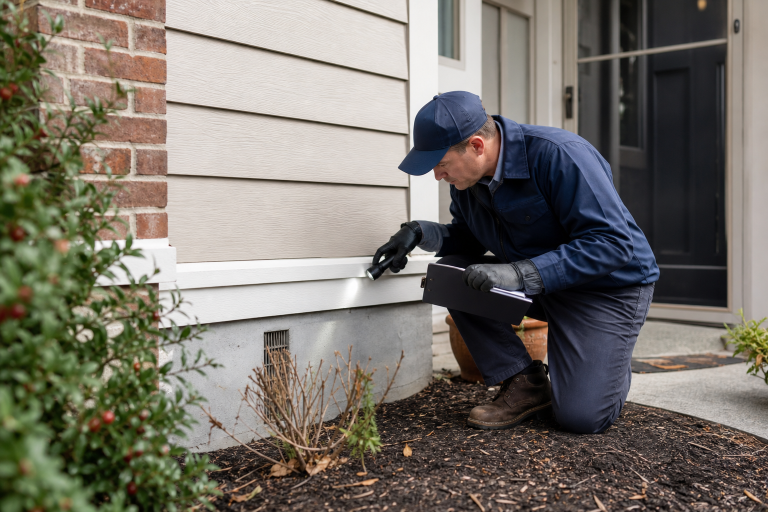
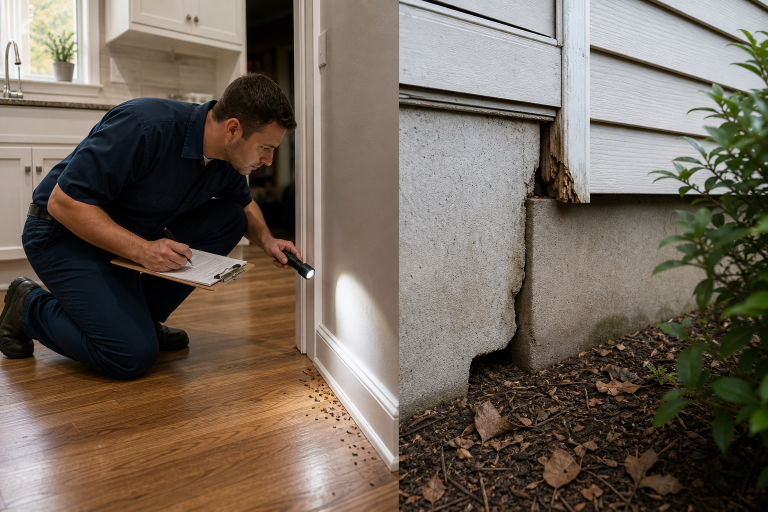
Spring: Ant scouts often show up as colonies search for food and moisture. Warm, wet conditions can also bring termite swarmers. Penn State Extension notes that termite swarmers have straight antennae and equal-length wings, while flying ants have elbowed antennae and unequal wing lengths. For termites, repeated swarms from the same interior area, mud tubes on a foundation, or soft wood can justify an inspection.
Summer: Moisture and accessible food keep many pests active. University of California Agriculture and Natural Resources, through its Statewide Integrated Pest Management Program, identifies sanitation, moisture control, and exclusion as core parts of ant management. Look for the reason insects are lingering, such as a dripping condensate line or pet food left overnight. Fixing that condition often matters more than adding another spray.
Fall: Cooler nights shift attention to cracks around utility lines, loose weatherstripping, and attic vents. University of Minnesota Extension describes how rodents move indoors for food and shelter as temperatures fall. Mice fit through a gap the width of a pencil. Brown marmorated stink bugs and boxelder bugs can also collect on sunny outside walls before moving into wall voids or attic spaces.
Winter: Cold weather reduces outdoor movement for some species, but it does not erase pests already inside. Rodents may keep using a quiet basement, and pantry pests can persist where food is available. University of Minnesota Extension advises storing food in rodent-proof containers and removing food sources as part of pest control. A winter sighting is often a reason to inspect storage and entry points, not a reason to assume every room needs treatment.
Which signs point to a real infestation?
A repeating trail, fresh droppings, or insects emerging from one spot points to an active issue worth identifying. A few insects that entered through an open door does not indicate the same issue as a trail of ants streaming from a drywall or cabinet gap. Count where you see them, when they appear, and whether the evidence returns after you clean up.
Look for a consistent route. Ants commonly follow edges, pipes, and wiring paths, while mice often leave small dark droppings near food storage, behind appliances, or along walls. Treat recurring evidence as a clue that food, shelter, or an entry gap remains available.
A pest company should be able to name what it found and point to the evidence, rather than treating every small dark insect as a termite or every bite concern as bed bugs. If bed bugs are a possibility, confirmation matters because they require a different response than a stray beetle or flea. See what makes bed bugs difficult to eliminate before agreeing to a treatment plan.
What should seasonal pest control cost?
A one-time general pest-control visit typically falls between $50 and $500, according to Angi’s 2025 Pest Control Cost Guide. The wide range reflects the pest, your region, the size of the affected area, and whether the provider needs to inspect or seal entry points. A routine exterior treatment and a targeted rodent exclusion job are not comparable scopes.
Ask for the price to separate inspection, treatment, follow-up, and repairs. That makes it easier to see whether a low first-visit price leaves out the work you actually need. A proposal that says only “pest service” gives you little way to compare products, locations, or return visits.
You do not need a quarterly contract for one ant trail that stops after you clean the food source. However, a recurring plan can make sense when documented activity returns through several seasons or when your property has a continuing condition that you cannot fully change.
Termite work, bed bug treatment, wildlife removal, and structural repairs deserve separate written scopes. Do not accept a price for “termite treatment” without learning whether it includes an inspection, what area is treated, and whether repairs are excluded. The cheaper quote may be perfectly fair if it covers less work, but it is not a bargain if you assumed it included exclusion or repair.
When is a simple fix enough?
For a small, isolated problem, sanitation and exclusion are often the sensible first moves. The EPA’s IPM framework puts prevention and monitoring ahead of routine pesticide use. You can remove a food source, dry a damp area, and close a visible gap before paying for a broad indoor application.
Seal gaps after you address the building issue that created them. For example, repair a loose pipe escutcheon or damaged door sweep, then close the remaining opening with an appropriate durable material. Select your remediation product to match the issue, foam alone is often a poor barrier where rodents can chew it or where sunlight breaks it down.
Use caution around stinging insects. A nest inside a wall near a frequently used door, or in a place where people or pets could disturb it, calls for a pest professional. Keep people and pets away from the nest. Do not pay for a whole-home spray when the real issue is one accessible exterior nest that can be addressed directly.
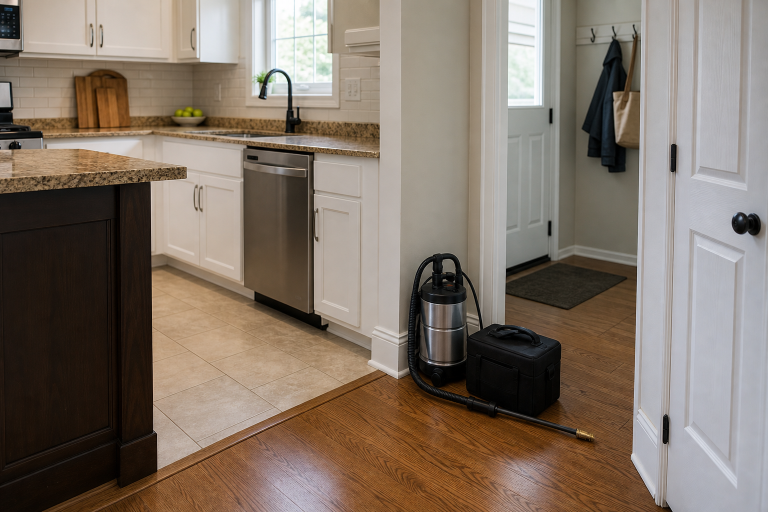
If treatment is proposed, ask what product category will be used and where it will go. Read the product label as it dictates the pesticide’s allowed use. Review practical preparation and reentry questions in this pest-control safety guide for parents and pet owners.
What should you ask a pest-control pro?
Their proposal should identify the pest, the evidence, the treatment location, and the conditions that need fixing. Ask for a written explanation in plain language. A good answer ties the recommendation to a specific trail, gap, nest, or moisture source. It also separates pest work from carpentry, insulation, or cleanup that another contractor may need to handle.
- “What evidence tells you this is the pest you identified, and where is it entering or nesting?”
- “What does this price include, what happens at a follow-up visit, and what building repair do I need to arrange?”
Watch for vague promises and pressure to sign before you know the scope. A provider may reasonably recommend monitoring after treatment, but “maintenance” should describe a schedule, covered pests, service locations, and cancellation terms. Read the warranty language as carefully as the price. A retreatment promise is different from a promise to repair damage or prevent all future insects.
FAQ
Are pests worse in spring or fall?
Both seasons can be busy, but they produce different patterns. Spring often reveals new insect activity as weather warms, while fall brings more shelter-seeking rodents and insects toward homes. Your region, rainfall, and the condition of your building matter more than the calendar alone.
Should you treat pests before you see them?
Prevention can be worthwhile when it means sealing known gaps, managing food, and correcting moisture. Routine chemical treatment without a pest, an entry route, or a history of recurring activity is harder to justify. Match paid service to a documented risk on your property.
How long should you wait before calling pest control?
Call promptly when activity repeats, you find structural signs associated with termites, or a nest creates a safety concern. For a single low-risk sighting, clean the area and monitor it first. Photos and notes about location make an inspection more useful.
If seasonal activity keeps returning, request a written inspection and quote that identifies the pest, the likely entry point, and the smallest effective scope for your situation. Please call a listed specialist for a free, no-obligation discussion.
Sources: Angi, 2025 Pest Control Cost Guide; Penn State Extension, termite swarmer identification guidance; University of California Statewide Integrated Pest Management Program, ant management guidance; University of Minnesota Extension, rodent and seasonal pest guidance.