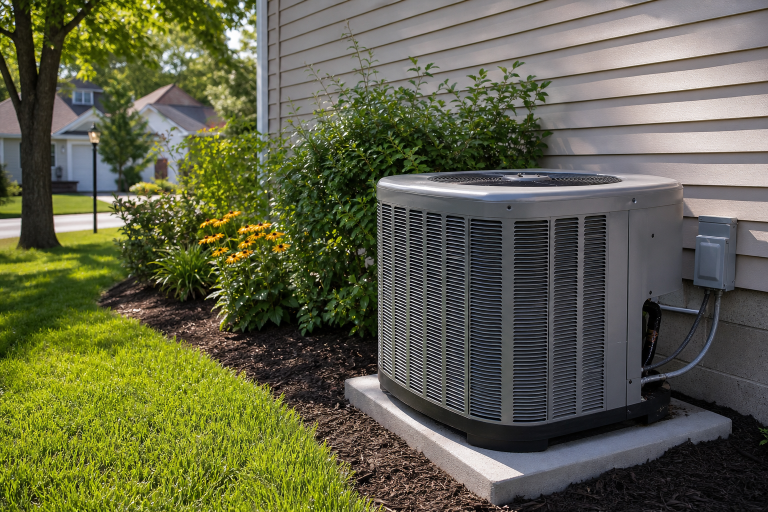
Frozen HVAC Coil or Overheating Unit: Urgent Steps
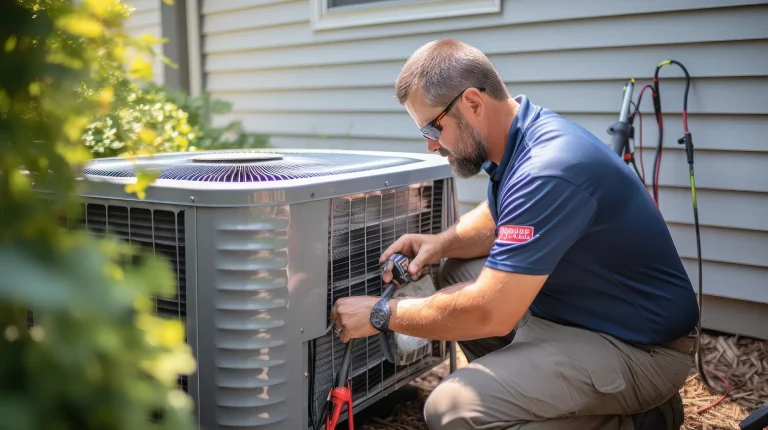
A frozen pipe on an outdoor HVAC unit or an indoor air handler is usually a good case for professional help. Start by turning off the system at the thermostat. If you notice a burning smell, smoke, sparks, or a breaker that will not stay on, leave the equipment off and call a qualified HVAC provider promptly.
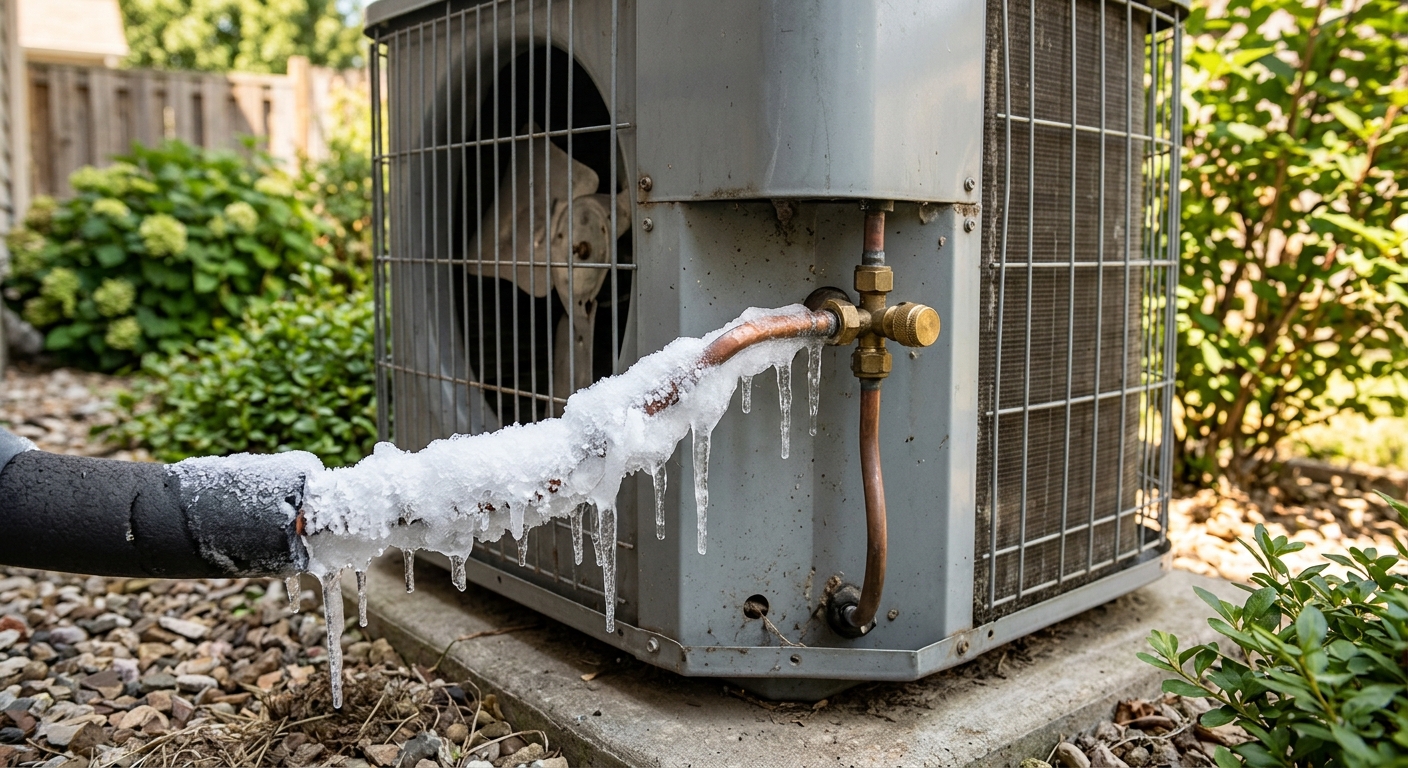
The next step depends on what stopped the system from moving heat or air. A layer of white ice on the copper refrigerant line points toward a cooling-side problem. A furnace that repeatedly shuts down during a heat call points toward a heating-side problem. Neither condition gives you enough information to approve a major repair, but it’s a good reason to call a professional
How much does frozen-coil or overheating HVAC repairs cost?
In 2025, Angi lists typical HVAC repair costs at $180 to $580, while an evaporator-coil replacement commonly runs $600 to $2,000. Those are broad marketplace estimates, not a diagnosis. Labor rates, access to the indoor coil, refrigerant work, and the actual failed part can move your total outside either range.
A service visit may end with a modest diagnosis, such as a recommendation to replace a failed blower part or a blocked filter. It can also reveal a refrigerant leak or damaged coil. Ask for the diagnostic charge separately from the repair price, then ask whether that charge is credited if you approve the work.
Do not pay for an evaporator-coil replacement before the provider explains what caused the ice. Replacing the coil without addressing an airflow restriction or a leak can leave you with the same problem and a much larger bill.
What should you do first when a coil freezes?
Set cooling to Off and set the fan to Auto, then let the ice thaw without forcing the system to run. A frozen coil cannot cool normally. Continuing to run it can leave you with warm air and more water when the ice melts.
Check only the simple, safe items. Make sure the return grille is not covered by a rug or storage box. Look at the filter. A visibly loaded 1-inch pleated filter is a reasonable item to replace with the correct size and direction shown on its frame. Do not open the sealed refrigerant system, chip ice from the coil, or add refrigerant yourself.
The U.S. Department of Energy says a clogged filter reduces airflow and can cause an air conditioner’s evaporator coil to freeze. Its air-conditioner maintenance guidance also identifies clean coils and unobstructed airflow as part of normal operation. If the filter looks clean, or if ice returns after it is changed, stop troubleshooting and schedule service.
Expect water during thawing. Put towels around a small indoor drip if you can do so safely, but do not remove cabinet panels to reach the coil. Water spreading across finished flooring or coming from electrical equipment needs prompt professional attention.
What can make an indoor coil freeze?
Restricted airflow and a refrigerant problem are two main issues worth separating during diagnosis. The Department of Energy identifies insufficient airflow and low refrigerant charge as conditions associated with frozen evaporator coils.
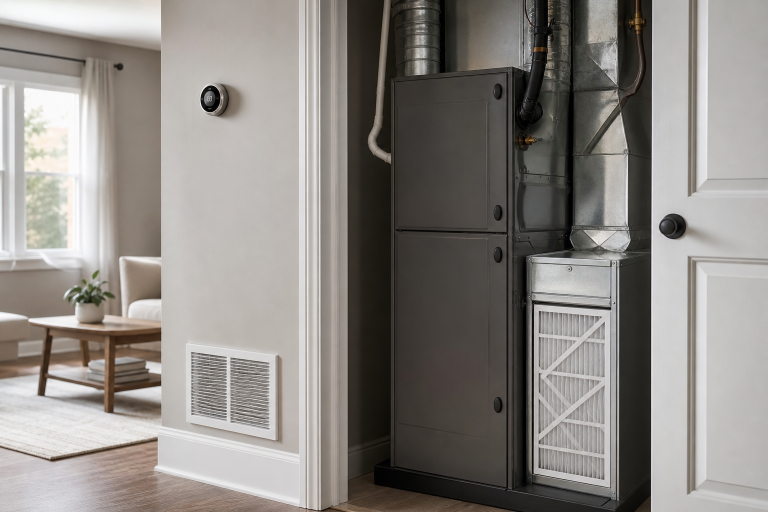
Airflow trouble can start with a dirty filter, a failed blower motor, or a closed-off return path. The indoor coil often sits inside a metal cabinet near the furnace or air handler, so you may only see ice on the larger insulated refrigerant line outside that cabinet. That visible frost is a clue, not proof of the failed part. For a clearer view of blower-related warning signs, see this guide to HVAC blower motor problems.
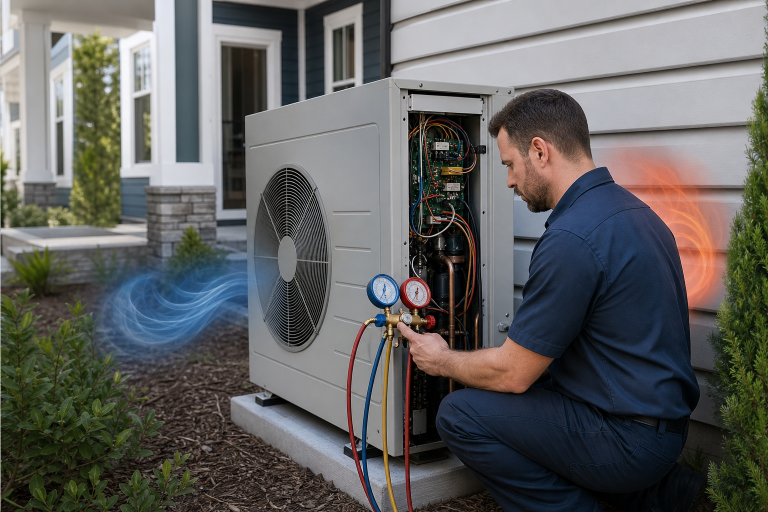
Low refrigerant is different. Your system does not use refrigerant like a car uses gasoline. If the charge is low, the provider should look for a leak and explain the repair plan. A dirty filter is the cheaper possibility. A suspected leak is not a reason to accept a vague “recharge” without questions.
What does an overheating HVAC unit mean?
A system that smells hot, trips a breaker, makes unusual electrical noises, or repeatedly stops during a heating cycle should stay off until a qualified provider evaluates it. “Overheating” can describe several problems, including restricted airflow, a blower failure, or an electrical fault.
Start with the thermostat setting and the filter. If the equipment has no burning odor or electrical warning, confirm that supply registers are open and that furniture is blocking a return grille. Don’t dig around inside a furnace as it has safety controls and electrical components that are best diagnosed by a professional.
Gas odor, smoke, visible sparking, or repeated electrical tripping changes the urgency. Leave the area if needed, avoid operating switches near a suspected gas leak, and contact the appropriate emergency service or utility before arranging HVAC repair.
What should a technician check before quoting a repair?
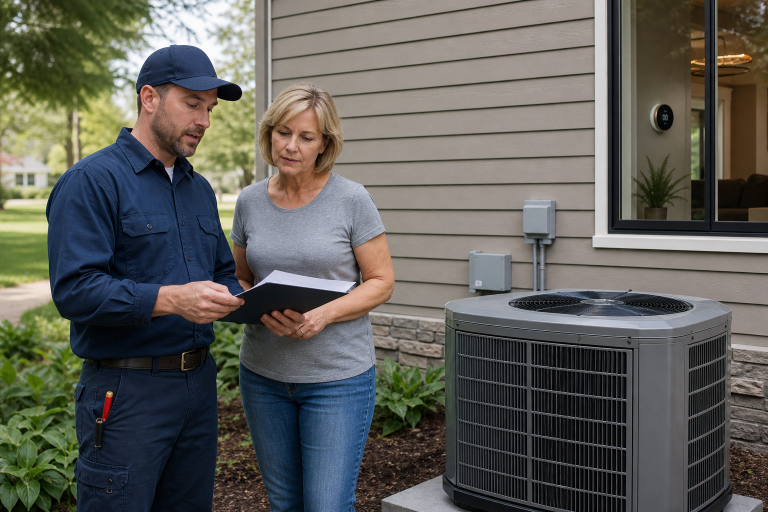
A diagnosis should identify a failed condition and show how the recommended repair addresses it. You need more than a statement that the system is “low” or “overheating.” Ask the provider to separate the diagnosis, immediate repair, and any optional improvement on the written estimate.
- For a frozen coil, ask whether airflow was measured or inspected and whether the provider found evidence of a refrigerant leak before recommending refrigerant work.
- For an overheating unit, ask which safety control or electrical component stopped operation and whether the blower is moving air as intended.
Request the part name, labor amount, warranty terms, and total price before approving the work. If a coil replacement is proposed, ask whether the quote includes leak testing, refrigerant, access work, and cleanup. A low headline price can omit items that appear later as change orders.
Keep replacement decisions separate from urgent diagnosis. A provider may find that repair is sensible, or that equipment condition and repair scope make replacement worth comparing. This HVAC repair-or-replace guide can help you compare those options after you have a written finding.
When is a replacement quote reasonable?
A replacement proposal is worth considering when the failed component has a high repair cost, the system has repeated major problems, or the existing equipment cannot support a practical repair. It is not an automatic answer to ice on a line or one shutdown. You deserve the diagnosis first.
If you do compare new equipment, ask how the provider determined capacity. ACCA’s Manual J procedure is the industry method for calculating a home’s heating and cooling load, meaning the amount of heating or cooling the house needs under design conditions. A larger unit is not automatically safer. Oversizing can create its own comfort and operating problems.
Ask for the proposed equipment’s efficiency rating, model numbers, warranty terms, and the scope for duct or electrical changes. Compare like-for-like written quotes. A lower bid can be enough when it specifies the same scope, capacity calculation, and warranty coverage.
How can you prevent a repeat problem?
Regular filter checks and clear airflow paths give the system its best chance to operate normally. Check the filter on the schedule stated by its maker, or sooner when it visibly holds dust. Do not install a denser filter simply because it sounds better unless the equipment documentation supports it.
Keep the outdoor unit clear of leaves and loose debris. Indoors, keep the return grille free of boxes and avoid shutting multiple supply registers to force more air into another room. Those simple steps are enough for routine care. You do not need a seasonal add-on package just because a provider uses the phrase “freeze prevention.”
If the same fault returns, save the invoices and note whether it happens in cooling or heating mode. A pattern gives the next provider useful information without asking you to diagnose the machinery.
FAQ
Can you run the fan while an AC coil is frozen?
Leaving the fan on Auto and the cooling setting Off is the cautious choice while you wait for the coil to thaw. A provider can tell you whether continuous fan operation is appropriate for your equipment after checking the cause.
Should you replace the filter when the coil freezes?
Replace a filter that is visibly dirty or overdue, using the correct size and airflow direction. A clean filter does not rule out a blower, duct, or refrigerant problem, so do not treat it as proof that the issue is solved.
Can low refrigerant be fixed by adding more refrigerant?
Adding refrigerant may restore operation temporarily, but a low charge can indicate a leak that needs evaluation. EPA rules require properly certified technicians for regulated refrigerant service, so ask what testing supports the recommendation.
If the system is off and you need a clear answer, request a written diagnostic quote that separates the immediate fix from any optional replacement proposal. For additional help, please call a listed provider for a free, no-obligation discussion.
Sources: Angi, 2025 HVAC Repair Cost and Evaporator Coil Replacement Cost marketplace estimates; Air Conditioning Contractors of America, Manual J residential load calculation procedure.