HVAC Variable Speed Systems: Market Overview and What’s Changing
Focus Keyword: HVAC variable speed systems

Call for a free estimate:
Variable speed systems are moving from premium upgrade to a mainstream option in many replacement quotes, largely because current efficiency rules, comfort expectations, and product line changes now favor equipment that can adjust output instead of running at only one fixed speed.
For homeowners, the market matters because the equipment showing up in bids today is not the same mix that dominated a few years ago. If you are replacing an air conditioner, heat pump, or furnace, you are more likely to see two-stage and variable-speed models side by side, with different blower designs, controls, and warranty terms. The right choice depends less on trend language and more on your climate, duct system, budget, and how long you expect to stay in the home.
According to the U.S. Department of Energy, central air conditioners and heat pumps with higher efficiency can reduce energy use, and proper sizing and duct condition affect real-world performance. In practice, that is where variable-speed equipment enters the conversation: it is designed to match output more closely to the home’s actual demand instead of cycling fully on and fully off as often.
In some homes, a well-installed single-stage or two-stage system is the better value, especially if the ductwork is undersized, the house has major air leakage, or the quote pushes expensive controls without addressing the basics first. If you have not looked at the blower side of the system before, Abodence has a separate guide on HVAC blower motor problems that helps explain why airflow and motor type matter.
What are HVAC variable speed systems, and how are they different?
These systems use motors and compressor controls that can ramp output up or down in smaller increments, rather than operating at only one fixed level.
In a cooling system, the biggest distinction is often the compressor. A single-stage compressor is either on or off. A two-stage compressor has a high and a lower setting. A variable-speed compressor, often using inverter-driven technology, can modulate across a wider range. On the air-handling side, many systems also use an electronically commutated motor, or ECM, so the indoor blower can adjust airflow more precisely.
According to AHRI, the Air-Conditioning, Heating, and Refrigeration Institute, matched system ratings depend on the exact combination of outdoor unit, indoor coil, and air handler or furnace. That is why two quotes that sound similar can perform differently on paper. The equipment family matters, but the matched combination matters more.
Manufacturers such as Carrier, Trane, Lennox, and Daikin describe variable-capacity equipment as a way to improve temperature consistency and humidity control by running longer at lower output when conditions allow. That longer, lower operation is the core feature homeowners are paying for.
Why is the market shifting toward HVAC variable speed systems?
Efficiency standards, product redesigns, and homeowner demand for quieter comfort are pushing more of the market toward modulating equipment.
Since the federal transition to SEER2 and related testing metrics, many brands have updated product lines and narrowed the gap between entry-level and better-equipped systems. According to the ENERGY STAR program, qualifying central air conditioners and air-source heat pumps must meet specific efficiency thresholds that vary by product type and region. Higher-efficiency tiers often align with equipment that uses more advanced fan and compressor controls.
Noise is another market driver. Manufacturer product literature from major HVAC brands routinely publishes lower sound ratings for premium variable-capacity outdoor units than for basic single-stage models in the same brand family. That does not make every premium system quiet in every installation, but it does explain why variable-speed equipment is often positioned as a comfort upgrade rather than only an efficiency upgrade.
How much more do HVAC variable speed systems cost?
Installed replacement costs for residential variable-speed central systems commonly land above basic equipment, and 2026 marketplace estimates from Angi place central air conditioner replacement broadly in the several-thousand-dollar range, with higher-end and more complex systems running substantially more.
That broad number is only a starting point, because marketplace estimates combine many system sizes and installation conditions. For a like-for-like replacement, a variable-speed air conditioner or heat pump paired with a communicating air handler or compatible furnace typically costs more than a single-stage setup because the equipment, controls, and labor scope are more involved. Quotes also rise when the job includes line-set replacement, electrical upgrades, zoning changes, or duct repairs.
If a quote jumps sharply in price, ask what is actually included. Some proposals bundle upgraded filtration cabinets, proprietary thermostats, surge protection, or extended labor coverage. Those items may be worth considering, but they should be separated clearly so you can compare scope rather than just comparing a headline number.
Where do variable-speed systems make the most sense?
Homes with long cooling seasons, humidity issues, uneven temperatures, or high electricity rates usually have the strongest case for paying more upfront.
Variable-capacity cooling can hold a steadier indoor temperature because it avoids some of the wider swings that come with full-output cycling. In humid climates, the longer run times at lower output can also improve moisture removal when the system is designed and set up correctly. That benefit shows up most clearly in houses where comfort complaints are tied to sticky indoor conditions, not just high afternoon temperatures.
You may also get better value from variable-speed equipment if you work from home and care about lower indoor noise, or if bedrooms run warmer or cooler than the rest of the house and the existing duct layout is reasonably sound. A system that can stay on at lower speed often feels less abrupt.
If you expect to move soon, the added cost may not return enough value unless local buyers strongly favor high-efficiency HVAC. The same caution applies if your home still has major envelope problems. In that case, air sealing and insulation improvements can be the smarter first spend. Abodence covers that side of the decision in its guide to HVAC energy audits.
What are the tradeoffs homeowners should watch for?
Better comfort and efficiency often come with more complex controls, stricter setup requirements, and higher repair stakes once the warranty period ends.
Call for a free estimate:
Variable-speed systems rely on communicating boards, sensors, and software logic more than basic single-stage equipment does. Manufacturer installation instructions from brands such as Bosch, Carrier, and Lennox make clear that airflow settings, refrigerant charge, control compatibility, and commissioning steps are central to performance. A strong product can disappoint if those details are skipped.
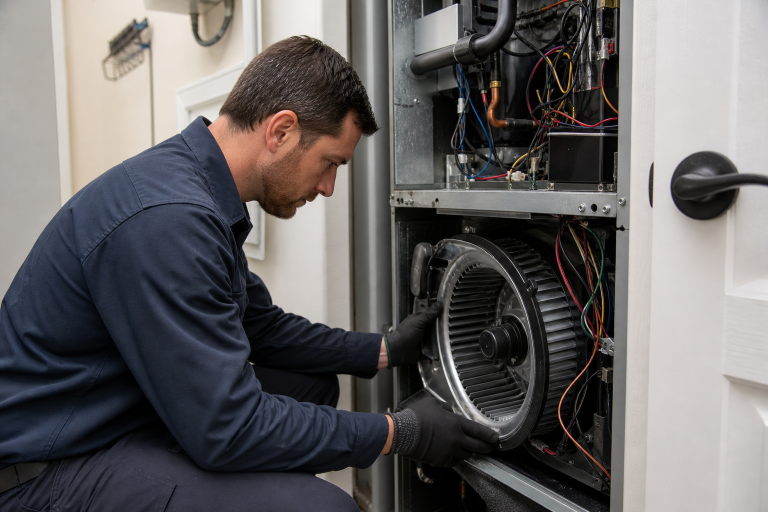
Repair costs can also be different. A standard PSC blower motor and capacitor setup is generally simpler than an ECM-based blower assembly. Likewise, inverter-driven outdoor units use different electronics than conventional condensers. That does not mean they are unreliable. It means diagnosis and parts can be more specialized.
The practical risk for homeowners is the vague quote. Some contractors sell “variable-speed” as a catchall phrase when the proposal actually includes only a variable-speed blower, not a variable-capacity compressor. Others use premium comfort language without identifying whether the thermostat is communicating, whether the AHRI match is confirmed, or whether duct modifications are included. Those details belong in writing.
How should you compare quotes for HVAC variable speed systems?
A useful quote identifies the exact matched equipment, the controls, the warranty terms, and any duct or electrical work needed for the system to perform as rated.
Use this checklist when reviewing proposals:
- Outdoor unit model number and indoor unit model number
- Whether the compressor is single-stage, two-stage, or variable-capacity
- Whether the indoor blower motor is ECM and whether the thermostat is communicating
- AHRI matched system reference or confirmation that the combination is rated together
- Stated efficiency ratings, such as SEER2 and EER2, for that exact match
- Any included duct sealing, return-air changes, or static-pressure corrections
- Electrical scope, pad, line set, drain changes, and permits
- Manufacturer parts warranty and any separate labor warranty
- Total installed price and any rebates or tax-credit assumptions dated for 2026
One more point is worth mentioning: ask whether the contractor performed a load calculation. According to DOE guidance on maintaining and replacing air conditioning equipment, proper sizing is essential to efficiency and comfort. A premium variable-speed system cannot correct a badly oversized replacement by itself.
Are heat pumps changing the variable-speed market?
Yes, much of the current momentum is tied to inverter heat pumps, which increasingly bring variable-capacity operation into mainstream replacement discussions.
Cold-climate product development, utility rebates in some regions, and federal tax-credit eligibility have made heat pumps more visible to homeowners who once would have replaced an air conditioner and furnace with the same arrangement by default. Many of the heat pumps now marketed for higher efficiency use inverter-driven compressors, so “heat pump quote” and “variable-speed quote” often overlap.
This does not mean every house should switch. In very cold regions, backup heat strategy, panel capacity, and local utility pricing all matter. In mixed climates, though, the market is clearly moving toward more sophisticated heat-pump options, and that shift is one reason variable-speed technology no longer feels niche.
What mistakes lead to buyer’s remorse?
A common regret comes from paying for premium equipment without getting the installation details that let it work like premium equipment.
Three mistakes show up often. First, homeowners accept a comfort promise without seeing the exact equipment match. Second, the quote skips duct issues even when rooms already have airflow problems. Third, the decision is based on maximum efficiency numbers alone, without checking whether the thermostat, air handler, and outdoor unit are designed to deliver those results together.
A cheaper option can be the right option when the house needs foundational work first. If your current system struggles because of poor return airflow, leaky ducts, or insulation gaps, fixing those problems may improve comfort more than jumping straight to the most advanced condenser on the market.
FAQ
Do HVAC variable speed systems save money?
They can lower operating costs when the home, climate, utility rates, and installation quality all support the equipment’s efficiency advantages. The exact savings should be tied to the matched system and your local energy costs, not to a generic percentage.
Is a variable-speed system better than a two-stage system?
A variable-capacity system usually offers finer comfort control, but a two-stage system can be the better value when your budget is tighter or when the rest of the house needs upgrades first. The stronger choice depends on the full installation, not on the label alone.
Do you need special ductwork for a variable-speed HVAC system?
Existing ducts may work, but airflow and static pressure still need to be checked. Manufacturer setup guidance and AHRI-rated performance both assume the system can move air properly through the home.
How long do variable-speed HVAC systems last?
Service life varies by installation quality, maintenance, operating conditions, and parts support. Manufacturers publish warranty terms, but warranty length is not the same thing as expected lifespan.
Is a communicating thermostat required?
Some premium systems need brand-compatible communicating controls to deliver their full features and rated performance. The quote should state that clearly instead of treating the thermostat as an interchangeable accessory.
If you are comparing replacement options and want help sorting through variable-speed, two-stage, and standard system quotes, please call one of the specialists listed. There is no obligation and most quotes are free.
Sources: AHRI, Carrier product literature, Trane product literature, Lennox product literature, Daikin product literature, Angi 2026 marketplace estimates, Bosch installation literature