Why your AC may struggle to keep up during a heat wave
An air conditioner that runs for hours during a heat wave is not automatically broken. The useful question is whether the system is performing close to its intended capacity or whether an equipment fault, airflow restriction, duct problem, or avoidable heat gain is holding it back. The answer affects whether the sensible next step is basic maintenance, a targeted repair, home improvements, or a full home load calculation before replacing anything.

Call for a free estimate:
The U.S. Department of Energy explains that central air-conditioning systems need proper sizing, installation, and maintenance to perform as intended. A heat wave can expose weaknesses that were less obvious on ordinary summer days, but a high thermostat reading by itself does not identify the cause.
Why can a properly working AC still miss the thermostat setting?
A correctly sized system may run continuously and still fall short of its normal setpoint when outdoor conditions exceed the local design conditions used for sizing. Air Conditioning Contractors of America, or ACCA, sets out the residential load-calculation method in Manual J, which accounts for local weather data, solar gain, insulation, windows, occupants, appliances, and air leakage.
Manual J does not treat every home in the same city as identical. A west-facing room with large unshaded glass can absorb far more afternoon heat than a shaded room, even when both are served by the same air conditioner. A kitchen can also add heat while cooking, and open exterior doors can add warm, humid outdoor air.
Cooling capacity also changes as outdoor temperature rises. The AHRI Standard 210/240 report establishes the test methods and rating conditions used for unitary residential air-conditioning and heat-pump equipment. Those standardized ratings allow products to be compared, but they do not promise that a unit will maintain any chosen indoor temperature through every extreme weather event in every house.
A short-term temperature drift during exceptional heat is therefore different from an AC that cannot cool adequately on a typical hot afternoon. A good way to strategize is by recording the outdoor temperature, thermostat setting, indoor temperature, and how long the system runs before deciding which pattern you have and the best way to mitigate increasing home heat.
How does the house make an AC work harder?
Heat entering through the building shell can exceed what the equipment and ducts were designed to handle. The U.S. Department of Energy’s air-sealing guidance identifies uncontrolled air leakage as a source of energy loss, while its insulation guidance explains that insulation slows heat flow through ceilings, walls, and floors.
An attic is often a major part of the summer load because the ceiling separates conditioned rooms from a very hot space. Missing or uneven insulation, disconnected attic ducts, and gaps around ceiling penetrations can leave the AC trying to offset heat that should have been kept outside the living area.
Windows create a separate problem. Sunlight passing through glass adds radiant heat directly to rooms and furnishings, so a sunny top-floor bedroom may feel warmer than the thermostat suggests. Exterior shading, closed blinds or curtains during direct sun, and limiting heat-producing activities during the hottest part of the day reduce the load without needing to upgrade HVAC equipment.
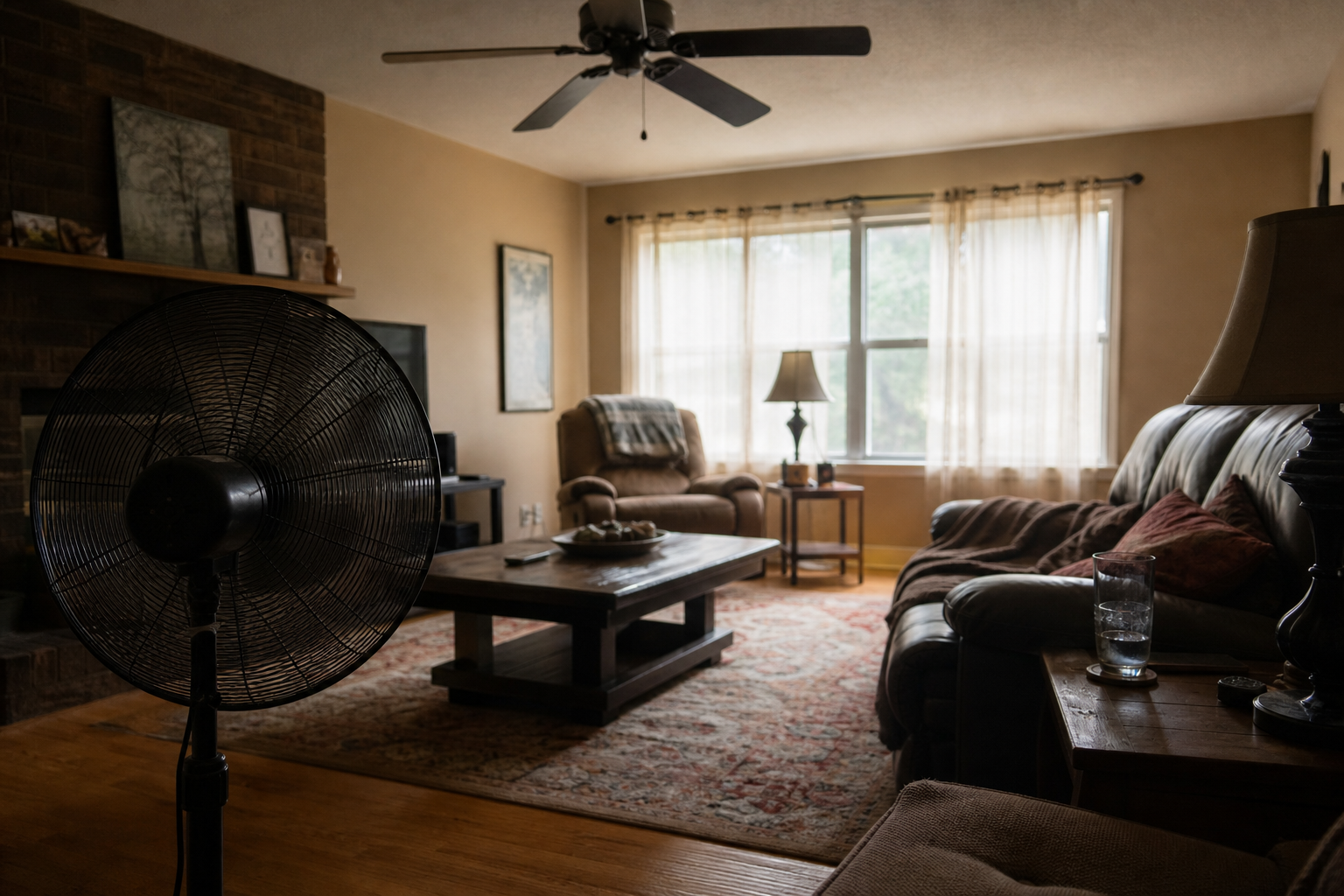
Room-to-room imbalance does not always mean the outdoor unit is too small. It can point to a duct path that supplies too little air to one room, a return-air path that is restricted when doors are closed, or a thermostat located in a cooler part of the house. ACCA Manual D is the industry standard for residential duct design, and it treats airflow delivery as part of system performance rather than an afterthought.
If most rooms are close to the setting but one or two are consistently hotter, investigate the room, ducts, and solar exposure before considering a larger condenser. An oversized replacement may still leave the same room uncomfortable if the cool-air delivery issue remains unchanged.
What equipment problems commonly show up during extreme heat?
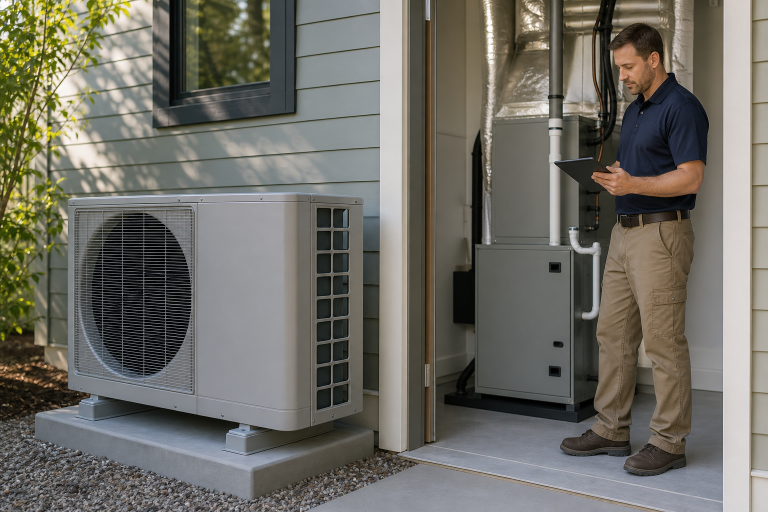
Restricted airflow, dirty heat-transfer surfaces, a failing component, or a refrigerant-system fault can reduce cooling output enough that the gap becomes obvious during a heat wave. The Department of Energy’s air-conditioner maintenance guidance identifies clean filters, coils, and unobstructed condenser airflow as parts of normal performance and maintenance.
A filter that is overdue for replacement can limit air moving across the indoor coil. A blocked return grille, closed supply registers, a damaged blower assembly, or duct leakage can create related airflow issues. These are reasons to inspect the basic conditions and arrange service when needed, not evidence that refrigerant should be added.
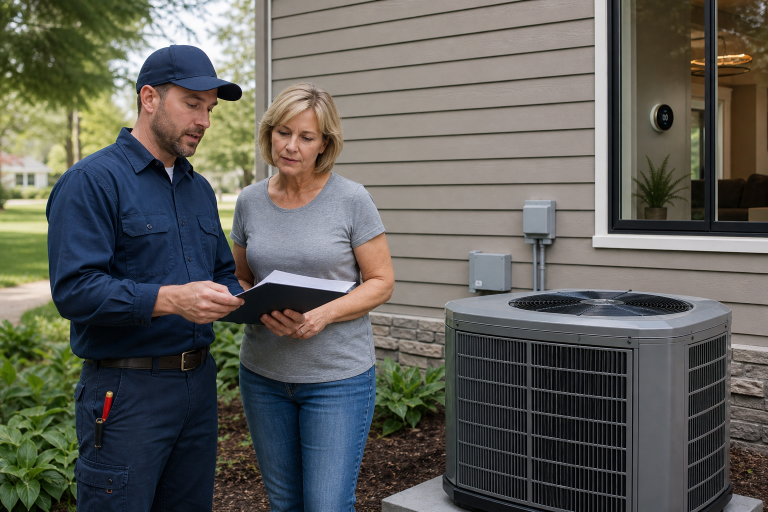
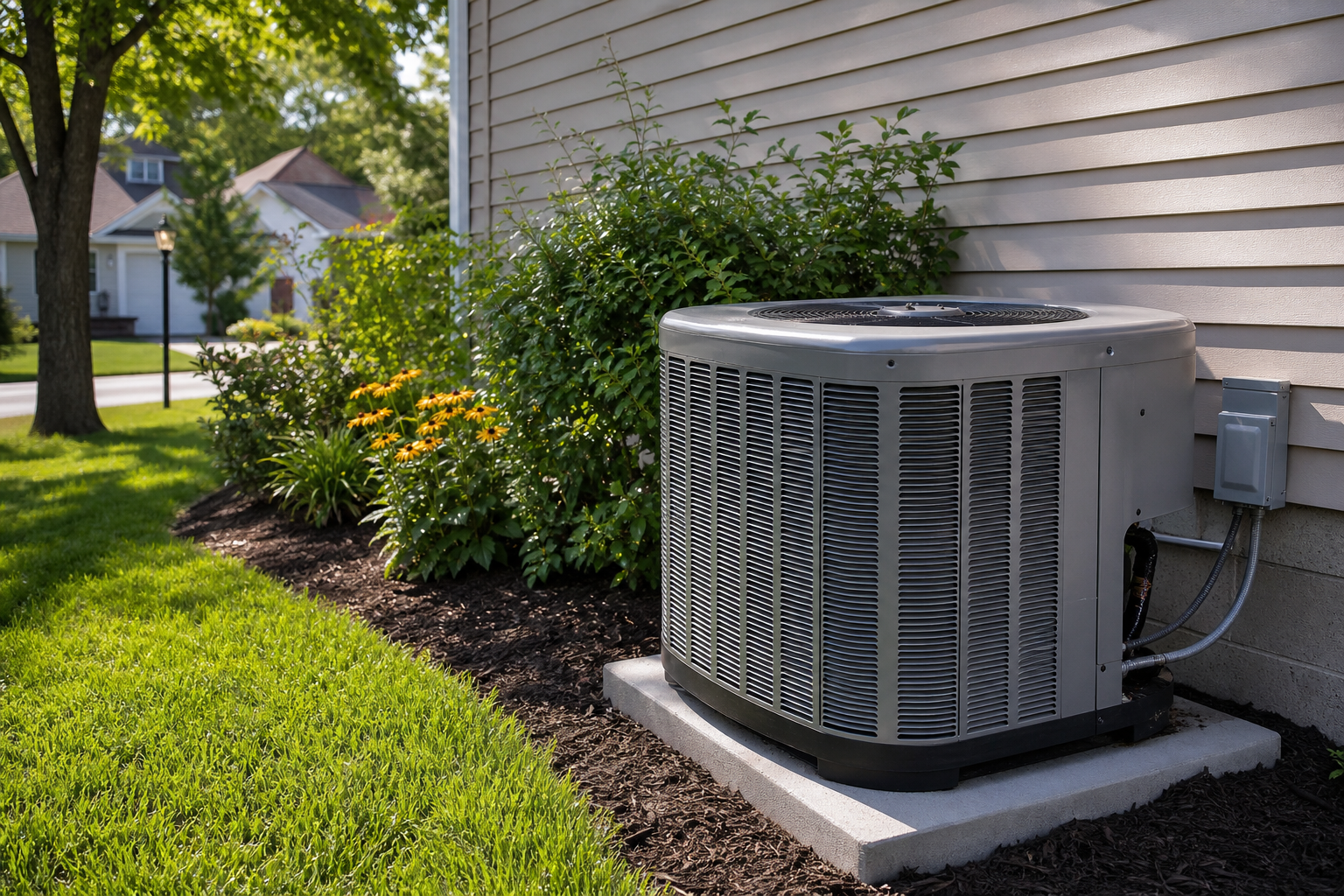
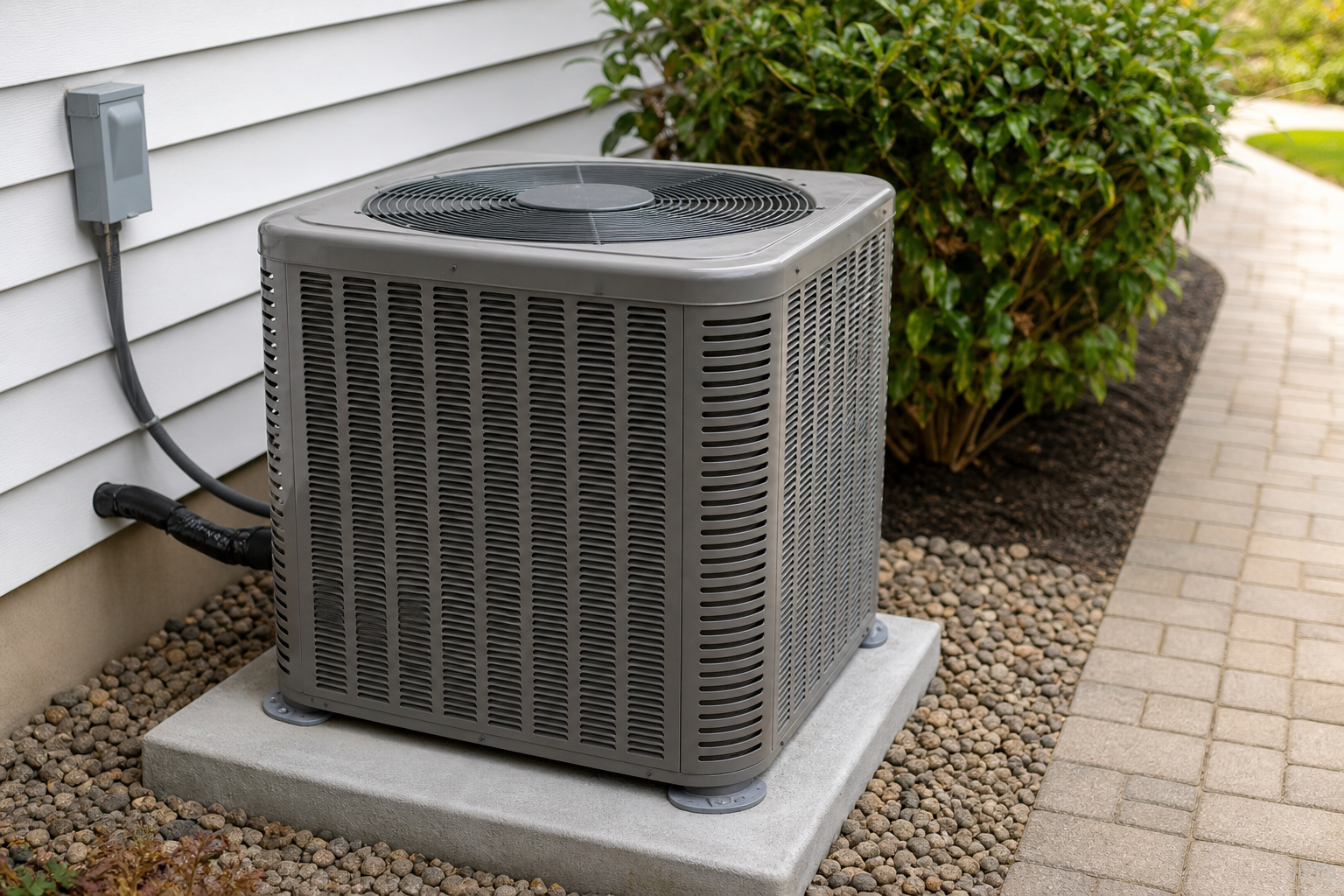
The outdoor condenser also needs clearance for air to move through its coil and reject heat outdoors. Leaves, grass clippings, stored items, or a dense buildup on the coil can interfere with that process. Disconnect power before any cleaning beyond a visual check, and leave electrical, refrigerant, and internal mechanical work to a qualified HVAC professional.
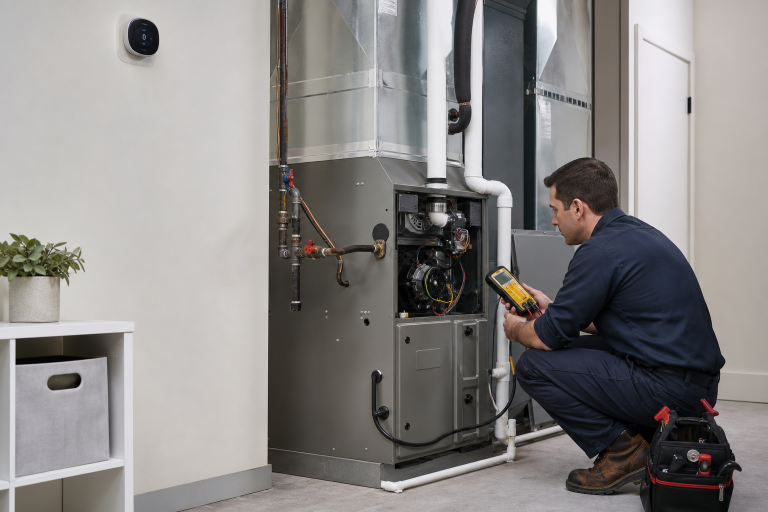
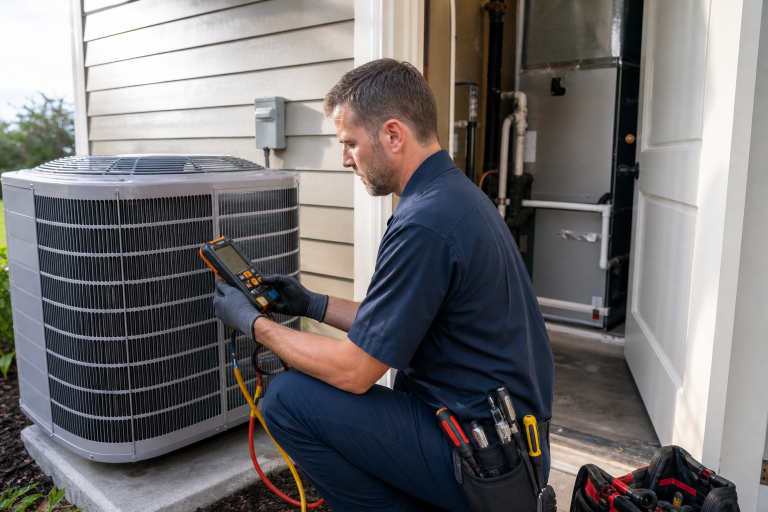
Some signs warrant prompt professional evaluation: ice visible on refrigerant tubing or the indoor equipment, water where it should not be, repeated breaker trips, unusual mechanical noise, or a system that starts and stops rapidly. A technician can measure airflow, electrical operation, refrigerant performance, and temperature change across the equipment. Guessing from thermostat behavior alone can lead to an unnecessary part replacement.
A service visit may uncover a correctable fault rather than force a replacement decision. For a broader look at repair-versus-replacement factors, see HVAC repair or replace: smart signs to make the right call.
How can you tell whether the unit or the home is the main limitation?
A consistent whole-house cooling shortfall points more strongly toward capacity, airflow, controls, or equipment condition, while a concentrated hot-room problem points toward solar gain or air distribution.
Start by observing patterns without changing multiple settings at once. Is the house reasonably comfortable until late afternoon, then does a west-facing room become the problem? Does the temperature recover after sunset? Are all rooms warmer than expected from morning onward? Does the system run continuously, or does it cycle off while rooms remain warm? These observations give a contractor useful context.
- Compare the thermostat reading with a reliable room thermometer placed away from direct sun, supply registers, and heat-producing appliances.
- Note whether every room is affected or only certain rooms, floors, or exposures.
- Check that supply and return grilles are open and not blocked by furniture, rugs, or curtains.
- Replace a filter only if it is the correct size and type specified for the equipment, then note whether airflow changes.
- Look outdoors for visible debris or objects crowding the condenser, without opening the unit or bending coil fins.
Thermostat settings can also mislead homeowners. Lowering the setting far below the desired temperature does not make a conventional central AC cool faster, according to ENERGY STAR’s thermostat guidance. It generally tells the system to run longer, which can make recovery after a heat-heavy day more difficult to judge.
Call for a free estimate:
Bring notes to a service appointment. A technician can determine whether the system is meeting its operating requirements and whether the problem is predominantly equipment-related, distribution-related, or tied to the home’s heat load.
When is a bigger AC actually the right answer?
Replacement capacity should follow a room-by-room load calculation. ACCA Manual J is designed to establish the cooling load, and Manual S covers selecting equipment that matches that load.
Adding capacity can be justified when a calculation shows the existing system is undersized for the house as it stands, particularly after documented changes such as a finished attic, an addition, or substantially more glass area. It can also be part of a planned redesign that addresses ducts, returns, and ventilation at the same time.
A larger unit is a poor shortcut for a home with leaking ducts, inadequate return airflow, or a room-specific solar problem. It may cool the thermostat area quickly while the underlying delivery or envelope issue continues. The more useful scope names the measured load, selected equipment capacity, duct findings, electrical work, permit responsibility where required, and warranty terms.
Ask for the calculation and proposal in writing. A quote that simply says “replace with larger unit” without documenting why leaves out the evidence needed to compare options. If replacement is being considered, this guide to choosing the correct HVAC size explains why sizing depends on the house rather than square footage alone.
What can you do while waiting for the heat wave to pass?
Reducing new heat gain gives the existing system the best chance of maintaining a livable indoor temperature. Keep windows and exterior doors closed while cooling is running, close window coverings on sun-facing glass, avoid using heat-heavy appliances during peak afternoon hours when practical, and keep interior air paths open.
Use fans only as a comfort measure for occupied rooms. They move air across people but do not lower the room’s air temperature or repair an AC capacity problem. Turn them off in empty rooms so they do not add unnecessary motor heat and waste electricity.
Do not cover the outdoor unit, place a shade structure directly over it, or crowd it with stored items during operation. The condenser must discharge heat to the outdoor air, and it needs the clearances specified in its installation instructions. If a permanent shade plan is being considered, have the equipment manufacturer’s clearance requirements checked first.
Set a realistic target and avoid repeatedly changing the thermostat. A stable setting makes it easier to see whether conditions are improving and gives useful information to a service technician if the problem continues after the weather moderates.
FAQ
Should an AC run all day during a heat wave?
Continuous operation can be normal during unusually high outdoor temperatures if the system is close to its cooling limit and is still gradually holding the home near the setting. It deserves evaluation when the same behavior occurs in ordinary summer weather, when indoor temperature keeps climbing, or when it is accompanied by ice, water, breaker trips, or unusual noise.
How far below outdoor temperature should my house get?
There is no universal indoor-to-outdoor temperature difference that proves an AC is working correctly. ACCA load calculations use local design data and house-specific inputs, so the meaningful question is whether the system matches the calculated load and performs properly under its actual operating conditions.
Why is one room hot when the rest of the house is cool?
A room-specific issue usually involves sun exposure, insulation, air leakage, supply airflow, return-air access, or duct routing. A contractor can evaluate that room’s load and airflow before recommending system-wide equipment changes.
Can a dirty filter make the whole house feel warmer?
Restricted filter airflow can reduce the amount of conditioned air moving through the system, which may lower cooling performance. Use the filter type and replacement interval specified by the equipment manufacturer, and seek service if replacing an overdue filter does not restore normal operation.
If your AC is falling behind beyond a brief heat-wave period, request a written assessment that includes equipment performance, airflow, duct condition, and a load calculation when replacement is proposed.