Water Heater Leaking or Failing: Signs and Steps
A water heater leak can come from a replaceable valve, a loose pipe connection, or a tank that has reached the end of its serviceable life. The location of the water matters more than the size of the puddle. A few drops under a fitting call for a different decision than water seeping from the tank’s bottom seam.
Start by looking for the source without removing covers or touching electrical parts. A leaking water heater is often inconvenient, but an active flow, a gas odor, or water near an electrical connection calls for a licensed plumber or qualified service provider promptly.
What does it cost to fix or replace a leaking water heater?
Angi’s March 2026 water-heater cost guide places typical installed costs for a standard tank unit at about $882 to $1,839, while tankless installation commonly runs about $1,400 to $3,900. Those national ranges can significantly change with local labor rates, permit fees, a new vent pipe, or changes to the gas or electrical supply.
A simple repair may cost much less than replacement when the tank itself is sound. A technician may be able to replace a pressure-relief valve, drain valve, expansion tank, or pipe fitting. The real question is whether water comes from a serviceable part or through the steel tank shell. Ask for that finding in writing before authorizing a replacement.
It may not be necessary to pay for a tankless conversion just because your current tank leaks. A like-for-like tank replacement is often enough when your household has adequate hot water and the existing fuel, venting, and electrical setup are in good condition. Tankless equipment can require a larger gas line, new venting, or electrical upgrades. Those added items can turn a modest replacement into a much larger project.
Age alone does not prove that a heater has failed. Check the label for the manufacture date and compare it with the warranty term, then ask whether the proposed repair makes financial sense for that particular unit.
Which water heater leaks mean the tank has failed?
Water escaping from a corroded tank body usually means replacement is the practical step. The tank stores hot water under pressure, and its inner lining eventually can crack or corrode. A plumber cannot reliably patch a rusted seam or a pinhole in the shell.
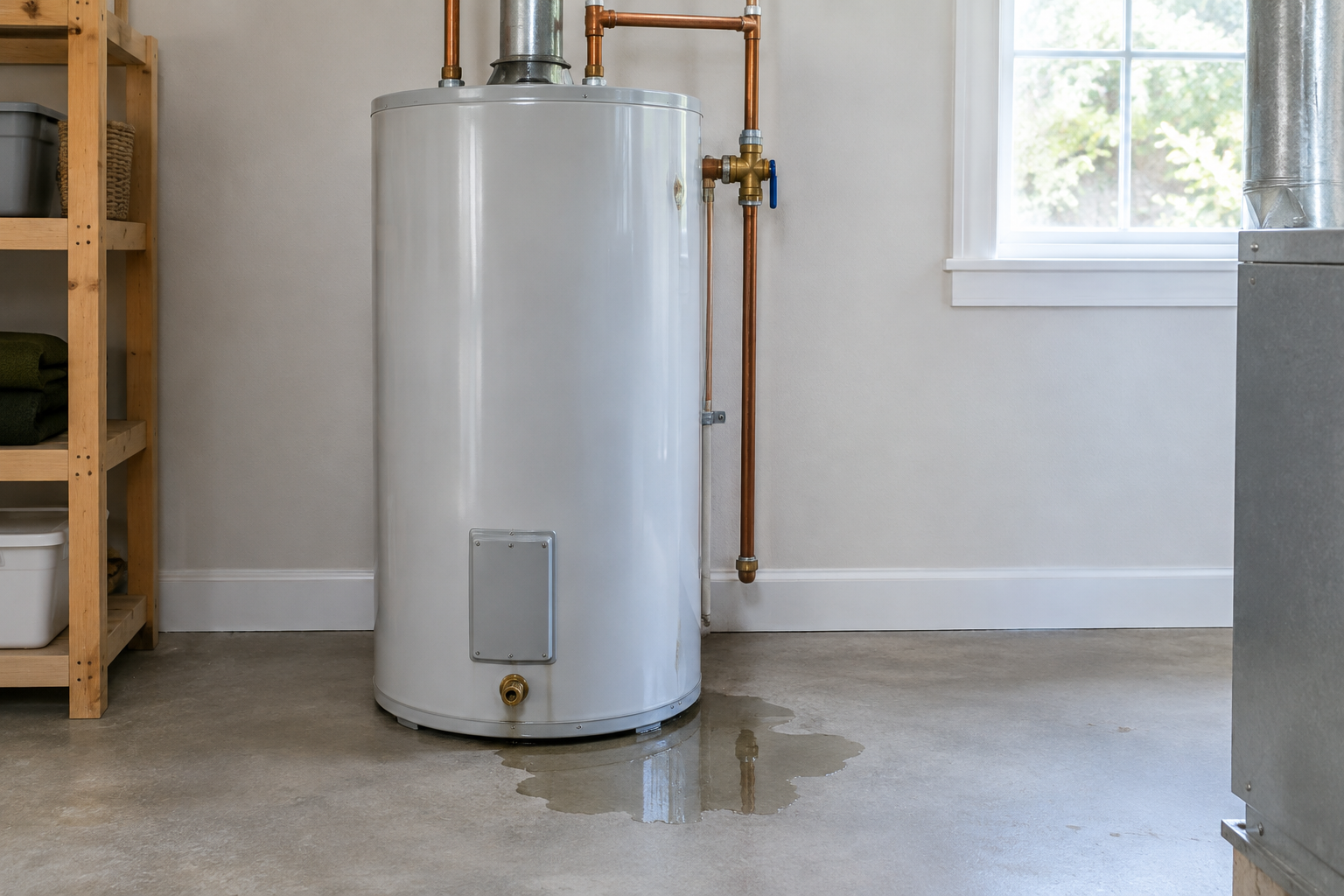
Look closely at where the water begins. Rust-colored streaks below the jacket, moisture around the circular base, or a steady puddle that returns after you dry the floor can point to a failed tank. Water may travel along the outside before it lands on the floor, so the lowest wet spot is not always the origin.
Internal corrosion can also leave rust-tinted hot water at faucets or cause popping and rumbling as sediment heats at the tank bottom. Those signs deserve an inspection, but they do not identify the leak by themselves. A plumber needs to distinguish a leaking tank from water arriving through a pipe above it.
A. O. Smith’s Residential Electric Water Heater Installation Instructions and Use & Care Guide identifies the temperature-and-pressure relief valve, drain valve, water connections, and condensation as possible sources of water around a heater. That is why a source check comes before a replacement decision.
Could the water be coming from a valve or connection?
A wet fitting, drain valve, or relief-valve outlet can often be repaired without replacing the entire appliance. Water at the top of the unit may come from the cold-water inlet, hot-water outlet, or nearby pipe joints. A loose connection can drip down the jacket and make the tank itself look guilty. Water directly around the small drain valve near the base may indicate a worn valve or a valve that does not close fully.
The temperature-and-pressure relief valve is different. It is a safety device that opens when temperature or pressure rises beyond its setting. The 2024 International Residential Code, Section P2804, requires water heaters to have a combination temperature-and-pressure relief valve and specifies how its discharge pipe must be installed. Local codes varies, so your provider should confirm the requirements where you live.
Water from that discharge pipe does not automatically mean the valve is bad. The valve may be worn, but high water pressure or thermal expansion can also force it open. Thermal expansion means water expands as it heats in a closed plumbing system. Replacing only the valve without checking the underlying pressure can leave you with the same drip.
Ask the provider to identify the exact source, explain whether the relief valve opened because of a defect or system pressure, and price the repair separately from a replacement. A vague phrase such as “it is leaking somewhere” is not enough for a major purchase.
When is water around the heater only condensation?
Moisture on a cold tank during warm-up can be ordinary condensation, especially after a large draw of hot water. It forms when humid air contacts the cooler outside surface of the tank.
Condensation tends to appear as a light film or scattered droplets rather than a focused drip from one fitting. It should diminish as the tank warms. A continuing puddle after normal operation needs a closer look.
Rheem’s Use & Care Manual for Residential Electric Water Heaters tells owners to distinguish condensation from leaks and to contact a qualified service technician for conditions that persist. You do not need to remove a panel or test live electrical components to make that call. Keep the area dry and let the provider trace the water path.
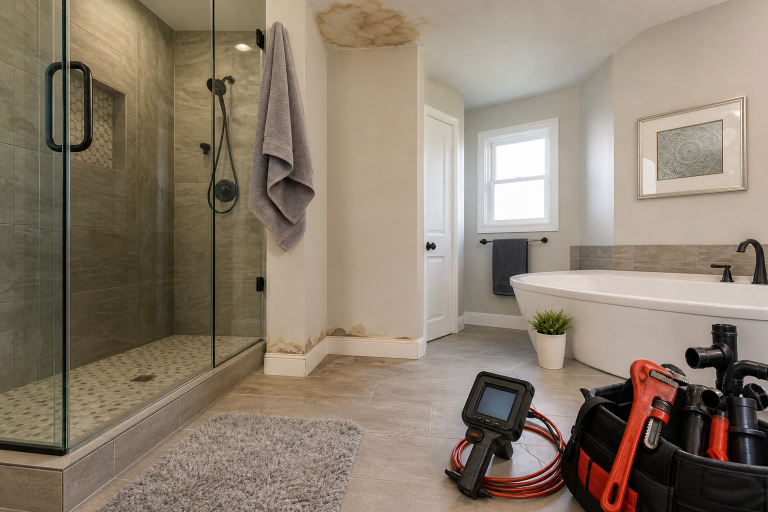
Water that appears only after a shower can also come from a nearby tub, shower pan, or drain connection. Before replacing equipment, rule out water running across the floor from another fixture. This guide to leaking shower or tub causes and fixes can help you separate a bathroom leak from a water-heater problem.
When should you call a pro right away?
An active leak, a gas odor, or water close to electrical wiring warrants prompt professional attention. Turn off the water supply only if you can reach the shutoff safely and know which valve serves the heater. Do not remove access panels, cap a relief-valve pipe, or attempt to stop a pressure-relief discharge yourself.
- Call promptly when water is flowing from the tank, a pipe, or the relief-valve discharge line and you cannot safely contain it.
- Call immediately if you smell gas, see scorched wiring, or find water around an electrical junction box.
A failing heater can also stop delivering enough hot water without leaking. For a gas unit, an intermittent burner or pilot problem needs trained diagnosis. For an electric unit, a failed heating element, thermostat, or electrical connection can cause the same complaint. Those are component issues, not proof that you need a new tank.
Take a clear photo of the wet area and the rating label before the appointment if it is safe to do so. The label shows the model, serial number, capacity, fuel type, and sometimes warranty information. That helps the provider bring appropriate parts and makes competing quotes easier to compare.
How can you compare water-heater replacement quotes?
A usable quote identifies the equipment, installation work, and code-related changes instead of presenting one unexplained total. The lowest number can omit haul-away, a permit, an expansion tank, or needed vent work. Those omissions often surface after work starts.
Ask for the tank capacity and fuel type, plus the unit’s warranty term. If you are considering a heat-pump water heater, the U.S. Department of Energy explains that this type moves heat from surrounding air into the water rather than generating all heat with electric resistance. It needs an appropriate location and enough surrounding air volume, so it is not an automatic fit for every closet or small utility room.
Use this short checklist when you request estimates:
- What exact part is leaking, and does the estimate include a repair option if the tank is sound?
- Does the price include permit handling, removal of the old unit, required piping or vent changes, and startup testing?
Get the answer on the same written quote as the price. It is harder to compare bids when one contractor includes a thermal expansion tank and another lists only the heater. For a broader look at conversion scope, see questions to ask before a major home conversion, especially the advice to separate base work from optional upgrades.
How long can you wait with a failing water heater?
A tank leaking through its body should be scheduled for replacement as soon as practical because the leak can grow without warning. Put a shallow pan beneath a minor drip only if it does not block access or interfere with electrical parts, then arrange an inspection. A pan catches water, but it does not fix the source.
You can usually take more time when a provider confirms that the tank is sound and the issue is a repairable connection or valve. Ask what would change that assessment. A good answer names a visible condition, such as water at the lower seam or repeated discharge from the relief valve, rather than simply saying the unit is old.
If the heater still works but recovery is slow, obtain a diagnosis before replacing it. A failed element or control can be less expensive to correct than a new appliance. The age, condition of the tank, warranty status, and repair estimate should drive the timing.
FAQ
Is a small water heater leak an emergency?
A small drip is not always an emergency, but it needs timely attention because the source may be a valve, connection, or failing tank. Call promptly if the flow increases, reaches electrical components, comes from the relief-valve pipe, or occurs with a gas odor.
Can a leaking water heater be repaired?
A leaking valve, fitting, or drain connection can often be repaired if the tank is intact. Water coming through the steel tank shell generally calls for replacement because a patch cannot reliably restore the tank’s pressure-holding ability.
Why is my water heater leaking from the top?
Top leaks commonly begin at the hot-water outlet, cold-water inlet, or nearby piping connection. Water can run down the jacket, so have a provider inspect the highest wet point rather than assuming the tank has failed.
Should you replace a water heater before it leaks?
Planned replacement can make sense when an older unit has a costly repair, corrosion signs, or an expired warranty, but age by itself does not require replacement. Ask for a repair estimate and a replacement estimate based on the unit’s actual condition.
If you have an unexplained puddle or unreliable hot water, request a written assessment that identifies the failed part and separates repair work from replacement options. Please call a listed provider for a free, no-obligation discussion.