Storm Door Options: Full, Mid or High View. Which is best for you?
A storm door is a second, outward-swinging door installed in front of an exterior entry door. The right view style depends less on a universal “best” choice than on what you want to see through it, how much ventilation you expect to use, and how exposed the lower half of the opening is to pets, children, or weather.

Call for a free estimate:
Full-view, mid-view, and high-view labels describe how much of the slab is glass or screen versus solid panel. Compare the actual glass opening, screen arrangement, panel construction, hinge side, and stated fit range on each product page before assuming two similarly named doors are equivalent.
Which storm door style fits your entry door?
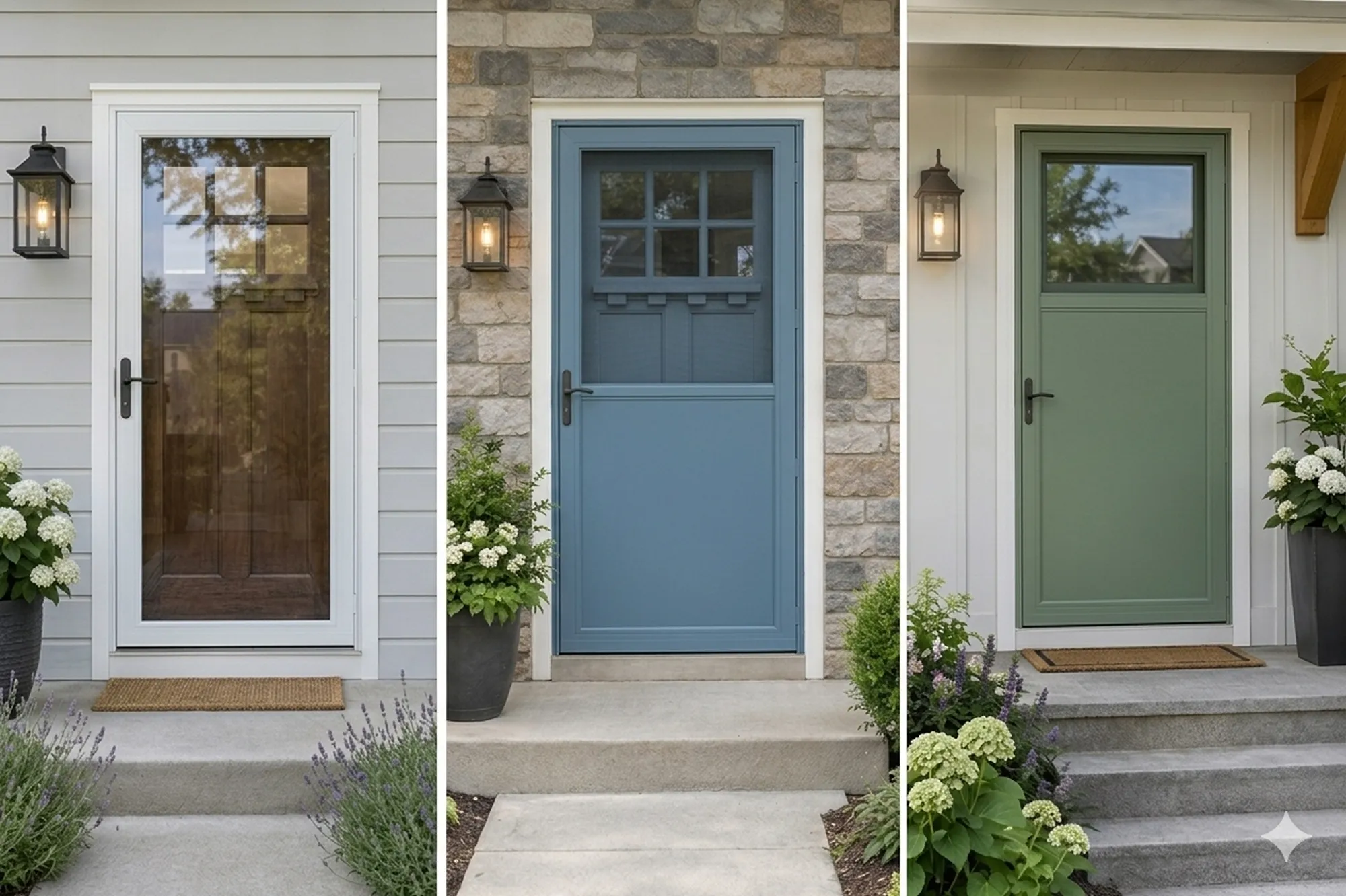
Choose a full-view door when preserving the appearance of a decorative or glass entry door is the priority, a mid-view door when you want a balance of window area and a protected lower panel, and a high-view door when privacy or lower-panel durability matters more than a broad outward view.
Full-view models place glass across nearly the entire door, usually within a narrow frame. This design leaves the most of your main door visible from the street. It also brings the most daylight into a foyer and gives you the clearest view outside. A plain painted front door can look lighter and more open behind one, while a door with sidelights, stained glass, or a distinctive color remains easy to see.
Some full-view doors use a removable screen panel that replaces the glass for warm weather. Others use a retractable screen stored in the top cassette or frame. Andersen offers both interchangeable glass-and-screen arrangements and retractable-screen configurations across its storm door lines.
Mid-view doors divide the slab into a larger upper glass or screen section and a substantial solid panel below. The lower panel can make sense at an active entrance where a bike handlebar, delivery, pet, or child is more likely to strike the door. It changes the look, too: less of the primary door is visible, and the entry has a more traditional, framed appearance.
High-view doors place the glass in the upper part of the slab and use a taller solid lower section. They are often the practical choice for an entry where you want daylight and a sightline at standing height but prefer to block views of the bottom of the main door. The solid area also gives the exterior a heavier visual base. If your entry door has damage or mismatched finish near the bottom, this format can hide it, although it should not be used to conceal rot, loose trim, or a clearance problem.
How do full-view storm doors compare in daily use?
Full-view doors offer the most uninterrupted light and visibility, but they require the most deliberate choice of glass and screen setup.
For an entry that faces a garden, porch, walkway, or street you want to watch, the broad pane can be the deciding benefit. It also keeps architectural details on the primary door from being visually chopped into sections. The tradeoff is that fingerprints, rain spotting, and pollen are easier to notice on a large expanse of glass. A lower solid panel would hide some marks, while a full-view design puts them in plain sight.
Ventilation can be excellent when the selected product has an integrated retractable screen or when you are willing to change a panel seasonally. It can be less convenient when the screen must be stored elsewhere or when lifting and handling a large glass insert is awkward for the household. Read the manufacturer’s instructions for the exact model rather than relying on the phrase “full view.” That phrase describes appearance, not necessarily the operation of the screen.
Weight and closing behavior also deserve attention. A large glazed panel contributes to the door’s overall weight, while a storm-door closer controls its swing and closing speed. Pella’s storm-door installation instructions require adjustment of the closer and warn against overextending it, a reminder that hardware setup affects everyday use regardless of view style. A door that slams, fails to latch, or collides with a nearby step rail needs correction, not a different glass layout.
Pick this category when the entry door itself is worth displaying and the household accepts the glass-cleaning and screen arrangement that come with it.
When does a mid-view storm door make more sense?
A mid-view layout is often the most forgiving compromise for a busy front, side, or back entrance because its solid lower panel takes routine contact while the upper opening still provides useful daylight.
The protected section is especially relevant where a dog noses at the door, children pass through with backpacks, or outdoor furniture sits close to the entrance. It will not make a storm door indestructible. Frame material, corner construction, glazing, hinges, and latch hardware still determine how a specific model handles use. But a solid panel means a direct bump at ankle or knee height is less likely to land on glass or a screen.
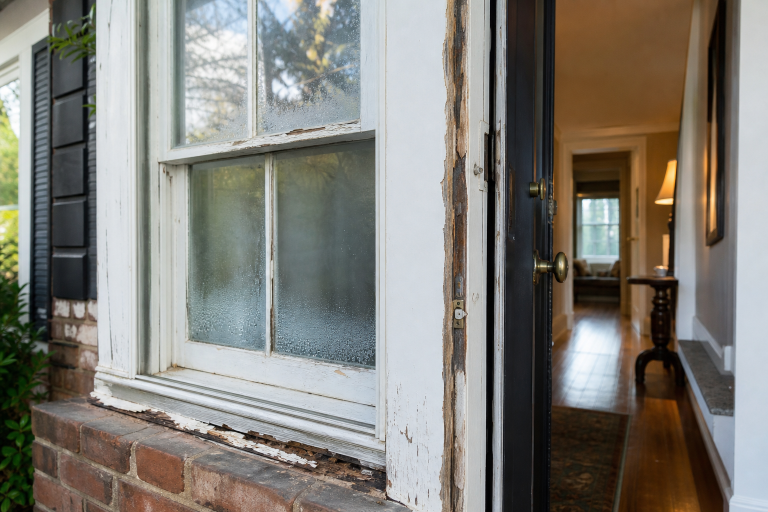
Mid-view designs also reduce the amount of the entry door that needs to coordinate visually with the street-facing side of the storm door. That can be useful when the primary door is simple, weathered, or due for refinishing. Peeling paint, soft wood, deteriorated brickmold, or water entry around the frame should be assessed before a new door is fitted over the opening.
Expect less outward visibility than with full view, particularly for packages placed at ground level. If seeing the entire stoop is a priority, a doorbell camera or another exterior camera may address that specific limitation more directly than choosing extra glass. The choice should also account for how doorbells, locks, and cameras can work together at the entrance.
Who should choose a high-view storm door?
High-view storm doors suit homeowners who want light near eye level, a more private lower half, and a larger solid surface facing the exterior.
This format is commonly associated with more traditional storm-door styling. Its lower panel can visually anchor a tall or wide entry and can reduce the sense that the front door is exposed behind a second sheet of glass. It may also be a better visual match for an entry door with raised lower panels, rather than a large decorative glass insert.
The cost of that privacy is reduced visibility at the bottom of the doorway. You will not have the same view of steps, a mat, pets, or delivered items that a full-view configuration provides. Consider the direction of the swing and the landing outside as well. A high-view door can be the sensible lower-maintenance visual choice at a seldom-used side entrance.
What should you compare beyond the glass layout?
The opening must be measured and the surrounding frame inspected before appearance decides the purchase, because a storm door needs compatible mounting surfaces, clearance, and a safe outward swing.
Call for a free estimate:
Manufacturers publish model-specific rough opening ranges, hinge-side requirements, handle clearances, and closer placement. Larson’s published measuring guidance, for example, separates width and height measurements and calls for checking the mounting surface. Those details vary by series. A product that fits the nominal door size can still be wrong for shallow brickmold, uneven trim, a protruding handle, or a screen door that would swing into a stair or railing.
- Frame and mounting surface: Verify that the existing exterior trim is solid, sufficiently wide for the chosen model, and reasonably square.
- Door swing: Confirm the storm door opens outward without striking a wall, light, rail, planter, step, or another door.
- Primary-door hardware: Check whether the storm-door handle will conflict with the entry handle, deadbolt, or knob.
- Glass and screen operation: Ask whether panels are removable, sliding, or retractable, and whether the screen covers the whole opening or only part of it.
- Finish and exposure: Match the color and panel proportion to the facade, then check the manufacturer’s stated limits for installation conditions and finish care.
- Warranty wording: Read what is covered for the frame, hardware, glass, screen, finish, and labor. These categories may have different terms.
A new storm door is not automatically an energy upgrade. The U.S. Department of Energy’s guidance on exterior doors focuses on reducing uncontrolled leakage with properly maintained weatherstripping and door sweeps. If drafts originate at the entry-door frame, threshold, or wall opening, correct those defects rather than expecting the second door to solve them alone. This guide to air leaks at doors and frames explains the common places to inspect.
How should you choose between glass, screen, and privacy?
If the lower half gets frequent contact, mid view gives the most balanced mix of visibility and protection. If privacy, a solid lower appearance, or a more traditional look outranks a low-level view, high view is the better fit.
Glass selection should follow exposure and comfort needs, not just appearance. Some product lines offer low-emissivity glass, decorative glass, tinted options, or clear tempered glazing. Treat each as a model-level specification. The National Fenestration Rating Council provides labels and ratings for certain fenestration products, but do not assume every storm door carries the same labeling or that one rating describes the complete performance of your existing entry-door assembly.
For screen use, decide whether you want a screen available daily, only during mild weather, or almost never. A retractable screen avoids storing a full panel but adds a moving component that should be operated and maintained according to the product instructions. A fixed or interchangeable panel may be simpler for a household that changes it only once or twice a year.
What should be in a storm door installation quote?
A useful written quote identifies the exact product and the work around the opening, so you can compare scope rather than only comparing a bottom-line price.
Ask for the manufacturer, series, size, color, glass and screen type, hinge side, handle set, closer arrangement, and any accessories. The document should also say whether removal and disposal of the old door, trimming, sealing, threshold work, repairs to mounting surfaces, and cleanup are included. Vague phrases such as “install storm door” leave room for disagreement when the existing frame is not suitable.
Installation rules can vary by location and scope. Check with the local building department before contracting if the work changes framing, the exterior opening, or related components. For help comparing credentials, scope, and written estimates, see how to vet door and window installers before you buy.
Full view is the better visual choice when you want openness. Mid view is the practical middle ground for many active entrances. High view gives up low-level sightlines in exchange for a more protected, private lower half. If the frame condition or fit is uncertain, request an on-site assessment and a written quote tailored to the opening. Please call a listed specialist for a free, no-obligation discussion.
FAQ
Is a full-view storm door less durable than a high-view door?
A full-view model is not inherently poor quality, but its larger glass area is more exposed to contact than the solid lower panel on many high-view designs. Compare the specific product’s frame, glass, hinges, latch, closer, and warranty rather than treating the view label as a durability rating.
Can you see through a mid-view storm door?
Yes, the upper opening provides a normal standing-height view outside, but the solid lower panel blocks the lowest part of the porch and the lower section of the entry door. The exact sightline depends on the height and width of that model’s glazed area.
Do storm doors need screens?
No, a screen is optional if ventilation is not one of your goals. A glass-only or screen-less setup may suit an entry where the primary door is rarely opened for fresh air. If you do want ventilation, confirm how the chosen model screens and how that component is stored or operated.
Should a storm door match the front door color?
The colors do not have to match. A full-view door often recedes visually and lets the entry door color lead, while mid-view and high-view doors contribute more visible frame and panel color. Compare samples against the siding, trim, hardware, and primary door in daylight before ordering.
Will a storm door stop drafts around an exterior door?
It may add a second layer at the opening, but it will not correct failed weatherstripping, a worn sweep, gaps at the frame, or water-damaged trim. Address the source of the leakage first, then choose a storm door for its ventilation, protection, and appearance benefits.
Sources: Andersen storm door product materials; Pella storm door installation instructions; Larson Storm Doors measuring guidance.