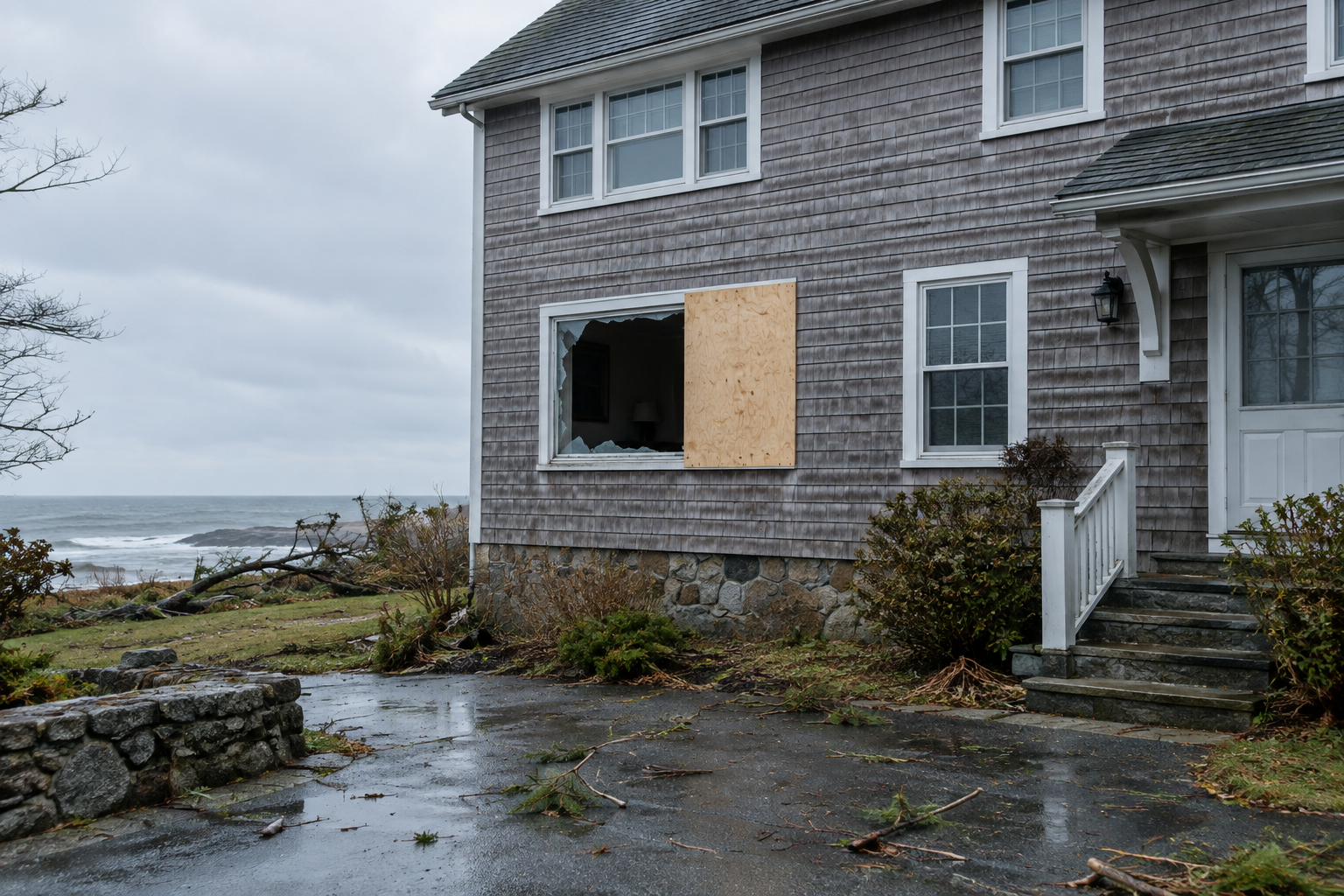
How to Secure Broken Windows After a Severe Nor’easter
A broken window after a severe nor’easter needs prompt attention, but the first priority is keeping people away from glass, unstable framing, water, and any nearby electrical hazard. The practical goal is to isolate the opening, prevent further weather entry and unauthorized access, document the condition, and arrange qualified emergency service when the damage exceeds a simple, stable opening.

Call for a free estimate:
Nor’easters can combine strong wind, wind-driven precipitation, coastal flooding, and falling debris. A cracked pane may remain in place, while a shattered insulated-glass unit, bent sash, damaged frame, or forced-open window can leave an entire wall opening exposed. Those conditions call for a temporary protective measure followed by a proper assessment, not an improvised permanent repair.
What should happen immediately after a window breaks?
Keep occupants, pets, and loose belongings away from the damaged area, then assess the scene from a safe distance before anyone attempts to touch the window or opening.
If the storm is still active, move to an interior room away from exterior glass and wait until local authorities indicate it is safe to inspect the property. Ready.gov advises people to stay indoors during severe weather and to avoid windows. If a power line, service mast, electrical equipment, or standing water is near the damage, keep clear and contact the utility or emergency services as appropriate rather than approaching the opening.
Do not climb ladders, reach through broken glass, remove large fragments from an elevated opening, or try to straighten a visibly loose frame. The U.S. Occupational Safety and Health Administration’s Hurricane eTool identifies cuts from broken glass and hazards around damaged structures among storm-cleanup concerns. A window that looks accessible from indoors may still have loose exterior trim, cracked masonry, or storm-damaged siding around it.
- Move people and pets out of the affected room or behind a closed interior door.
- Keep hands away from cracked glass, splintered wood, and sharp metal frame parts.
- Photograph the damage from a safe position before debris is moved, if conditions allow.
- Close nearby interior doors to limit drafts and wind-blown moisture moving through the house.
- Call a qualified emergency board-up or glazing provider when the opening is exposed, glass is loose, or the frame has shifted.
When does a broken window require professional service?
An exposed opening, loose glass, a damaged frame, or a window that no longer locks warrants professional emergency assistance, particularly when more wind or precipitation is expected.
Call emergency services first if someone is injured, the damage affects a means of exit, or there is an immediate electrical or structural danger. For property protection, a glazing contractor, restoration company, or qualified window professional can assess whether a temporary board-up, a weather barrier, or removal of unsafe glass is needed. The work should account for the opening’s size, the condition of the surrounding wall, and the need to avoid creating a new water path.
A small crack in an otherwise intact pane may not require a middle-of-the-night call if it is stable, protected from contact, and the home remains secure and dry. In that narrower situation, isolate the room, document the crack, and schedule a glass or window assessment promptly. Do not apply this lower-response approach when the sash is distorted, the lock will not engage, glass is falling, or weather is entering the room.
Windows near ground level deserve special attention after the storm passes. A boarded or otherwise protected opening should restore basic security until permanent glazing is installed. For broader steps after an exterior opening compromises household security, see home security after a break-in and critical first steps. The security principles overlap, even when the cause is storm damage rather than forced entry.
What should temporary window protection accomplish?
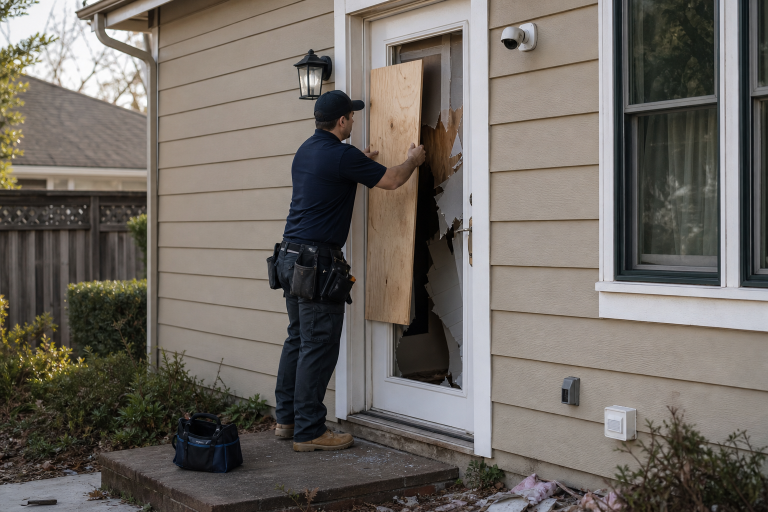
A temporary fix should cover the opening, prevent home intrusion, resist ordinary weather exposure, avoid further damage to the wall or frame, and allow the eventual repair team to identify what happened.
Emergency protection is a containment measure, not a substitute for a new window, replacement sash, or insulated-glass unit. A provider may use a rigid exterior panel, a sealed weather barrier, or another method suited to the opening and weather conditions. The appropriate method depends on whether the damage is limited to glass, whether the sash still sits squarely in its frame, and whether the surrounding wall is wet or damaged.
Ask the provider how the temporary material will be fastened, whether it will block drainage paths, and whether fastener holes will need repair. Fastening directly through fragile or compromised frame components can enlarge the eventual scope. A clear written description of the temporary work also helps distinguish emergency mitigation from the permanent window repair.
Plastic sheeting taped across a window can be a short-lived interior draft barrier for a minor, stable crack, but it is not reliable protection for a fully broken or forced-open window during continuing storm conditions. It can tear, detach, trap water against finishes, and leave the opening unsecured. For an exposed opening, the cheaper tape-and-sheet approach is usually the wrong solution.
How should storm window damage be documented for an insurance claim?
Clear photographs, a dated damage log, and itemized emergency invoices give an insurer a record of the storm condition and the steps taken to prevent additional property damage.
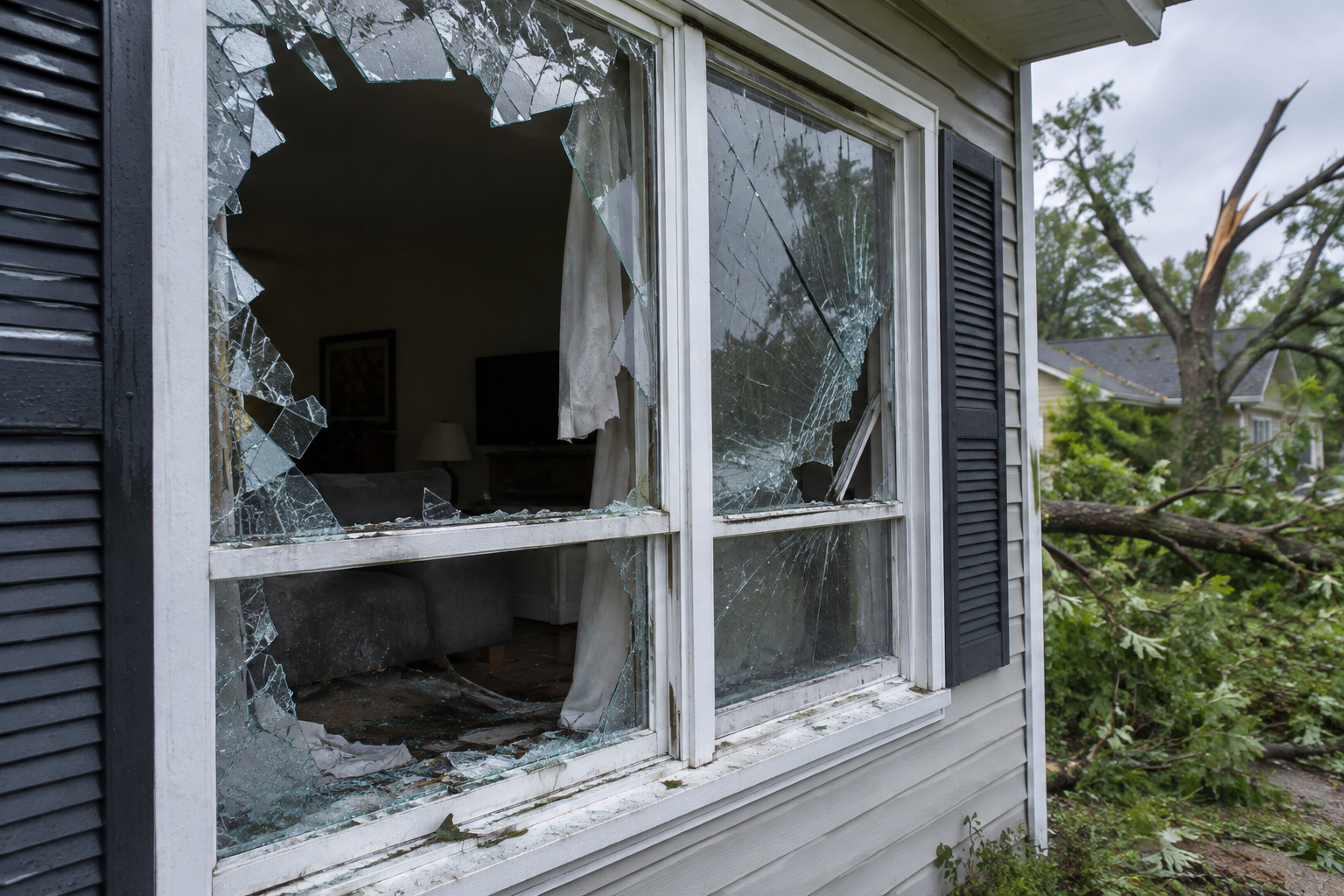
Start with wide photos that show the window in relation to the exterior wall and room, then take closer images of broken glass, bent frames, damaged screens, water marks, and affected belongings. Include images of any temporary protection after it is installed. Avoid moving damaged components solely to improve a photograph, especially where glass remains loose.
Keep the storm-related paperwork together: emergency service authorization, invoice, material charges, permanent repair estimate, and communication with the insurer. Ask the emergency provider to separate stabilization work from replacement work on its invoice. That separation makes the scope easier to understand and reduces confusion if a later inspection finds concealed damage around the opening.
Insurance coverage, deductibles, documentation rules, and deadlines depend on the policy and the cause of loss. Contact the carrier or agent before authorizing broad restoration work when conditions permit, but do not postpone necessary emergency protection merely to wait for an adjuster. Request the insurer’s claim instructions in writing and retain copies of every submission.
What should a permanent repair quote include?
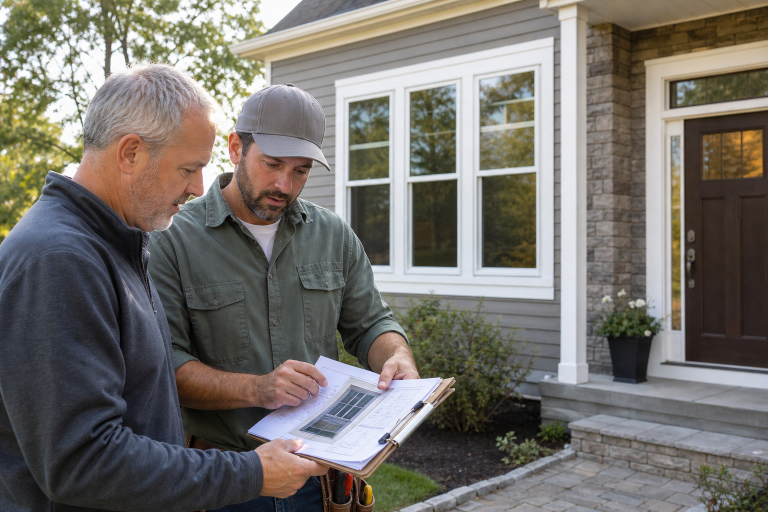
A useful written quote identifies whether the contractor will replace glass only, a sash, or the complete window unit, and it explains why that scope fits the observed damage.
Glass-only replacement may be appropriate when the frame, sash, seals, hardware, and mounting remain sound. A complete replacement may be justified when impact, water exposure, warping, failed hardware, or frame movement has damaged more than the glazing. The estimate should describe the product type, opening dimensions, finish, hardware, disposal, exterior trim work, interior repairs, and whether the temporary protection will be removed.
Call for a free estimate:
- The specific damaged parts and the proposed scope of replacement.
- Whether surrounding trim, siding, drywall, insulation, or flashing needs separate repair.
- The planned weatherproofing approach and who is responsible for it.
- Permit responsibility, where local rules require one.
- Expected lead time, installation date range, and what happens if weather delays the work.
- Labor and product warranty terms stated in writing, including exclusions.
Vague quotes create avoidable disputes after a storm. Watch for a price that lists only “window repair” without saying what will be repaired, or a promise of a lifetime warranty without identifying the product and labor coverage. Scope creep is especially common when the emergency board-up and permanent installation are discussed as one undefined job.
Local permit triggers vary with the type of work and jurisdiction. A replacement in the same opening may be treated differently from structural changes, altered egress, or changes to the exterior wall. Before signing, review the local questions outlined in this homeowner guide to door and window permit requirements, then confirm the answer with the local building department.
Should storm-resistant windows be considered during replacement?
Impact-resistant glazing is worth discussing when a home is repeatedly exposed to windborne debris, but it should be selected for the property’s location, code requirements, and complete installation system rather than as a universal upgrade.
ASTM International publishes ASTM E1886, a test method for performance of exterior windows, curtain walls, doors, and impact protective systems exposed to cyclic pressure and missile impacts. ASTM E1996 establishes the corresponding performance requirements for windborne-debris protection. These standards matter because a label or sales description should relate to a tested assembly and stated design conditions, not merely to thicker-looking glass.
Ask a prospective installer which tested rating applies to the exact window configuration, including its size and anchoring method. Coastal and high-wind jurisdictions may set specific local requirements. The International Code Council’s model codes are widely used as a basis for local codes, but the city or county that enforces the adopted code determines what applies at a particular address.
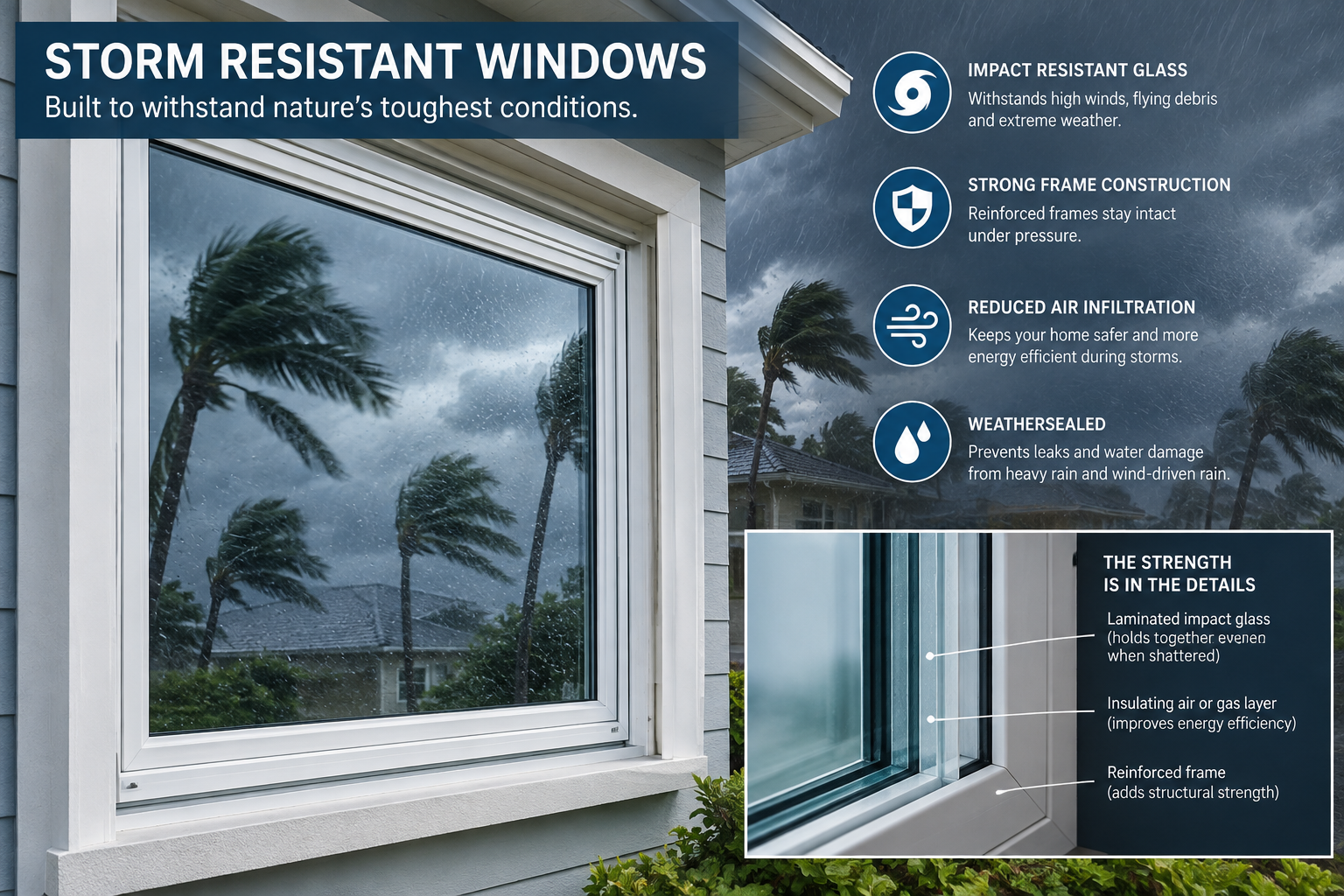
Storm-resistant units also do not resolve a damaged rough opening, deteriorated wall sheathing, or failed flashing. If the storm caused water entry around the frame, the repair discussion should cover the wall connection as well as the window itself. A replacement product performs only as well as the opening and installation details allow.
What should be checked after the temporary protection is installed?
Monitor the protected area for water entry, loosening material, interior staining, and changes in the surrounding wall until permanent repairs are complete.
Look from inside without disturbing the temporary cover. Note new drips, damp finishes, or a growing draft and report them to the provider that installed the protection. Do not remove a board-up to inspect the exterior in worsening weather. If water is entering near electrical outlets, fixtures, or equipment, avoid the area and arrange qualified evaluation.
Once the permanent work is done, retain before-and-after photos, invoices, product documentation, and warranty records. These documents are useful for insurance follow-up and for any later question about the window’s configuration or installation.
FAQ
Can a broken window wait until the next day?
A stable hairline crack in an otherwise secure, dry window may wait for a prompt scheduled assessment, but loose glass, a missing pane, a damaged frame, or an opening that will not lock should receive emergency professional attention. Continued rain, wind, and access from outside increase the reason to protect the opening sooner.
Should broken glass be removed before the contractor arrives?
Leave loose or elevated glass for a qualified professional when possible. Removing fragments can create cuts and may destabilize the remaining pane or sash. Keep the area isolated and report the condition when arranging the emergency visit.
Will an insurance company require a temporary board-up?
Policy terms control the claim, but temporary protection is commonly used to limit additional weather entry after an opening is exposed. Contact the insurer for its claim instructions, preserve photos and invoices, and ask the emergency provider to itemize stabilization separately from replacement work.
Can a contractor replace only the glass in a storm-damaged window?
Glass-only replacement may be possible when the sash, frame, seals, hardware, and wall connection remain undamaged. A qualified assessment should determine whether impact or water exposure affected those related components before a glass-only quote is accepted.
How can a homeowner avoid a poor storm-repair contract?
Choose a written scope that names the damaged components, temporary work, permanent repair, materials, weatherproofing responsibility, price, and warranty terms. Decline pressure to sign a vague authorization or an open-ended agreement before the proposed work is explained.
If the opening is exposed or the frame has been damaged, contact a qualified local glazing or window contractor for an emergency assessment and a written quote for the permanent repair. For additional help, please call a listed professional for a free, no-obligation discussion.
Sources: ASTM International, ASTM E1886 and ASTM E1996; International Code Council, model building codes.