HVAC Humidity Control Advice: The Importance of Balancing Comfort and Moisture
HVAC humidity control is the part of home comfort that many people notice only when it is off. Air can feel sticky in summer, dry in winter, or uneven from room to room even when the thermostat setting looks right. The good news is that humidity control often comes down to matching the right equipment and settings to your house, not automatically replacing the whole system.

Call for a free estimate:
According to the U.S. Environmental Protection Agency, keeping indoor humidity in a moderate range helps limit common moisture problems inside a home. In practice, that means your HVAC system may need to do more than heat and cool. It may also need to remove moisture, add moisture, or circulate air in a more controlled way.
This guide explains how humidity control integrates with your HVAC system, which equipment handles which job, what problems point to sizing or airflow issues, and when an add-on humidifier or dehumidifier makes more sense than a major system change.
How does HVAC humidity control actually work?
Your heating and cooling system manages moisture mainly through cooling, airflow, and run time, with optional add-on equipment handling the rest.
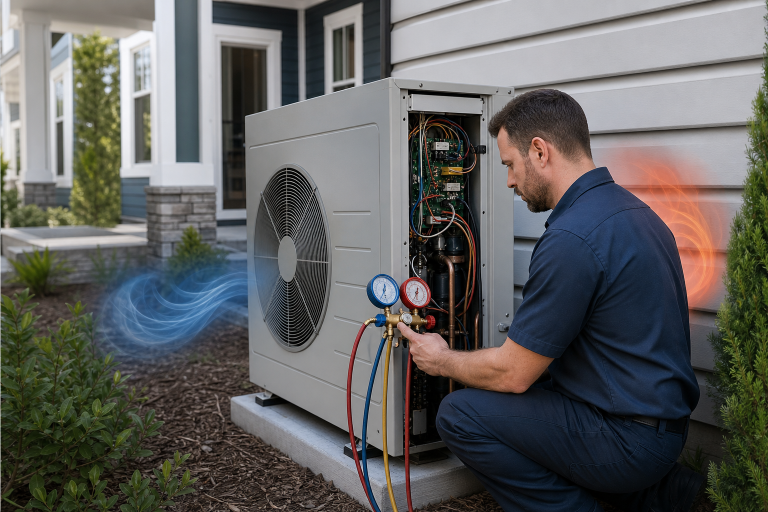
When your air conditioner runs, the indoor evaporator coil gets cold enough to pull water vapor from the air as condensation. That is the basic dehumidification process built into central air conditioning and heat pumps. According to the U.S. Department of Energy, proper airflow, coil condition, and equipment setup all affect how well an air conditioner performs. If airflow is too high, if the system is oversized, or if the equipment short-cycles, the house may cool down before enough moisture is removed.
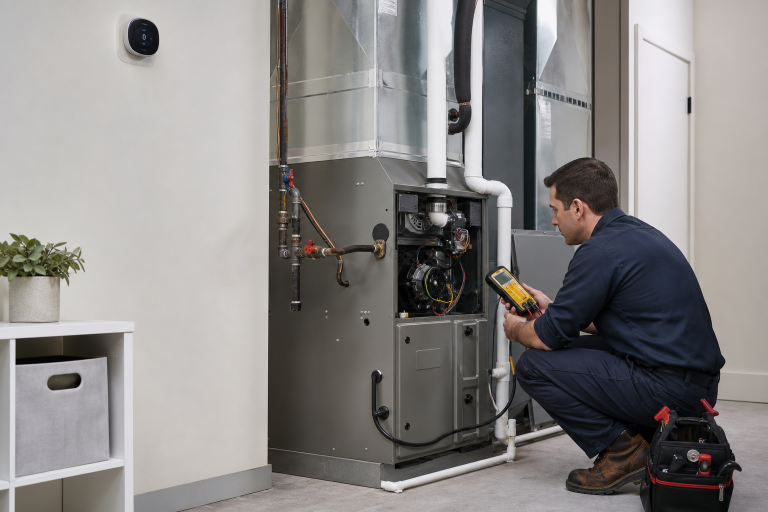
Heating season is different. A furnace does not add moisture to air. Indoor air often feels drier in winter because colder outdoor air holds less moisture, and that dry air enters the home through ventilation and leakage. If winter dryness becomes a comfort problem, a whole-home humidifier can be installed to work with the duct system.
Some homes also need a whole-home dehumidifier. That equipment removes moisture independently of the air conditioner, which is useful when outdoor conditions are humid but the house does not need much cooling.
What parts of the HVAC system affect humidity?
System sizing, fan settings, duct condition, and optional indoor air accessories usually have the biggest effect on indoor moisture control.
Equipment sizing
The right capacity matters more than many homeowners expect. According to ENERGY STAR oversized cooling equipment can cool a home quickly without running long enough to control humidity well. A contractor should base replacement sizing on a load calculation, often called Manual J, rather than on the old unit size alone.
If you are already comparing equipment options, Abodence has a related guide on how to choose the correct HVAC size.
Blower speed and thermostat setup
Fan operation changes how much moisture your system removes. Carrier’s Infinity System installation guidance describe humidity control strategies that lower airflow during dehumidification allowing the coil to remove more moisture. Some communicating thermostats and variable-speed air handlers can make these adjustments automatically.
A simple thermostat setting also matters. Leaving the fan in the continuous ON mode can re-evaporate some moisture from the coil after a cooling cycle ends. In many homes, AUTO is the better setting for summer moisture control unless a contractor has set up a specific ventilation or filtration strategy.
Duct leakage and insulation
Leaky or poorly insulated ducts can pull in unconditioned air from attics, crawlspaces, or garages, or lose cooling before air reaches the room. The National Air Duct Cleaners Association publishes guidance showing that duct defects can undermine comfort and system performance. In humid climates, that can show up as rooms that never quite dry out.
Ventilation and add-on moisture equipment
Fresh-air systems, whole-home dehumidifiers, and whole-home humidifiers all integrate with HVAC controls in different ways. Some run through the central ductwork. Others have dedicated controls and only use the HVAC blower when needed.
When does a home need a whole-home dehumidifier instead of just AC?
A separate dehumidifier makes sense when the house feels damp even though the air conditioner is working and the temperature is already where you want it.
According to the U.S. Department of Energy, dehumidifiers are intended to reduce indoor moisture when air conditioning alone is not enough. Whole-home units are typically tied into the return or supply ductwork and controlled by a humidistat or integrated thermostat.
Adding a dehumidifier can be the smarter fix when the cooling system is otherwise in good shape. Replacing an air conditioner just because the house feels muggy is often the wrong first move if the real issue is moisture load, ventilation, or setup.
When does a home need a whole-home humidifier?
A ducted humidifier is usually worth considering when winter air feels persistently dry across the whole house rather than in just one room.
Whole-home humidifiers are commonly installed on the supply or return plenum and controlled by a humidistat. Aprilaire installation and owner documentation for whole-home humidifiers explains that these systems add measured moisture to the air moving through the ductwork. Bypass, fan-powered, and steam models differ in output and installation requirements.
A single portable unit may be enough for a bedroom or office. For widespread winter dryness, a whole-home setup is usually more effective and easier to manage than maintaining several room units.
Call for a free estimate:
What are the signs your current HVAC setup is missing the humidity target?
Persistent indoor dampness, condensation patterns, static-prone winter air, or comfort complaints that do not match the thermostat reading usually point to a moisture-control issue.
- Rooms feel cool but clammy during summer.
- Windows show repeated interior condensation in winter.
- Basements stay damp even when upstairs feels fine.
- The system starts and stops frequently on humid days.
- Wood floors or trim show seasonal movement beyond what you normally see.
- You rely on portable units in several rooms to stay comfortable.
Those symptoms do not all point to the same fix. Short cycling may suggest oversizing. Basement dampness may call for dedicated dehumidification. Winter window condensation can involve indoor humidity level, outdoor temperature, and window performance at the same time.
How do contractors integrate humidity control into an existing system?
The best approach is usually a combination of measurement, control changes, and targeted add-ons rather than a one-size-fits-all equipment swap.
A solid evaluation should include runtime behavior, return and supply conditions, duct layout, filtration, thermostat settings, and whether the home has mechanical ventilation. ACCA Manual S and Manual J are the named industry standards commonly used for equipment selection and load calculation. If a quote jumps straight to replacing the condenser or furnace without discussing moisture load, controls, or duct performance, the scope may be too narrow.
In many homes, integration options include:
- Adjusting blower airflow for better latent performance.
- Upgrading to a thermostat or control that can manage humidity settings.
- Adding a whole-home dehumidifier tied to existing ducts.
- Adding a whole-home humidifier for winter operation.
- Sealing or insulating ducts where leakage or heat gain is affecting delivery.
If the system is older and you are weighing broader HVAC changes, Abodence also covers when repair or replacement makes sense.
How much does whole-home HVAC humidity control cost?
Based on 2025 marketplace estimates from Angi, installed whole-home humidifiers often fall around $400-1,200, while whole-home dehumidifiers commonly run about $1,300-2,800 depending on capacity, controls, and duct integration.
Those ranges are broad because installation complexity matters as much as equipment choice. Steam humidifiers, condensate drain work, electrical upgrades, and custom duct transitions can all push the total higher. A simpler bypass humidifier installed during other HVAC work usually lands toward the lower end.
Quotes should spell out the equipment model, control method, drain or pump requirements, electrical scope, and whether duct modifications are included. Vague line items are where scope creep starts.
Which HVAC features improve humidity control during a replacement?
Variable-speed airflow, staged cooling, and controls that can respond to indoor moisture generally offer the clearest humidity benefits during replacement planning.
Manufacturer product literature from Trane, Lennox, and Carrier consistently describes variable-speed indoor blowers and staged or variable-capacity compressors as tools for longer, steadier operation. Longer runtimes at lower output can improve moisture removal compared with a single-stage system that cycles on and off more abruptly.
Efficiency and humidity performance overlap, but they are not identical. If you want the efficiency side explained clearly, see Abodence’s guide to what SEER2 means for homeowners.
What mistakes cause humidity problems even after new HVAC equipment is installed?
A common post-install problem is a system that was installed without enough attention to load, controls, or duct details.
Three patterns come up often. First, the new unit is matched to the old tonnage without a fresh load calculation. Second, the blower is left at a default setting that favors airflow volume over moisture removal. Third, the proposal treats humidity as a sales talking point but does not include any actual humidity control method in the scope.
Warranty language and product brochures can also create confusion. A thermostat may display humidity, but that does not guarantee the system can actively control it. The quote should identify whether the equipment will only monitor humidity or can also change blower behavior, stage operation, or initiate a dehumidifier or humidifier.
FAQ
Can my thermostat control humidity as well as temperature?
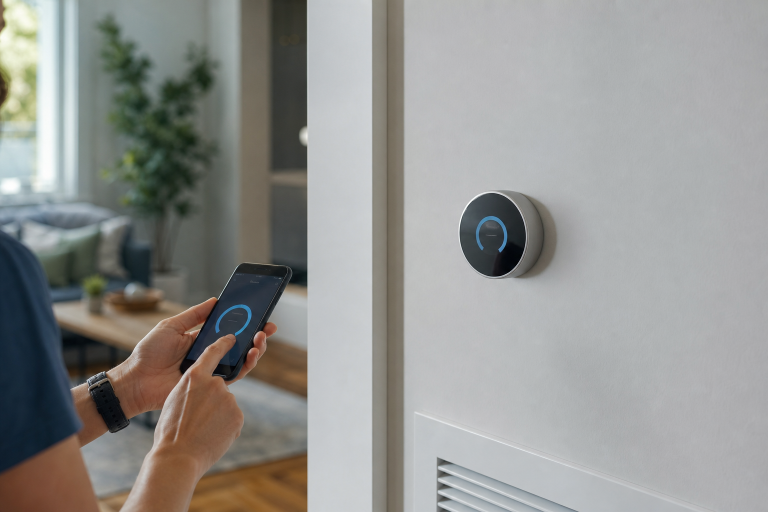
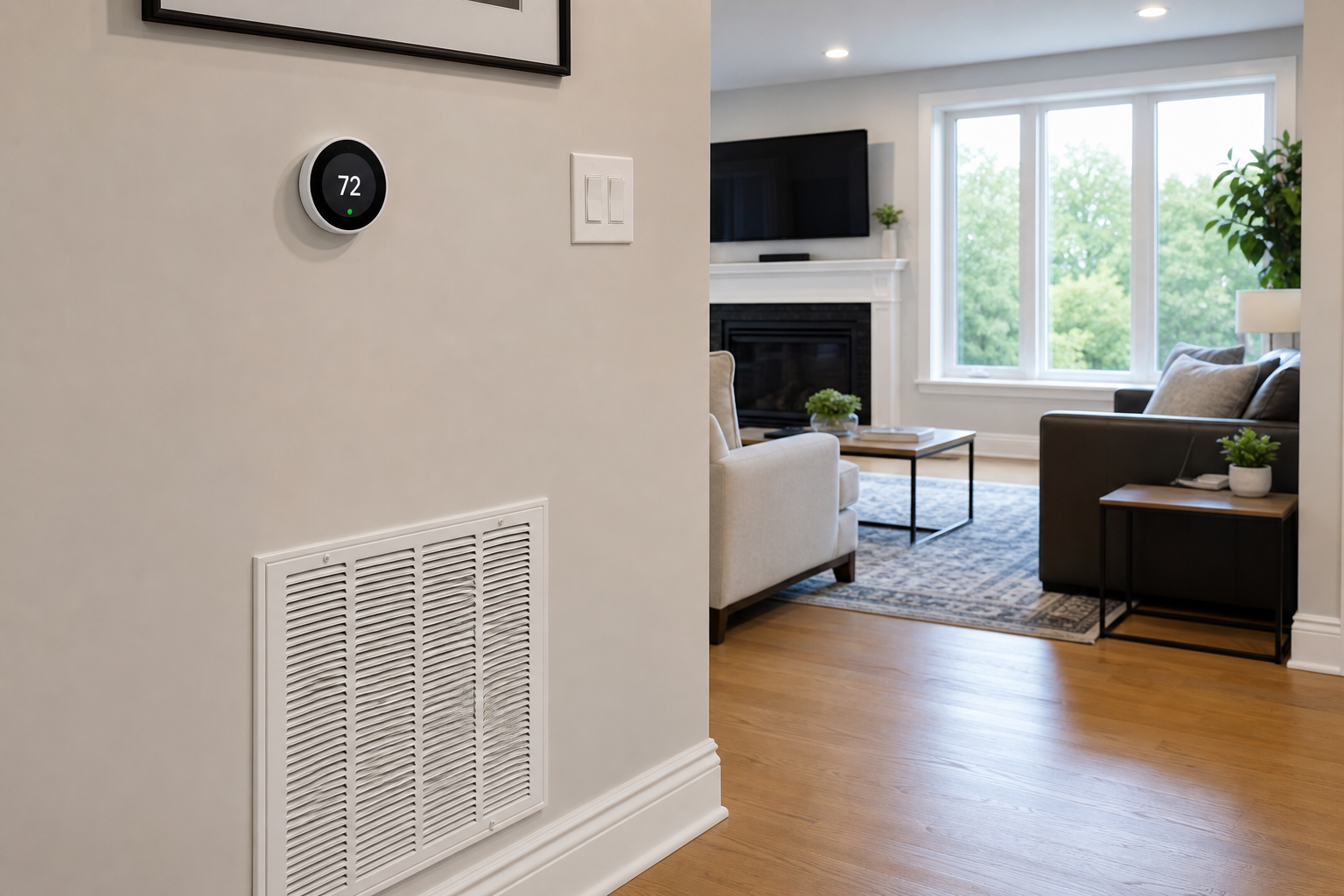
Many modern thermostats can monitor humidity, but only some can actively control it through compatible HVAC equipment or add-on devices. The useful question is whether the thermostat can trigger blower adjustments, staged cooling, a whole-home humidifier, or a whole-home dehumidifier.
Should I set the HVAC fan to ON or AUTO for better humidity control?
In many homes, AUTO works better during cooling season because it limits moisture re-evaporation off the coil after a cycle ends. A contractor may recommend a different setup if your system includes special ventilation or filtration controls.
Will a larger air conditioner remove more humidity?
A bigger unit can make humidity control worse if it cools the house too quickly and shuts off before enough moisture is removed. ENERGY STAR guidance specifically warns that oversized cooling equipment can leave indoor air feeling damp.
Call for a free estimate:
Is a portable dehumidifier enough for the whole house?
A single portable unit is usually best for one problem area, such as a basement or one damp room. Whole-house moisture issues are usually handled more effectively with a ducted dehumidifier integrated with HVAC controls.
Do whole-home humidifiers work with both furnaces and heat pumps?
Many whole-home humidifiers can be integrated with either type of forced-air system as long as the duct configuration and controls are compatible. The installer should confirm airflow, mounting location, drain needs, and control wiring before specifying the model.
If your house feels sticky in summer, overly dry in winter, or simply uncomfortable despite normal thermostat settings, a focused HVAC humidity assessment can usually narrow down the real cause and the most practical fix. If you want help sorting through options, you can request a quote for your specific setup. Please call a listed specialist for a free, no-obligation discussion.
Sources: Carrier Infinity System product literature and installation guidance, Aprilaire whole-home humidifier installation and owner documentation, ACCA Manual J, ACCA Manual S, National Air Duct Cleaners Association, Angi 2025 pricing data, Trane product literature, Lennox product literature