Smart Plumbing and Water Safety Tips to Prevent Costly Home Damage
Plumbing and water safety starts with preventing leaks, contamination, and pressure problems before they turn into repairs, insurance claims, or unsafe water conditions. In a remodel, a repair, or routine upkeep, the practical goal is the same: protect your water supply, keep wastewater moving out correctly, and reduce the chance that hidden failures damage floors, walls, cabinets, or finishes.

Call for a free estimate:
Most homeowners do not need a complex system to stay ahead of plumbing risk. They need a few clear checks, a basic understanding of shutoffs, and a way to spot work that looks incomplete, oversized, or poorly planned.
According to the U.S. Environmental Protection Agency WaterSense program, household leaks can waste nearly 10,000 gallons of water each year, and 10 percent of homes have leaks that waste 90 gallons or more per day. Those numbers matter because even a small leak can also damage trim, subfloors, drywall, and cabinetry long before it looks dramatic.
This article focuses on the parts of plumbing and water safety that most often affect homeowners: shutoff planning, fixture and appliance leak prevention, water heater settings, backflow and cross-connection basics, drain and sewer warning signs, and what to verify before signing off on plumbing work.
What makes plumbing and water safety such a high-priority issue at home?
Water problems move fast, and the damage is often larger than the original plumbing failure. A loose supply line, a failed wax ring, a cracked drain connection, or an unnoticed appliance leak can spread into framing, insulation, flooring, and adjacent rooms.
According to the Insurance Institute for Business & Home Safety, water damage and freezing are among the most common causes of property loss for homeowners. IBHS also points to supply system failures, appliance failures, and drain system failures as major categories behind those losses.
Clean water safety matters too. The Centers for Disease Control and Prevention states that backflow can allow contaminants to enter drinking water if water pressure changes and proper protection is missing. For a homeowner, that means plumbing is not only about convenience. It is also about protecting the potable water system, which is the water intended for drinking, cooking, and bathing.
One more point gets missed during renovations: finishes are usually easier to replace than hidden plumbing. A cheaper faucet, vanity, or tile choice can be changed later. Incorrect slope, poor venting, weak shutoff access, or missing backflow protection is harder and more expensive to reopen walls and fix.
How can you lower plumbing and water safety risk before a leak happens?
The most effective approach is to control the simple failure points first: accessible shutoffs, visible supply connections, stable water pressure, and routine checks around fixtures and appliances.
Know every shutoff that matters
Every homeowner should know the main water shutoff location and test whether it turns freely before an emergency happens. Local shutoffs at sinks, toilets, dishwashers, washing machines, and ice makers also matter because they let a small problem stay small.
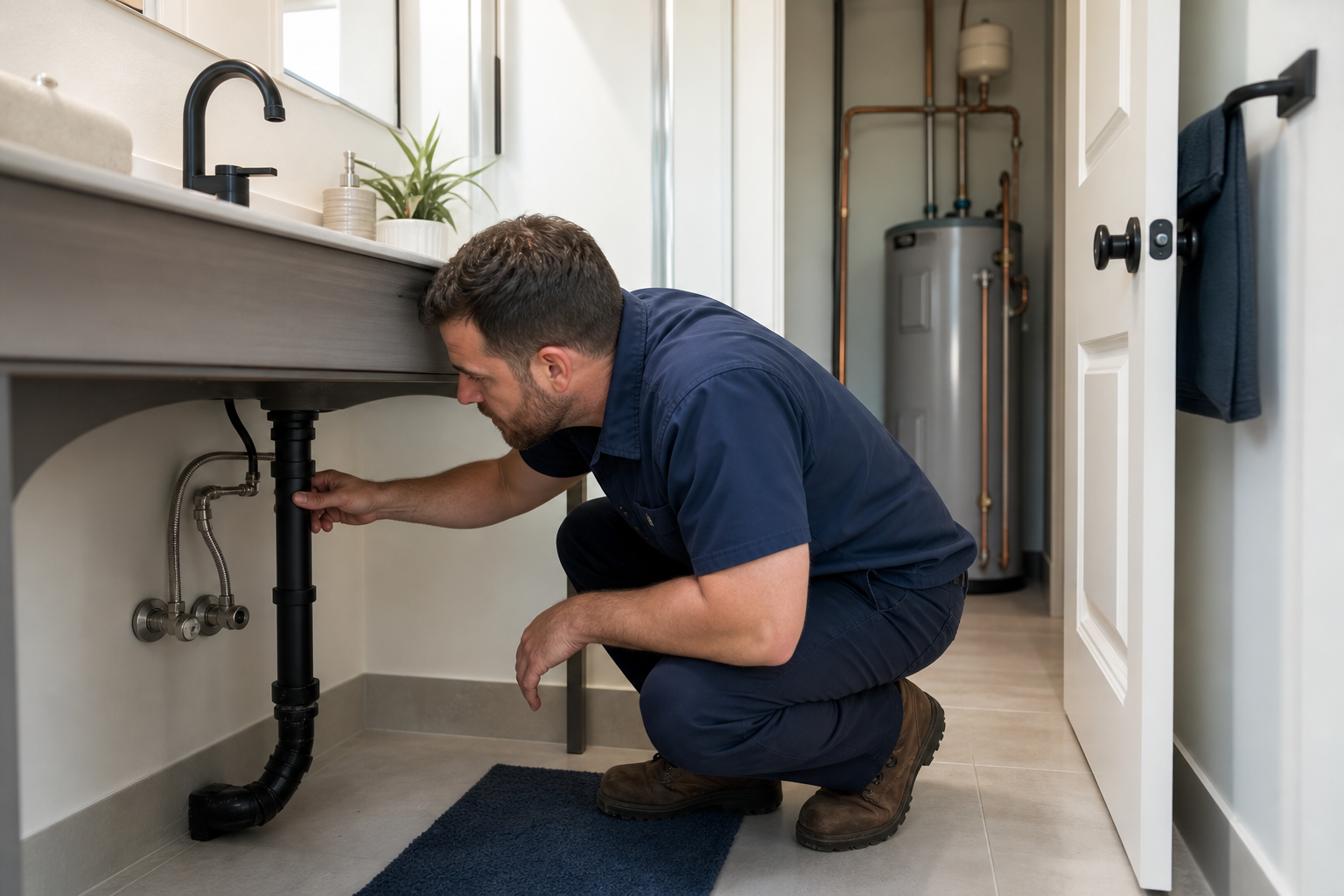
When plumbers replace fixtures, asking for clearly accessible valves is usually worth it. A shutoff buried behind a fixed vanity panel or in an inconvenient location does not help when a supply line starts leaking on a weekend.
Watch the connectors that fail first
Flexible supply lines, washing machine hoses, refrigerator water lines, and dishwasher connections deserve regular visual checks. The International Association of Certified Home Inspectors, InterNACHI, identifies supply pipes, fixtures, water heaters, and washing machine hoses as common sources of household leaks in its homeowner guidance.
Look for corrosion, bulging, kinks, mineral buildup, staining, or damp cabinet floors. Those signs do not prove a major failure is imminent, but they are enough to justify service before damage spreads.
Keep pressure in a safe range
Excessive water pressure puts unnecessary stress on valves, connectors, and appliance internals. The International Code Council, in the International Residential Code, limits static water pressure in residential water distribution systems to 80 psi, with pressure-reducing measures required when supply pressure exceeds that level.
If your home has banging pipes, frequent fixture drips, repeated supply line failures, or appliances that seem hard on inlet valves, pressure is worth checking. In many homes, a pressure-reducing valve is a better fix than repeatedly replacing small parts.
Which fixtures and appliances create water damage risk?
Washing machines, water heaters, toilets, dishwashers, refrigerators with water lines, and showers create a large share of preventable household water damage because they combine pressurized water with hidden or semi-hidden connections.
Washing machines and utility areas
Laundry spaces are high risk because hoses can fail while no one is nearby. Stainless braided hoses are widely used as an upgrade from older rubber hoses, but the key protection is still inspection, secure installation, and a shutoff plan. If the laundry area is being remodeled, a drain pan and an accessible shutoff setup are practical additions.
Water heaters
Tank-style water heaters need attention to age, drain pan use where appropriate, discharge piping at the temperature and pressure relief valve, and any sign of rusting or slow seepage. The U.S. Department of Energy states that 120 degrees Fahrenheit is the generally recommended setting for many homes because it can reduce energy use and lower scald risk compared with higher settings.
That does not mean every household should change the setting without checking the equipment and the home’s needs. Homes with specific hot water demands should have that reviewed with a qualified plumber or manufacturer documentation.
Bathrooms
Toilets often leak at the supply connection, shutoff valve, tank bolts, or wax seal. A soft floor at the toilet base, staining at the ceiling below, or movement when the toilet is used should not be ignored. In showers and tubs, failed caulk is not the only concern. Hidden plumbing leaks behind walls and at drain assemblies can mimic surface water problems. If that is the issue you are dealing with, this guide to leaking shower or tub causes covers the common failure points in more detail.
Call for a free estimate:
How do you keep drinking water safer inside the plumbing system?
Safe water depends on keeping clean supply water separated from anything that could flow backward into it. In residential plumbing, that usually comes down to avoiding cross-connections and making sure fixtures that need backflow protection actually have it.
A cross-connection is any physical link between potable water and a possible contamination source. Common examples include a hose submerged in a bucket, utility sink, pool, chemical sprayer, or similar container. The CDC’s drinking water guidance explains that a pressure drop can reverse normal flow and allow contamination into the supply if backflow protection is absent.
Hose bibb vacuum breakers, faucet air gaps where required, dishwasher air-gap or high-loop requirements where specified by local code or manufacturer instructions, and irrigation backflow devices all exist for this reason. The exact device depends on the fixture and local code adoption.
Homeowners should also treat unprotected temporary connections as a real risk. A garden hose left in standing water is a small detail until pressure changes make it a plumbing safety issue.
What should you verify before approving plumbing work in a remodel?
Good plumbing work should be easy to understand on paper before it disappears behind drywall, tile, or cabinetry.
For remodels, the quote should identify which fixtures are being installed, whether supply and drain lines are being relocated, who is providing finish materials, whether shutoffs are being replaced, and whether permits and inspections are included. Vague language is where scope creep starts.
According to the Federal Trade Commission, homeowners should get contract terms in writing, understand the payment schedule, and make sure promises are documented. While the FTC guidance applies broadly to contractors, it is especially useful in plumbing because hidden work can be difficult to verify after the walls close up.
- Fixture model numbers and finish selections
- Scope of demolition and repair, including patching responsibility
- Supply line, drain, and vent changes
- Shutoff valve replacement or reuse
- Permit responsibility and inspection responsibility
- Disposal of removed fixtures and debris
- Warranty terms for labor and manufacturer parts
If the project also involves layout changes and fixture upgrades, this comfort-height fixtures guide can help with selection decisions that affect both usability and rough-in planning.
It is also reasonable to ask when pressure testing, inspection, or final fixture testing will occur. Those checkpoints are more meaningful than a verbal assurance that everything will be handled.
What are common plumbing mistakes that lead to bigger repairs later?
The costliest mistakes are usually the quiet ones: hidden leaks, incomplete scope, and small code or installation details that get missed during a fast remodel.
Choosing finish upgrades while ignoring rough plumbing
Cabinet fronts, tile, and premium fixtures get attention because they are visible. Supply stops, trap alignment, venting changes, pan details, and access planning often do not. When the budget is tight, protecting the hidden system is usually the better priority than stretching for a higher-end visible finish.
Accepting vague allowances
An allowance can be reasonable, but only if it is specific. If a quote says “plumbing as needed” or “fixture install” without naming what is included, you may be paying later for shutoff replacement, flange repair, disposal, trim parts, or finish corrections that were predictable from the start.
Ignoring slow drains and minor staining
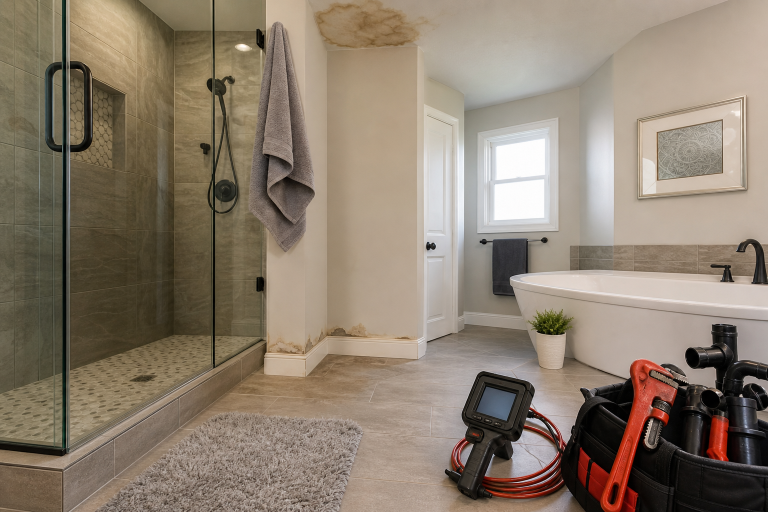
Slow drains, musty cabinet interiors, bubbling paint, and recurring toilet movement are early warnings. They are cheaper to investigate before subfloor damage, mold-prone moisture conditions, or ceiling staining spread into adjacent materials.
When the project includes broader budget planning, this remodel budgeting guide is useful for setting a contingency that covers hidden plumbing discoveries without derailing the whole job.
How much should you budget for plumbing and water safety work?
Plumbing costs vary widely by scope, but the practical budgeting rule is to expect a few hundred dollars for simple fixture or valve work and several thousand dollars when a remodel moves drains, vents, or supply lines.
For broad planning, Remodeling magazine’s 2024 Cost vs. Value Report shows that bathroom and kitchen remodel costs rise sharply when layouts change and multiple trades are involved. The same 2024 report is most useful as a benchmark for project scale, not as a fixed quote for your house. For local labor conditions, the U.S. Bureau of Labor Statistics publishes regional wage data that helps explain why the same plumbing job can price differently by market in 2026.
Small preventive work is often the better value. Replacing aging stop valves, upgrading weak supply lines, correcting pressure issues, or fixing a slow leak usually costs far less than replacing damaged flooring, cabinetry, drywall, and trim after a failure.
A homeowner who delays a $200-800 repair can end up inside a much larger finish restoration project once water reaches adjacent materials. Exact repair cost depends on access, region, and what got wet, so any contractor quote should separate plumbing correction from finish repair rather than blending them into one number.
What routine checks actually help with plumbing and water safety?
A short monthly and seasonal check is enough for most homes, as long as it focuses on the places where failures are easiest to miss.
Call for a free estimate:
- Look under sinks for dampness, staining, or corrosion
- Check around toilets for movement, odor, or soft flooring
- Inspect washing machine and refrigerator water connections
- Watch the water heater area for rust, seepage, or discharge issues
- Confirm exterior hose connections are not left submerged in containers
- Test that the main shutoff is identifiable and accessible
During any renovation, take photos of plumbing before walls are closed. That record can help later if you need to locate shutoffs, drains, or vent paths without unnecessary demolition.
FAQ
What is the most important first step for plumbing and water safety?
Knowing how to shut off the home’s water supply is the most important first step because it limits damage during a leak and buys time to call a plumber.
Is high water pressure really a plumbing safety issue?
Pressure above code limits can damage valves, connectors, and appliances over time, so repeated leaks or fixture problems justify having the pressure checked.
Should a small leak under a sink wait until the next remodel?
Minor leaks are worth fixing sooner because cabinet bottoms, wall materials, and flooring can be damaged long before the repair looks urgent.
Do all homes need backflow protection devices?
Different fixtures and systems need different protections, and local code determines the exact requirement, but hose connections, irrigation systems, and certain appliance setups commonly require backflow prevention.
Is a higher water heater temperature better?
A 120 degree Fahrenheit setting is commonly recommended by the U.S. Department of Energy for many homes, but the right setting should still match the equipment and household needs.
If you are planning plumbing work, dealing with a leak, or trying to make a remodel scope more complete before signing, getting a qualified assessment can help you catch the hidden items before they turn into larger repairs. Please call a listed professional for a free, no-obligation discussion.
Sources: Insurance Institute for Business & Home Safety, International Association of Certified Home Inspectors, Remodeling magazine Cost vs. Value Report 2024, U.S. Bureau of Labor Statistics