HVAC Indoor Air Quality: A Clear Homeowner Review Guide
Indoor air quality equipment is easiest to judge when each part has one clear job: capture particles, remove moisture, bring in outdoor air, or address a specific room. A whole-house HVAC system can support all of those goals, but no single filter, purifier, or thermostat setting solves every indoor-air problem.

Call for a free estimate:
This review focuses on the decisions that affect a typical forced-air home: the filter that fits the equipment, ventilation that actually exhausts moisture and odors outdoors, humidity control, and portable air cleaners for rooms that need added particle filtration. The sensible starting point is to identify the condition you want to change before buying equipment.
What does HVAC indoor air quality actually include?
A useful indoor air quality plan combines source control, ventilation, filtration, and moisture management rather than treating an HVAC add-on as a complete solution. The U.S. Environmental Protection Agency’s Inside Story: A Guide to Indoor Air Quality identifies source control as one of the most effective ways to improve indoor air quality, alongside ventilation and air cleaning.
In practical terms, source control means addressing the origin of an unwanted indoor condition. That may mean using a kitchen range hood that vents outside, repairing a plumbing leak, storing paints and solvents according to their labels, or keeping combustion equipment properly maintained. Filtration then captures particles carried through the return duct, while ventilation exchanges indoor and outdoor air when conditions and the home’s design allow it.
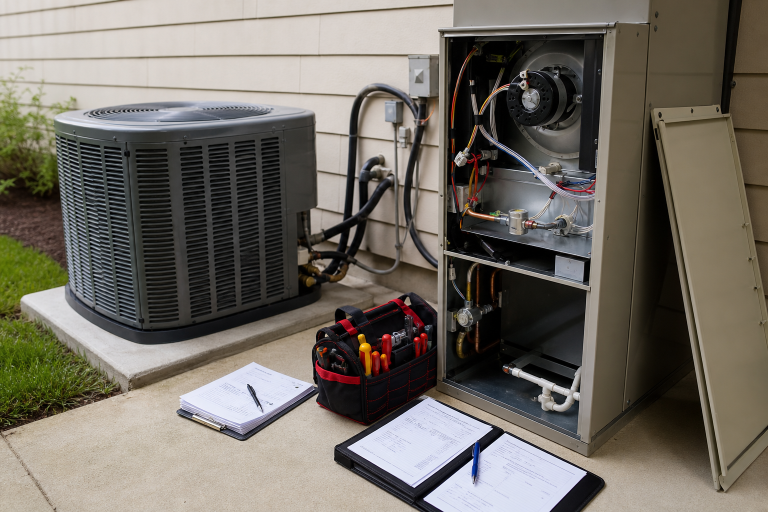
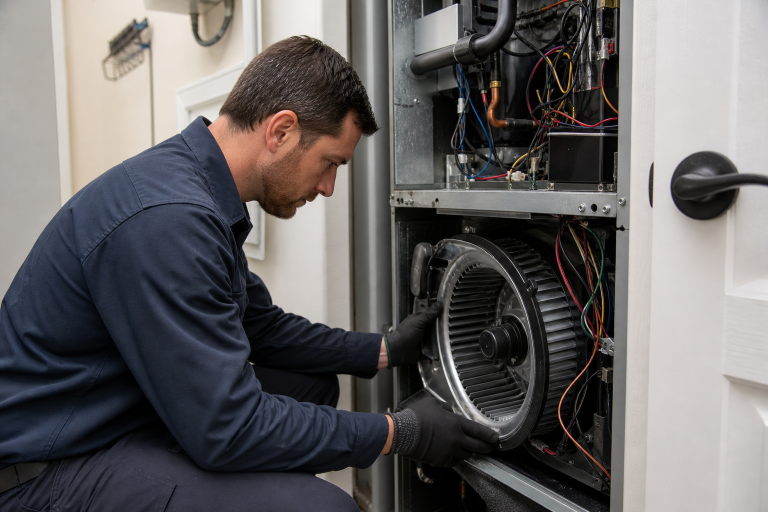
HVAC indoor air quality also depends on the condition of the system itself. A return opening, duct connection, drain arrangement, or filter rack that does not seal properly can undermine the equipment selected for the home. Before adding technology, confirm that the existing system can move air as intended and that its basic maintenance needs are being met. For related equipment warning signs, see this guide to HVAC blower motor problems.
What should you inspect before buying air-quality equipment?
Start with the room, season, and condition that prompted the search, then inspect the simple causes that may already have a direct fix. A bathroom that stays damp after showers points toward exhaust and moisture control. A single bedroom with lingering particles may be a candidate for a portable cleaner. Dust collecting around supply registers may call for a closer look at housekeeping, return-air leaks, or the filter fit.
- Check whether kitchen and bath fans discharge outdoors rather than into an attic, crawlspace, or another enclosed area.
- Look for visible water leaks, wet materials, standing water near HVAC equipment, or persistent condensation on surfaces.
- Confirm the filter’s actual dimensions, airflow direction, and whether it sits tightly in its rack without bypass gaps.
- Note which rooms are affected, when the condition occurs, and whether it changes when the HVAC fan runs.
- Review the equipment manual before selecting a more restrictive replacement filter or an accessory that requires ductwork changes.
If the underlying issue is an unvented bathroom or a roof leak, a whole-house air cleaner is addressing the wrong problem. If the current filter is loose in its frame, correcting the fit is more useful than simply choosing a higher rating.
Keep the system’s design limits in view. Airflow, duct size, blower capability, and the installed filter cabinet all affect what a central system can accommodate. A contractor evaluating an upgrade should examine those parts rather than selecting equipment from floor area alone.
How should you choose a central HVAC filter?
The right central filter is one that fits the cabinet, is compatible with the equipment’s available airflow, and provides the level of particle capture you need. The filter rating most homeowners encounter is MERV, short for Minimum Efficiency Reporting Value. It comes from ANSI/ASHRAE Standard 52.2, which tests general-ventilation air-cleaning devices by particle-size ranges and assigns the MERV value from the results.
A higher MERV number describes the filter’s test performance, not an automatic recommendation for every furnace or air handler. Denser media can add resistance to airflow. The manufacturer’s installation literature and the equipment’s documented airflow specifications should guide any move to a more restrictive filter. When that information is unavailable, have an HVAC contractor assess the system rather than guessing from the filter slot size.
Fit and replacement discipline matter more than marketing
Air bypasses a filter when it can travel around the edges instead of through the media. Measure the installed filter, not only the nominal size printed on its frame, and make sure the arrow follows the direction of airflow. The replacement interval should follow the equipment or filter manufacturer’s instructions and should be shortened only when the manufacturer allows it and the filter is visibly loaded or conditions justify it.
A thick media cabinet may allow a larger filter surface area than a one-inch slot. That is a design difference worth discussing during a system assessment, because surface area and pressure drop matter alongside the printed efficiency rating. It is not a reason to modify a cabinet or force a filter into place.
Efficiency and indoor-air features are separate buying decisions. A system’s SEER2 rating concerns cooling efficiency under a federal test procedure, while filtration concerns air cleaning. This explanation of SEER2 and indoor air quality helps keep those specifications distinct.
When does a portable air cleaner make sense?
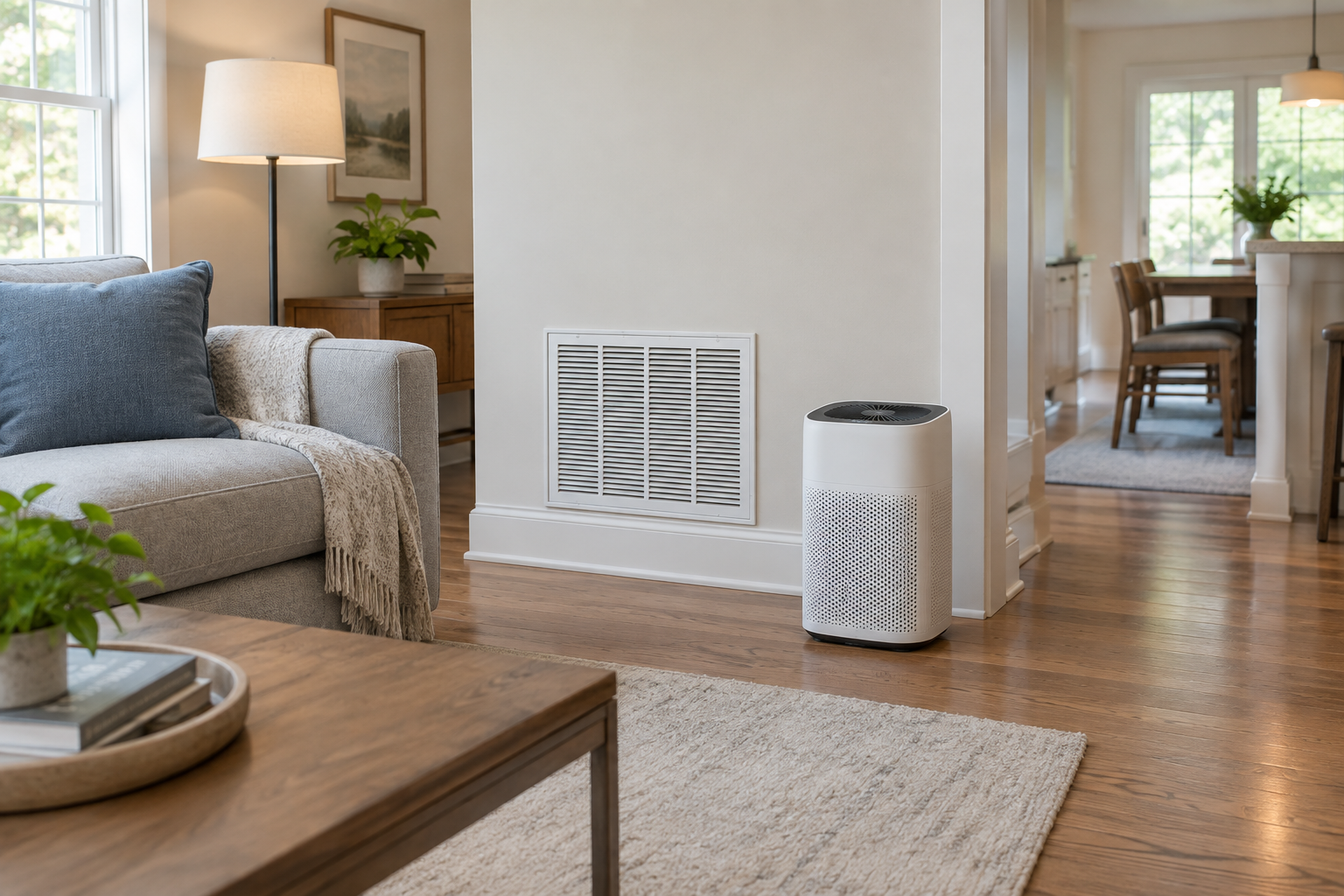
A portable air cleaner is most useful when you want added particle filtration in a defined room and can place a properly sized unit there. The EPA’s Air Cleaners and Air Filters in the Home guidance explains that portable air cleaners can reduce indoor air pollution, while also stating that no air cleaner removes all pollutants from indoor air.
Compare units by the room size they are designed to serve and, when available, their Clean Air Delivery Rate, or CADR. EPA guidance explains that CADR is a rating for portable air cleaners that reflects delivery of cleaner air for tobacco smoke, dust, and pollen under a standardized test. The room’s size, ceiling height, open doorways, and the cleaner’s operating setting all affect how closely real use matches a published rating.
Placement deserves as much attention as the box. Give the unit open space around its intake and outlet, avoid pushing it behind furniture, and choose a location where its sound level will not cause it to be switched off. A smaller, quieter unit that runs consistently in the room of concern may be more practical than a large unit placed elsewhere.
Be cautious with products that make broad claims about destroying, neutralizing, or eliminating every indoor contaminant. EPA advises consumers to understand both the pollutant of concern and the technology used. Ask for the model’s documentation, its filter replacement requirements, its published room-sizing basis, and whether the device generates anything beyond filtered airflow.
How do ventilation and humidity affect indoor air quality?
Exhausting moisture and pollutants at their source is often the direct fix for a kitchen or bathroom problem. The U.S. Department of Energy’s Ventilation guidance describes spot ventilation, such as kitchen range hoods and bathroom exhaust fans, as a way to remove moisture and pollutants directly from rooms where they are produced.
Whole-house ventilation is a different category. It may use dedicated fans, ducts, and controls to bring outdoor air in and send indoor air out in a managed way. The appropriate design depends on the home’s layout, climate, existing HVAC configuration, and local code. A qualified designer can determine whether an exhaust-only, supply-only, or balanced approach suits the house.
Call for a free estimate:
For moisture, the EPA’s A Brief Guide to Mold, Moisture and Your Home recommends keeping indoor humidity below 60 percent, ideally between 30 and 50 percent where possible, and fixing leaks or other moisture sources. A hygrometer can show the indoor relative humidity, but it does not identify why the level is high.
Central air conditioning removes some moisture during cooling operation, but it cannot resolve every humidity issue. A basement may need its own dehumidification approach. A bath fan may need repair or proper exterior termination. An oversized cooling system can also require a design review rather than a new accessory. The least costly reliable correction is the one aimed at the actual moisture source.
What should an HVAC indoor air quality proposal include?
A credible proposal ties each recommended component to a documented condition in the home and explains how it will be installed, controlled, and maintained. It should not rely on a generic promise that one device will fix every air-quality concern.
- The observed condition and the evidence used to identify it, such as humidity readings, room-specific concerns, equipment inspection findings, or ventilation measurements.
- The exact equipment category and model, plus any required cabinet, duct, electrical, drain, or control changes.
- How the recommendation affects airflow and whether the contractor verified compatibility with the existing blower and duct system.
- Filter or consumable replacement needs, maintenance tasks, noise considerations, and access for future service.
- Written warranty terms, permit responsibilities where applicable, project exclusions, and a clear total price.
Vague wording such as “air purification package” leaves too much unanswered. Ask what the device captures or controls, where it will be located, and what condition it is intended to address. If the contractor cannot connect the recommendation to a defined problem, pause before approving the work.
FAQ
Can an HVAC filter replace a portable air cleaner?
No, a central filter treats air moving through the HVAC system, while a portable unit provides added filtration in the room where it operates. The better choice depends on whether the concern is house-wide and tied to HVAC runtime or concentrated in one room.
Should you run the HVAC fan continuously for air quality?
It depends on the equipment, filter setup, comfort needs, and energy use in your home. Continuous fan operation moves more air through the central filter, but a contractor or the equipment manufacturer should confirm that the filter and blower arrangement are suitable for that operating plan.
Will a dehumidifier solve a moisture problem?
A dehumidifier can lower indoor humidity in the space it serves, but it does not repair a leak, correct missing exhaust ventilation, or stop water entering the building. Identify and correct the moisture source before treating dehumidification as the complete answer.
Is a high-MERV filter always better?
No, the appropriate filter balances particle-capture performance with fit and the airflow the HVAC equipment can support. A compatible filter installed correctly is a better choice than a higher-rated filter that causes unacceptable airflow restriction.
If you have a persistent room-specific issue or are considering a whole-house upgrade, request a written HVAC indoor air quality assessment that identifies the condition, the proposed scope, and the maintenance the solution will require. Please call a listed specialist for a free, no-obligation discussion.