Termites vs Flying Ants: Tips & Tricks to Tell the Difference
Focus Keyword: termites vs flying ants
Termites vs flying ants is one of the most common identification mistakes homeowners make, especially during spring swarms. The confusion is understandable. Both can appear suddenly, both may gather near windows or lights, and both can show up in large numbers. But they are not the same pest, and the right next step depends on knowing which one you are seeing.
That visual difference matters because termites are an active wood-destroying pest problem, while flying ants may point to an ant colony nearby or, in some cases, a carpenter ant issue that still needs attention. If you are already seeing wood-related warning signs, Abodence also has a related guide on carpenter ant signs homeowners should not ignore.
How can you tell termites vs flying ants at a glance?
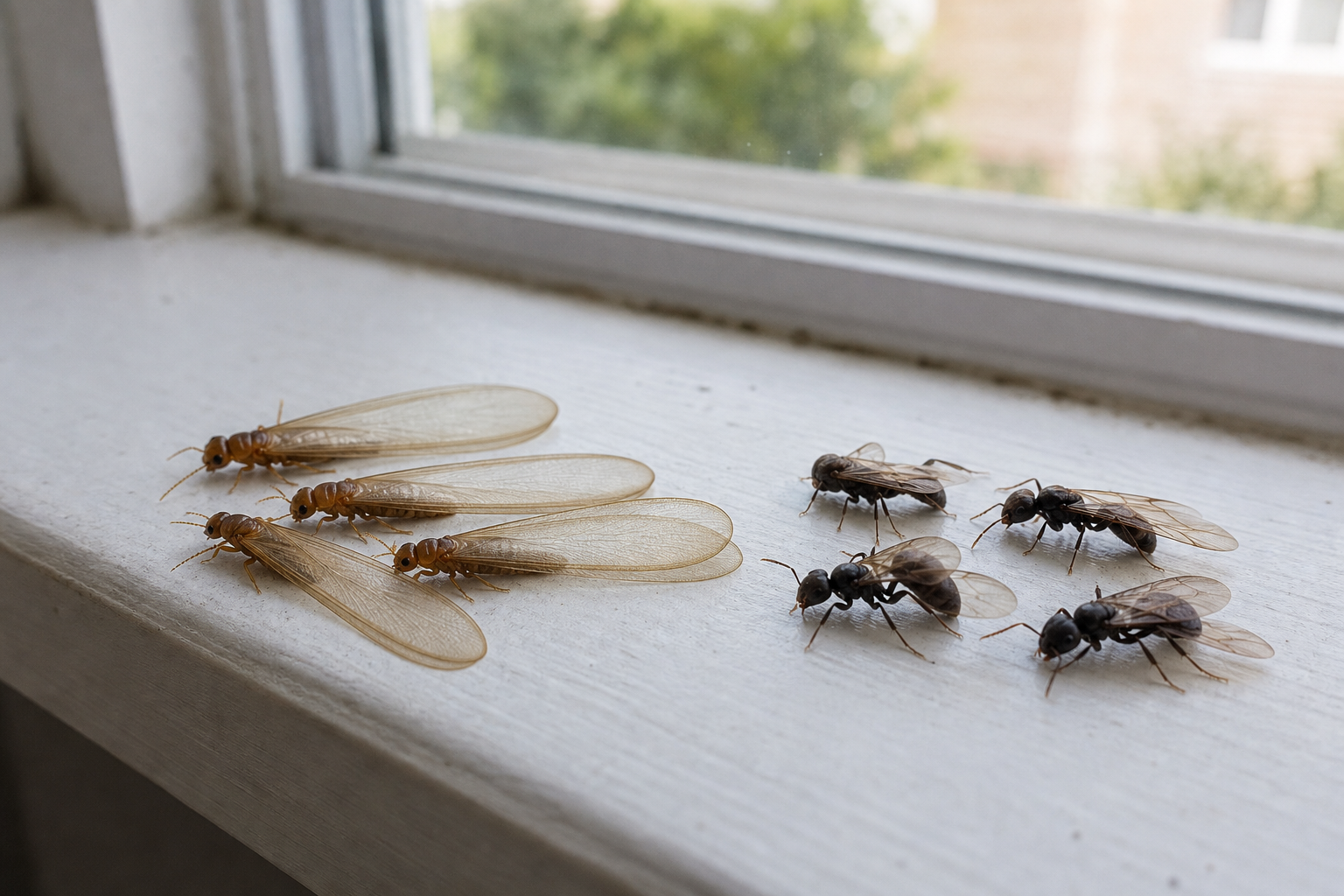
The fastest way to separate the two is to look at the waist, antennae, and wing size. Those three traits are the standard visual markers used by the EPA and by university extension identification guides.
Termites look more uniform from head to tail. Their bodies do not have the sharply narrowed middle section that ants have. The antennae on termites appear straight or only slightly curved, while ants have a bent, elbow-like antenna shape. Wing length is another strong clue. On flying ants, the front pair is noticeably longer than the back pair. On termites, all four wings are about the same length.
What the body shape usually looks like
A termite’s body tends to look thick and straight through the middle. A flying ant has the classic ant outline, with a distinct head, narrow waist, and larger rear section.
This is usually the easiest trait to spot without magnification.
What the wings usually look like
Equal-length wings point toward termites. Uneven wing pairs point toward ants.
According to the University of Kentucky Entomology extension guidance, termite swarmers also tend to have wings that are longer in proportion to the body and are easily shed after swarming. That is one reason homeowners often find small piles of matching wings on sills or floors after a termite swarm.
When do termites and flying ants usually appear?
Both pests often appear during warm, humid periods, but swarm timing varies by species and region. The National Pest Management Association explains that termite swarmers commonly emerge when colonies mature, often in spring, while ant swarmers also appear seasonally as part of reproduction.
That means timing can help, but it cannot confirm identification by itself. A spring swarm indoors may raise concern for termites, yet some ant species also swarm around the same time. Local climate changes the calendar. In warmer states, activity may start earlier and last longer.
Indoor appearance is often more important than the month. If winged insects are emerging from inside walls, trim, window frames, or baseboards, that deserves prompt professional inspection regardless of whether you think they are ants or termites.
Where do homeowners usually find termites vs flying ants?
Termite are often found near windows, doors, light sources, and areas where they can escape toward daylight. Flying ants also gather around light, but they are more often noticed traveling from visible entry points, around kitchens, near exterior doors, or along established ant trails.
According to the Mississippi State University Extension Service, termite evidence can include discarded wings, mud tubes, and damaged wood. Mud tubes are shelter tubes termites build to stay protected and retain moisture while moving between the soil and wood.
If you see winged insects plus pencil-width mud tubes on a foundation wall, pier, crawl space support, or slab edge, the balance of evidence shifts strongly toward termites. Flying ants do not build termite-style mud tubes.
Common places termites show up
- Window sills with piles of equal-size wings
- Basement, crawl space, or foundation areas with mud tubes
- Door frames, trim, or baseboards near hidden moisture
- Wood that sounds hollow when tapped
Common places flying ants show up
- Near light fixtures or windows during a swarm
- Along visible ant trails on counters, floors, or walls
- Around exterior mulch, tree stumps, or landscape edges
- Near gaps at doors, utility penetrations, or siding joints
Do shed wings mean you have termites?
Shed wings can point to termites, but the wing shape and the surrounding signs matter. Equal-size wings found in a neat pile are more consistent with termites, while mixed wing sizes suggest flying ants.
According to the University of California Statewide Integrated Pest Management Program, swarmers of both ants and termites may leave wings behind, so the wing pattern should be considered with body features and site evidence. A few isolated wings near an open door may have blown in from outside. Repeated indoor piles, especially near the same area, deserve closer attention.
What signs point more strongly to termites than to flying ants?
Hidden wood damage, mud tubes, and repeated indoor swarms are the signs that suggest termites rather than flying ants. Those indicators are used in EPA and extension guidance because they reflect termite behavior, not just insect appearance.
Wood damage from termites is often concealed beneath paint, veneer, or the outer wood surface. The National Park Service preservation guidance on termites notes that subterranean termites consume wood from the inside and often follow the grain, which can leave a thin outer surface intact while the interior is damaged.
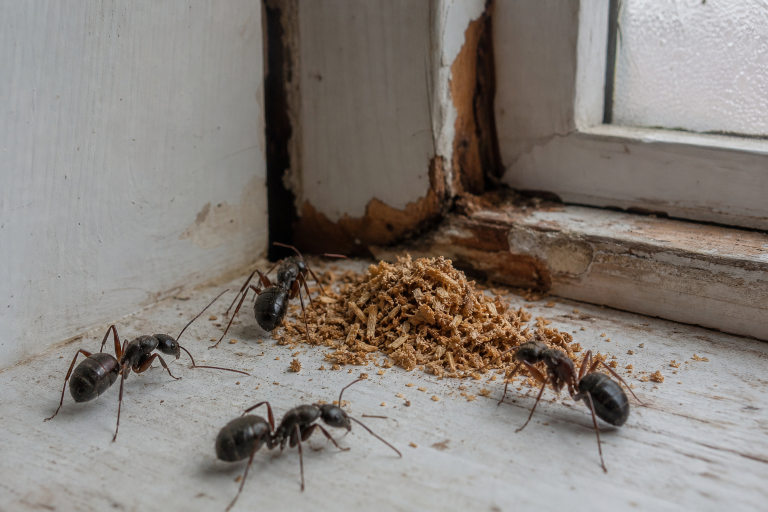
By contrast, flying ants themselves are not wood-eating insects. Some species, especially carpenter ants, can be associated with wood damage because they excavate galleries for nesting. If frass, which looks like coarse sawdust, is present instead of mud tubes, that pattern may lean more toward carpenter ants than termites.
Signs that deserve a termite inspection
- Broad-waisted swarmers with straight antennae
- Piles of four same-size wings on interior sills
- Mud tubes on foundation surfaces or framing
- Bubbling paint or blistered wood with no obvious water leak
- Repeated swarms from the same indoor area
Can flying ants still mean a serious pest problem?
Some flying ants are mostly a nuisance, but others can indicate a colony in or near the house that still needs treatment. Carpenter ants are the main reason not to dismiss all winged ants as harmless.
According to the University of Massachusetts Amherst, carpenter ants nest in wood that is often damp or previously damaged. They do not eat wood the way termites do, but they can expand galleries over time. If you are seeing winged ants plus coarse sawdust-like debris, rustling in a wall, or ant activity around damp trim, the issue may be a carpenter ant colony rather than termites.
That is still a reason to schedule a professional inspection. The treatment plan and repair priorities are different, which is why correct identification matters.
Should you rely on photos online to identify termites vs flying ants?
Photos can help narrow it down, but a close physical inspection is more reliable. Lighting, camera angle, and insect damage can make online comparison images less useful than they seem.
A simple magnifying glass can make the waist and antenna shape easier to see. If you can safely collect a specimen, place it in a sealed bag or small container for the inspection visit. Avoid crushing the wings if possible. A clear sample often shortens the time needed for identification.
What should not happen is signing up for a full treatment plan based only on a quick glance at a swarm without a clear explanation of what was identified and where the evidence was found.
What should a pest professional inspect if you are not sure?
A proper visit should include identification of the insect itself and a search for supporting evidence in the structure. According to the EPA guidance on choosing a pest control company, you should ask for a written evaluation of the pest problem and treatment plan before work is done.
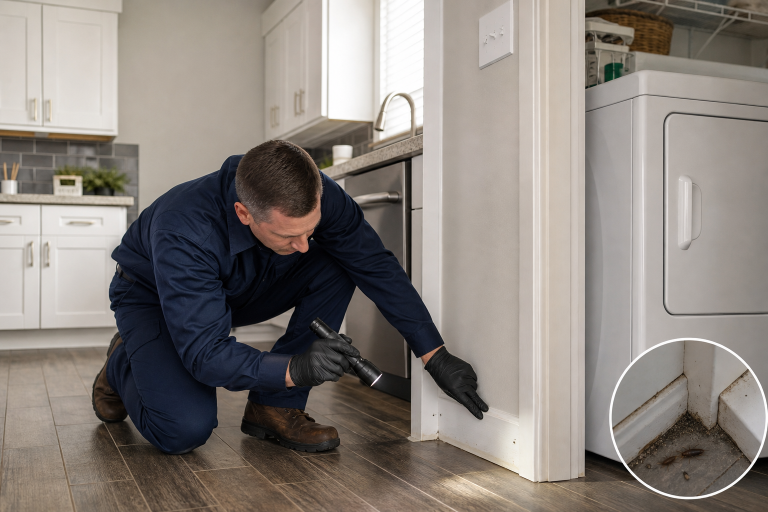
For a termite concern, that usually means checking accessible foundation areas, crawl spaces, basements, slab edges, window and door trim, attached wood elements, and any visible signs of moisture intrusion. For an ant concern, the inspection should focus on nest clues, entry routes, conducive conditions, and whether the species appears to be carpenter ants or another ant type.
If the company recommends a contract, ask what pest was identified, what evidence supports that conclusion, what treatment method is proposed, and whether follow-up visits are included. If you want pricing context before that conversation, Abodence has a separate guide on pest control cost and infestation pricing.
What mistakes do homeowners make when comparing termites vs flying ants?
The most common mistakes are focusing on size, assuming all winged insects near windows are termites, and treating first without confirming the species. Each of those shortcuts can send you toward the wrong service.
Another frequent mistake is overlooking the surrounding evidence. Wings alone are not the whole story. Mud tubes, frass, visible ant trails, damaged trim, and where the insects emerged all help separate one problem from another. A third mistake is ignoring a one-time swarm because it stopped on its own. Swarming often ends quickly, but the colony issue may remain.
The practical approach is simple: identify the insect, inspect the structure for corroborating signs, and only then decide whether treatment is needed and what kind.
When is it time to call a licensed pest professional?
Indoor swarms, repeated wing piles, mud tubes, or any sign of wood damage are enough reason to schedule an inspection. Those signs point to a problem that is easy to misread and hard to confirm without training.
You do not need to wait until damage is obvious. A smaller, earlier inspection is usually more useful than guessing for weeks and then paying for the wrong service. If the insects turn out to be ordinary flying ants, the answer may be limited treatment or exclusion work. If they are termites, a documented inspection gives you a clearer basis for comparing treatment options and any repair recommendations.
If you are seeing termites vs flying ants and want a clear next step, getting a written inspection and identification from a licensed pest professional is the most practical place to start. Please call one of those listed for a no-obligation discussion.
Sources: University of Kentucky Entomology, National Pest Management Association, Mississippi State University Extension Service, University of California Statewide Integrated Pest Management Program, National Park Service, University of Massachusetts Amherst Center for Agriculture, Food, and the Environment