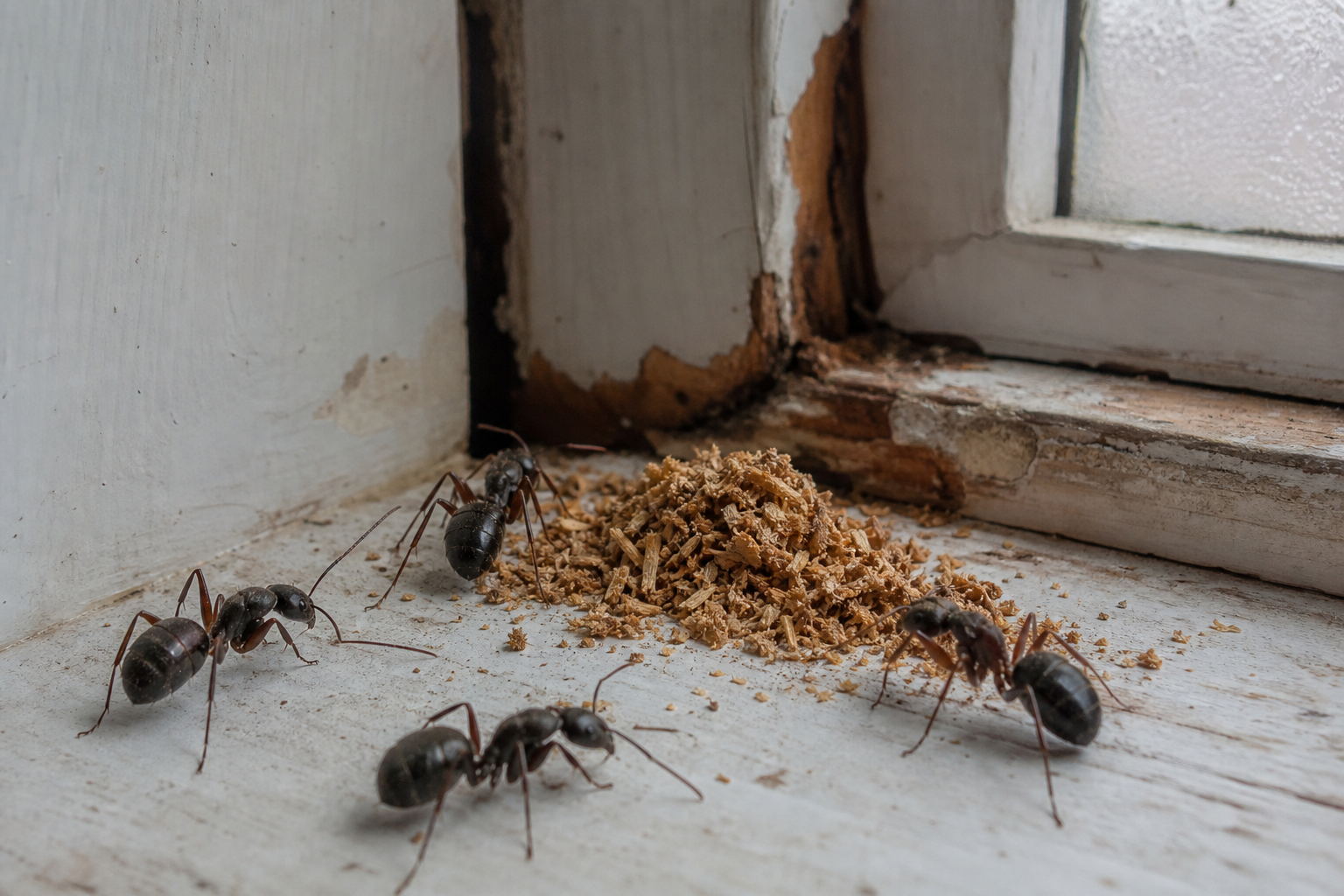
Carpenter Ant Signs: Serious Warning Clues Homeowners Should Not Ignore
Signs of carpenter ants usually show up before you ever see a large column of ants, and the earliest clues are often small piles of coarse sawdust-like debris, faint rustling in walls, or repeated ant activity near damp wood.
That makes this a recognition problem first, not necessarily an immediate treatment problem. If you can tell the difference between a few wandering ants and evidence of a nesting site inside the house, you can make a better decision about when simple cleanup is enough and when a licensed pest professional should inspect further.
According to the U.S. Environmental Protection Agency, carpenter ants excavate wood to build nests and leave behind sawdust-like material called frass, and moisture-damaged or decayed wood is especially attractive for nesting. The EPA also notes that these ants do not eat wood the way termites do.
What are the most common carpenter ant signs inside a house?
The most useful indoor clues are frass, large ants appearing repeatedly in the same area, and activity around damp or damaged wood.
Frass is one of the clearest signs because it often looks different from ordinary household dust. Instead of a fine powder, it tends to be coarse and may include bits of wood, insulation, or insect parts. The EPA identifies this debris as a common indicator of carpenter ant nesting activity.
You may also notice worker ants at night in kitchens, bathrooms, laundry rooms, basements, or around window and door frames. The presence of a few ants does not prove an indoor nest, but repeated sightings in one part of the home deserve attention, especially when they happen after dark.
Another common clue is wood that sounds faintly hollow when tapped or has small slit-like openings where ants push debris out. Cornell Cooperative Extension describes carpenter ant nests as galleries cut smooth inside the wood, with frass often expelled through openings near the nest.
- Coarse sawdust-like frass below trim, baseboards, or window frames
- Large black, red, or black-and-red ants showing up repeatedly indoors
- Ant traffic near sinks, tubs, dishwashers, or other moisture-prone areas
- Small openings in wood with debris beneath them
- Soft, damp, or previously water-damaged wood where activity keeps returning
How can you tell carpenter ants from termites?
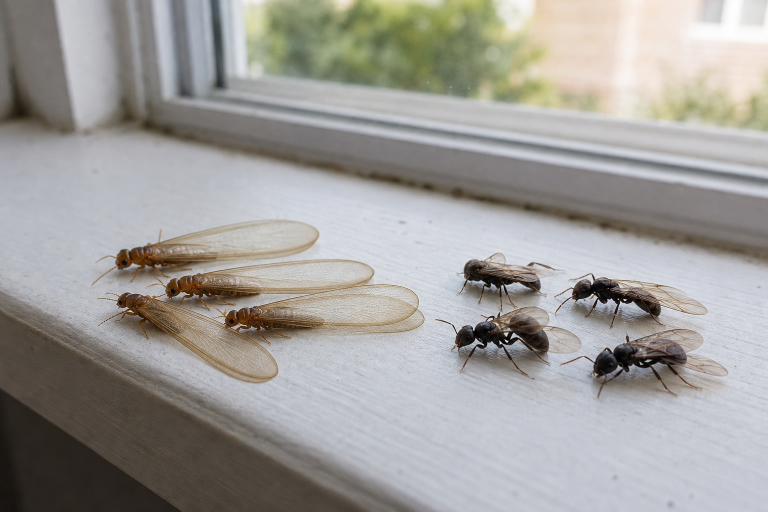
The easiest visual difference is body shape: carpenter ants have a narrow, pinched waist, while termites have a broader body without that distinct constriction.
According to the University of Kentucky Entomology, carpenter ants also have elbowed antennae and hind wings that are shorter than the front wings on swarmers, while termite swarmers have straight antennae and two pairs of wings that are about equal in size. That source also notes that carpenter ants excavate wood but do not consume it as food.
This distinction matters because the debris is different too. Carpenter ant frass is made of excavated material pushed out of galleries. Termite evidence more often involves mud tubes or damaged wood that looks layered and soil-stained, depending on the species. If you are only seeing winged insects near windows in spring, identification matters before any treatment decision is made.
Why do carpenter ants show up around damp wood?
Moisture problems make wood easier for carpenter ants to excavate and more likely to support a nest site.
The EPA says moisture-damaged or decayed wood is especially attractive. That is why signs often show up near roof leaks, plumbing leaks, poorly sealed windows, wet crawl spaces, or wood that stays damp from exterior drainage problems. The ant issue is often tied to a building issue.
In practical terms, that means treatment alone may not solve the problem if the damp condition remains. A colony can be reduced, but if the wood stays wet, the site may continue to attract ants later. For some homes, the lower-cost first move is fixing the leak or moisture source and replacing only the damaged section of wood, rather than jumping straight to broader repair work.
If you are already dealing with other home maintenance questions, Abodence’s gutter cleaning schedule guide can help you spot exterior water issues that sometimes contribute to damp wood around the structure.
Do carpenter ants make noise in walls?
Light rustling or faint crackling in quiet walls can happen when a mature colony is active inside the wood.
Cornell Cooperative Extension notes that carpenter ants may sometimes be heard in wall voids or woodwork. Homeowners usually notice this at night, when the house is quiet and ant activity is higher. The sound alone is not enough to confirm a nest, but it becomes more meaningful when combined with frass or regular ant sightings.
When are flying ants a serious warning sign?
Winged ants indoors are more concerning when they appear in numbers or keep showing up near the same window, light, or room.
According to the University of California Agriculture and Natural Resources Statewide IPM Program, carpenter ant swarmers may emerge from nests and are often mistaken for termites. Indoor swarms can indicate that a nest is inside the structure or very close to it.
A single winged ant found once is less informative than a cluster of them, a pile of shed wings, or repeated appearances over several days. If that pattern shows up with frass or damp wood, the case for a professional inspection gets stronger.
Where do carpenter ants usually nest in and around a home?
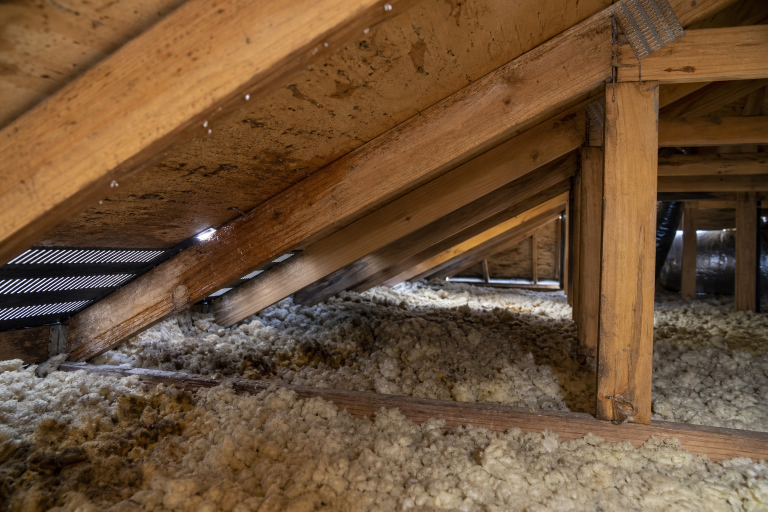
The National Pest Management Association explains in its carpenter ant guidance that nests are frequently associated with moisture-damaged wood and may occur in structural voids, hollow doors, insulation, or outdoor wood features such as stumps and landscape timbers. Many homes have both a parent colony outdoors and satellite nests indoors.
That pattern helps explain why you may see ants in a kitchen even when the main nest is not there. Foraging workers can travel from one nest area to another in search of food and water. The visible trail is not always the place where the damage is occurring.
Indoor areas that deserve closer attention
Window sills, shower-adjacent walls, dishwasher spaces, attic framing below roof leaks, and basement sill plates are all worth a careful look. These are not random hotspots. They are places where wood and moisture often meet.
Outdoor areas that can support a source colony
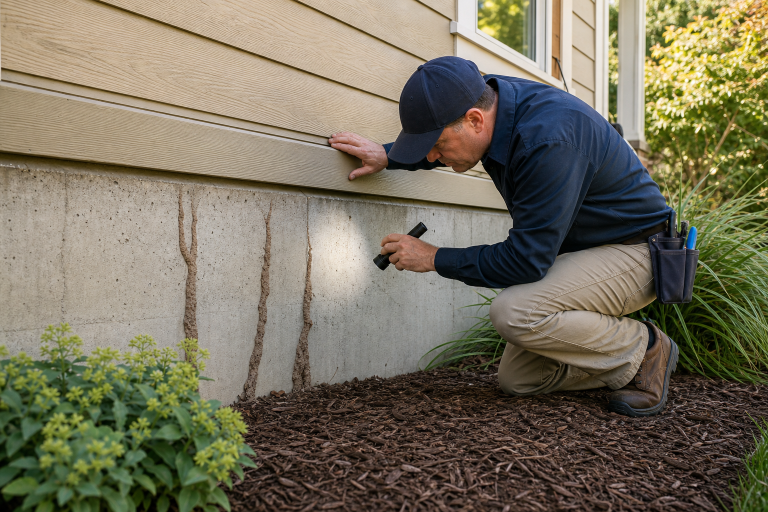
Tree stumps, rotting fence posts, stacked firewood, and old landscape timbers can all serve as nesting locations. A nest outside does not automatically mean the house is infested, but it does raise the odds that foraging ants will keep showing up indoors.
How much damage can carpenter ants cause?
Damage usually develops over time, but established nests can hollow out wood enough to require repairs, especially when moisture problems are left uncorrected.
Severity depends on how long the colony has been active, whether there are multiple nests, and how much of the affected wood was already weakened by moisture. In many homes, the repair scope is limited once the problem is found early. If the wood is still structurally sound, targeted treatment and moisture correction may be enough. If trim, framing, or sheathing has become soft or hollow, replacement may be needed.
For broader budgeting context, Abodence’s pest control cost guide covers how inspection and treatment pricing typically varies by infestation type and service scope.
When should you call a pest professional for carpenter ant signs?
A professional inspection makes sense when you find frass, indoor swarmers, repeated ant activity in the same area, or evidence near damp structural wood.
That is the practical threshold because those signs point to a nest or a recurring access pattern, not just an occasional ant that wandered inside. A licensed pest professional can identify the species, look for satellite nests, and determine whether the problem is limited to one area or tied to an exterior source.
Simple cleanup is reasonable for isolated ants with no repeat activity. The more expensive response is not automatically the right one. If there is no frass, no moisture-damaged wood, and no pattern of recurring sightings, monitoring first may be the better call.
When you do get estimates, look for a written scope that explains inspection findings, treatment areas, whether exterior nesting sites were considered, and what building conditions should be corrected. Vague quotes are a common problem in pest work, especially when the proposal names a chemical treatment but says little about where the nest is likely located or what follow-up is included.
What should you do before an inspection?
Good notes and a few clear photos help. Try to record where ants were seen, what time of day activity was highest, whether there was frass, and whether the area has a history of leaks or dampness. If possible, collect a few ants or winged insects in a sealed container for identification. Avoid heavy cleaning of the evidence area until after photos are taken.
It also helps to move stored items away from suspect walls so the inspection is not blocked. In basements, attics, and crawl spaces, access can matter as much as the visible symptom.
FAQ
Can carpenter ants be a sign of water damage?
Yes, recurring activity around wood often points to a moisture issue because the EPA says carpenter ants are especially attracted to moisture-damaged or decayed wood.
Are a few large ants in the house always a carpenter ant problem?
No, occasional ants can wander indoors without a nest being inside, but repeated sightings in the same area are more concerning when they happen with frass or damp wood.
Do carpenter ants eat wood like termites?
No, the EPA and university extension sources state that carpenter ants excavate wood to create galleries for nesting rather than consuming it as food.
Is frass the same as ordinary sawdust?
No, carpenter ant frass is usually coarser and may contain bits of insect parts or insulation, which makes it different from the fine dust left by cutting or sanding wood.
Can carpenter ants nest in sound, dry wood?
Yes, they can use sound wood, but authoritative guidance from the EPA and extension sources says moisture-damaged wood is especially attractive and is a common place to find nests.
If you are seeing carpenter ant signs and want help sorting out whether it looks like a minor issue or a likely nesting problem, you can use Abodence to find pest control help for your specific situation.
Sources: Cornell Cooperative Extension, National Pest Management Association