Insurance Discounts: Which Home Security Systems & Components Qualify?
Home security insurance discount rules are fairly simple once you know where insurers usually draw the line: discounts are typically tied to monitored burglary or fire protection, and the insurer usually wants proof that the system is active.
If you are adding a system mainly to lower your premium, the useful question is not which brand is popular. The useful question is which features your insurer recognizes, how they verify them, and whether the savings justify the monthly monitoring cost.
According to the Insurance Information Institute, you may qualify for a discount of up to 20 percent depending on the type of security and fire protection you install. The same guidance also notes that centrally monitored burglar alarms and fire alarms are the setups most commonly associated with larger discounts than simple deadbolts or local alarms.
That range is broad for a reason. Insurers set their own underwriting and discount rules, and many now separate basic smart-home devices from professionally monitored alarm systems.
Which home security systems usually qualify for an insurance discount?
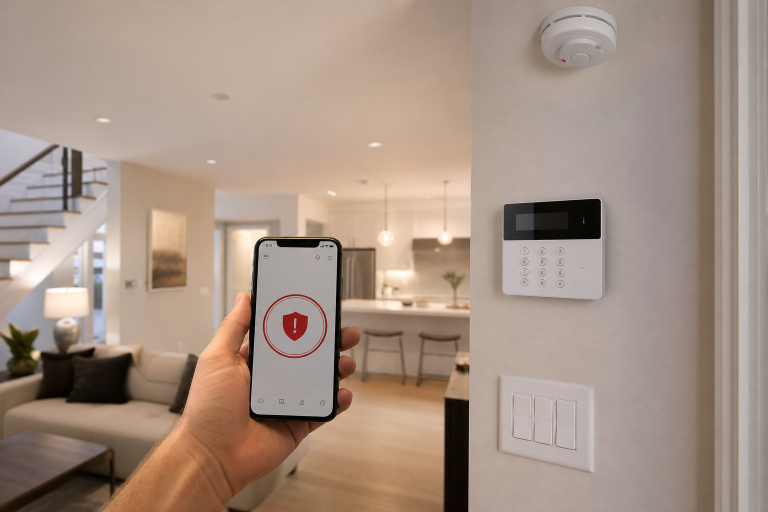
Insurers often distinguish between three categories. The first is basic physical protection, such as deadbolts and window locks. The second is an unmonitored alarm or camera setup that alerts only you. The third is a centrally monitored system that can notify a monitoring center when a sensor or detector is triggered.
Per the Insurance Information Institute, dead-bolt locks, burglar alarms, and smoke alarms may help reduce premiums, while centrally monitored burglar and fire alarms can qualify for larger credits. In practice, that means a video doorbell alone may help your security plan, but it may not be enough to trigger an insurance discount by itself.
According to the National Association of Insurance Commissioners, available discounts vary by insurer and state, and homeowners should ask their carrier which protective devices qualify before buying equipment. That is the most important step, because a system that looks advanced to you may still fall outside your carrier’s approved categories.
Features insurers commonly recognize
The devices often mentioned by carriers fall into a short list of protective features rather than lifestyle features.
- Central station burglary monitoring
- Monitored smoke or fire alarms
- Monitored water leak detection, with some insurers
- Deadbolt locks on exterior doors
- Local burglar alarms, where accepted
Some insurers also offer separate smart-home or connected-device discounts. Those programs are carrier-specific, so they should not be assumed to apply just because your devices are app-connected.
What proof does an insurer usually require?
Carriers often ask for a monitoring certificate, a declarations page from the alarm provider, or a recent bill showing active service and the type of protection in place.
The proof matters because insurers usually discount verified protection, not just installed hardware. A self-installed kit that is no longer monitored may not qualify even if every sensor still works. Many carriers also want the installation or activation date, the monitoring company name, and confirmation that burglary, fire, or both are included.
Some companies accept documentation during a policy change mid-term. Others apply the discount only at renewal. The NAIC advises consumers to ask their insurer which documents are required and when the credit takes effect, because those details vary by company.
Documents worth gathering before you call
A short file of paperwork can make this process much easier.
- Monitoring certificate or welcome letter
- Recent invoice showing active professional monitoring
- Equipment summary listing burglary, smoke, fire, or water sensors
- Installation completion record, if professionally installed
- Your current policy number and renewal date
How much can a home security insurance discount actually save?
Up to 20 percent is the widely cited ceiling from the Insurance Information Institute, but many homeowners will see a smaller discount because the actual amount depends on the insurer, state, and the exact protection verified.
For example, if a carrier offers only a modest credit for burglary monitoring, the least expensive qualifying monitored plan may make more financial sense than a premium package with indoor cameras, smart lighting, and automation features you do not need for insurance purposes. On the other hand, if you already want monitored smoke detection for safety, the insurance credit can help offset part of the service cost.
According to the Federal Trade Commission, home security companies may offer long-term contracts, equipment financing, and monthly monitoring plans, so consumers should review the full contract terms before signing. A discount on insurance does not automatically make a high-fee monitoring contract a good deal.
Do smart cameras, video doorbells, and DIY systems count?
Sometimes they do, but many insurers treat them differently from monitored alarm systems and may offer little or no discount for them alone.
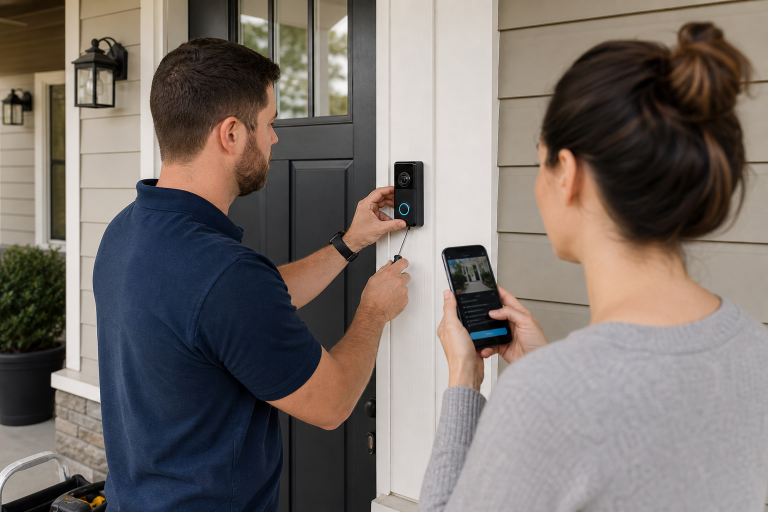
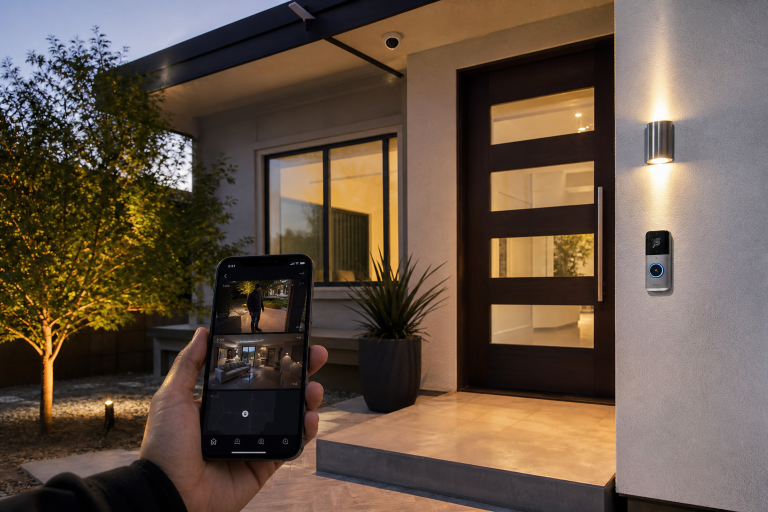
This is where homeowners often overestimate what qualifies. Cameras can help document activity and improve awareness. A video doorbell can help you screen visitors. But an insurer may still classify those devices as convenience or loss-mitigation tools rather than as monitored protective systems.
DIY systems can qualify if they include professional monitoring and your carrier accepts that provider’s documentation. The deciding factor is usually not whether you installed the sensors yourself. It is whether the system meets the carrier’s underwriting definition for monitored protection.
If you are comparing options, Abodence’s guide to security camera installation cost can help you separate camera spending from insurance-focused alarm spending.
When a simpler setup may be enough
A lower-cost monitored burglary package may be the better buy if your only goal is a home security insurance discount.
Many homeowners do not need an extensive smart-home bundle to qualify. If your insurer confirms that central monitoring is the threshold, paying extra for camera storage, smart locks, or automation scenes may improve convenience but may not increase the discount.
Which questions should you ask your insurer before buying anything?
The best call starts with qualification rules, not product shopping, because the insurer can tell you exactly which protections count on your policy.
- Which protective-device discounts are available on my policy?
- Do you require professional monitoring, or do local alarms count?
- Do burglary and fire monitoring receive different credits?
- Do DIY systems qualify if they are professionally monitored?
- What proof do you need to apply the discount?
- Will the discount start now or at renewal?
- Are there approved providers, or can I choose any licensed monitoring company?
What should you compare in a security contract if insurance savings are the goal?
Monthly monitoring cost, contract length, cancellation terms, and the exact monitoring type matter more than premium add-ons when you are buying primarily for an insurance credit.
The FTC advises consumers to review whether the company requires a long-term contract, charges early termination fees, or finances equipment separately from monitoring. Those terms can change the math quickly. A small annual insurance discount can disappear if the contract locks you into high monthly fees.
Look closely at the service description. Some plans monitor only intrusion sensors. Others include smoke, carbon monoxide, or water alerts. If your insurer offers a larger discount for combined burglary and fire monitoring, that distinction matters more than cosmetic hardware upgrades.
It is also worth asking whether the provider can issue a certificate that clearly states the type of monitoring. If the paperwork is vague, the insurer may ask for more documentation before applying the credit.
Can adding fire or leak detection improve the discount?
In some cases, yes, because insurers often value monitored fire protection separately from burglary protection, and some carriers also promote water-loss prevention devices.
According to the Insurance Institute for Business & Home Safety, insurers may offer mitigation-related incentives when a protective measure reduces loss potential, although the exact credit depends on the carrier and state program. While IBHS is better known for resilience guidance than alarm pricing, the same insurance logic applies: verified loss prevention is what carriers tend to reward.
For home security systems, that usually means smoke and heat detection tied to monitoring can matter more to underwriting than cameras alone. Water shutoff and leak-alert programs also exist with some insurers, but they are not universal and should be confirmed in writing before you count on savings.
If your concern follows a recent incident, Abodence also has practical guidance on home security after a break-in and on lock rekeying after a forced entry.
What mistakes keep homeowners from getting the discount?
Common problems are assuming all smart devices qualify, failing to submit proof, and focusing on equipment features instead of the insurer’s actual discount rules.
Another frequent issue is forgetting to update the policy after installation. Insurers usually do not apply a protective-device credit automatically just because you bought a system. You normally have to request the review and provide documentation.
Some homeowners also cancel monitoring after the first term and forget that the discount may no longer apply. If your policy credit depends on active central monitoring, the carrier should be notified when that service ends.
Vague quotes are another problem. If a provider cannot clearly tell you whether the plan includes central station monitoring for burglary, fire, or both, there is a good chance the paperwork will be just as unclear when your insurer asks for proof.
Is a home security insurance discount worth it on its own?
Sometimes yes, but usually only when the qualifying system also matches a real security need in your home.
If you already want monitored intrusion or fire protection, the discount is a useful financial offset. If you are buying a system only for premium savings, run the numbers carefully. A modest annual credit may not justify a long contract or expensive equipment package.
The practical approach is to start with your insurer’s rules, then price the least expensive system that clearly qualifies. If a basic monitored plan earns the same credit as a premium bundle, the cheaper plan is the rational choice. If no meaningful discount is available on your policy, you can decide on security features based on protection and convenience rather than on expected insurance savings.
If you want help comparing a qualifying setup against your policy requirements please call one of the listed specialists for a free, no-obligation discussion.
Sources: Insurance Information Institute, National Association of Insurance Commissioners, Federal Trade Commission, Insurance Institute for Business & Home Safety