HVAC Brand Comparisons: A Step-by-Step Guide for Homeowners
HVAC comparisons work best when you start with the system your home actually needs, then use brand differences to narrow the field. That approach is more reliable than shopping by logo, ad claims, or a salesperson’s favorite line.

Call for a free estimate:
Most homeowners should use a clear way to compare efficiency ratings, compressor types, warranty terms, cold-climate performance, repair support, and quote details without getting pulled into vague promises. According to the U.S. Department of Energy, central air conditioner performance depends heavily on proper sizing, installation, and duct condition, which means the best-known brand can still underperform if the design or installation is wrong.
What should you compare before you look at HVAC brands?
Your home’s load calculation, fuel type, climate, and duct setup should come first, because those factors determine which equipment categories even make sense. The Air Conditioning Contractors of America Manual J is the industry standard for residential load calculations, and ACCA Manual S covers equipment selection from that load.
If a contractor has not measured the home and discussed insulation, windows, orientation, and duct layout, the brand conversation is premature. A two-stage or variable-speed system may be a good fit in one house and unnecessary in another. In some cases, the right answer is a simpler single-stage system with better duct corrections rather than a pricier model with more features.
Start with four basics:
- The equipment type: gas furnace with AC, heat pump, dual-fuel, or ductless
- The size range supported by a load calculation
- Your climate, especially whether winter heat pump performance matters
- Your budget for both installation and long-term operating cost
How do HVAC efficiency ratings help with brand comparisons?
SEER2, EER2, and HSPF2 ratings give you a standardized way to compare efficiency across brands, as long as you compare similar equipment types and sizes. According to ENERGY STAR, central air conditioners and heat pumps must meet specific efficiency thresholds that vary by product category and region.
For cooling equipment, SEER2 is the seasonal efficiency rating most homeowners see first. EER2 is useful when high outdoor temperatures matter. For heat pumps, HSPF2 indicates heating efficiency over a season. These ratings do not tell you everything about comfort, sound, or dehumidification, but they are useful for apples-to-apples screening.
Published AHRI matched-system data is especially important here. The Air-Conditioning, Heating, and Refrigeration Institute directory lists certified performance for specific indoor and outdoor combinations. A brand may advertise a headline rating, but your quoted coil and air handler or furnace pairing determines the actual certified result.
If you want a deeper look at equipment behavior beyond headline efficiency, Abodence also covers HVAC variable-speed systems.
Which HVAC features matter most when comparing brands?
Compressor and blower design usually matter more than cosmetic differences, because they affect comfort, sound, and how steadily the system runs. Manufacturer product data sheets typically identify whether the system is single-stage, two-stage, or variable-capacity, and whether the indoor blower is fixed-speed, multi-speed, or variable-speed.
Single-stage, two-stage, and variable-capacity
Single-stage equipment runs at full output when on. Two-stage equipment can run at a lower level part of the time. Variable-capacity systems can modulate across a wider range. Carrier product literature, Trane product specifications, and Lennox product specifications all describe these operating differences in their published model documentation.
For many homes, two-stage or variable-capacity equipment improves temperature consistency and humidity control. A smaller home with short duct runs and modest comfort complaints may not benefit enough to justify the extra cost.
Communicating controls
Brand-specific communicating systems can coordinate outdoor units, furnaces or air handlers, and thermostats more precisely than basic 24-volt controls. Daikin, Carrier, and Trane each publish communicating-system compatibility details in their product documentation. The tradeoff is that replacement thermostats and future component matching can become more brand-specific.
Sound ratings
Published decibel ratings can help if the outdoor unit sits near a patio or bedroom window. Manufacturer submittals often list sound levels for condenser units, but compare similar operating conditions and product classes. A quiet premium model in one brand should be compared with a quiet premium model in another, not with an entry-level unit.
How should you compare HVAC warranties across brands?
The written warranty terms matter more than the brochure summary, because registration rules, covered parts, and exclusions vary by manufacturer. According to the Federal Trade Commission, warranty coverage should be reviewed in the actual written terms, not assumed from marketing language.
Look for these details in the manufacturer warranty document:
- Parts coverage length
- Whether registration changes the coverage term
- Compressor or heat exchanger coverage
- Transferability to a new homeowner
- Exclusions tied to installation, maintenance, or matched components
- Whether labor is included or only available through a separate contractor plan
Most manufacturer warranties cover parts, not labor. That is where many quotes become hard to compare. One contractor may include a labor warranty from the installing company, while another may not. Ask for both the manufacturer warranty name and the installer’s labor warranty in writing.
Do repair parts and dealer support differ by HVAC brand?
Local support can differ a lot even when published specifications look similar, because your experience after installation depends on who services the equipment in your area. Manufacturer dealer distributor networks can indicate local presence, but the practical question is narrower: who will maintain and repair this exact system after the sale?
Call for a free estimate:
Ask each bidder how warranty parts are handled, whether they stock common items locally, and whether they service the equipment they install with their own technicians or subcontract service calls. This is one area where a less famous brand with strong local support can be the safer choice than a premium label with limited area coverage.
How do you compare heat pump brands for cold weather?
Low-temperature heating data matters more than broad marketing claims if you are comparing heat pumps in a colder climate. According to the U.S. Department of Energy, modern air-source heat pumps can provide efficient heating in cold climates, but performance varies by model and installation.
Ask for the submitted performance data at outdoor temperatures relevant to your area, such as 17 degrees Fahrenheit and 5 degrees Fahrenheit if those conditions are realistic where you live. Manufacturers such as Mitsubishi Electric, Daikin, and Bosch publish detailed heating capacity tables in engineering or submittal documents for many models. Those tables show whether the unit maintains capacity or relies more heavily on backup heat as temperatures drop.
If you are replacing a working furnace in a very cold region, a dual-fuel setup may be worth comparing. In milder regions, a standard heat pump may be enough. The right answer depends on the load calculation and the local winter temperature, not on a generic claim that one brand is “better in the cold.”
What is the best step-by-step method for HVAC brand comparisons?
A written side-by-side worksheet is the most reliable way to compare bids, because it forces every contractor and brand into the same criteria. Use one page or spreadsheet and fill in each line from the quote and manufacturer documents.
- Confirm the equipment type. Write down whether each quote is for a heat pump, AC with furnace, dual-fuel system, or ductless setup.
- Verify sizing method. Note whether the contractor performed or provided a Manual J load calculation and selected equipment per Manual S.
- Record exact model numbers. Generic phrases such as “3-ton high-efficiency system” are not enough for comparison.
- Check AHRI matched-system certification. Make sure the indoor and outdoor components are listed as a certified combination.
- Compare efficiency ratings. List SEER2, EER2, and HSPF2 where applicable.
- Identify operating type. Mark single-stage, two-stage, or variable-capacity, plus the blower type.
- Review warranty documents. Separate manufacturer parts coverage from installer labor coverage.
- Compare included scope. Note thermostat, pad, line set, drain work, electrical upgrades, duct modifications, permits, and startup testing.
- Evaluate local service support. Ask who will service the system and what response process applies after installation.
This is where many quote problems show up. Two proposals can look similar on price while covering different scopes, different controls, and different warranty terms.
What common mistakes make HVAC brand comparisons unreliable?
The biggest mistakes are comparing brands without exact model numbers, ignoring installation scope, and assuming higher efficiency always means lower total cost. Those errors can make a weaker quote look stronger than it is.
Comparing series names instead of model numbers
Many brands use broad family names that include multiple efficiency levels and feature sets. Without exact model numbers and the matched indoor combination, you may be comparing unlike systems.
Letting price hide missing scope
A lower bid may exclude permits, thermostat upgrades, line set replacement, drain improvements, or duct corrections. Those items can appear later as change orders. Written scope protects you more than a low number.
Paying for premium features that your home will not use
A top-tier communicating variable-capacity system can be a good fit. It can also be more system than a home needs if the ductwork is undersized, the thermostat location is poor, or the comfort problem is really an airflow issue in one room. In that case, targeted duct work or balancing may do more than a premium brand upgrade.
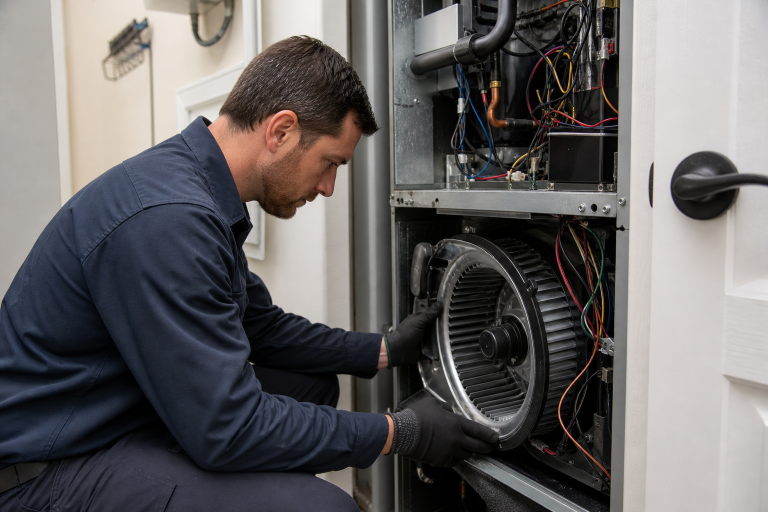
For related HVAC troubleshooting context, Abodence also explains HVAC blower motor problems that can affect airflow and comfort.
How much should brand affect the final HVAC decision?
Brand should usually be a secondary decision after system design, exact equipment match, and installer quality are clear. Manufacturer differences are real, especially in controls, warranty language, available efficiency tiers, and cold-weather model options. Still, the installation details often have more impact on day-to-day performance than the badge on the cabinet.
That is why a careful comparison often ends with two or three acceptable options rather than one winner. If one quote includes a documented load calculation, complete scope, certified match, and clear warranty terms, that can outweigh minor brand prestige differences. If two systems are equally well specified, then features such as sound level, thermostat ecosystem, and local service support become useful tie-breakers.
FAQ
Is one HVAC brand always more reliable than the rest?
No, reliability cannot be reduced to a universal brand winner because model design, installation quality, maintenance, and local service support all affect the outcome. The more dependable comparison is between exact model families, warranty terms, and the installing contractor’s scope and setup process.
Should you choose the highest SEER2 rating available?
No, the highest efficiency option is not automatically the best value because the payback depends on climate, run time, utility rates, and installed price. A mid-range system with proper sizing and commissioning can be the better buy for many homes.
Are extended labor warranties worth it?
Sometimes, added labor coverage can make sense when the price is reasonable and the terms are clear about what is covered and who provides service. The useful comparison is between the written labor terms, claim process, and length of coverage, not just the phrase “extended warranty.”
Can you compare HVAC brands from online reviews alone?
No, consumer reviews rarely show whether the system was sized correctly, matched correctly, or installed to published standards. Reviews may help you assess communication and scheduling, but they are weak evidence for technical comparison.
If you want help sorting through quotes or narrowing down system options, Abodence can connect you with support for your specific HVAC situation.
Sources: Air Conditioning Contractors of America Manual J, Air Conditioning Contractors of America Manual S, Air-Conditioning, Heating, and Refrigeration Institute Directory, Carrier product specifications, Trane product specifications, Lennox product specifications, Daikin product documentation, Mitsubishi Electric engineering documents, Bosch HVAC submittal documents