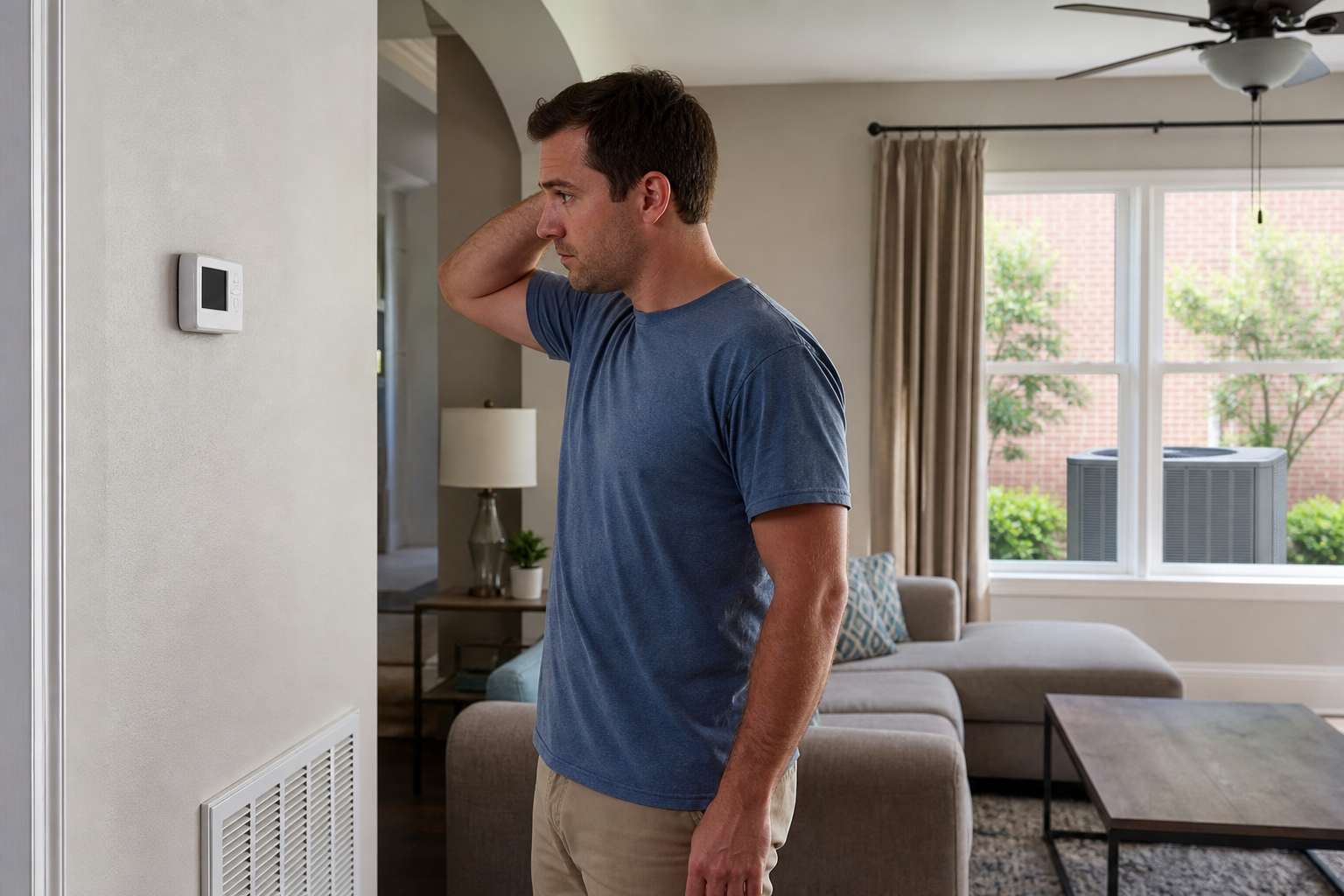
Warm Air From Your A/C? Tactical Troubleshooting Steps That Can Fix It Fast
Warm air from your A/C usually points to a short list of problems you can safely check before scheduling service: thermostat settings, a dirty filter, a tripped breaker, blocked outdoor airflow, or an iced evaporator coil.

Call for a free estimate:
Some of those fixes are simple. Others are signs to stop troubleshooting and call a licensed HVAC technician, especially if the system has frozen up, the outdoor unit will not run, or you suspect a refrigerant issue.
This guide stays with quick, homeowner-safe checks. It also separates the problems that are worth a service call from the ones that are often solved in a few minutes.
What should you check first when your A/C is blowing warm air?
Start with the thermostat, the air filter, and the breaker panel because those are the most accessible checks and they can stop cooling even when the equipment itself is still in working order.
According to the U.S. Department of Energy, clogged filters can lower an air conditioner’s efficiency and should be cleaned or replaced regularly. The same DOE guidance also notes that outdoor condenser coils need to stay free of debris so heat can leave the system properly.
- Set the thermostat to Cool, not Fan or Heat.
- Lower the set temperature at least 3 to 5 degrees below the room temperature.
- Make sure the fan setting is on Auto. If it is on On, the blower can keep moving air between cooling cycles, which may feel warm.
- Check the filter and replace it if it looks loaded with dust.
- Look at the electrical panel for a tripped breaker, possibly labeled A/C, air handler, furnace, or condenser.
- Confirm the outdoor unit has power and is not buried in leaves, grass clippings, or other debris.
If one of those checks solves the problem, you may not need service at all.
Could the thermostat be the whole problem?
Yes, incorrect thermostat settings can make a healthy system seem broken, especially when the fan is set to run continuously or the schedule has changed without you noticing.
A thermostat issue is more likely if the system was cooling recently and suddenly started blowing room-temperature air without unusual noises, icing, or breaker trips. Check whether the thermostat is following a programmed schedule, using a temporary hold, or switched to a different system mode. If it uses batteries, replace them if the display is dim or unresponsive.
Per ENERGY STAR, programmable and smart thermostat settings can affect both comfort and system run time, so verifying mode and schedule is a practical first step before assuming equipment failure.
If the thermostat clicks on but the outdoor unit does not start, the problem may be elsewhere. At that point, move to power and airflow checks.
Can a dirty air filter make an A/C blow warm air?
Yes, a badly clogged filter can restrict airflow enough to reduce cooling and, in some cases, contribute to an evaporator coil freezing over.
When airflow drops, the system may keep running but deliver weak or gradually warmer air. You might also notice longer run times, some rooms cooling poorly, or ice on the indoor refrigerant line near the air handler. DOE maintenance guidance supports routine filter replacement for this reason.
What to do with the filter
Install the correct size and airflow direction, then let the system run for a while after replacement to see whether cooling returns. If you find heavy dust buildup, check the filter slot for gaps and make sure the replacement is seated properly.
Do not jump straight to a high-MERV filter just because it sounds better. Your system has to be able to handle the added resistance. If you are not sure what filter type the equipment is designed for, the installation instructions or the servicing contractor can confirm it.
Why is the indoor unit running but the outside unit not coming on?
A power problem is one of the most common reasons the indoor blower runs while the condenser stays off.
Central air systems often have separate electrical components for the indoor and outdoor sections. A tripped breaker, a pulled disconnect near the condenser, or a blown fuse can leave you with airflow but no cooling. According to the National Electrical Code consumer guidance from NFPA, HVAC equipment requires proper overcurrent protection and disconnection, which is why a partial power loss can affect one section of the system but not the other.
Check the breaker, if it is tripped, reset it one time. If it trips again, stop there and call for service. Repeated resetting can mask an electrical fault and is not a homeowner fix.
Also look at the outdoor disconnect box if it is plainly visible and accessible. Do not open panels or handle internal electrical parts. If the disconnect appears off or missing after recent yard work or service, that is enough information to give the technician.
What does ice on the refrigerant line or indoor coil mean?
Visible ice usually means the system should be turned off and evaluated, because continued operation can strain the equipment and the root cause is often not something you can safely fix beyond basic airflow checks.
Call for a free estimate:
According to Carrier’s ac guidance, frozen coils can be associated with restricted airflow or refrigerant-related problems. Carrier advises turning the system off and allowing it to thaw before service if ice is present.
If you see ice, switch cooling off. If your thermostat allows it, run the fan only to help thaw the coil, and replace the filter if it is dirty. If the system ices up again after thawing, that points away from a one-time airflow issue and toward a service diagnosis.
Could the outdoor unit be blocked or dirty?
Yes, poor heat dissapation at the condenser can reduce cooling performance, especially when the coil is packed with debris or the unit has little clearance for airflow.
The DOE says outdoor condenser coils should be kept clean and the area around the unit should stay clear of debris. A quick visual check is appropriate for a homeowner. Leaves, cottonwood fluff, mulch, and grass clippings can all collect on the coil surface.
What you can do safely
Clear away loose debris around the cabinet, trim vegetation back, and make sure airflow around the unit is not blocked by stored items or dense plant growth. Keep the thermostat off while cleaning around the condenser, and avoid bending the delicate coil fins.
If the coil looks greasy, heavily matted, or damaged, that moves beyond a quick troubleshooting step. A proper cleaning may require the contractor to open the unit and clean from the inside out.
When is warm air a sign of a refrigerant or compressor problem?
Weak cooling with the blower running and the outdoor unit humming, short cycling, icing that returns after airflow issues are corrected, or a condenser that will not start can all point to faults that need professional diagnosis.
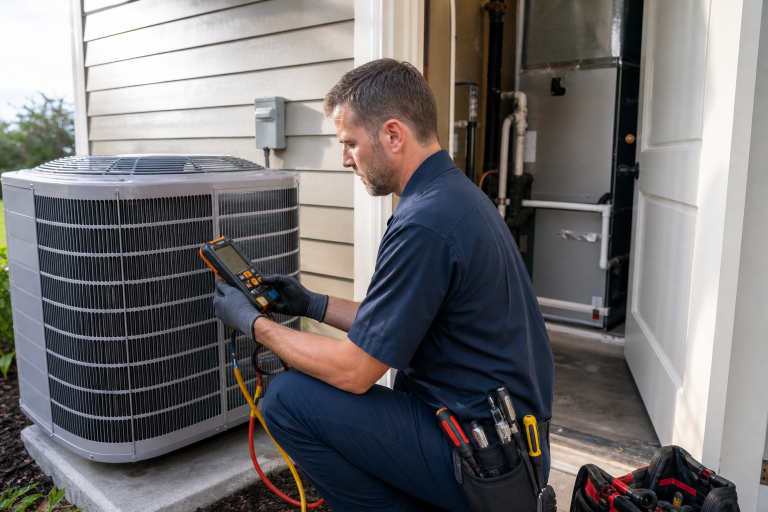
Under EPA refrigerant rules, refrigerant handling is regulated and must be performed by properly certified technicians. That means a homeowner-safe checklist ends before gauges, refrigerant charging, or sealed-system repair.
Common service-call causes in this category include low refrigerant from a leak, a failed capacitor, a contactor problem, a compressor fault, or a control issue. Those are real possibilities and a vague diagnosis like “it just needs refrigerant” is not enough. A written service explanation should identify the fault, the test result, and the proposed repair.
If your system is older, you may also want to compare repair versus replacement options. Abodence covers broader equipment choices in this HVAC brand comparison guide.
How can you tell whether the problem is airflow, controls, or a failing blower motor?
Air coming from the vents but feeling weak often points to airflow trouble, while no air at all points more toward the indoor blower, its controls, or a power problem.
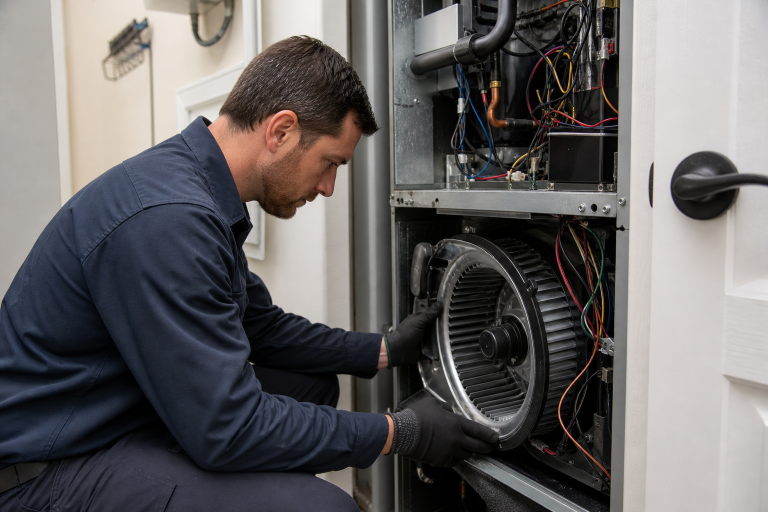
If some rooms have airflow and others do not, look for closed supply registers or a recently changed damper setting. If every register is weak, the filter, evaporator coil, or blower assembly may be involved. If the system makes noise but little air reaches the rooms, the blower section deserves attention. For a deeper look at that side of the system, Abodence has a related guide on HVAC blower motor problems.
One practical distinction helps here. Warm air with strong airflow often points to a cooling problem. Warm air with weak airflow often starts with an airflow problem.
What mistakes make this problem harder to diagnose?
Resetting breakers repeatedly, changing multiple settings at once, and calling for replacement before basic checks are done are the most common ways homeowners end up with a muddier diagnosis and a less useful service visit.
Keep the process simple and sequential.
- Change one thing at a time, then wait to see the result.
- Do not keep lowering the thermostat far below normal just to force cooling.
- Do not run the system in cooling mode if the coil or refrigerant line is iced over.
- Do not assume warm air means the whole system needs replacement.
- Do not accept a vague quote that lists parts without explaining the tested fault.
Record whether the outdoor unit runs, whether airflow is strong or weak, whether ice is visible, and whether the breaker tripped. Those details make the service call more efficient.
When should you call an HVAC technician right away?
Immediate service makes sense when the breaker trips again, the system ices up, the outdoor unit will not run, burning smells are present, or the equipment starts and stops abnormally.
Those symptoms move beyond quick troubleshooting because the likely causes involve electrical components, the sealed refrigerant circuit, or failing motors and controls. If your home is still getting some airflow but no cooling, turn the system off until it can be checked, especially if ice is visible.
If the issue turns out to be poor overall system performance rather than a single failed part, an energy review may help you avoid paying for the wrong upgrade. Abodence explains that process in this HVAC energy audit guide.
Call for a free estimate:
FAQ
Why is my A/C blowing warm air after I changed the thermostat setting?
A schedule, fan setting, or power issue may still be interrupting cooling even after the setpoint changes. Check that the thermostat is in Cool mode, the fan is on Auto, and the outdoor unit is actually running.
Should you turn the A/C off if it is blowing warm air?
Shutting the system off is the safer choice if you see ice, hear unusual electrical noises, or notice repeated breaker trips. If there is no ice and the issue appears to be a setting or filter problem, brief troubleshooting is reasonable.
Can low refrigerant cause warm air from the vents?
Yes, low refrigerant can reduce cooling capacity, but it usually means there is a leak or another sealed-system issue that needs a certified technician under EPA rules. Adding refrigerant without finding the cause is not a complete repair.
How long should you wait after changing the filter or thermostat?
About 10 to 20 minutes is usually enough to tell whether normal cooling is returning, assuming the system is not frozen. If the air stays warm after that, move to the next check or schedule service.
Is warm air always a sign that the A/C needs replacement?
No, many cases come down to settings, airflow restrictions, or a single failed component. Replacement is a separate decision that should follow a clear diagnosis and a written repair estimate.
If you have worked through the safe checks and the system is still blowing warm air, getting a written HVAC diagnosis is the practical next step. Please call one of the listed specialists for a free, no-obligation discussion.
Sources: Carrier homeowner air conditioner troubleshooting guidance