Eco-Friendly Pest Control: The Hard Truth About Whether It Works as Well as Chemicals
Eco-friendly pest control can be effective, but it is not equally effective for every pest, every infestation level, or every part of a treatment plan.
That is the practical answer most homeowners need first. If you are dealing with a few ants at an entry point, a mosquito problem in the yard, or early-stage garden pests, lower-toxicity and organic options may work well. If you are dealing with termites inside structural wood, a large cockroach infestation, or rodents repeatedly entering the house, conventional pesticides or a broader professional program are often more reliable.
The useful comparison is not organic versus chemical as a simple winner. It is whether the product matches the pest, the location, and the severity of the problem. According to the U.S. Environmental Protection Agency, integrated pest management, usually called IPM, emphasizes inspection, monitoring, prevention, and targeted treatment rather than routine blanket spraying. That framework matters more than whether a label sounds natural.
For many homes, the best result is a mixed approach: exclusion and sanitation first, lower-risk products where they are likely to work, and conventional products only where the evidence supports them.
Are eco-friendly pest control options actually effective?
Many lower-toxicity products work well when they are used for the right pest and in the right setting.
That includes products and methods such as baits, traps, boric acid, diatomaceous earth, insecticidal soaps, certain essential-oil-based products, and biological controls used outdoors. The National Pest Management Association describes modern pest control as a process built around inspection, identification, and targeted treatment, not just spraying. In practice, that means a well-chosen non-chemical or reduced-risk option can solve a real problem, especially when the infestation is still limited.
What often gets lost in marketing is that effectiveness has two parts. First, can the product kill, repel, or suppress the pest under controlled conditions? Second, can it solve your actual household problem over time? A product may do the first and still fail at the second if the pest keeps returning through gaps, moisture problems, food access, or untreated nesting areas.
For example, insect growth regulators, baits, and dusts can be very targeted and highly effective even though homeowners may not think of them as the classic spray treatment. On the other side, some plant-oil sprays may kill on contact but have limited residual effect, which means they may need more frequent reapplication to keep working.
When do eco-friendly or organic pest treatments work best?
The strongest use cases are small, localized, or prevention-focused pest problems where the treatment can directly reach the pest or interrupt its access to the home.
Ants, pantry pests, and occasional invaders
Baits, exclusion work, and sanitation are often enough for ants, pantry moths, beetles, and similar pests. The key is that these pests often follow food sources or travel routes that can be identified and interrupted. A lower-toxicity bait may outperform a broad spray because it targets the foraging pattern instead of just the visible insects.
Outdoor mosquito reduction
Source reduction is one of the most effective non-chemical measures for mosquitoes. According to the Centers for Disease Control and Prevention, emptying standing water from containers around the home helps reduce mosquito breeding. That does not eliminate every mosquito issue, but it addresses the life cycle directly. For homeowners comparing options, that can matter more than choosing between an organic yard spray and a conventional one.
If mosquitoes are the issue, Abodence also has a related guide on mosquito and tick season risks.
Garden and landscape pests
Biological controls, horticultural oils, neem-based products, and insecticidal soaps can work well in landscape settings, especially when the pest is correctly identified and the treatment is timed well. University extension guidance commonly treats these as useful tools, but timing and coverage are critical. A product that works on soft-bodied insects on contact may do very little for hidden pests or insects protected by waxy coatings.
Prevention programs
Sealing gaps, reducing clutter, storing food in hard containers, correcting moisture problems, and trimming vegetation away from the structure can reduce pest pressure without relying on routine chemical use. According to the U.S. Department of Housing and Urban Development, pest prevention in housing includes removing food, water, and shelter sources and blocking pest entry points.
When are conventional chemical treatments usually more effective?
Serious structural pests, heavy infestations, and pests that hide deep in voids or nesting areas usually respond better to conventional products or a professional treatment plan that includes them.
Termites are the clearest example. The University of California Agriculture and Natural Resources Statewide Integrated Pest Management Program explains that subterranean termite control commonly relies on soil-applied termiticides, bait systems, or wood treatments, chosen based on the construction type and infestation pattern. Once termites are active in or around structural components, a simple organic spray is rarely a complete answer.
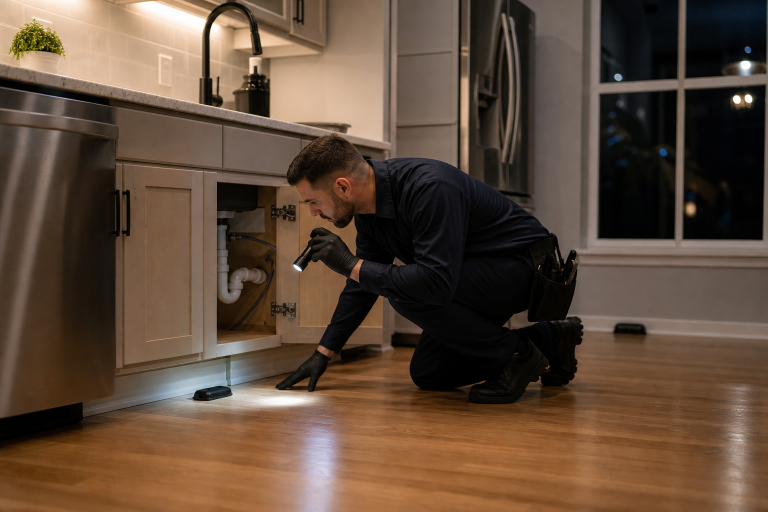
Cockroaches can fall into the same category when the infestation is established behind walls, under cabinets, or around plumbing chases. A few visible roaches do not tell you where the main harborages are. In those cases, targeted professional products, often paired with monitoring and sanitation, are usually more dependable than natural repellents sold for general household use.
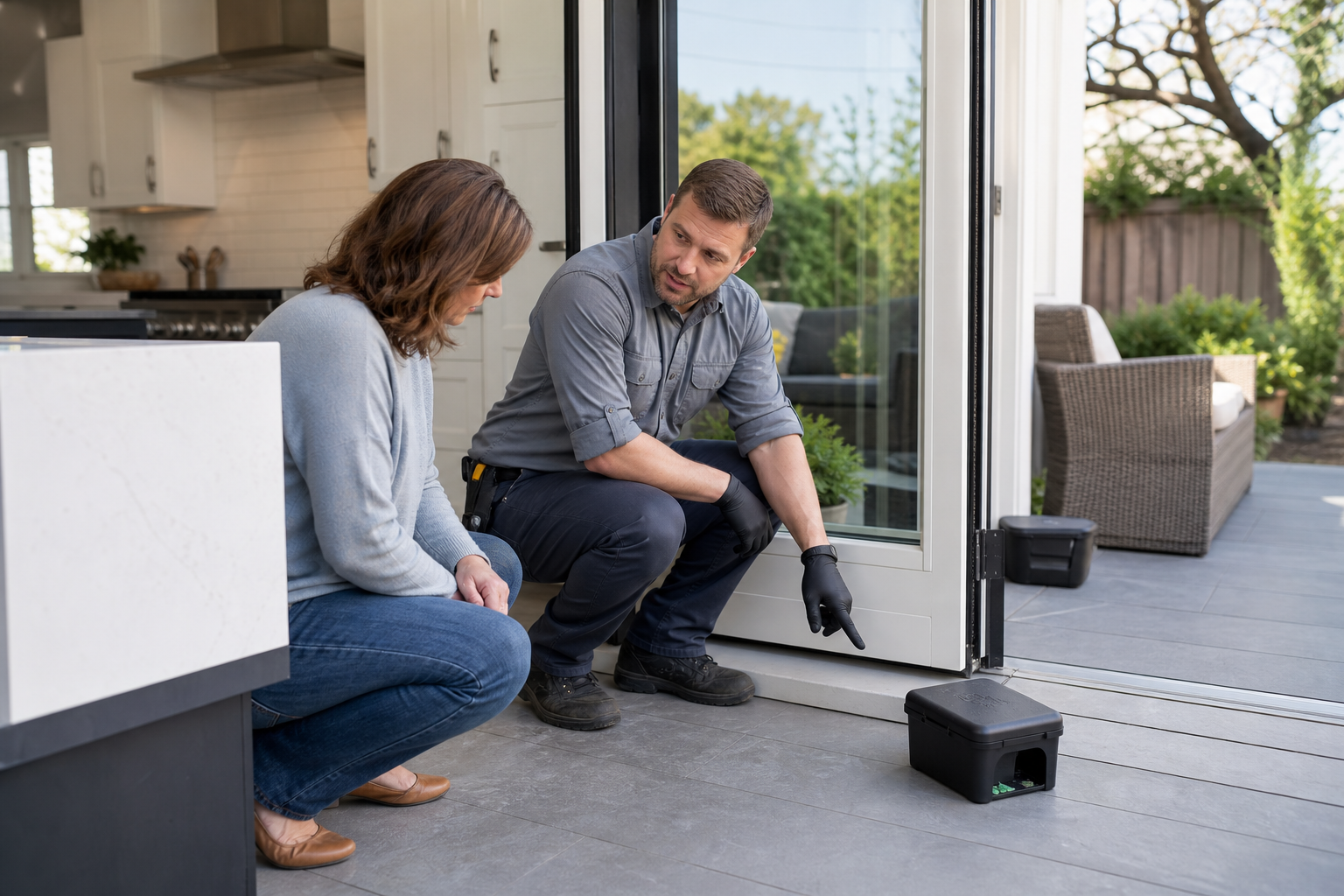
Rodents are another area where the pesticide type can distract from the real issue. Entry-point sealing, trapping, and habitat correction are often more important than any spray or scent-based deterrent. The Centers for Disease Control and Prevention recommends sealing holes and gaps, setting traps, and cleaning up food sources as core rodent-control steps. If mice or rats are getting inside, repellents alone are usually the weak option.
For a related prevention-focused read, see Abodence on pest control safety for parents and pet owners.
What does “organic” or “eco-friendly” really mean in pest control?
Those terms usually describe how a product is marketed, not a guarantee of equal performance, equal safety in every situation, or a uniform regulatory category.
The EPA regulates pesticides based on active ingredients, use directions, and risk review, including certain minimum-risk products that are exempt from federal registration under specific conditions. A homeowner shopping by buzzword can easily miss the more important questions: What is the active ingredient? What pest is it labeled for? Where can it legally be used? How long is it expected to last?
Some products marketed as “natural” still kill on contact. Others act as repellents, which can reduce activity without solving the source problem. By contrast, some conventional products are designed for residual control, bait transfer, or growth disruption, which can make them more effective for hidden infestations.
How do professionals compare eco-friendly and chemical pest control in real homes?
Most effective service plans compare methods by fit, not by ideology.
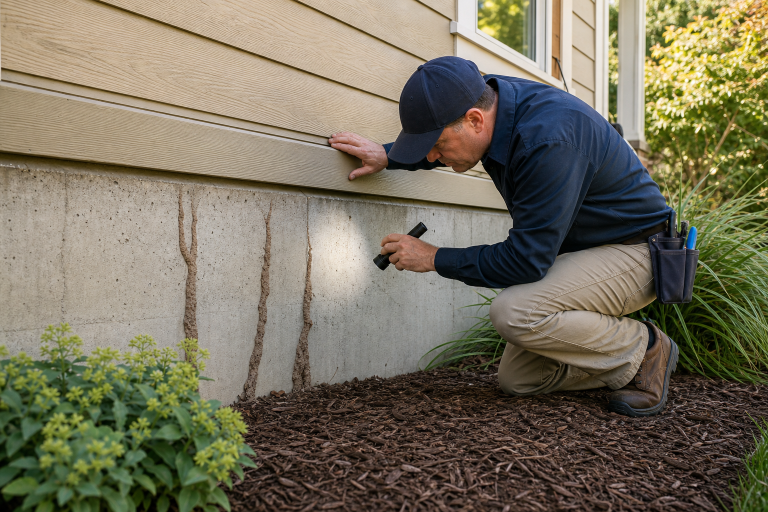
A competent pest professional should start with inspection, pest identification, and a clear explanation of why a given treatment is being proposed. If the problem can be solved with exclusion, trapping, or a targeted lower-risk product, that should be on the table. If the company jumps straight to recurring spray service without explaining the pest pressure, entry conditions, or treatment scope, that is a sign to ask more questions.
Look for specifics in the proposal rather than broad reassurance. You want to know the target pest, the treatment areas, the non-chemical steps included, and whether follow-up is based on monitoring or on a preset schedule. Vague language is common in this trade, especially around “green” packages that sound safer or more advanced but are not clearly defined.
In many cases, the most credible answer is mixed treatment. A professional may use traps and sealing for rodents, baits for ants or roaches, and a limited chemical application only where activity is confirmed. That is often a better plan than choosing one side of the organic-versus-chemical debate and forcing every pest problem into it.
Which pests are good candidates for lower-toxicity treatment, and which usually are not?
The dividing line is usually whether the pest is exposed and localized, or hidden and established.
- Often good candidates for lower-toxicity treatment: ants in limited trails, pantry pests, some yard mosquitoes when breeding sites are removed, fleas in mild cases with environmental control, and many garden pests.
- Often poor candidates for lower-toxicity-only treatment: termites, large cockroach infestations, recurring rodent entry, and stinging insects in concealed nests inside wall voids.
- Mixed-case pests: spiders, silverfish, and occasional invaders may respond well if moisture control and exclusion are the real fix, but they may keep returning if those conditions remain.
This is why a cheaper, simpler fix is sometimes the right one. If insects are entering under a garage door sweep or through torn screens, replacing those materials may do more than upgrading to a stronger pesticide program.
What are common mistakes homeowners make with eco-friendly pest control?
One mistake is expecting a product choice to overcome a diagnosis problem. If the pest is misidentified, the treatment often fails no matter how natural or strong it is. Another common mistake is using repellents where baits or exclusion would make more sense. Repelling insects away from one visible area can leave the larger population untouched.
Frequency is another issue. Some organic and plant-based products break down faster and may need more frequent application to maintain control. If a homeowner compares one application of a short-residual product against a longer-lasting treatment, the conclusion may be less about chemistry and more about duration and convenience.
There is also a tendency to treat the symptom instead of the condition that supports the pest. Moisture, food access, clutter, and entry gaps are often the reason the problem persists. Without correcting those conditions, even a product that works at first may seem ineffective later.
How should you choose between eco-friendly and chemical pest control?
The practical choice depends on the pest, the infestation level, who lives in the home, and whether prevention steps can realistically solve most of the problem.
If the issue is limited and visible, start by asking whether sanitation, exclusion, trapping, or a lower-toxicity product is likely to work. If the pest is hidden, destructive, or well established, ask what evidence supports a stronger treatment and whether a targeted application can replace a broad one.
A useful quote should answer these questions:
- What pest has been identified?
- What non-chemical steps are included?
- What product type is being proposed, bait, trap, dust, growth regulator, or spray?
- What areas will be treated?
- What result should you realistically expect after the first visit?
- What follow-up is based on actual monitoring rather than an automatic schedule?
Is the safest and most effective answer usually one or the other?
For most homes, the best answer is a targeted plan that uses the least intensive method likely to work, then escalates only when the pest and conditions justify it.
That approach aligns with IPM principles and avoids a false choice. Some organic options are effective and worth using. Some chemical options are more reliable for severe or hidden infestations. The right standard is not whether a treatment sounds natural. The right standard is whether it is labeled for the pest, matched to the infestation, and supported by prevention steps that keep the problem from returning.
If you are comparing treatment options for a specific infestation, getting an inspection and a written scope of work is the clearest next step. Please call a listed specialist for a free, no-obligation discussion.
Sources: National Pest Management Association, University of California Agriculture and Natural Resources Statewide Integrated Pest Management Program