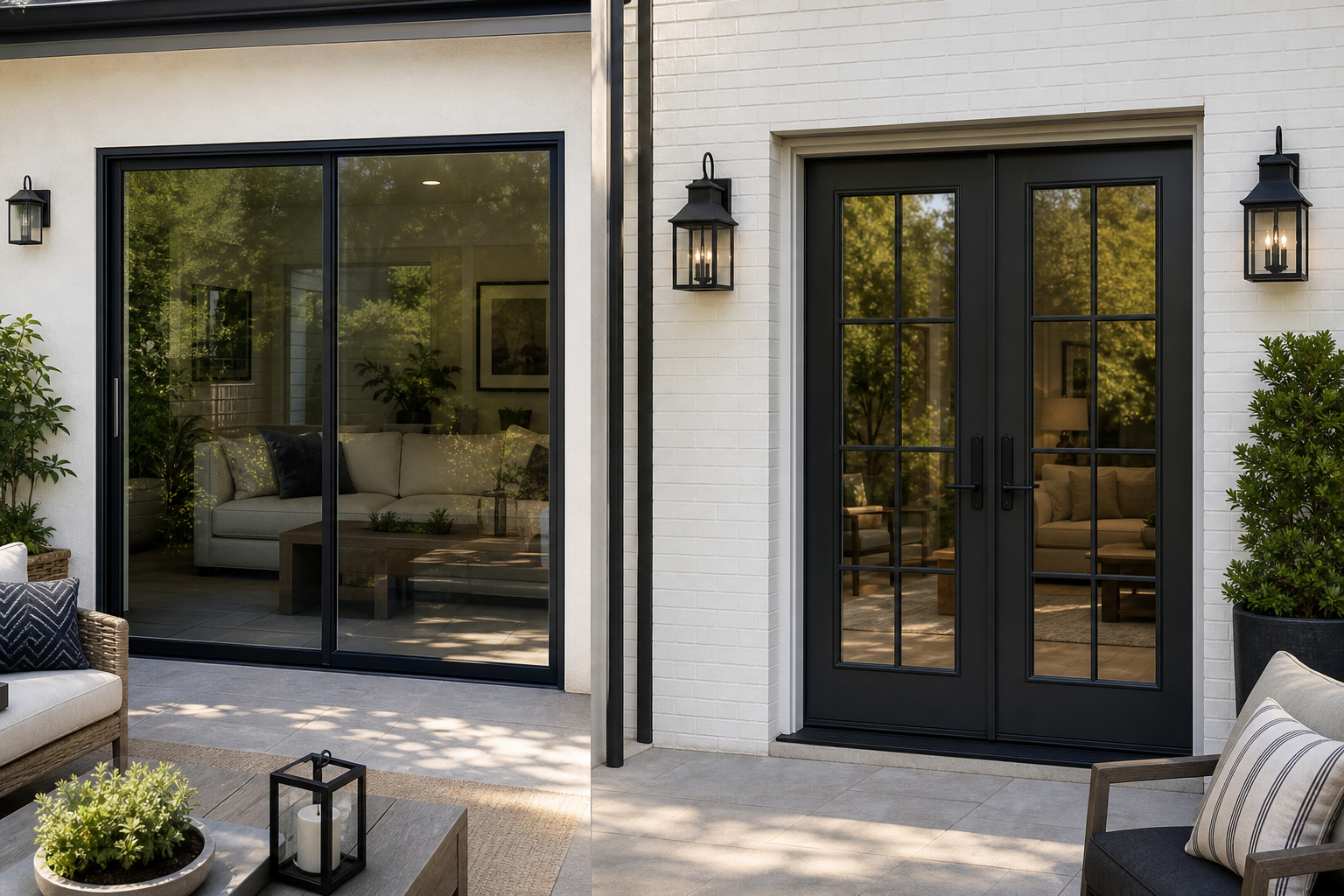
Patio Door Choice? How to Choose a Sliding Glass Door or French Door
Choosing between a Sliding Glass or French Door usually comes down to four things first: floor space, opening width, how you use the room, and the performance label on the specific door you are considering. If you are deciding between a sliding glass door and a French door for a patio, the better option is rarely the more expensive-looking one. It is the one that fits your layout, traffic pattern, climate, and installation scope without creating daily annoyances.

Call for a free estimate:
Both styles are common, widely available, and valid for new construction or replacement work. The real difference is how they operate and what that means for clearance, ventilation, security hardware, maintenance, and cost. According to the U.S. Department of Energy, windows and glass doors can affect heat gain and heat loss, which is why labels and product ratings matter more than style alone. For homeowners, that means the right patio door is partly a design decision and partly a performance decision.
When is a sliding glass door the better patio door choice?
A sliding unit is usually the better fit when you need a wide glass opening without using interior or exterior swing space. Because the panels move on a track instead of swinging, this style works well in tighter rooms, near kitchen tables, beside islands, or on patios where furniture sits close to the door.
That space-saving advantage is the main reason many homeowners pick sliding doors. You can place furniture closer to the opening, and there is less risk of a door interfering with traffic flow. In a compact breakfast area or family room, that can matter more than appearance.
Where sliding doors tend to make the most sense
Layouts with limited clearance are the clearest use case. A sliding door often fits better when:
- The room is narrow and a swinging door would hit furniture
- The patio is shallow and an outswing door would crowd seating
- You want a broad glass view with a relatively simple operating pattern
- You prefer one fixed panel and one active panel for predictable daily use
Many current product lines also offer large-panel sliding units, including two-panel and multi-panel configurations. Availability varies by manufacturer, but the broad market trend is clear: sliding systems are often the easier path when you want more glass and less interruption from door leaves and mullions.
What you give up with a sliding door
The tradeoff is that a standard sliding door usually opens only partway, because one panel passes behind another. By contrast, many French door configurations can open a larger clear passage when both sides are fully open. If your patio doorway is a major entertaining route or a frequent moving path for large items, that difference is worth considering before you buy.
Track maintenance is another practical issue. Sliding doors depend on rollers and tracks staying reasonably clean and aligned. That does not make them unreliable, but it does mean operation quality depends heavily on product quality and installation accuracy.
When is a French door the better patio door choice?
A hinged patio door is often the better fit when you want a more traditional look and a wider walk-through opening when both panels are operable. French doors can feel more architectural, especially in homes with classic, craftsman, colonial, or transitional design cues.
Style is only part of the case for them. The stronger practical reason is access. If you regularly move serving trays, strollers, pet gear, or outdoor dining items in and out, a double-door opening can be more convenient than a partial-width slider opening.
Some homeowners also prefer the feel of a traditional handle set and latch system over a sliding lock. That is a preference issue, not a universal performance advantage, because hardware quality differs by product line.
What you give up with French doors
Swing clearance is the biggest compromise. An inswing unit takes interior floor area every time the door opens. An outswing unit avoids that inside conflict, but it needs unobstructed patio space and careful planning for exterior conditions. Manufacturer sizing and installation instructions also matter here because threshold, sill pan, flashing, and swing direction all affect long-term water management.
How should you compare energy performance between the two?
The label on the exact product matters more than whether the patio door slides or swings. According to the National Fenestration Rating Council], NFRC labels rate products for factors such as U-factor and solar heat gain coefficient, which are the standard numbers used to compare energy performance across windows, doors, and skylights.
That means a well-specified sliding door can outperform a poorly specified French door, and the reverse is also true. If a quote talks only about style, color, or frame material, it is incomplete. You should be looking for the NFRC label values for the exact configuration being sold.
Which ratings matter?
In colder climates, a lower U-factor generally matters because it indicates less heat transfer. In hotter sunny climates, solar heat gain coefficient can matter just as much because it reflects how much solar heat the glazing admits. ENERGY STAR explains that climate-specific product selection is part of choosing efficient windows and doors, rather than assuming one glazing package is best everywhere.
Frame material also affects performance and upkeep. If you are still comparing material types, this guide to vinyl, wood, and fiberglass window frame materials can help you sort through the tradeoffs that often carry over to patio door systems from the same manufacturers.
What about air leakage and weather resistance?
The American Architectural Manufacturers Association and related FGIA standards are widely used in the fenestration industry for testing and performance classification, while manufacturers publish product-specific performance data for air, water, and structural ratings. In practice, you should ask for the tested ratings sheet for the exact door series on your quote, not a general brochure for the brand.
A good quote should identify the series, size, glass package, and configuration. Without that level of detail, it is hard to compare one offer against another fairly.
What does patio door choice usually cost?
Installed cost varies widely, but replacement patio doors commonly land in the low thousands rather than the hundreds. Based on 2024 manufacturer and retailer listings from Andersen, Pella, Home Depot, and Lowe’s, product pricing alone can range from roughly $800 to $4,000 or more depending on size, frame material, glass package, and configuration. Installation adds materially to that total, especially if the opening needs reframing, trim repair, or flashing corrections.
Call for a free estimate:
For a straightforward replacement in an existing opening, a basic sliding patio door is often less expensive than a comparably sized French door system. Once you move into premium materials, impact-rated glass, multi-point hardware, custom sizes, or wider configurations, the range climbs quickly and overlap between the two styles becomes common.
If one proposal is far below the others, look for missing scope. Common omissions include interior trim repair, exterior flashing details, disposal, hardware upgrades, finish work, and permit handling where required. If the project changes the rough opening or egress conditions, local review may be needed. This homeowner guide to door and window permit requirements is useful if your project is more than a simple same-size replacement.
How do security and locking differences affect the decision?
Both styles can be secure when the product, glass, hardware, and installation are all specified well. The style alone does not settle the question. What matters is the actual locking system, the glazing option, the frame strength, and whether the installer follows the manufacturer’s anchoring and hardware instructions.
Many French doors use multi-point locking systems in higher-end lines, while many sliding doors rely on latch systems that vary significantly by product tier. Tempered safety glass is commonly required in hazardous locations near doors under modern code rules, and some lines offer laminated glass or upgraded hardware packages for added resistance. The relevant standard basis for safety glazing in doors appears in the International Residential Code, which identifies hazardous locations that require safety glazing.
If security is a major concern, compare features rather than assuming one style is safer. Ask whether the quote includes upgraded locks, laminated glass availability, reinforced strike areas, and manufacturer-tested hardware options. For a broader look at practical home protection around openings, this article on strengthening doors and windows against break-ins covers the questions worth asking.
Which patio door is easier to live with day to day?
Daily convenience often favors the door that interferes least with your room. In a casual living space, a sliding door usually feels simpler because it opens without claiming floor area. In a home where the patio opening is part of entertaining or indoor-outdoor dining, French doors may feel more generous because both leaves can create a broader passage.
Maintenance habits matter too. Sliding systems need periodic attention to the track and rollers. Hinged systems rely more on adjustment at hinges, latches, and weatherstripping over time. Neither style is maintenance-free, but the type of upkeep is different.
Choose based on how you actually use the opening
If the door is mostly for light, view, and occasional backyard access, a slider is often the practical answer. If the opening functions like a regular extension of the living area during gatherings, a French door can earn its extra space requirements.
Pets and kids can influence the decision as well. Some households prefer the predictable path of a sliding panel. Others prefer the wider opening of hinged doors when moving people and gear quickly.
What should be on a patio door quote before you decide?
A usable quote should identify the exact product and the full installation scope, not just a style name and total price. Vague proposals are where many door projects go sideways, especially when trim, flashing, or threshold details turn into change orders later.
Before you sign, the written quote should clearly state:
- Manufacturer and exact series or model line
- Door style, size, handing, and configuration
- Frame material and finish
- Glass package and NFRC ratings
- Hardware finish and locking system
- Whether the job is insert replacement or full-frame replacement
- Exterior flashing, sealant, and water-management scope
- Interior and exterior trim scope
- Permit handling, if applicable
- Warranty terms for both product and labor
If you are comparing installers, this guide to vetting door and window installers is worth reviewing before you commit. The product matters, but installation quality is what determines whether the unit performs as tested.
How do you make the final patio door choice?
The best answer usually becomes obvious once you rank your constraints in the right order. Start with swing clearance and furniture layout. Then compare the clear opening you want, the energy ratings on the exact quoted products, and the full installed scope. Style comes after those basics, not before them.
Choose a sliding glass door when floor space is tight, the room layout is unforgiving, or a wide glass view matters more than a fully open passage. Choose a French door when you have the clearance for it and you will benefit from a wider active opening or a more traditional architectural look.
If two options still seem close, the deciding factor should be the better-specified quote, not the prettier showroom impression. A clearly documented midrange door with solid ratings and complete installation scope is often the smarter purchase than a premium-looking option sold with vague details.
If you need help comparing patio door quotes or narrowing the right configuration for your layout, please call a listed specialist for a free, no-obligation discussion.
FAQ
Is a sliding glass door cheaper than a French door?
Often, yes, a basic sliding patio door is commonly priced below a comparably sized French door system, based on 2024 product listings from Andersen, Pella, Home Depot, and Lowe’s. The gap can shrink or reverse once you add premium materials, custom sizing, or upgraded glass and hardware.
Which patio door is more energy efficient?
The exact product rating decides that more than the operating style does. NFRC labels let you compare U-factor and solar heat gain coefficient on the specific door being quoted, which is the reliable way to judge efficiency.
Do French doors add more value than sliding doors?
There is no universal rule that one style adds more value in every home. Buyer appeal depends more on fit with the house, layout, finish level, and installation quality than on the door category alone.
Call for a free estimate:
Are sliding glass doors secure enough?
They can be, provided the unit includes solid locking hardware, appropriate safety glazing, and proper installation. Security varies by product tier, so the hardware and glass options on the quote matter more than assumptions about the style.
Sources: Andersen patio door product information and sizing data, Pella patio door product information and performance materials, Home Depot patio door product listings, Lowe’s patio door product listings, FGIA performance standards overview