Window Frame Materials Compared: The Smart Guide to Vinyl, Wood, and Fiberglass
Focus Keyword: Window Frame Materials Compared

Call for a free estimate:
Comparing window frame materials is one of the most useful starting points for homeowners who want better energy performance, lower maintenance, and a clearer buying decision before requesting estimates. The right frame material affects durability, appearance, maintenance needs, thermal performance, and long-term ownership cost. It also shapes what warranty terms may apply, how the window handles weather exposure, and whether the product fits a historic look or a modern remodel.
This guide focuses on three common frame categories, vinyl, wood, and fiberglass. It emphasizes verifiable decision criteria, including manufacturer-published product information, ENERGY STAR guidance, the U.S. Department of Energy, and the Efficient Windows Collaborative. It also includes practical buying cautions, because window projects often involve large contracts, custom orders, and installation quality that matters as much as the product itself.
What is the main difference between vinyl, wood, and fiberglass window frames?
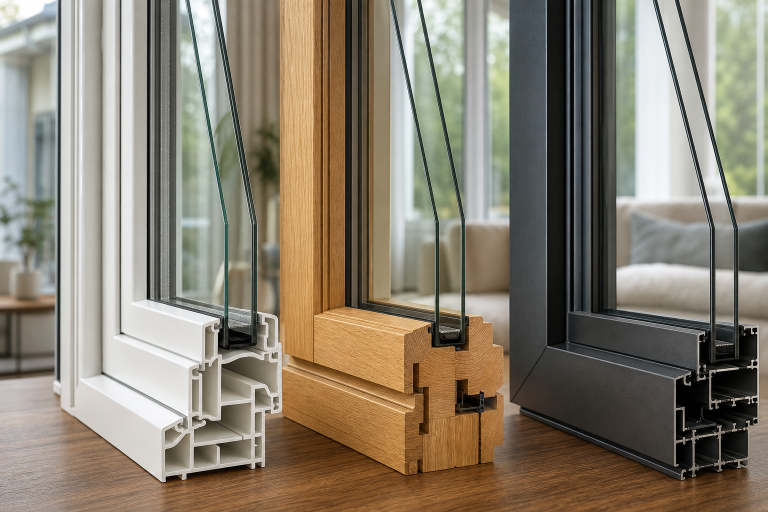
The main difference between vinyl, wood, and fiberglass window frames is that vinyl is generally lower-maintenance and budget-oriented, wood offers a traditional look with ongoing upkeep, and fiberglass offers strength, dimensional stability, and premium pricing.
According to the U.S. Department of Energy, frame material affects durability, maintenance, and thermal characteristics, all of which influence overall window performance. The Efficient Windows Collaborative, a project supported by the U.S. Department of Energy, also notes that frame type changes insulating value, expansion behavior, and maintenance expectations.
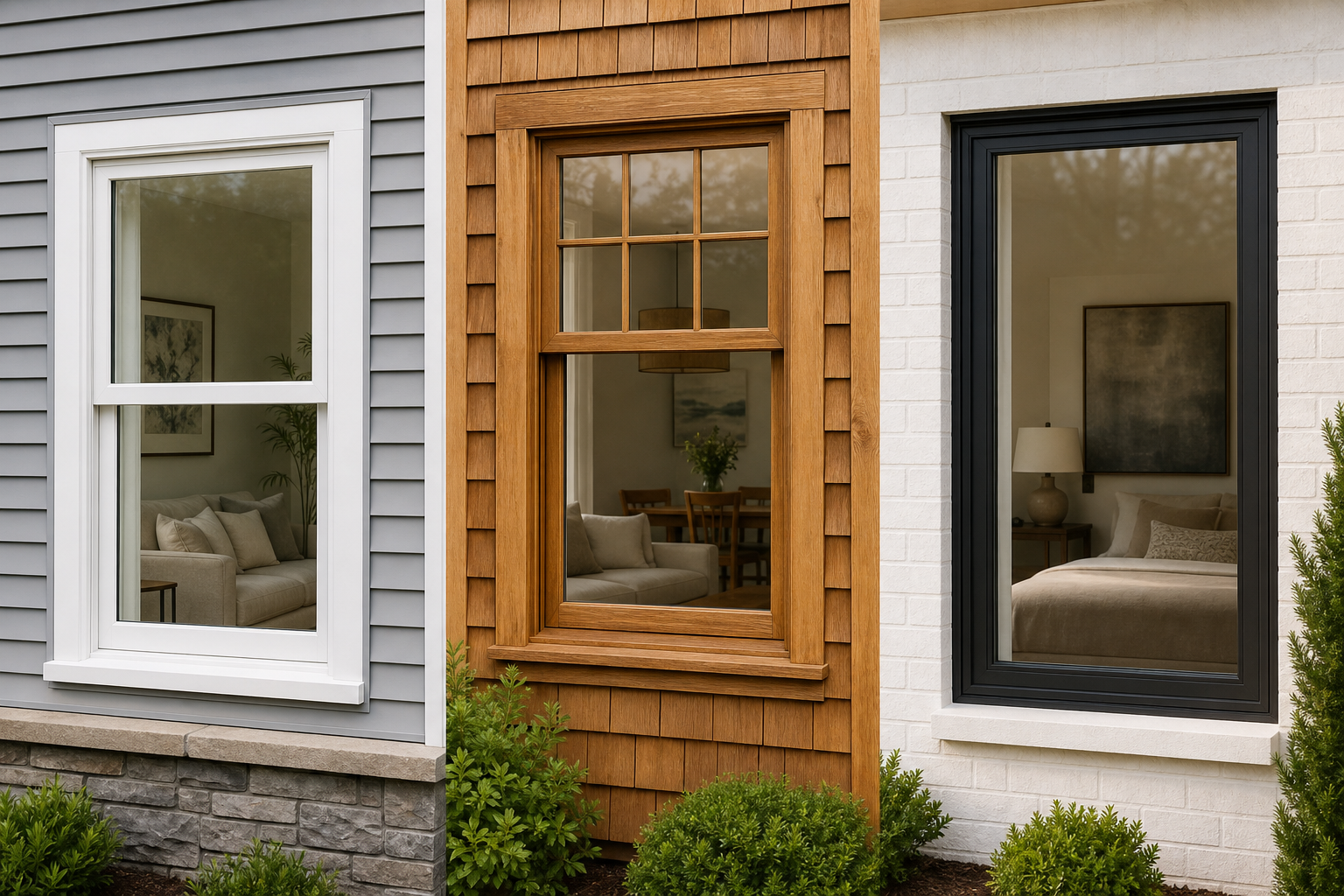
At a high level, vinyl frames are typically made from PVC-based material and are widely sold in replacement and new-construction lines. Wood frames are chosen for appearance, paintability, and compatibility with traditional architecture. Fiberglass frames are manufactured for rigidity and resistance to temperature-related movement.
No frame is universally right for every house. Climate, sun exposure, desired finish, maintenance tolerance, and budget all matter. Installation quality also matters, because even a strong frame can underperform if air sealing, flashing, or sizing is poor.
How do vinyl window frames perform?
Vinyl window frames perform well for many homeowners because they are typically low-maintenance, moisture-resistant, and more affordable than many wood or fiberglass options.
According to the U.S. Department of Energy, vinyl window frames do not require painting and generally have good moisture resistance. The Efficient Windows Collaborative states that vinyl frames can provide good thermal performance, although the quality of the frame design and reinforcement can vary by product line.
Where vinyl stands out
- Low maintenance: Vinyl does not need routine scraping and repainting the way wood can.
- Moisture resistance: It is not vulnerable to rot in the same way wood is.
- Broad availability: Many manufacturers offer vinyl in multiple glass packages and operating styles.
- Value positioning: Vinyl is often the entry point for homeowners balancing performance and cost.
Where vinyl may fall short
- Appearance limitations: Some homeowners prefer the look and texture of real wood.
- Thermal expansion: The Efficient Windows Collaborative notes that vinyl can expand or contract more with temperature changes than some other materials.
- Product variation: Frame thickness, reinforcements, build consistency, and hardware quality differ significantly by manufacturer line.
How do wood window frames perform?
Wood window frames perform best for homeowners who prioritize appearance, finish flexibility, and traditional detailing, but they generally require more maintenance than vinyl or fiberglass.
According to the U.S. Department of Energy, wood frames are valued for insulating properties and appearance, but they require maintenance to protect against moisture, weathering and termites. Manufacturer care documents commonly state that exterior coatings and sealants must be maintained to preserve performance and, in some cases, warranty coverage.
Where wood stands out
- Architectural fit: Wood is often preferred for historic homes and high-detail interiors.
- Finish options: It can usually be stained to match interior trim.
- Insulating properties: DOE guidance recognizes wood as a material with favorable insulating characteristics.
Where wood may fall short
- Maintenance burden: Paint, stain, and protective finishes need ongoing attention.
- Moisture risk: If neglected, wood can be vulnerable to swelling, rot, or finish failure.
- Cost: Wood products are often positioned above basic vinyl lines.
Many current wood windows use exterior cladding, such as aluminum or fiberglass, to reduce weather exposure on the outside while preserving a wood interior. That can change maintenance expectations, so buyers should verify exactly what surfaces are wood and what surfaces are clad.
How do fiberglass window frames perform?
Fiberglass window frames perform well when a homeowner wants a strong, stable frame with relatively low maintenance, but they are often priced above many vinyl options.
According to the Efficient Windows Collaborative, fiberglass frames are strong, durable, and dimensionally stable. Manufacturer product literature commonly highlights that fiberglass expands and contracts at a rate closer to glass than vinyl does, which can support long-term seal and fit consistency, although exact performance varies by product design and regional weather.
Where fiberglass stands out
- Strength: Fiberglass is commonly marketed for rigidity and structural stability.
- Temperature stability: It generally moves less with temperature swings than vinyl.
- Lower upkeep than exposed wood: It typically does not require the same maintenance cycle as traditional wood frames.
Where fiberglass may fall short
- Higher upfront cost: Fiberglass often sits in a more premium price tier.
- Fewer budget options: Availability can be narrower than vinyl in some local markets.
- Style and finish differences: Product lines vary, and not every fiberglass frame offers the same interior appearance homeowners want.
Call for a free estimate:
Fiberglass can be especially attractive in climates with large seasonal temperature swings, but the decision should still come down to the full package, frame material, glass package, installation method, and warranty terms.
How much do vinyl, wood, and fiberglass windows usually cost?
Vinyl, wood, and fiberglass replacement windows commonly range from about $300 to $2,500 or more per window installed, depending on size, style, glazing, and project conditions, according to 2025 cost guides published by Angi and HomeAdvisor, and this is an estimate, not a quote.
Because pricing changes by region, labor market, and custom sizing, broad national ranges are more useful for budgeting than for contractor selection. Cost figures from non-government publishers should be treated as directional only. For a more grounded comparison, ask each company to break out the product line, glass package, warranty, trim or capping, and installation scope.
Typical market positioning
- Vinyl: Often the lower-cost category, depending on brand and glass options.
- Wood: Often higher than vinyl, especially with premium finishes or architectural details.
- Fiberglass: Often priced between better vinyl lines and premium wood offerings, but local quoting can vary.
A quote that seems unusually low may exclude disposal, interior trim touch-up, lead-safe work practices for older homes, or exterior finishing. A quote that seems unusually high may include upgraded glass, custom colors, or extensive opening repair. The only fair comparison is line-by-line.
Which window frame material is most energy efficient?
The most energy-efficient window frame material depends on the full window assembly, because glass package, spacer system, air leakage performance, and installation can matter as much as the frame itself.
According to the U.S. Department of Energy, consumers should evaluate whole-window performance ratings rather than assuming one material is automatically best. ENERGY STAR also certifies windows by climate zone and performance criteria, which means a well-built product in any of these frame categories may qualify when matched with the right glazing package.
Homeowners should compare National Fenestration Rating Council, or NFRC, labels for U-Factor and Solar Heat Gain Coefficient. NFRC ratings are the standard reference used across the industry to compare whole-window performance. In colder climates, lower U-Factor is especially important. In cooling-dominated climates, Solar Heat Gain Coefficient may deserve more attention, depending on orientation and local weather.
Frame material still matters, but it should not be considered the sole criteria. A premium frame with mediocre glass may underperform a midrange frame with a stronger glazing package and better installation.
What should homeowners compare besides frame material?
Homeowners should compare warranty terms, installation scope, service responsiveness, and contract clarity just as carefully as they compare frame material.
This matters because window projects are custom and service-dependent. Manufacturer warranties may cover insulated glass, frame components, or hardware differently, and labor coverage may be limited or handled separately by the installer. Published manufacturer warranty documents often contain exclusions for improper installation, lack of maintenance, coastal exposure, or finish issues.
Key buying criteria to review
- NFRC ratings: Compare U-Factor, SHGC, Visible Transmittance, and air leakage data if available.
- Warranty structure: Separate product coverage from labor coverage.
- Installation details: Ask whether the quote includes flashing, insulation, exterior capping, interior trim work, and disposal.
- Service process: Ask who handles adjustments or warranty claims after installation.
- Lead times: Custom windows can take weeks or months depending on product line and season.
Common red flags during shopping
- High-pressure in-home sales tactics
- Same-day pricing that disappears unless signed immediately
- Vague warranty language
- Unclear subcontractor responsibility
- Missing product line names on the proposal
Those issues do not prove a bad outcome, but they are valid reasons to slow down and ask for written clarification.
Which window frame material fits different homeowner priorities?
The right window frame material depends on whether your priority is lower maintenance, traditional appearance, structural stability, or budget control.
Choose vinyl if
- You want a lower-maintenance option
- You are focused on value and broad product availability
- You are comfortable comparing quality carefully across product lines
Choose wood if
- You want a classic or historic appearance
- You want stain flexibility indoors
- You accept ongoing maintenance as part of ownership
Choose fiberglass if
- You want a stable, durable frame
- You expect wide temperature swings
- You are open to a higher upfront budget for a premium product category
In practice, many homeowners narrow the choice by exterior exposure and interior design goals. A shaded traditional home may support a different decision than a sun-exposed modern home with large openings.
What are the key takeaways from this window frame materials compared guide?
The key takeaway from this guide is that vinyl, wood, and fiberglass each make sense in the right context, and the smartest choice comes from comparing verified performance data, contract terms, and installation scope together.
Call for a free estimate:
According to the U.S. Department of Energy and ENERGY STAR, whole-window performance should guide the decision more than frame material alone. According to manufacturer warranty documents and standard industry practice, maintenance obligations and installation quality can affect long-term satisfaction as much as the material itself.
If you are still narrowing down options, it helps to gather multiple written estimates that identify the exact product line, NFRC performance data, warranty coverage, and installation details. If you want help reviewing options for your home and climate, simply call one of the listed providers.
FAQ
Are fiberglass windows better than vinyl?
Fiberglass windows are not automatically better than vinyl, because the better choice depends on your budget, climate, desired appearance, and the quality of the specific product line. The Efficient Windows Collaborative notes strengths for fiberglass in stability and durability, while DOE guidance supports evaluating the full window system rather than frame material alone.
Do wood windows always require more maintenance?
Wood windows generally require more maintenance than vinyl or fiberglass, especially when wood surfaces are exposed to weather. DOE guidance and manufacturer care documents consistently indicate that protective finishes must be maintained to help prevent moisture-related deterioration.
What matters more, frame material or glass?
Glass package often matters as much as frame material, and sometimes more, when comparing energy performance. DOE and ENERGY STAR guidance emphasize whole-window ratings, which include the combined effect of frame, glass, spacers, and overall construction.
How many quotes should you get for replacement windows?
Getting at least three written quotes is a practical way to compare product lines, installation scope, and warranty terms without relying on a single sales presentation. The goal is not just price comparison, but a clear understanding of what each proposal includes.
Sources: U.S. Department of Energy, ENERGY STAR, Efficient Windows Collaborative, National Fenestration Rating Council, Angi, HomeAdvisor