Critical HVAC Flood Safety Checks: What Homeowners Should Do Before Restarting AC
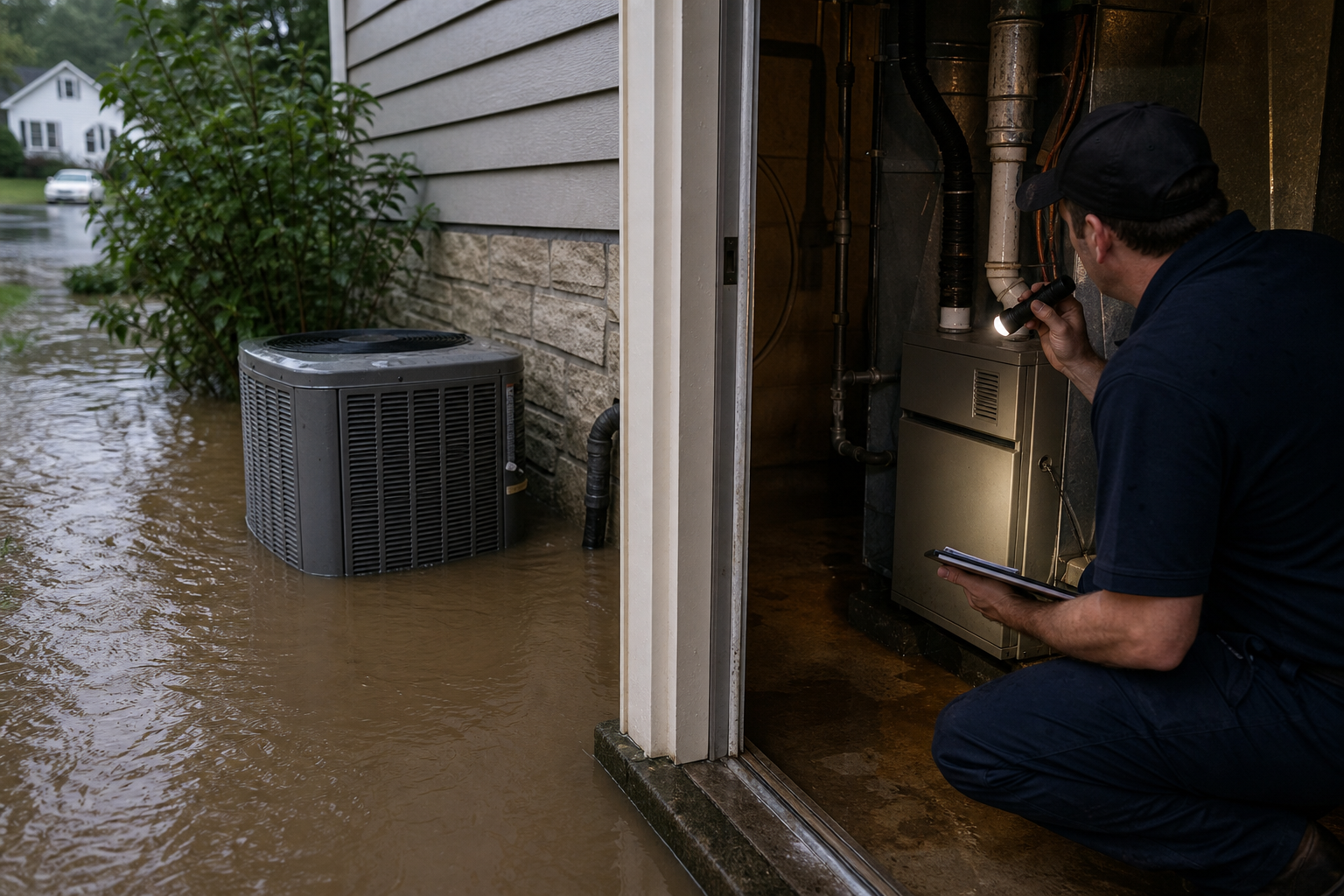
AC safety checks should be performed after a flood of any basement, crawl space, or yard has reached your condenser, furnace, or air handler. If storm water touched HVAC equipment, do not turn the system back on until it has been inspected for electrical damage, contaminated components, and unsafe controls.

Call for a free estimate:
That is especially relevant after severe summer storms drive heavy rain, flash flooding, and power interruptions which can leave outdoor condensers partly submerged and indoor equipment sitting in wet basements. The wrong next step is a quick restart to “see if it still works.” A flooded system can have damaged motors, compromised controls, wet insulation, and debris inside moving parts.
According to the Federal Emergency Management Agency, flooded electrical, heating, and appliance equipment should be checked by a qualified professional before use. The U.S. Consumer Product Safety Commission also says electrical appliances and equipment exposed to water can pose shock and fire hazards and should be evaluated before being energized again.
For homeowners, the practical goal is simple: find out whether the equipment can be cleaned and repaired, whether key parts must be replaced, or whether replacement is the safer and more economical path.
What should you check first after floodwater reaches your AC or furnace?
The first priority is confirming whether any part of the HVAC system was exposed to floodwater and keeping it powered off until a professional evaluates it.
Start with the basic facts. Identify which equipment got wet, how high the water rose, and whether the water was clean rainwater, muddy runoff, or sewage-contaminated floodwater. That distinction matters because contamination can affect whether insulation, internal liners, filters, and some porous materials can be safely reused.
Take clear photos before cleanup changes the evidence. Photograph the outdoor condenser, indoor furnace or air handler, duct connections near the floor, the thermostat if water reached that level, and the electrical disconnect or breaker area if it was exposed. Insurers and contractors often need this record. Leave the system off.
Why is restarting a flooded HVAC system risky?
Water exposure can damage electrical parts, bearings, insulation, and safety controls in ways that are not visible from the outside.
Outdoor condensers are often built to handle rain, but they are not designed to operate safely after flood submersion without inspection. Manufacturer guidance commonly distinguishes normal weather exposure from flooding. For example, Carrier residential guidance states that systems exposed to floodwater require inspection and that affected controls and motors may need replacement. The same kind of warning appears in Trane and Lennox post-flood service guidance.
Indoor equipment is often at greater risk as a furnace or air handler installed in a basement can take on water around the blower section, burner compartment, control board, transformer, and wiring harness. If sediment dries inside the cabinet, the system may still appear intact while hidden corrosion begins.
A quick restart can also turn a smaller repair into a larger one. A blower motor that might have been salvageable after cleaning and testing can fail under load if contamination remains in the bearings or windings. If you want a better sense of how blower-related failures show up in normal conditions, Abodence covers that in this guide to HVAC blower motor problems.
Which parts usually need the closest inspection?
The components nearest the waterline and the components that carry electricity need the closest attention first.
Outdoor condenser components
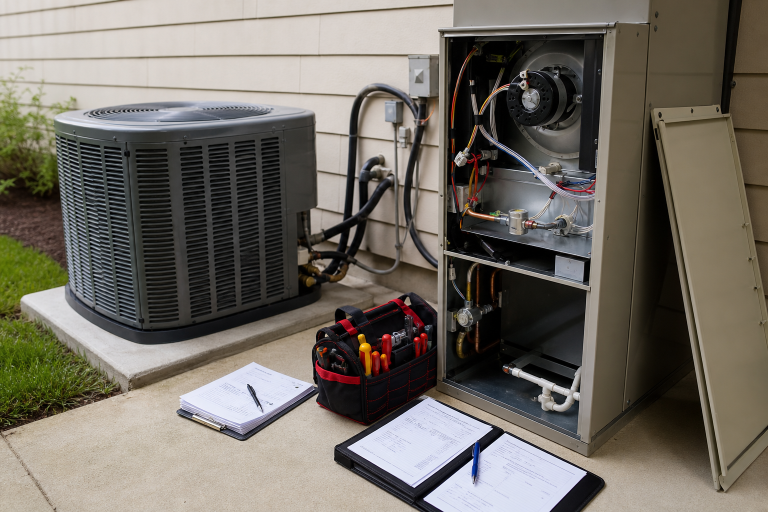
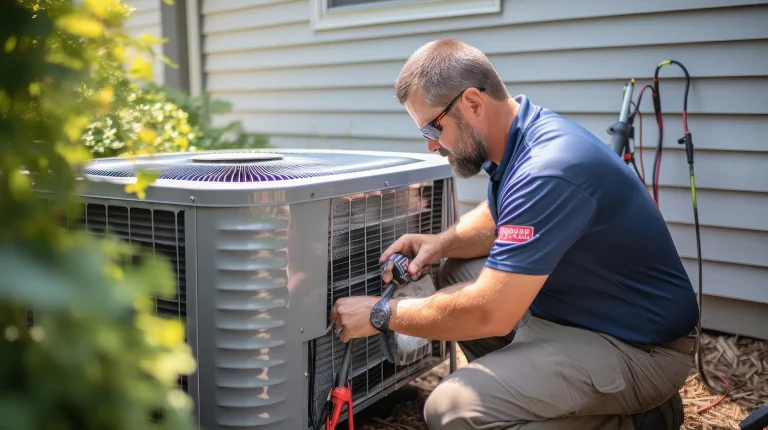
An HVAC contractor will usually inspect the compressor terminals, contactor, capacitor, fan motor, control wiring, coil fins, and the disconnect. Sediment packed into the coil can restrict heat transfer, while silt inside electrical compartments can lead to tracking, corrosion, or later failure.
If the condenser sat in moving water, the base pan and lower coil area may also hold debris that is not obvious until panels are removed.
Indoor furnace or air handler components
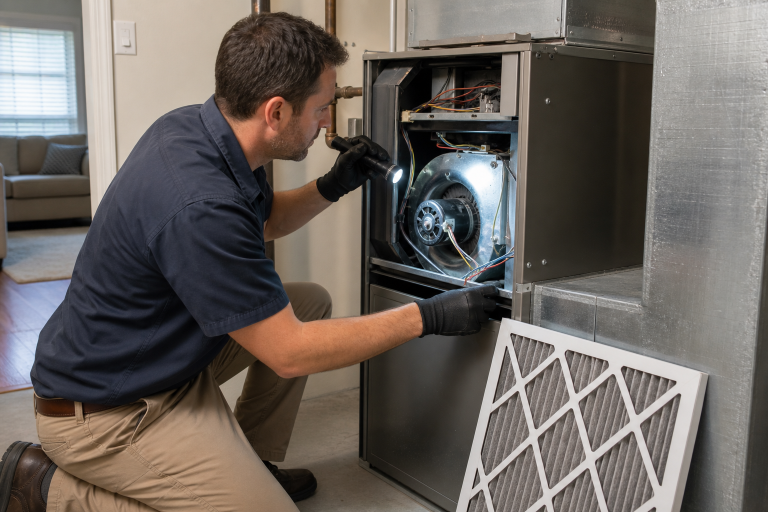
Low-mounted furnace sections often take the worst of basement flooding. The blower motor, blower wheel, control board, inducer assembly, gas valve wiring, door switches, and low-voltage controls may all be affected. For electric air handlers, sequencers, relays, heat strips, and insulation inside the cabinet can also be compromised.
According to guidance from the Air-Conditioning, Heating, and Refrigeration Institute, flood-damaged heating and cooling equipment should be evaluated carefully because electrical and mechanical components may need replacement even when the cabinet looks repairable. AHRI also notes that contaminated water can affect internal materials beyond the plainly visible parts.
Ductwork and accessories
Floor-level ducts, flex duct, duct board, media filters, humidifiers, and condensate pumps can all be part of the loss. The Environmental Protection Agency says in its flood cleanup guidance that porous materials contacted by floodwater often cannot be effectively cleaned if contamination is present. In HVAC terms, that can affect wet insulation and some duct materials.
Can any flooded AC or furnace be safely saved?
Some systems can be repaired after limited water exposure, but equipment with submerged controls, contaminated porous materials, or major electrical damage often ends up being a replacement case.
The cheaper option is sometimes the right one here, and sometimes it is not. If floodwater only reached the condenser base outdoors and did not enter the electrical compartment, cleaning, testing, and a few replaced parts may be enough. If a basement furnace sat in several inches of muddy water and the controls, blower section, and insulation were soaked, replacement may be more practical than part-by-part repairs.
Manufacturer warranty terms also matter. Goodman, Carrier, and Trane published warranty language and service guidance have each treated flood damage as outside normal covered defects, which means post-flood repairs are often an insurance matter rather than a warranty claim.
Call for a free estimate:
Ask the contractor to separate the recommendation into three buckets:
- Parts that are clearly reusable after inspection and cleaning
- Parts that require replacement to return the system to safe operation
- Conditions that make full equipment replacement the more reasonable option
What should a contractor actually do before any restart?
A proper post-flood visit should verify electrical safety, inspect contaminated components, and document whether the system meets manufacturer and code-based expectations for returning to service.
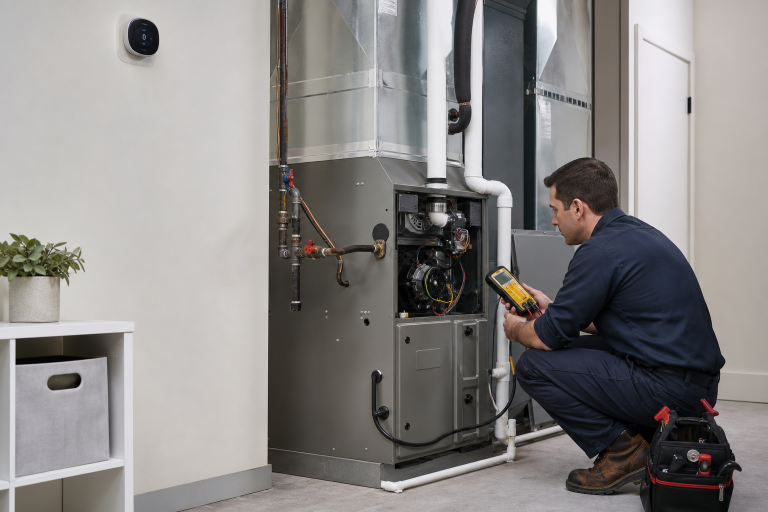
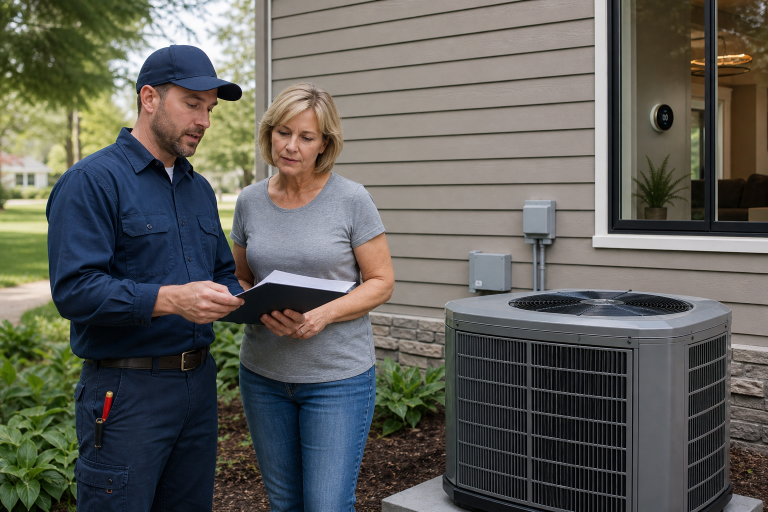
You should expect more than a visual glance and a thermostat test. A meaningful inspection usually includes opening accessible panels, checking motors and controls, examining wiring and terminals for corrosion or residue, inspecting the disconnect and breaker condition, and confirming that safety devices still function as intended.
For gas furnaces, the inspection should also include the burner area, ignition components, venting condition, and any control that was below the waterline. For condensers and heat pumps, the contractor should inspect the fan section, compressor compartment, and coil condition before power is restored.
According to the International Code Council, appliances and equipment that have been submerged or exposed to flooding conditions can require replacement of affected controls and components to maintain safe operation. State specific local enforcement can vary by municipality and code cycle, so permit and inspection requirements may depend on where you live and how extensive the replacement becomes.
If the storm damage leads to a larger repair or full system changeout, permit questions can become part of the project. Abodence explains the general homeowner side of HVAC replacement decisions in this HVAC brand comparison guide and broader moisture-related building concerns in this attic moisture article.
How much can post-flood HVAC repair or replacement cost?
There is no single government price book for flood-damaged HVAC repairs, so any range needs to be treated as a market estimate. Based on 2026 contractor marketplace pricing published by Angi for AC repair and furnace repair categories, many repair visits fall roughly in the low hundreds to over $1,500 depending on the failed part and system type. When flood exposure has damaged multiple controls or motors, costs can move beyond ordinary repair ranges quickly. For full HVAC replacement, 2026 marketplace ranges commonly span several thousand dollars to well above $10,000 depending on equipment size, efficiency, and installation scope.
For labor context rather than project pricing, the U.S. Bureau of Labor Statistics lists 2025 wage data for heating, air conditioning, and refrigeration mechanics and installers. That does not tell you what your project will cost, but it helps explain why multi-visit diagnostics and replacement labor are not minor line items.
The practical move is to get written scopes, not just totals. A low quote that does not specify which water-exposed parts are being replaced can be more expensive later.
What should you ask before approving repair or replacement?
Useful questions are the ones that force a clear scope, a clear safety basis, and a clear warranty explanation.
- Which exact components were below the waterline or showed water intrusion?
- Which parts are being cleaned, and which parts are being replaced?
- What manufacturer guidance supports returning this unit to service?
- Are any wet porous materials, such as insulation or duct materials, part of the scope?
- Will the contractor document test results and the condition of controls and motors?
- If replacement is recommended, what specifically made repair unreasonable?
- Does the quote include permit handling if local rules require it?
- What warranty applies to the repair work or replacement equipment after flood-related damage?
What mistakes should homeowners avoid after a flooding?
Critical mistakes are restoring power too soon, assuming rain-rated outdoor equipment is flood-safe, and treating a contaminated system like a normal maintenance issue.
Another common mistake is replacing only the obvious failed part without addressing the rest of the water-exposed system. A new capacitor or control board will not solve hidden corrosion in other components. The result can be repeat service calls that look unrelated on paper but trace back to the same flood event.
Insurance documentation also gets weaker when cleanup happens before photos, waterline notes, and equipment model information are recorded. Save serial numbers, panel photos, and any contractor findings in one folder.
Another practical issue is basement moisture that lingers after the water is gone. Even if the HVAC equipment itself is repairable, damp surrounding materials can affect nearby ductwork, filters, and indoor conditions. If your furnace has already started acting up, this furnace repair guide can help you understand what a proper service call should cover.
When is replacement the better call than repair?
Replacement becomes the stronger option when floodwater reached core controls and motors, when contamination affected internal materials, or when repair costs approach the value of older equipment.
Age matters here, but only in context. A fairly new condenser with limited water exposure may justify targeted repair. An older basement furnace with submerged electronics, blower components, and cabinet insulation often does not. If the contractor cannot state clearly which parts remain reliable after testing, the safer path may be replacing the affected equipment.
That is also where written scope matters most. “Try this part first” can be reasonable for ordinary breakdowns. It is much less convincing after flooding if several submerged components remain in place.
FAQ
Can you turn your AC back on after a flood if it seems dry now?
No. Equipment that looks dry can still have water-damaged controls, residue, or corrosion inside sealed or covered sections, so FEMA and CPSC guidance supports professional inspection before use.
Call for a free estimate:
Does floodwater always mean the outdoor condenser has to be replaced?
No. Limited exposure may allow cleaning, testing, and selected part replacement, but the decision depends on how high the water reached and whether electrical components were affected.
Should a flooded furnace always be replaced?
Often, a basement furnace with submerged controls and blower components is a strong replacement candidate, especially when muddy or contaminated water was involved. The exact answer depends on which components got wet and what the manufacturer guidance allows.
Will homeowners insurance cover flood-damaged HVAC equipment?
Coverage depends on the policy and the cause of loss. Standard homeowners and separate flood coverage can work differently, so the insurer should review the source of the water and the equipment documentation.
Do you need a permit to replace flood-damaged HVAC equipment in Pennsylvania?
Often, yes for major replacement work, but the exact requirement depends on your municipality and the scope of the job. Your contractor or local code office should confirm it before installation begins.
If your AC, furnace, or air handler was exposed to floodwater after a storm, a qualified HVAC inspection is the sensible next step before any restart or repair decision. Please call one of the listed specialists for a free, no-obligation discussion.
Sources: Carrier residential flood guidance, Trane post-flood service guidance, Lennox flood-related service guidance, Air-Conditioning, Heating, and Refrigeration Institute, Angi 2026 HVAC repair and replacement marketplace pricing, Goodman published warranty terms