Will FEMA Pay for a Storm-Damaged Roof? What Homeowners Need to Know
FEMA can provide financial assistance for an eligible storm-damaged roof, but only after insurance and other available assistance have been considered. The money is intended to make a disaster-damaged primary home safe, sanitary, and functional, not to return the property to its pre-storm condition or fund an elective upgrade.

Call for a free estimate:
A roof leak, missing shingles, or structural damage may fit FEMA’s Housing Assistance rules when the damage stems from a federally declared disaster, the applicant meets eligibility requirements, and insurance does not cover the necessary work. The award amount is based on the verified unmet need, so a full roof replacement is possible in some cases but never automatic.
When can FEMA help pay for roof damage?
Federal aid may be available when a declared disaster directly damaged your owner-occupied primary residence and left an uninsured or underinsured need that affects safe occupancy. FEMA’s Individuals and Households Program provides Housing Assistance for eligible survivors after a presidential major-disaster declaration authorizes Individual Assistance.
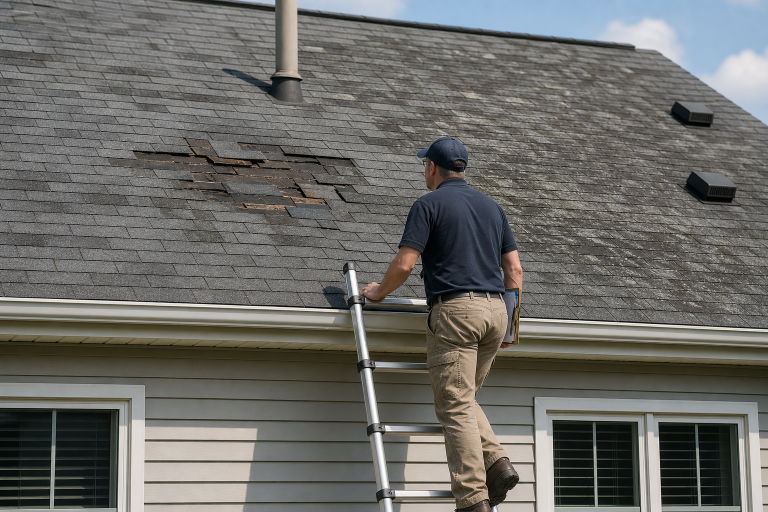
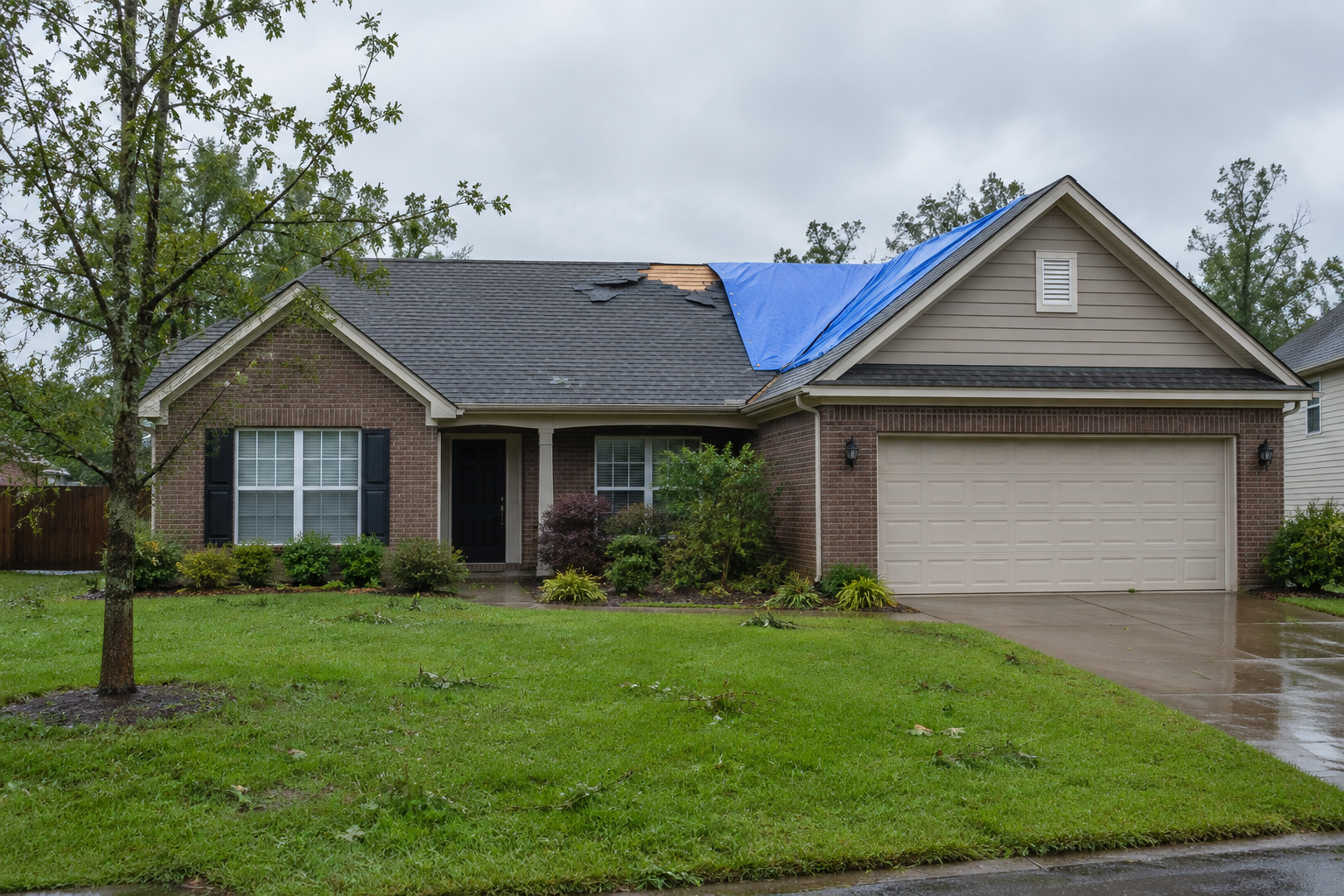
For roofing, FEMA’s practical question is whether the storm damage created a condition that prevents the home from being safe, sanitary, or functional. A roof opening that allows rain into living areas, wind damage that compromises the roof covering, or damage that makes part of the home unusable may qualify for consideration. Cosmetic damage alone generally does not establish a FEMA housing need.
The home must be your primary residence. FEMA assistance is generally not available through this program for a vacation home, a second home, or a rental property you own. Renters may be eligible for other forms of disaster assistance, but they do not receive FEMA repair assistance for a landlord’s roof.
FEMA assistance is also limited to damage caused by the declared event. An aging roof, a long-standing leak, poor maintenance, or deterioration that existed before the storm is outside the purpose of disaster assistance, even if the roof happens to fail after severe weather.
Does insurance have to be used first?
Yes, you must pursue insurance and disclose the outcome before FEMA can decide whether it can cover an unmet roof-related need. FEMA’s published guidance describes disaster aid as assistance for necessary expenses and serious needs that are not covered by insurance, other programs, or other sources.
Open a claim with your homeowners insurer promptly, even if you expect a denial or your deductible is high. Give the insurer a chance to inspect the loss and issue a written decision. FEMA can review an insurance settlement, a denial letter, proof that the claim remains pending, or documentation showing that the policy does not cover the relevant damage.
You cannot receive duplicate benefits for the same repair. If insurance pays for replacement shingles, flashing, decking, or related work, FEMA cannot pay that same cost again. If insurance leaves a documented gap, FEMA may consider the remaining eligible need. A deductible is not automatically paid simply because it is an out-of-pocket cost; FEMA reviews the facts of the individual application and the available documentation.
Do not delay a needed insurance claim because a contractor has offered a quick cash repair. A written insurer decision creates the record FEMA needs to evaluate whether federal assistance is appropriate.
What does FEMA assistance actually cover for a damaged roof?
Eligible funding is designed for necessary repair or replacement work that restores basic livability, not for a like-for-like restoration of every feature that existed before the storm. FEMA’s Housing Assistance framework separates disaster-related repair needs from upgrades, routine maintenance, and improvements that exceed what is necessary to make the residence usable.
That distinction can affect both the scope and amount of an award. If storm damage requires work to stop water intrusion and restore a weather-resistant roof, FEMA may assess that need. A choice to change roofing materials, add a design feature, or replace undamaged portions solely to achieve a uniform appearance may fall outside the eligible scope.
FEMA assistance is a grant, not a roofing contract. It does not select the contractor, guarantee workmanship, or establish that any particular estimate is reasonable. Homeowners remain responsible for deciding how to use funds for the approved disaster-related need and for checking local permit and contractor requirements.
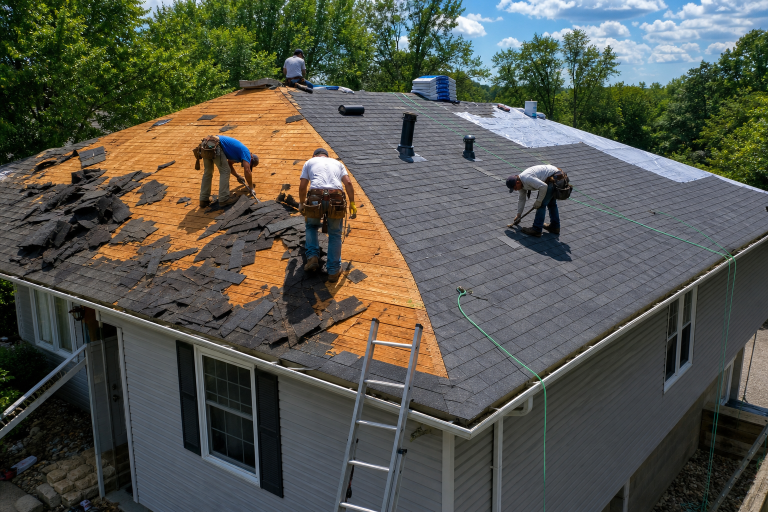
Roofing proposals should separate immediate storm-related work from unrelated replacement items. That makes it easier to compare an insurer’s scope, FEMA’s determination, and the contractor’s estimate. Before signing a broad replacement agreement, review the difference between a targeted roof repair and full replacement, particularly when only one part of the roof was damaged.
What eligibility requirements must a homeowner meet?
Applicants generally need to show identity, occupancy, ownership, disaster-related damage, and an unmet necessary need. FEMA verifies these items through application records, documents supplied by the applicant, inspections when needed, and available third-party data.
- The disaster must be eligible: Your address must be in an area approved for FEMA Individual Assistance under the relevant disaster declaration.
- The residence must qualify: The damaged home must be your primary residence, and you must have occupied it at the time of the disaster.
- Ownership must be established: FEMA may request a deed, mortgage record, property tax receipt, title, or another acceptable ownership document.
- The damage must be tied to the event: Photos, inspection findings, insurance documents, and repair records can help distinguish new storm damage from earlier conditions.
- Other funding must be disclosed: Insurance proceeds, charitable aid, and assistance from other programs can affect the amount FEMA can provide because duplicate benefits are prohibited.
Eligibility decisions are specific to the declared disaster and the applicant’s verified circumstances. A neighbor’s award, a contractor’s opinion, or an online estimate does not establish what FEMA will approve for your home.
What documents should you provide to FEMA?
A complete record of the damage and the insurance outcome gives FEMA the clearest basis for reviewing a roof claim. FEMA’s After You Apply guidance explains that applicants may need to provide identity, residency, ownership, and insurance information when FEMA cannot verify those details automatically.
Keep the original files and submit readable copies through the method FEMA specifies for your application. Include documents that identify the property address and connect each item to the declared storm.
- Save dated photos and video showing the roof, exterior damage, interior water entry, and any temporary protective measures.
- Keep the insurer’s claim number, adjuster correspondence, estimate, settlement statement, denial letter, and any explanation of excluded coverage.
- Collect ownership and occupancy records, such as a deed, mortgage statement, property tax record, utility bill, lease-related occupancy record, or government identification, as applicable to FEMA’s request.
- Retain itemized contractor estimates, invoices, receipts, and proof of payment for emergency measures and completed work.
- Read every FEMA letter carefully and respond by the stated deadline if FEMA asks for more information or schedules an inspection.
Call for a free estimate:
Photos alone may not prove the age, cause, or extent of a roof problem, but they can preserve evidence before rain, wind, or temporary repairs change the scene. A contractor estimate can document a proposed scope, yet it does not replace FEMA’s eligibility review or an insurer’s coverage decision.
How does the FEMA application and inspection process work?
Start the application as soon as FEMA opens Individual Assistance for your county or tribal area, then follow the deadline published for that declaration. FEMA disaster deadlines vary, and an announced registration period may be extended, so use the current declaration information rather than relying on a general timetable.
During the application, report the damage accurately, identify your insurer, and explain whether the home is safe to occupy. FEMA may schedule an inspection or request documents before making a decision. An inspection records observed disaster damage and verifies information for eligibility purposes. It does not guarantee payment, determine an insurance settlement, or serve as a contractor’s repair specification.
Be ready to show the inspector the affected roof areas from a safe location, the rooms where water entered, and documents related to prior repairs or the insurance claim. Do not climb onto a damaged roof for an inspection or attempt a risky temporary repair. Active structural concerns, downed electrical lines, or major water intrusion call for qualified emergency and repair services.
FEMA may issue a decision after reviewing the application, documents, and inspection information. Read the notice for the specific reason for approval, denial, or request for additional evidence. The notice controls the next step, including any deadline to send missing records or challenge the decision.
Can you appeal a FEMA roof decision?
Yes, you can appeal if you believe FEMA’s decision does not reflect eligible disaster damage, your insurance outcome, ownership, occupancy, or another relevant fact. FEMA’s appeal guidance states that applicants generally have 60 days from the date on FEMA’s decision letter to submit an appeal.
An effective appeal addresses the reason listed in the decision letter rather than simply restating that the roof needs work. If FEMA could not verify ownership, provide the requested ownership record. If the decision turns on insurance, send the settlement, denial, or updated coverage information. If the record did not show that the storm caused the damage, provide dated photos, an adjusted insurance determination, inspection material, or other documents that directly address that issue.
Include your FEMA application number and disaster number on the appeal materials, and keep a copy of everything submitted. The same deadline applies even if you are waiting on another party, so submit available evidence promptly and follow FEMA’s instructions on how to add later documentation if necessary.
Are FEMA roof grants taxable or repayable?
Qualified disaster relief payments for necessary personal, family, living, or funeral expenses, including home repair or rehabilitation expenses, are generally excluded from gross income under the IRS Publication 525 rules on qualified disaster relief payments. FEMA assistance for an eligible roof need is generally grant assistance, not a loan that must be repaid.
The tax treatment depends on the nature and use of the payment. Keep FEMA award letters, repair invoices, insurance records, and receipts with your tax records. A tax professional can address a situation involving insurance reimbursements, casualty-loss deductions, rental use, or other facts beyond a straightforward primary-residence repair.
FEMA funding also does not replace careful review of the roofing contract. Ask for a written scope that identifies materials, removal and disposal, flashing, decking allowances, permits, payment schedule, and workmanship warranty. Vague scope language can leave a homeowner responsible for costs that neither insurance nor FEMA approved. For a closer look at coverage limits in roofing paperwork, see this guide to roof warranty terms.
FAQ
Will FEMA replace my entire storm-damaged roof?
FEMA may consider necessary repair or replacement when verified disaster damage prevents the primary residence from being safe, sanitary, or functional and insurance does not cover the need. It does not promise a full replacement based on roof age, appearance, or a preference to match undamaged areas.
Can I apply before my insurance claim is settled?
Yes, you can apply while an insurance claim is pending, but FEMA will need information about the claim before it can determine whether an uninsured need remains. Submit the insurer’s decision or updated settlement information as soon as it is available.
Does FEMA pay for an old roof damaged in a hurricane or tornado?
Age alone does not disqualify an applicant, but FEMA assistance is limited to damage caused by the declared disaster and the amount necessary to restore safe, sanitary, functional conditions. Pre-existing deterioration and maintenance issues are not disaster-related needs.
Should I get a roofing estimate before applying for FEMA aid?
A detailed estimate can document the apparent work needed, but do not wait to apply if the FEMA registration period is open. Seek a written, itemized quote for your records, and use a qualified local roofing professional if you need help defining the storm-related scope.
Please call a listed specialist for a free, no-obligation discussion.