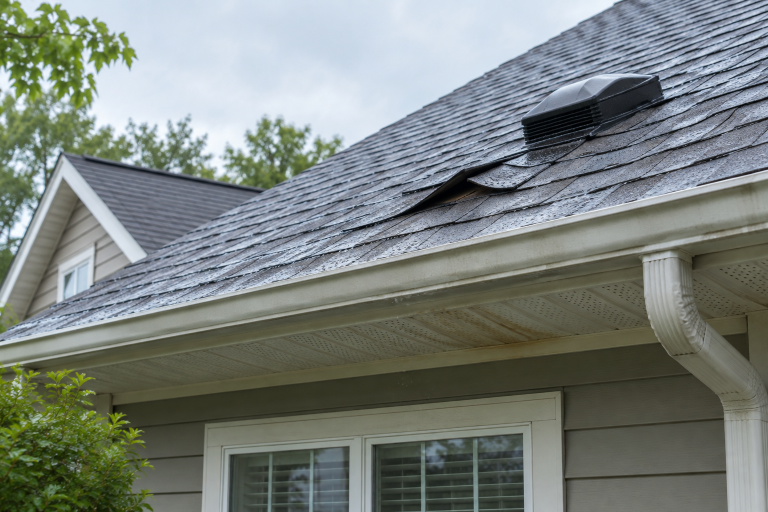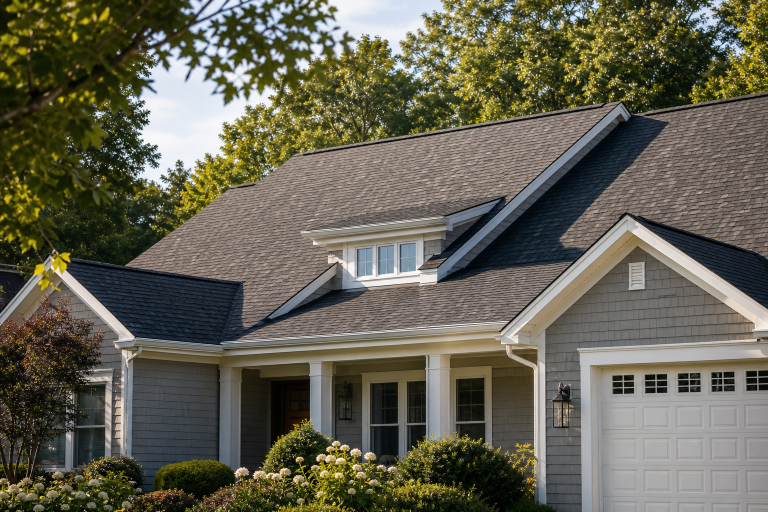
Roof Repair or Replacement? 9 Signs to Know the Difference
A roof repair is usually the sensible choice when damage is isolated and the surrounding roof remains sound. A full roof replacement becomes the stronger option when failure is widespread, the roof covering is near the end of its service life, or hidden components need broad correction.

Call for a free estimate:
The visible symptom, such as a missing shingle or ceiling stain, rarely answers the question by itself. A useful approach is to look at where the problem began, how far it extends, whether the existing materials can integrate with a repair, and what the inspection finds below the surface.
When does a roof repair make sense?
A targeted repair makes sense when one defined event or defect affected a limited area and the rest of the roof still has reliable condition and remaining life.
A few wind-lifted shingles, flashing that has separated at a chimney, a damaged pipe boot, or a leak confined to one penetration may need a simple fix. In those cases, replacing the failed component and restoring the surrounding shingles can preserve a roof that does not otherwise need replacement. The National Roofing Contractors Association’s NRCA Roofing Manual treats roof investigations as a process of identifying the source of water entry and the affected assembly, rather than assuming every interior stain requires a new roof.
A repair should also have a clear scope and the written proposal should identify the location, materials being removed, replacement materials, flashing work, and how the contractor will address any damaged sheathing found after the covering is opened.
Which signs point toward full roof replacement?
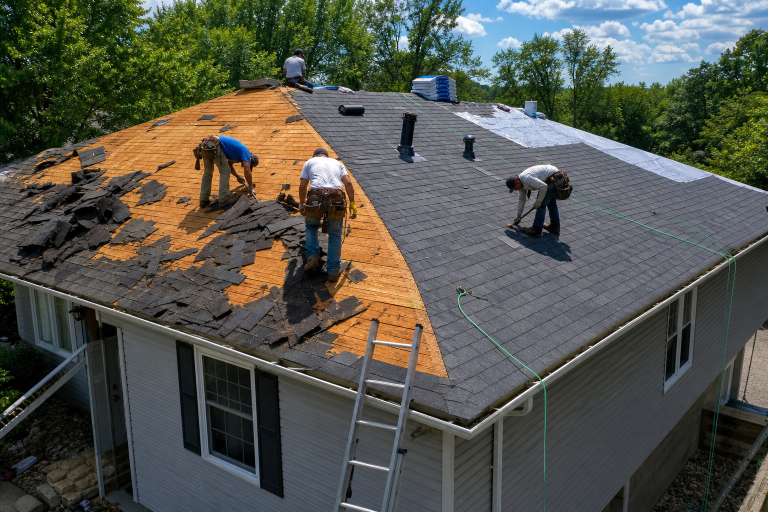
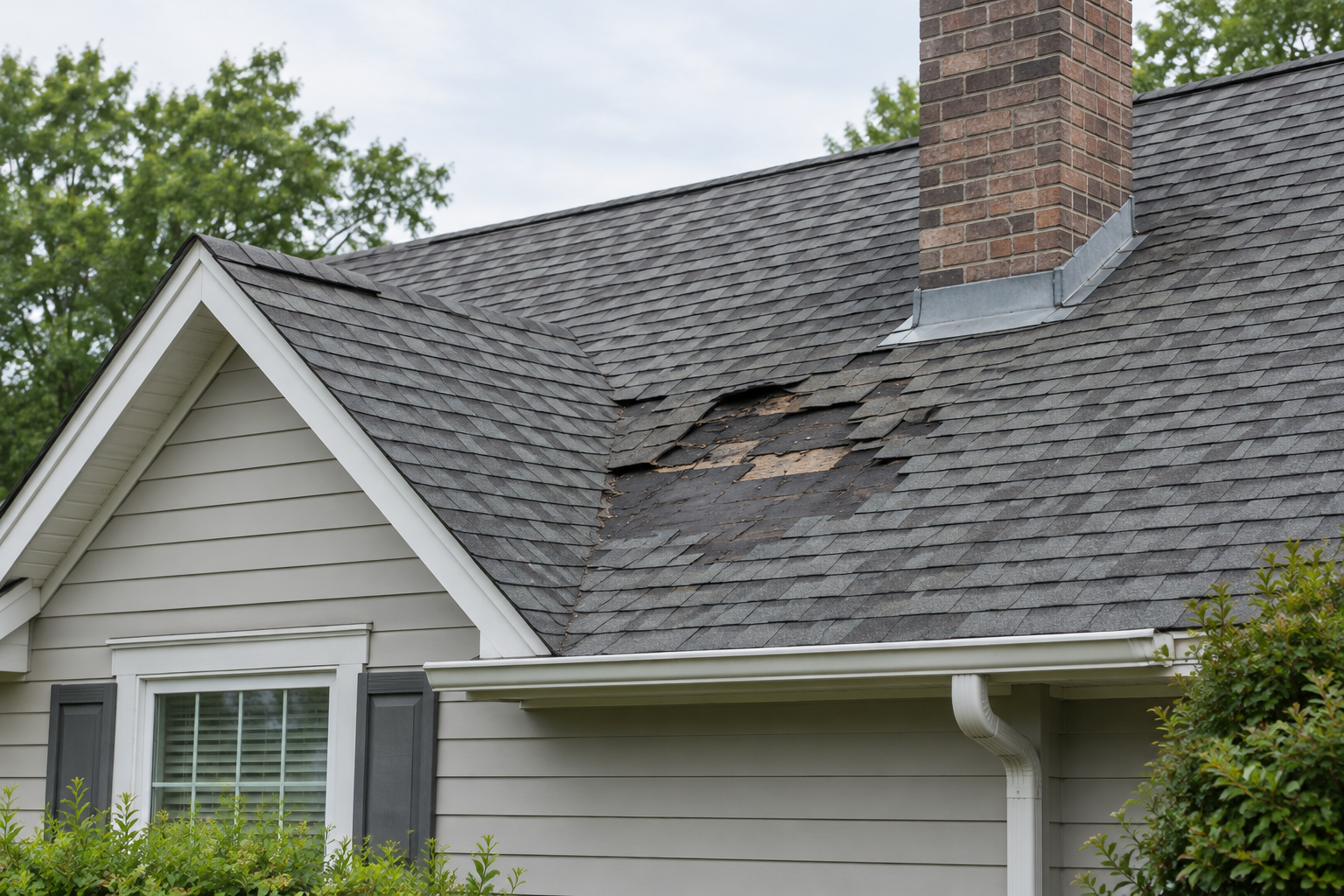
Damage spread across several roof areas usually favors replacement because isolated patches cannot correct a roof covering that is failing as a system.
- Widespread shingle aging: Extensive cracking, curling, cupping, bald areas where granules have worn away, or brittle shingles across multiple slopes signal a broad material condition rather than one repairable defect.
- Repeated leaks in different locations: Separate leak paths can indicate multiple flashing failures, worn roofing materials, or water reaching the deck through more than one route.
- Large areas of missing, torn, or displaced shingles: A concentrated patch after a branch strike may be repairable. Damage scattered over several elevations often requires a whole-roof evaluation.
- Soft, sagging, or deteriorated decking: Roof decking provides the fastening base for the covering. Broad deterioration can only be evaluated and corrected after roofing materials are removed.
- Repairs that keep multiplying: Several unrelated repairs over a short period can mean the roof is no longer a stable platform for another patch.
- Incompatible or unavailable replacement materials: When a sound, water-shedding repair cannot be integrated with the existing system, replacement may avoid creating a visibly patchwork roof with uncertain detailing.
How does roof age affect the repair-or-replace decision?
Age is a useful screening tool, but material condition and installation history decide whether it should drive the final call.
Manufacturers publish distinct warranty terms for different shingle lines, and those terms are not a prediction that every roof will perform for a fixed number of years. GAF’s Asphaltic Shingle Limited Warranty, for example, separates coverage periods and conditions from the practical question of whether an installed roof remains repairable. Sun exposure, ventilation design, storm history, workmanship, and earlier repairs can leave two roofs of the same age in very different condition.
An older roof with one failed pipe boot can still be a repair candidate if shingles around it remain flexible enough to work with, the deck is sound, and the contractor can restore the flashing correctly. By contrast, a younger roof with broad installation defects or significant storm damage may warrant replacement well before anyone expected it.
When discussing with a technician, ask for an explanation of the roof’s remaining serviceability. The helpful answer identifies observed wear, the number and location of damaged areas, and whether lifting surrounding shingles for a repair is likely to cause further breakage.
What should an inspection look for beneath the shingles?
The inspection should check decking, underlayment, flashing, ventilation details, and roof penetrations because shingles are only the exposed layer of the roof assembly.
Water can enter at valleys, walls, skylights, chimneys, vents, and plumbing penetrations, then travel along framing or underlayment before it becomes visible indoors. That means the ceiling stain may sit some distance from the actual entry point. The National Roofing Contractors Association’s guidance on roof investigation supports tracing the water path and reviewing adjacent construction, rather than treating the stain as proof of a failure directly above it.
Decking deserves particular attention. Soft spots, delamination, rot, or panels that no longer hold fasteners can change a small repair into a larger project. No inspection from the ground can confirm every concealed condition, so a responsible scope explains what is visible, what requires opening the roof to verify, and how added work would be documented.
Ventilation and attic moisture should be considered without treating them as automatic proof that a roof must be replaced. The U.S. Department of Energy’s air-sealing guidance explains that air leakage can move moisture into building cavities, which is why an attic review may include ceiling-plane air leaks, insulation, and ventilation pathways alongside the roofing assessment. Correcting those conditions may be separate from replacing shingles.
Can an active leak be repaired instead of replacing the roof?
Many active leaks have a repairable source, but prompt professional assessment is warranted because water can affect concealed materials before the full path is apparent.
Move belongings away from the affected area and collect dripping water if it can be done safely. Do not climb onto a wet, icy, storm-damaged, or visibly unstable roof. If water is near electrical equipment or a ceiling is sagging under accumulated water, avoid the area and contact a qualified professional immediately.
Inside, record the location and timing of the leak with photos. Outside, a contractor can inspect the roof covering, transitions, gutters, penetrations, and attic-side evidence where accessible. The useful outcome is a documented cause and a stated repair limit, such as whether the work addresses a failed flashing detail only or whether surrounding shingles and deck condition raise a broader concern.
For a more detailed comparison of warning signs, see Abodence’s guide to spot repairs and full roof replacement.
What should a roof repair or replacement quote include?
A usable quote states the work area, materials, tear-off scope, and conditions that could change the price, so you can compare proposals on the same work rather than on a single total.
Call for a free estimate:
- The specific slopes, sections, or penetrations included in the work.
- Whether existing roofing will be removed, and how many layers are included in that assumption.
- The proposed shingles or other covering, underlayment, flashings, ventilation components, and edge details.
- How the contractor will handle deck repairs found after removal, including unit pricing or an approval process.
- Protection and cleanup plans for landscaping, siding, driveways, and debris.
- Separate descriptions of manufacturer material coverage and the contractor’s workmanship coverage.
- Permit responsibility where local rules require one, plus any inspection or disposal assumptions.
Vague language such as “repair as needed” creates room for disagreement once the roof is open. It is reasonable to ask what conditions are included, what conditions are excluded, and who authorizes additional work before it proceeds.
Warranty language also needs a careful reading. Material coverage and workmanship coverage address different risks, and exclusions can matter as much as the headline term. Review this explanation of roof warranty terms before relying on a warranty as the reason to choose one scope over another.
How can you make the final decision?
Choose the smallest scope that fully corrects the documented problem and leaves a sound, maintainable roof assembly.
That may be a focused repair when the defect is truly local. It may be replacement when repeated patches would leave widespread wear, incompatible materials, deteriorated decking, or unresolved installation details in place. A lower initial price is not a useful saving if the proposal leaves known failure points untouched, but replacement should not be sold as the default response to every leak.
Get written assessments that explain the cause, the proposed scope, material choices, warranty terms, and any conditions that cannot be confirmed until the roof is opened. If the recommendations differ, compare the observed evidence and the stated assumptions before comparing totals.
For help evaluating your specific roof condition, request a written assessment and quote that separates necessary repairs from optional replacement work. Please call a listed specialist for a free, no-obligation discussion.
FAQ
Can a roof be repaired if it is leaking in one room?
A single-room leak can often be repaired when inspection traces it to one localized failure, such as a penetration or flashing detail. The ceiling location alone does not identify the entry point because water can travel before it becomes visible.
Do missing shingles always mean a new roof is needed?
No, a small and contained area of missing shingles may be repaired if surrounding materials are sound and replacement shingles can be installed with reliable overlap and fastening. Damage across several slopes warrants a broader inspection.
Should roof decking be replaced during every reroof?
No, decking is typically replaced where inspection finds deterioration or where it no longer provides a suitable fastening base. A quote should explain how concealed deck issues will be identified and priced if they appear after tear-off.
Is a roof warranty the same as a workmanship warranty?
No, manufacturer material coverage and contractor workmanship coverage are separate commitments with different terms, exclusions, and claim procedures. Read both documents before treating either as proof that a particular repair or replacement scope is appropriate.