Video Doorbell Installation: A Clear Home Security Guide
A video doorbell is most useful when its power source, Wi-Fi signal, camera angle, notification settings, and privacy controls fit the entrance and the security strategy. The device itself may be straightforward, but installation decisions affect whether it records reliably, shows a visitor’s face clearly, captures package placement, and avoids unnecessary recording of adjacent property.
What should be checked before choosing a video doorbell?
Start with the existing doorbell setup, the distance to the Wi-Fi router, the doorway layout, and the household’s willingness to manage charging or a subscription. A wired chime, visible low-voltage wires, and a transformer do not automatically mean every wired doorbell will work. Compatibility depends on the voltage, transformer capacity, chime type, and the specific model’s published requirements.
For a home with no usable low-voltage doorbell wiring, a battery model is often the simpler decision because it avoids altering electrical components. Expect to replace the battery more frequently if the entry gets frequent traffic, recordings are numerous, or winter conditions reduce battery performance.
Network planning deserves the same attention as power planning as the device needs a dependable WIFI connection at the exterior wall. Stone, brick, metal cladding, insulated glass, and long distances can weaken wireless performance. Check the manufacturer’s Wi-Fi band and network requirements before purchase, then test a phone at the intended mounting location as a practical indication of local coverage. Your phone may see a strong signal , but that is only an indication, since a phone and doorbell may have different receivers and antennas.
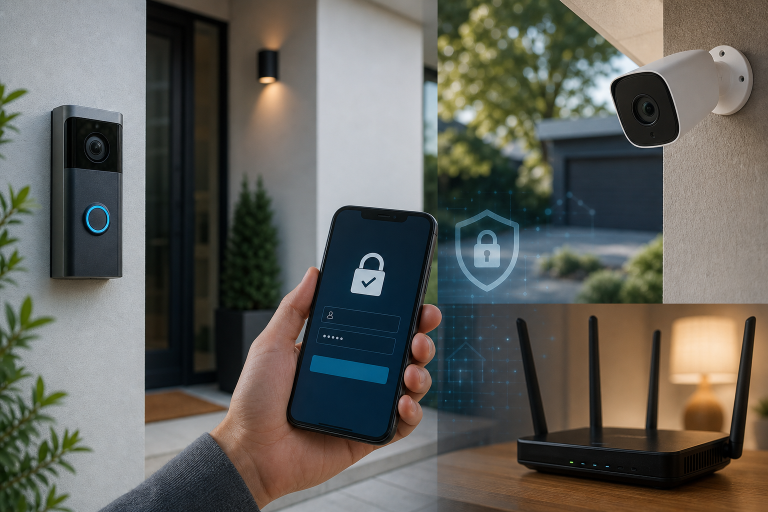
For homes that use several connected devices, this guide to smart home security integration can help clarify how a doorbell, lock, indoor chime, and phone alerts may fit together before selecting a platform.
Where should the camera be placed for a useful view?
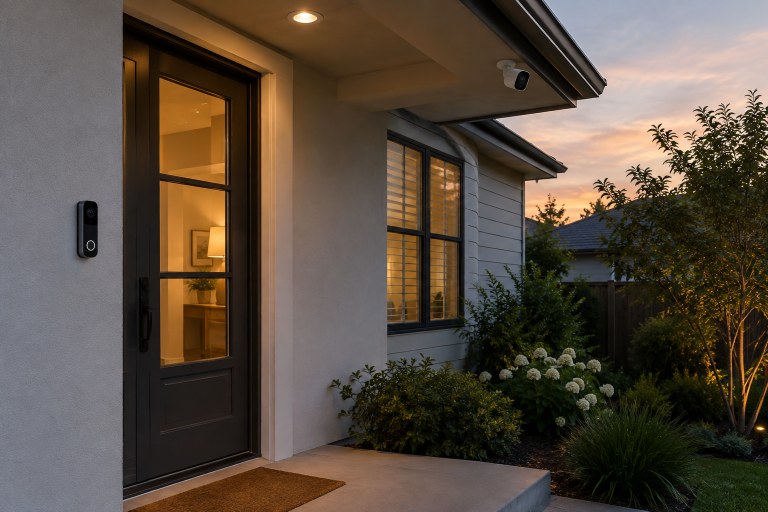
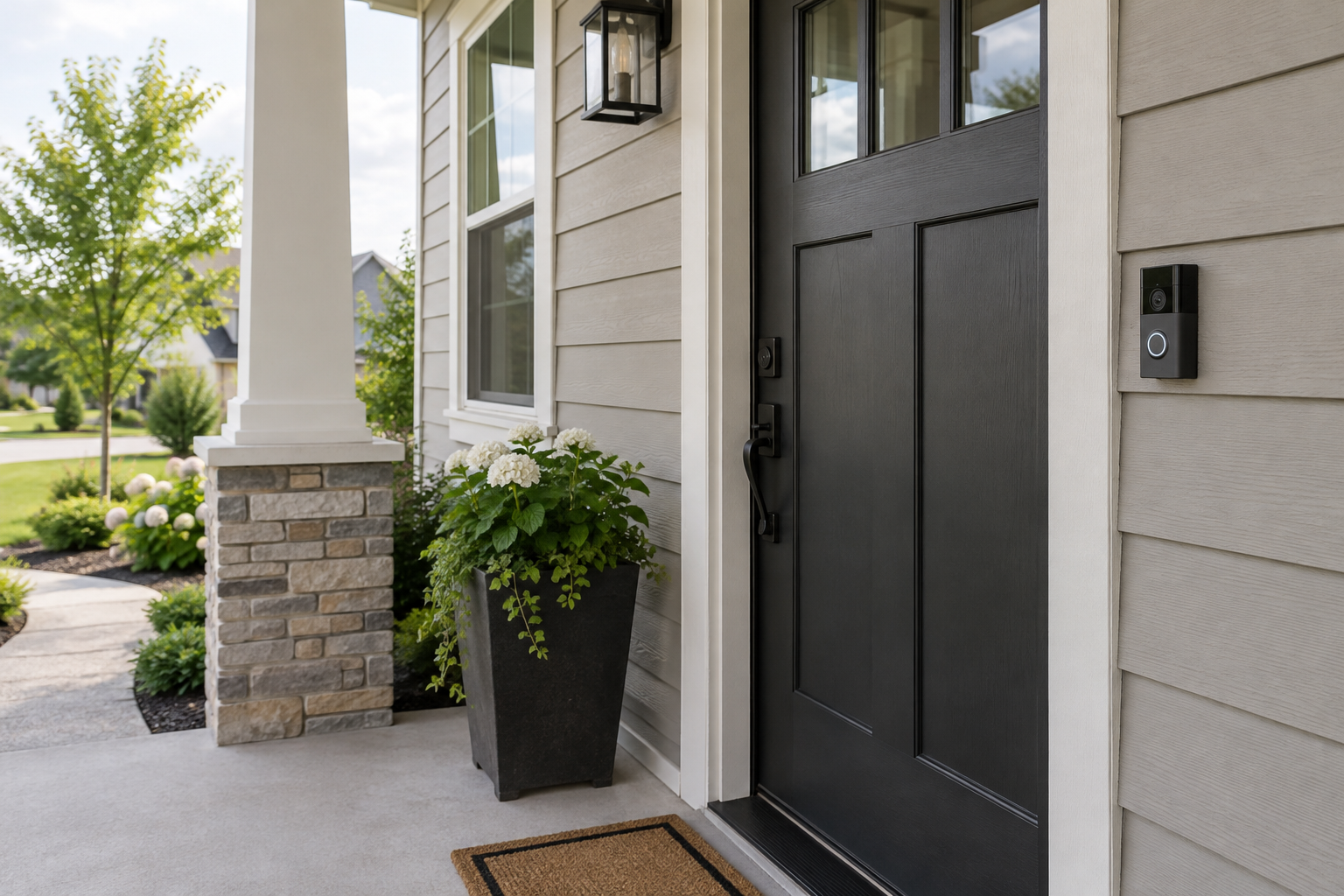
A view centered on the approach to the door, rather than the street, gives the most relevant footage and reduces avoidable motion activity. The right height and angle depend on the camera’s field of view, the height of the door, steps, a porch rail, and whether packages are usually left close to the threshold. Use the manufacturer’s supplied wedge or angle accessory when the doorway geometry requires it, rather than assuming a flat wall position produces the best view.
Before permanent mounting, use the product’s live-view or framing feature, if available, to look for blind spots. A deep porch, a screen door, glare from sidelights, a wall-mounted mailbox, or a column can block part of the approach. A low placement may emphasize packages but miss faces. A high placement may show faces but leave the doorstep outside the useful portion of the image.
Privacy controls vary by product, but activity zones and privacy zones may reduce alerts or block portions of the image. These settings are worth reviewing after installation, especially when the camera’s wide-angle view includes a sidewalk, shared drive, or neighboring entrance. They are not a substitute for checking local rules, lease terms, condominium rules, or employer requirements for a home-based business.
The Federal Trade Commission’s guidance on securing a home Wi-Fi network recommends changing the router’s default password, using WPA2 or WPA3 encryption, and keeping router software current. Those measures matter here because a doorbell is an internet-connected camera, not simply an outdoor button.
When is a wired doorbell installation better left to an electrician?
Stop and arrange qualified electrical help when wiring is damaged, unidentified, warm, loose, corroded, or connected to equipment that does not match the doorbell maker’s stated requirements. Electrical work can involve shock and fire risk, and a professional can identify the transformer, verify its output, and determine whether a chime or other component needs compatible hardware.
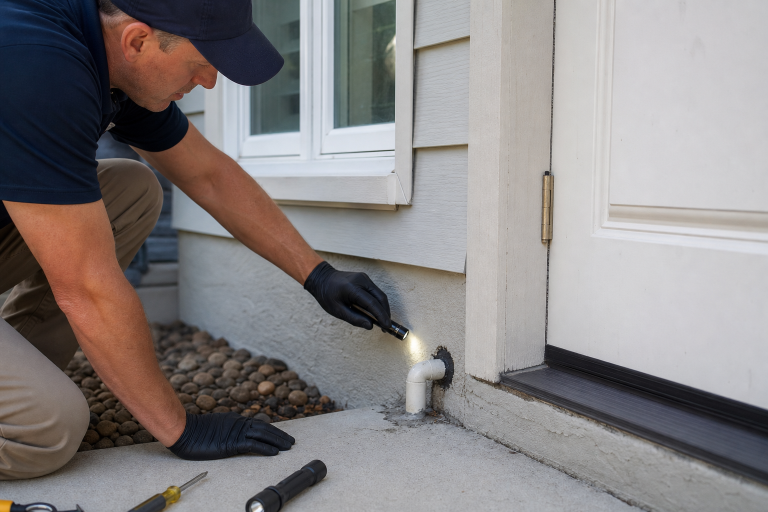
A homeowner should also seek help when the old doorbell circuit is missing, when the installation would require a new transformer or new cable run, or when the entrance has conditions that make mounting uncertain. Exterior materials such as masonry, stucco, metal, and older siding can require an appropriate fastening method and careful work around concealed services. For a rental property, obtain the owner’s written approval before changing hardware or drilling an exterior surface.
Local code enforcement is the authority that can explain whether a proposed electrical alteration requires a permit or licensed work in that jurisdiction. The National Electrical Code is published by the National Fire Protection Association and adopted or amended by jurisdictions, so it is not a universal homeowner permission slip. An installer who gives a quote should identify the exact device, whether electrical work is included, who obtains a required permit, how wall damage will be handled, and whether return work is covered.
What should a professional installation quote include?
A usable quote identifies the device and the work at the door, then separates any electrical correction or network work that may be needed. Ask for enough detail to compare two estimates without guessing what each installer intends to do.
- The exact model and whether the homeowner or installer supplies it.
- The proposed power approach, including any transformer, chime adapter, battery, or charging accessory.
- The mounting location, surface type, visible wire routing, and any angle mount or weather protection proposed.
- Whether testing includes live video, two-way audio, motion alerts, mobile app access, and indoor chime behavior.
- Any permit responsibility, repair of mounting holes or surfaces, labor warranty, and exclusions.
Be cautious with claims that a particular camera will eliminate theft, prevent crime, or guarantee identification. A video doorbell can provide alerts and recordings when configured and connected properly. It cannot ensure that a person is in frame, that the network stays online, or that footage will be available without considering the product’s storage plan and settings.
Which settings matter after the doorbell is mounted?
Account security, alert tuning, recording retention, and access permissions determine much of the day-to-day experience. Complete the maker’s setup process, give the device a distinctive name, and remove old household members, former tenants, or contractors from shared access when their access is no longer appropriate.
The Cybersecurity and Infrastructure Security Agency advises users to enable multi-factor authentication where available, use strong unique passwords, and apply updates promptly in its Turn On MFA guidance. Apply those practices to the account that controls the camera and to the email account used for password recovery. A shared password can create a larger privacy problem than an imperfect camera angle.
Set motion sensitivity and zones based on actual alerts over several days. A setting that detects every passing vehicle can bury a delivery or visitor alert among routine notifications. Conversely, an overly narrow zone can miss someone approaching from the side. Check daytime and nighttime clips, because porch lighting, reflections, and headlights can change what the camera captures.
Storage deserves a separate decision. Some products offer local storage, some offer optional cloud recording, and some provide only limited live-view or event features without a plan. The terms can change by model and region. Confirm what happens to recordings when a trial ends, how long clips are retained under the selected plan, whether downloading is available, and whether the chosen setting records only motion events or supports continuous recording.
Review the doorbell maker’s current privacy notice and subscription terms before enabling recording. For a broader look at account protection and camera-data exposure, see Abodence’s home security camera data security guide.
How can the installation be tested without overcomplicating it?
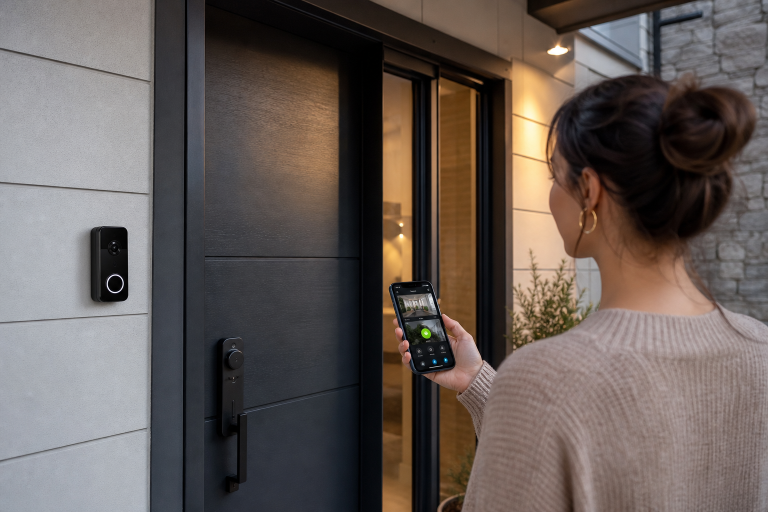
A short, deliberate test at the door is enough to reveal most setup problems. Confirm that a press produces the expected phone and chime response, that live video and two-way audio work, and that an ordinary approach triggers the intended alert. Then review a clip for framing, sound, glare, and delay.
If the result is unreliable, first distinguish between a power issue, a Wi-Fi issue, and a settings issue. A device that goes offline may need network troubleshooting or compatible power. A device that stays online but generates poor alerts may need zone or sensitivity adjustment. Repeated resets can erase useful setup information without fixing a weak signal or unsuitable power supply, so use the manufacturer’s support steps for the specific model before changing hardware.
FAQ
Can a video doorbell work without existing doorbell wires?
Yes, a battery-powered model can be appropriate where there is no usable doorbell wiring, provided its published installation method suits the wall surface and the household accepts recharging the battery. Check the manufacturer’s stated Wi-Fi requirements and expected charging method before buying.
Do wired video doorbells work with every existing chime?
No, chime compatibility varies by model and by the existing doorbell system. The relevant manufacturer installation guide should state power requirements, compatible chime arrangements, and any included or required adapter. Arrange electrical help when the condition or rating of the existing equipment is unclear.
How high should a video doorbell be mounted?
The manufacturer’s instructions for the chosen model should control, because lens design and supplied angle mounts differ. Confirm the actual live view before finalizing placement so the view includes the visitor’s face and the expected delivery area without unnecessarily monitoring neighboring private areas.
Is a subscription required for a video doorbell?
It depends on the product and the features wanted. A model may allow live viewing without a plan while requiring a subscription for cloud recording, longer retention, person alerts, or other features. Read the current terms for the exact device and country before relying on any advertised trial.
Should a video doorbell be professionally installed?
Professional installation is the safer choice when the job involves unidentified or damaged wiring, a transformer change, a new cable run, difficult exterior materials, or an uncertain permit requirement. A battery device mounted within its published instructions may be simpler, but the final choice should still account for property approval, Wi-Fi coverage, and privacy settings.
If the existing doorbell wiring or mounting surface is uncertain, a local electrician or qualified security installer can provide a written assessment and quote for the specific entrance. Please contact a listed specialist for a free, no-obligation discussion.